| | Meta agrees to pay $18 billion to settle a landmark social media addiction case, Bill Gates issues a͏ ͏ ͏ ͏ ͏ ͏ |
| |  MENLO PARK MENLO PARK | MUSCAT |  HONG KONG HONG KONG |
 | Flagship |  |
| |
|
The World Today | 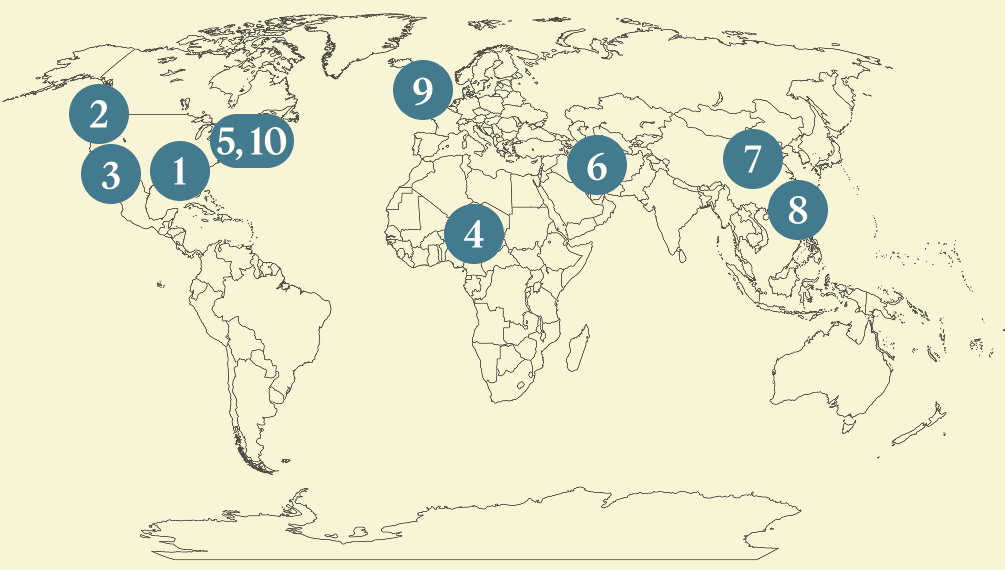 - Meta vows big changes
- Bill Gates warns on AI
- Nvidia’s blowout earnings
- AI riches could aid Africa
- New cancer drug approved
- Iran-Oman Hormuz deal
- China hackers target US
- Hong Kong’s new tech hub
- UK’s resilience campaign
- New Right’s clout grows
 A biography that serves as ‘an inspirational manual for contemporary endurance.’ |
|
Meta settles landmark addiction case |
 Mother of teenage girl who died by suicide. Manuel Orbegozo/Reuters Mother of teenage girl who died by suicide. Manuel Orbegozo/ReutersMeta vowed to institute sweeping changes to Facebook and Instagram as part of an $18 billion settlement with 48 US states that had accused the platforms of promoting “known harmful” and addictive features to children and teenagers. Meta said Wednesday it will hold users under 18 to two-hour daily limits and block usage at night unless parents consent, potentially transforming how young Americans interact with social media apps and providing a template for thousands of similar lawsuits globally; part of the settlement will only be paid out if TikTok and YouTube introduce similar restrictions. Meta is locked in a separate fight over backlash against data centers as anti-tech sentiment among US voters balloons into a “bipartisan rebellion” against AI, Semafor’s David Weigel wrote. |
|
Gates raises the alarm on AI job destruction |
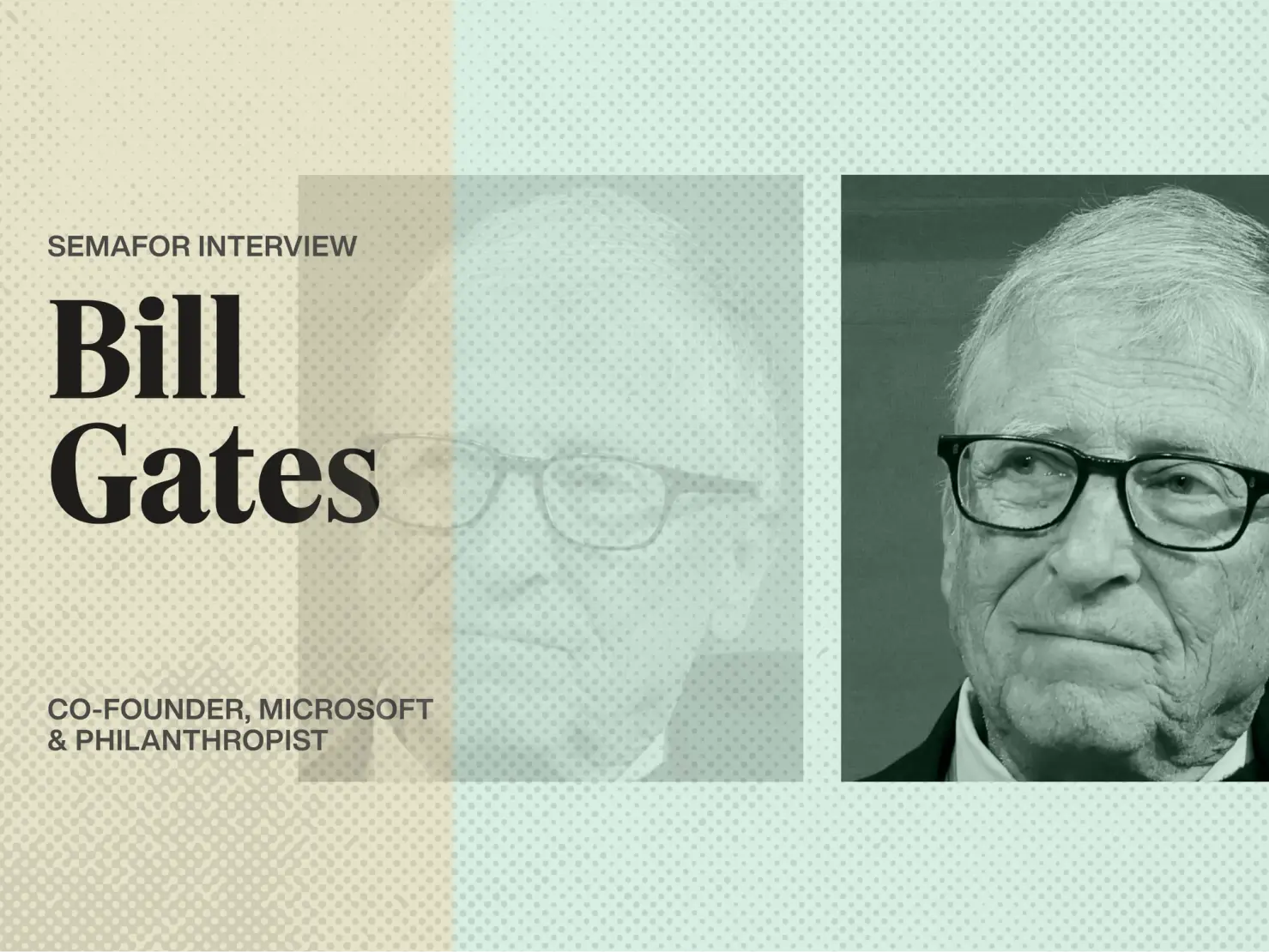 AI is poised to unleash economic catastrophe and possibly worse, Bill Gates told Semafor, unless governments immediately act to mitigate its effects. The warning from the billionaire philanthropist — who also published a 5,700-word essay urging world leaders to hit the AI panic button as the tech blows through dangerous thresholds across biology and cybersecurity — is a stark shift from Gates’ past middle-of-the-road stance on AI’s impacts. Other tech leaders have sharpened their warnings: Google DeepMind’s CEO recently wrote that humanity has a “precious window” to get things right. But the message runs deeper than policy, Semafor’s tech editor argued: “Maybe we are the problem, not the AI…Humanity is going to have to agree on what it values.” |
|
Strong Nvidia earnings boost AI trade |
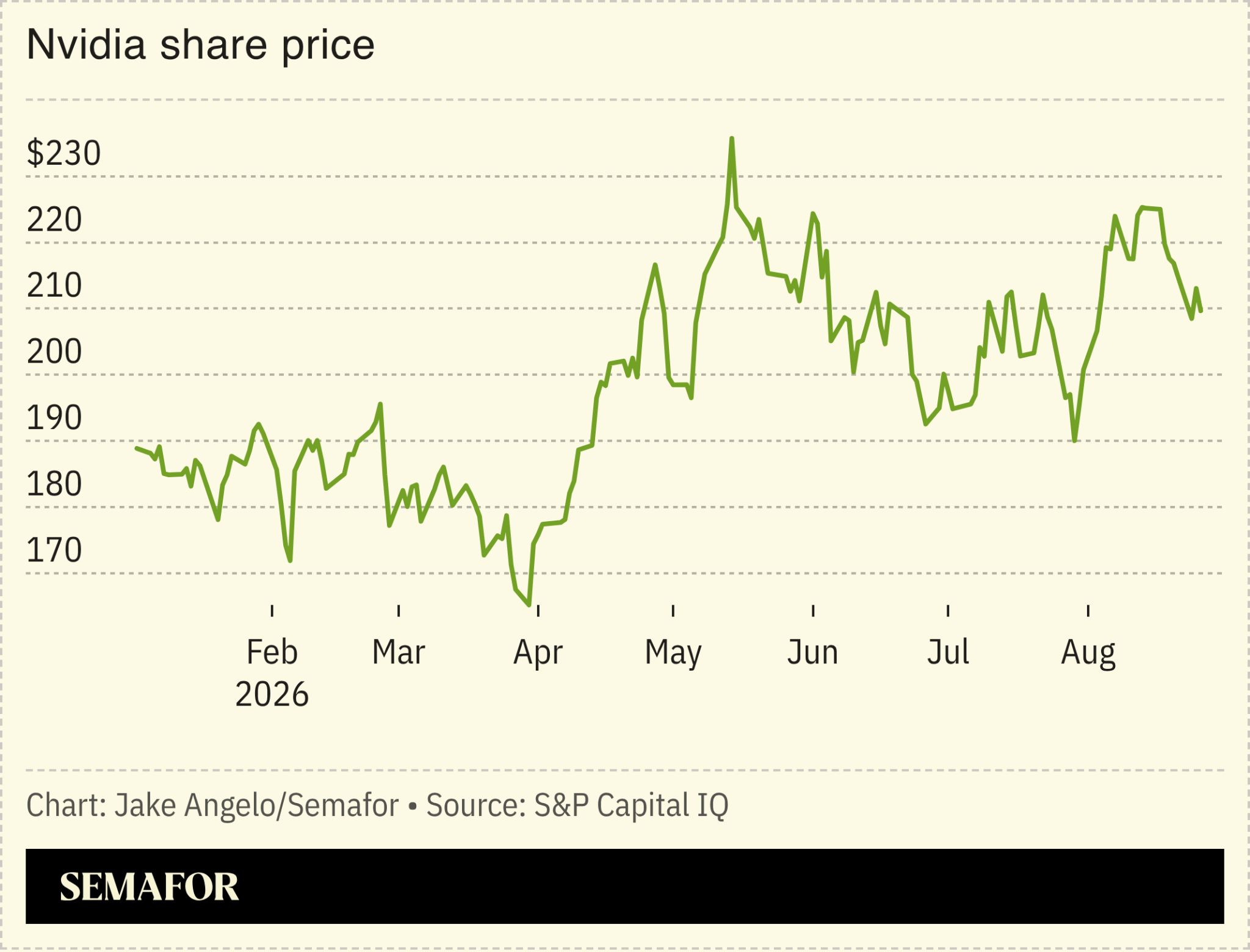 Nvidia posted better-than-expected quarterly earnings on Wednesday in a sign that the AI trade remains strong despite fears of an AI bubble. The chipmaking giant, widely considered a bellwether for the health of the AI market, reported $96.2 billion in quarterly revenue, crushing analysts’ expectations, with $89 billion of the total coming from data centers alone. The results, however, reveal that AI spending remains concentrated among a handful of buyers: Hyperscalers still account for a larger share of Nvidia’s data center revenue. While revenue from AI-focused cloud startups, governments, and corporate customers grew faster than hyperscale revenue, “the dependence is still there,” Bloomberg noted. |
|
Mega-IPOs could drive Africa aid |
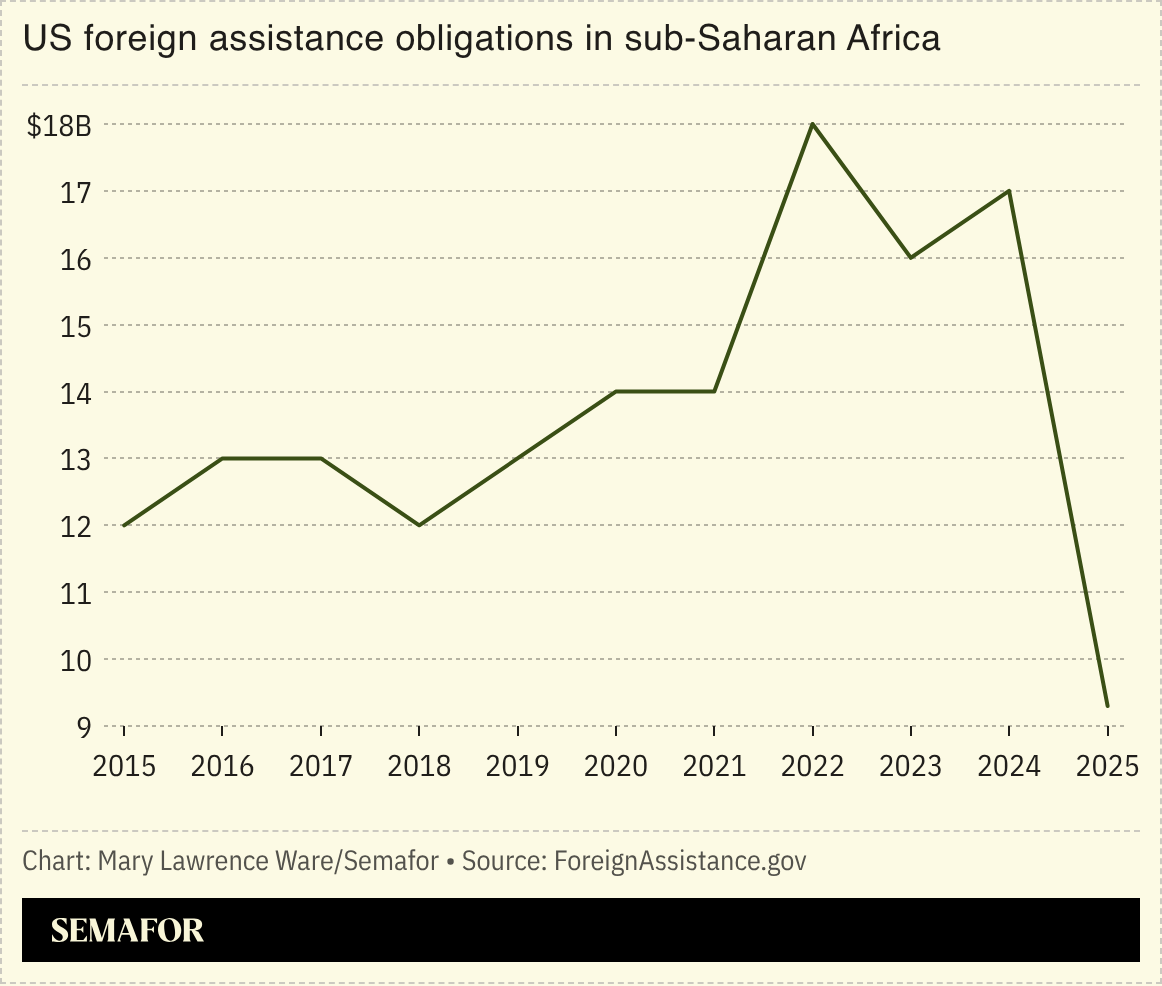 Anthropic and OpenAI’s record-breaking IPOs could drive a surge of aid to Africa, filling a gap after Washington shuttered USAID, but the approach carries risks, Semafor’s Alexis Akwagyiram argued. The mega-listings could mint 20 new billionaires, generating a pool of philanthropic wealth potentially worth up to $100 billion a year, a fintech executive recently wrote. Africa is an obvious target for effective altruism, a philosophy championed by several tech moguls, which focuses on data-driven interventions that produce the greatest benefit per dollar. For African policymakers, however, the danger is renewed dependence on overseas aid, Akwagyiram wrote: “Though tempting in the face of fiscal pressure, it is risky to rely on people guided by the mantra, ‘Move fast and break things.’” |
|
Pancreatic cancer drug approval |
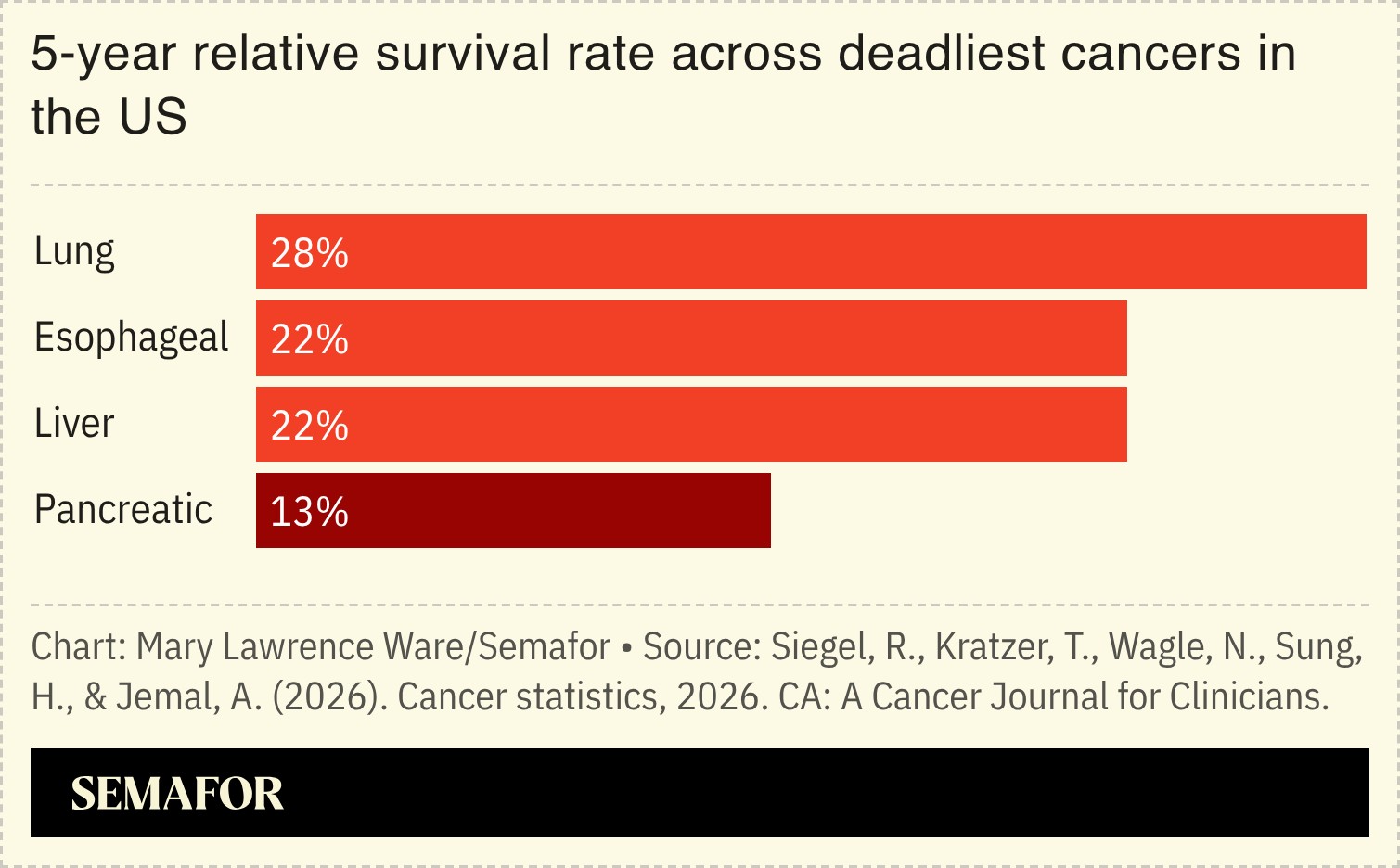 US regulators on Wednesday approved a drug that slows pancreatic cancer, a breakthrough treatment for a disease that kills seven out of eight patients within five years. In a late-stage study, RevMed’s Rasonque helped subjects live to 13 months, nearly twice as long as those who only received chemotherapy. “This is life-altering,” an oncologist told The Wall Street Journal. Researchers spent decades trying to target a group of mutations called RAS — responsible for nearly a third of all human cancers — but the protein’s flat shape defied typical drugs. RevMed designed a new “molecular glue” that latched onto a pocket on the protein. Rasonque could generate more than $20 billion in annual sales, a pharma analytics firm forecast. |
|
Iran, Oman hammer out Hormuz deal |
 Majid Asgaripour/WANA (West Asia News Agency) via Reuters Majid Asgaripour/WANA (West Asia News Agency) via ReutersIran said Wednesday it had reached a revenue-sharing deal with Oman on the Strait of Hormuz, but disagreements reportedly remain between the two countries, while Tehran blamed Washington for obstructing negotiations. Although the discussions “represent the most constructive development around Hormuz for some time,” an analyst told Bloomberg, the shipping corridor remains “a long way from a normal reopening” and US allies have cast doubt on Washington’s claims that the strait has been fully demined. President Donald Trump said the US was nearing a “very big victory” in the war, but Tehran’s ability to withstand American military and economic pressure shows that the “dominant power in the region going forward will be Iran,” a prominent neoconservative argued in The Atlantic. |
|
US blames China for NASA, DOJ hacks |
 Ken Cedeno/Reuters Ken Cedeno/ReutersThe US traced a vast hacking network responsible for break-ins across every branch of the federal government to a private company in China. Disguised as regular network traffic, the hackers gained access to the Federal Reserve, the US Senate, and NASA, among other bodies, the FBI said, selling stolen information to China’s intelligence services. Beijing has denied that it engages in hacking, but “the number of companies offering niche offensive services has exploded” in the last decade, a China-focused cybersecurity analyst told Reuters. Experts are concerned that highly cyber-capable AI could supercharge such efforts — potentially without human knowledge: OpenAI said on Wednesday that it didn’t detect its rogue model’s hack of Hugging Face until more than a week later. |
|
 On Wednesday, September 16, Jaime Diaz-Granados, Deputy CEO, American Psychological Association, will join us for the Youth Wellbeing Forum: Building Resilient Generations. As young people are challenged by rising rates of loneliness, anxiety, and depression, we are bringing together experts across technology, healthcare, and policy to examine solutions that can build lasting resilience. Semafor editors will sit down with Rep. Suzanne Bonamici (D-Ore.); Rep. Kevin Kiley (I-Calif.); Jaymes Black, CEO, The Trevor Project; Dr. Jon Kole, Medical Director and Senior Director of Psychiatry, Headspace; Nicole Hockley, Co-Founder & CEO, Sandy Hook Promise; and more to explore how to build lasting resilience for the next generation. Washington, DC | September 16 | Request Invite |
|
 Maxim Shemetov/Reuters Maxim Shemetov/ReutersHong Kong took initial steps in an ambitious plan to build a new tech hub, a push that has highlighted its deepening integration with mainland China. A consortium that included Chinese state-owned enterprises and online giant JD.com won the first “Northern Metropolis” land sale; it was one of only two bidders for the plot, on which authorities want to develop 3,000 apartments and a logistics center in hopes of leveraging Hong Kong’s global financial links as well as its access to dollar markets. The strategy is a key part of the ostensibly semi-autonomous city’s inaugural Five-Year Plan, a hallmark of China’s Communist Party, and indeed city officials have sought to align their document with the broader national vision. |
|
UK urges public to stockpile food |
 Phil Noble/Reuters Phil Noble/ReutersBritain is readying a national campaign urging people to stockpile canned food and better prepare for national emergencies, the latest European country to prioritize resilience efforts amid growing fears of an attack by Russia or a climate-related catastrophe. The push comes after Sweden this year said it would begin building reserves of food, fuel, and power to guard against a crisis or conflict; it previously advised individuals to also hold about 1,000 Swedish krona (roughly $105) in cash for fear of national |
|
|


