|
|
|
Newsletter continues after sponsor message
|
|
|
Did you read last week's tips on exercise during pregnancy and think I wish I was in a position to take this advice?
Healthy heterosexual couples in their 20s to early 30s having regular, unprotected sex have a 25% to 30% chance of getting pregnant in any given month, according to the American College of Obstetricians & Gynecologists. And while an increasing number of women are having babies into their 40s, the odds of conception decrease around age 35.
"Trying to get pregnant is like playing a slot machine," says reproductive endocrinologist Dr. Lucky Sekhon. "You can pull the lever by timing your attempts around ovulation, but whether things line up and you hit the jackpot are not in your control."
However, there are some lifestyle changes both men and women can make to help boost their odds of conceiving, as Life Kit’s Andee Tagle reports. Inspired by Sekhon’s metaphor, illustrator LA Johnson created this Vegas-themed guide to help improve your chances. Here are some of the highlights from the comic and Tagle’s reporting.
♥️ Eat foods that stabilize blood sugar
Think Mediterranean, heart-healthy diet. Fill your plate with foods high in protein and low in carbohydrates. Also fruits and veggies, especially green leafy ones. That can help stabilize your blood sugar, which plays an important role in balancing hormones for both men and women, Sekhon says.
♣️ Gentlemen, take it easy on your testicles
If your gonads are under pressure, it's time to give those guys a break. In some cases, tight underwear, chronic exposure to heat or repetitive trauma to the testes (ow!) can lead to low sperm count.
”I've had couples where the husband was, like, a professional biker, and that repetitive stress in that area, we think led to lower sperm quality,” Sekhon says. But it’s reversible, and she’s seen big improvements when testing for sperm quality over a span of a few months.
♦️ Ladies, take prenatal vitamins
Start taking them at least one to three months before trying to conceive, the Mayo Clinic recommends. Ingredients to look for include folic acid, iron and DHA. This can help both you and the fetus have the necessary nutrients as soon as pregnancy begins.
♠️ Avoid stress if possible
Stress can interfere with your ability to conceive, according to the Mayo Clinic. Anxiety can delay pregnancy. So when you’re trying to make a baby, avoid stressful situations if you can, and maybe plan some relaxing dates. (My sister got pregnant with her twins on a Caribbean couple’s getaway, so take that as you will 🌴.)
Be sure to check out this cute comic for more fertility-promoting lifestyle advice. And listen to the Life Kit podcast episode to dig deeper on how to plan your reproductive journey.
Plus: Researchers find microplastics in men's testicles |
|
The “Got Milk?” advertising campaign from the California Milk Processor Board leaned into a combination of comedy and horror. In one ad, a pair of siblings refuses to drink milk because it's “for babies,” though their mother says milk helps build strong bones. Then they look out their window, as their elderly neighbor who claims to never drink milk works in his yard. The neighbor attempts to lift the handles on a wheel barrow, and both his arms break off! Suddenly, the kids are guzzling the white stuff down.
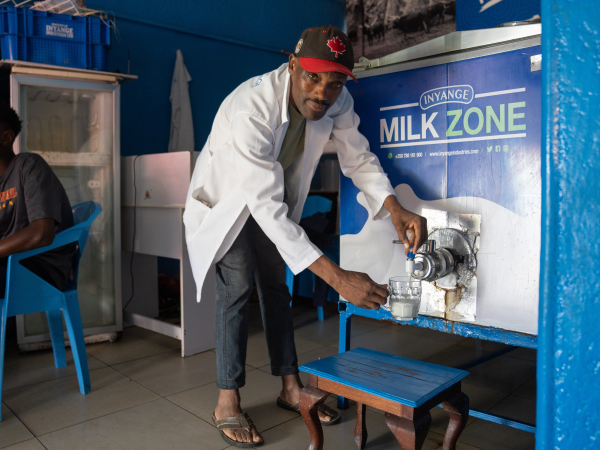
Over in Rwanda, people need no such coaxing to drink plenty of moo juice. Cows are revered, and many urban dwellers there enjoy their milk on tap, as NPR global health correspondent Fatma Tanis reports. Milk bars in the capital Kigali have become popular as many Rwandans moved to the city from rural areas in the past decade and lost their easy access to dairy cows. You can find options like hot milk with a dollop of honey, fermented milk or milk flavored with chocolate, strawberry or vanilla, as well as low fat and skim.
Dr. Sabin Nsanzimana, Rwanda's health minister, acknowledges that milk has important nutrients, like protein and calcium, but he’d like to see Rwandans limit their consumption to about a cup a day. Studies have shown that too much milk can lead to obesity and even cardiovascular disease and can have adverse effects on overall mortality. Nsanzimana sees excessive milk consumption as part of a variety of new health challenges that come with urban lifestyles. "Now we're seeing more people going to hospital for chronic diseases that could have [been] prevented by less milk drinking, less alcohol drinking, [by] exercising," he says.
But communication has been difficult. "If I go to my own family and start to talk about [how] too much milk is not good or how water is important, they will start to think that I probably went into the wrong medicine," he says with a laugh.
Check out the full story for a peak inside a Kigali milk bar.
Plus: Whole, skim or nonfat? Scientists are updating the health guidance on dairy |
|
Sarah Hofius Hall/WVIA News |
|
Kids with brain injuries thrive at this camp. (Pictured above) But federal research funding is in flux
Drugstores say Medicare's $50 obesity drug program is catching on
4 ways to cope with constant thoughts about your body image
Listen: How your metabolism could alter your mental health |
|
We hope you enjoyed these stories. Find more of NPR's health journalism online.
All our best,
Andrea Muraskin and your NPR Health editors |
|
Listen to your local NPR station. |
|
Visit NPR.org to hear live radio from WAMU 88.5 (edit station). |
|
|
| |
|
|
|
|
|
|
|
|
You received this message because you're subscribed to Health emails. This email was sent by National Public Radio, Inc., 1111 North Capitol Street NE, Washington, DC 20002
Unsubscribe | Privacy Policy |
 |
|
|
|
|
|
|
|