Good morning, readers. We’re back. Europe Today is live on your screens from 8.00 CEST every weekday — and back in your inboxes from 8.30. I’m Mared Gwyn, with you today and for the rest of the week.
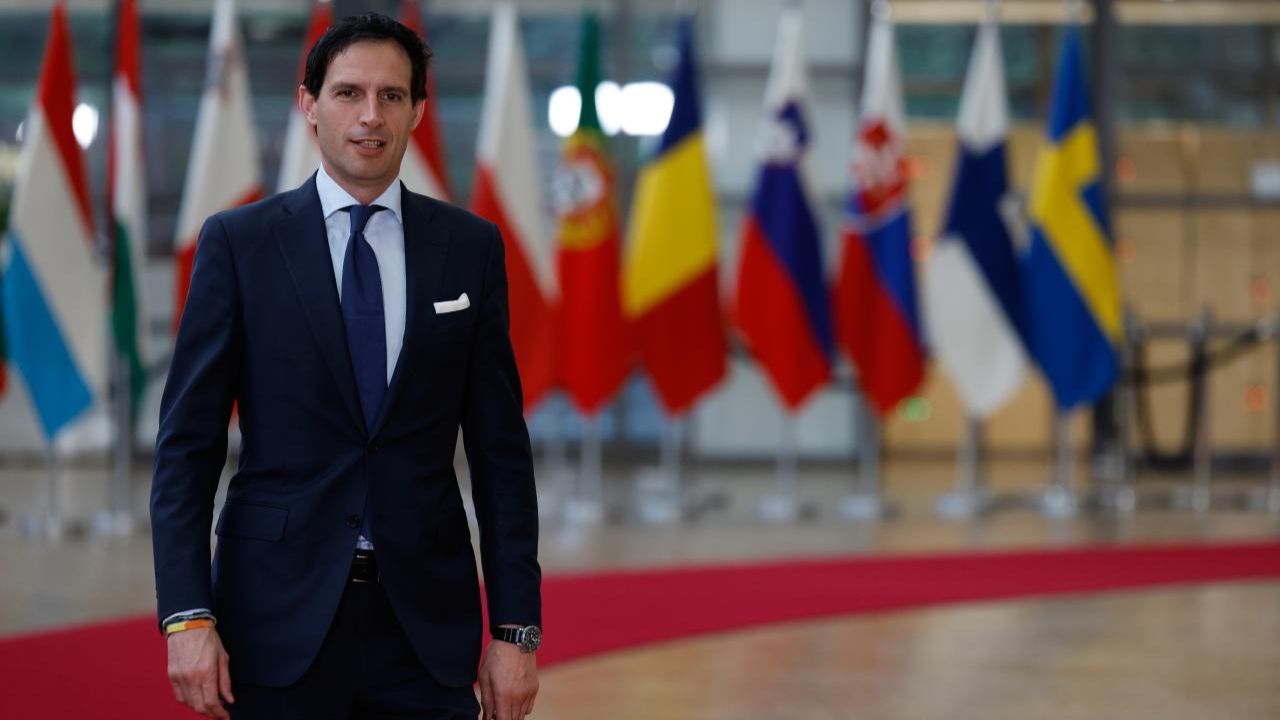
We’re kicking off with an exclusive interview with the EU’s climate chief, Wopke Hoekstra, who told my colleague Maria Tadeo that Europe must invest more to protect itself from climate disasters, despite capitals’ tight budgets. More in our top story below.
But first – Brussels awakens from its summer slumber this morning to a cold shower from the north: Iceland has voted 52.8% to 47.2% against restarting EU membership talks, freezing the possibility of joining the bloc for the foreseeable future.
A chilly setback: It’s a major knock for Brussels, where officials have been pushing to reinvigorate the EU’s enlargement agenda in recent months. The ‘No’ from Icelanders raises major questions over the EU’s ability to attract wealthier, northern countries to its ranks, with all current candidates lagging severely behind Reykjavik on economic indicators.
The response from the EU institutions has been notably muted – with a Commission spokesperson issuing a few brief words “taking note” of the result. European Council President António Costa exchanged messages with Iceland’s Prime Minister Kristrún Frostadóttir on Sunday, saying the EU “fully respects the democratic choice of the Icelandic population” and vowing to continue strengthening the bilateral relationship.
Meanwhile, hard-right leaders including Marine Le Pen took the opportunity to hail the outcome as a win for national sovereignty.
Despite the temptation to frame the vote as a geopolitical reckoning – amid US threats against Greenland, Trump’s tariffs and China’s assertiveness – concerns over Iceland’s lucrative fishing industry ultimately proved decisive.
The fish factor: Fish accounts for a massive 40% of Iceland’s export value, and Icelandic fishers land more fish annually than any other EU nation. Fish – as it did in the 2016 Brexit referendum – became a highly politicised symbol of Iceland’s sovereignty, with many industries warning against losing control over the country’s prized 760,000 square kilometre exclusive economic zone (EEZ).
Taking ‘control’: Iceland’s powerful fishing industry had been spooked at the prospect of joining the EU’s Common Fisheries Policy (CFP), a set of rules for managing the EU fleet and conserving fish stocks, despite officials in Brussels saying they were open to “creative solutions” in talks on Iceland’s access to the bloc’s agriculture and fisheries programmes.
Speaking to Europe Today earlier, Margrét Ágústa Sigurðardóttir, secretary general of the Icelandic Farmers Association, also said the desire to avoid joining the EU’s Common Agricultural Policy (CAP) had been a crucial factor in the vote. “Icelanders voted to keep decisions about Iceland in Iceland,” she said, stressing that the island had not “rejected Europe”, but rather “full EU membership”.
‘Very disappointed’: Pro-EU voices have meanwhile been left deflated by the narrow defeat. Former Reykjavik mayor Dagur B. Eggertsson told Europe Today that he was “disappointed” after what he described as a “very harsh campaign”, which he said had “echoes of Brexit and the Brexit playbook”.
My colleague Jorge Liboreiro has these four takeaways from the referendum result, and Vincenzo Genovese has more on the implications for Brussels.
NATO security under spotlight: How secure is the central military operational headquarters at the North Atlantic Treaty Organisation (NATO), and who wants to spy on it? These questions are at the heart of a court case playing out in Mons, Belgium today. My colleague Angela Skujins writes in to report on the unravelling espionage tale from the usually quiet country town now sitting at the centre of a security scandal.
In July, the Belgian Federal Prosecutor’s Office arrested a Canadian national of Chinese origin for allegedly carrying out spy activities for a third country while interning at NATO’s Supreme Headquarters Allied Powers Europe. She was ordered to remain in detention before the trial kicked off — something her legal team has appealed.
So, who is she? And was she spying for China?
Investigative media Follow The Money reports that the individual is a woman in her thirties called Claire Biwei Zhang, and may have been abetted by accomplices while the Belgian authorities mounted their legal case. While a lot of this case is confidential, we do know that pre-trial detention underscores the veracity of the charges and what potentially is at stake, with media reports filling in the blanks. Angela will have more details from the Mons courthouse during the day.
Also today: Hungary could meet all EU criteria to unlock €10 billion in post-Covid EU recovery funds as soon as today, my colleague Sándor Zsiros reports. To unlock the cash, frozen under the previous government of Viktor Orbán, Budapest needs to deliver on 27 so-called milestones, including judicial and anti-corruption reforms, by the end of today.
Both Hungarian and EU officials have previously told Sándor that work is progressing well, and that it was “realistic” for Budapest to meet its targets on time. The government led by Prime Minister Péter Mayar has said it wants to “bring home every cent due to Hungary.” |