|
|

|
Aug 31, 2026
|
|
|
|
|
Supported by
|

|
|
|
|
|
Welcome back! Elon Musk responds to The Information's report on SpaceX building a turbine blade factory. OpenAI pulls its models from SpaceX-owned Cursor. Andreessen Horowitz raises $1.1 billion for an AI hardware fund.
|
|
|
SpaceX CEO Elon Musk on Saturday responded to The Information’s report that his company was laying the groundwork for a foundry to build turbine vanes and blades to avoid a power shortage for AI data centers. “By doing in-house casting [of vanes and blades] at SpaceX, we can accelerate nat gas turbines coming online by up to 18 months, which is a profound game-changer,” Musk said on X, in response to the The Information’s report. The foundry move is classic Musk, seeking to do an end-run around an existing oligopoly of incumbents in the field. He said the move was critical because, as his company’s chatbot Grok estimated, 15 gigawatts of AI chips produced next year won’t be turned on because of power and other equipment shortages. Chips that consume that level of energy are worth hundreds of billions of dollars. The Information reported two weeks ago that data center developers that work with Google, Microsoft, Oracle and others fear that AI chips won’t have a place to plug in because of power delays, political fights and other technical challenges facing new facilities.
|
|
|
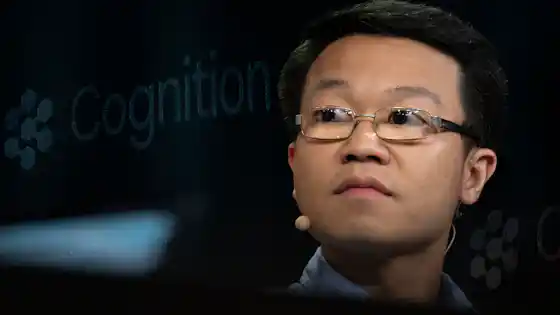
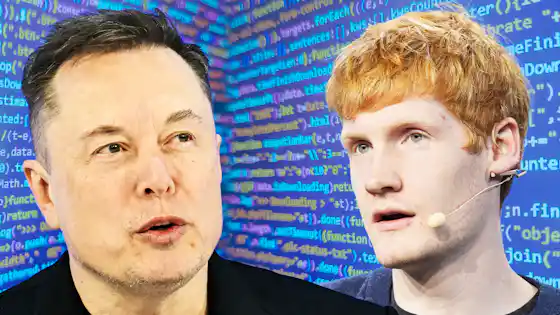
OpenAI said Friday night that it will terminate its contract to provide its AI models to coding assistant Cursor following Cursor’s $60 billion acquisition by Elon Musk’s SpaceX. The move escalates the high-profile feud between OpenAI CEO Sam Altman and Musk: OpenAI’s post explicitly cite a lack of trust stemming from alleged past contract violations by Musk-owned entities like X and xAI. (Musk previously said xAI used OpenAI models to help train xAI models.) “I couldn’t care less,” Musk said in a reply on X. The decision could shield OpenAI’s next flagship model, Astra, from being used by Musk’s team to develop new models. For his part, Cursor co-founder Michael Truell said in a post on X that OpenAI represents just 5% of Cursor’s traffic and lamented that Cursor had “trusted their platform to be neutral….” (Cursor is generating around $4 billion in annualized revenue overall.) Anthropic didn’t miss a chance to dunk on its rival, with co-founder Tom Brown saying on X that his company would continue providing Claude models to Cursor. What he didn’t say is that Cursor customers’ use of Anthropic models drives a meaningful amount of revenue to Anthropic, and Anthropic recently became a large renter of servers from SpaceX data centers. Some critics pointed out the hypocrisy of Brown’s tone, given that last year Anthropic rushed to cut off AI coding assistant Windsurf from having direct access to Claude models because of reports that OpenAI was buying the startup behind the assistant. (Cognition, another AI coding assistant startup, ended up buying Windsurf instead.) Existing OpenAI models will be permanently pulled from the Cursor platform on Nov. 12. The move is somewhat ironic that OpenAI led a seed investment round in Cursor’s parent company three years ago
|
|
|
Andreessen Horowitz raised $1.1 billion for a fund that will invest in physical AI and infrastructure startups, the firm announced Friday. The money will be used to back companies building chips, memory, networking, storage and other companies involved in the AI buildout. Investors on the firm’s infrastructure team, helmed by Martin Casado, and its American Dynamism team, which invests in defense tech and is led by David Ulevitch, can invest out of the fund, a person familiar with the effort said. The new cash comes only nine or so months after Andreessen Horowitz raised $15 billion, which included $1.7 billion for a fund to invest in AI infrastructure, or the tech that underpins the AI stack, such as developer tools, cloud, and security. American Dynamism raised just under $1.8 billion in that effort. It’s also on the heels of two notable exits for the infrastructure team: SpaceX’s $60 billion acquisition of Cursor, and Stripe’s $7.5 billion acquisition of OpenRouter.
|
|
|
PayPal shares tumbled 12% on Friday after a Bloomberg report that Stripe and private equity firm Advent International had abandoned their attempt to buy the company. Shares of PayPal fell to $54 as of Friday morning, lower than the $60.50 per share price that Stripe and Advent had offered in July, which would value PayPal at more than $53 billion. PayPal viewed that offer as insufficient and the two sides had recently been negotiating a higher price, the Wall Street Journal reported this month. PayPal CEO Enrique Lores said last month that the company would evaluate any deal offer and compare it with its own turnaround strategy to choose the option that creates more value. Separately, Stripe this month agreed to buy OpenRouter, an AI model marketplace, for a reported $7.5 billion.
|
|
|
OpenAI in recent months has started giving some major customers the option of paying only when its AI completes tasks like handling customer support interactions, The Information reported Sunday. The move comes as Salesforce and a host of other AI providers are beginning to try to charge customers only when the AI works, otherwise known as outcome-based pricing, to help customers justify ever-larger purchases. Perhaps anticipating future disputes about the new pricing model, payment provider Stripe has published best practices for how to pursue such a model and how to avoid misunderstandings, the report said.
|
|
|
Prediction markets startup Kalshi was dealt a setback by a federal appeals court that Friday ruled states had the right to regulate prediction markets, increasing the likelihood the company will turn to the Supreme Court to intervene in a fight between state lawmakers and the U.S. government. The U.S. Court of Appeals for the Ninth Circuit rejected Kalshi’s attempt to stop Nevada’s injunction against the company for what the state claims is unlicensed gambling. Kalshi has said its contracts, which allow people to bet ‘yes’ or ‘no’ on the outcome of an event, are futures contracts regulated by the Commodity Futures Trading Commission. Judge Nelson wrote that Kalshi’s sports events contracts were “not ‘swaps’ because they were sports bets” and thus subjected to state gambling laws. The appeals court’s decision splits with a ruling by the Third Circuit in a separate case involving Kalshi in April that said the company’s sports contracts were swaps under the Commodity Exchange Act, which makes them federally regulated under the CFTC.
|
|
|
ChangXin Memory Technologies (CXMT), China’s leading memory chipmaker, is suing the U.S. Department of Defense as it seeks a removal from a Pentagon blacklist identifying it as a Chinese military-linked entity. CXMT denied any affiliations with the military and said it produces its DRAM chips for civilian and commercial uses. Its lawsuit, filed in the US District Court for the District of Columbia, also names Defense Secretary Pete Hegseth among the defendants. CXMT was added to the U.S. government’s Section 1260H list in January 2025 and remained on the list after a review in June 2026. The company joins a growing number of Chinese entities, including Alibaba, that have taken legal action against the U.S. Department of Defense for designations they said were made erroneously. The “Chinese Military Companies” list flags companies that the DoD deems to be owned, controlled or operated by the Chinese military, or to act on behalf of the Chinese military. The list bars anyone included from doing business with the DoD and carries no other immediate sanction implications. Most of the companies on the list are state-backed. Chinese smartphone maker Xiaomi was removed from a similar designation in 2021 after filing a lawsuit against the Pentagon. CXMT said in a statement that its inclusion on the list will not have a significant adverse impact on its daily operations, but stated that further restrictive policies in the short-term would lead to supply chain instability.
|
|
|
|
Popular articles
By Amir Efrati and Stephanie Palazzolo
| | |