
|
Mathematical Economics as a Tool of Technocracy
Professor Scott Scheall on the illusion of precision.
|

| |||||||||||||||


If you liked the way our political leaders handled the response to the COVID pandemic, you should love mathematical economics.
The models that locked us down, closed our kids’ schools, and put us in masks are not different in kind from the models that determine our interest rates. They are constructed the same way, fail the same way, and have similar – illiberal – consequences. If the pandemic made you skeptical of overweening experts wielding model-based predictions, then you have grounds for skepticism about mathematical economics.
Pandemic Modeling
The COVID models were not fraudulent; they were just models. Someone, somewhere constructed equations meant to represent their best guess about disease spread, fed in numbers and produced a prediction. Many of these predictions were, as it turned out, ruinously wrong, but governments had already acted on them before their failings became apparent.
The problem was twofold.
Some of what was included in the models was statistically measured – e.g., the age structure of the population – but much else was mere conjecture. Models, however, do not distinguish between measurement and guess. A model is a device for transforming assumptions into conclusions and the precision of the predictions that emerge is a consequence of the model not a reflection of the real world.
But, beyond the issue of what went in to the models, there was the perhaps more fundamental problem of what did not – indeed, often could not – go into the models. The educational consequences of closed schools. Once-thriving businesses locked down, never to re-open. The elderly relatives who died alone without loved ones at their bedsides. These were not the sorts of things easily entered into an equation and what did not get modeled was treated as nonessential.
Behind every modeling exercise is an implicit assumption, rarely made explicit as it sounds absurd when stated in plain language: everything measurable is meaningful, and everything meaningful is measurable.
The first clause makes that which happens to be quantifiable the determinant of policy. During the pandemic, decisions were made primarily on the basis of case counts because these were all we had.
The second clause is even more problematic. Consider all of the fundamental motives of human action that defy simple measurement: love, passion, patriotism, charity, friendship, fear, justice, to name but a few. None of these figured among the factors deciding COVID policy.
We have been making economic policy according to this rarely explicated assumption since the end of World War II.
How Economics Became a Technocratic Discipline
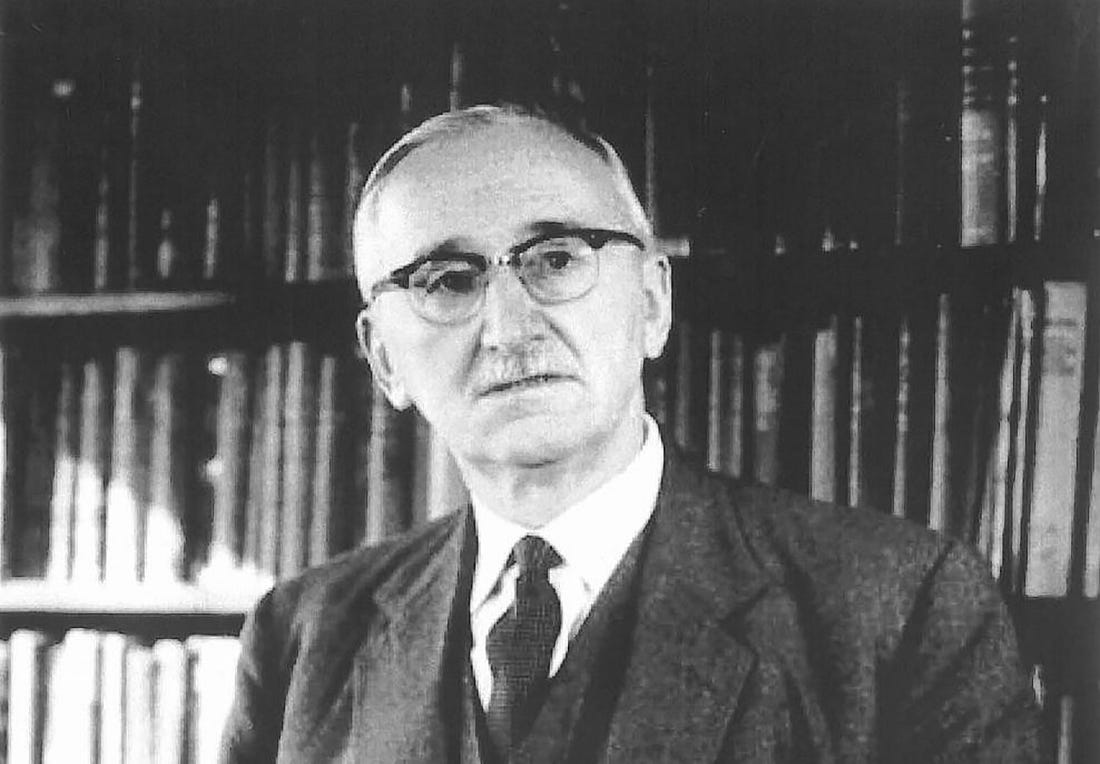
For most of its history, economics was a philosophical discipline, a subject in which arguments were presented in ordinary prose. Adam Smith, no less than his intellectual descendant, F. A. Hayek, wrote paragraphs, not proofs. Before the postwar “mathematical turn,” economists made claims about direction: rent control leads to fewer rentals; more money in the economy means higher prices. For the most part, however, prewar economists did not claim knowledge of magnitudes. Few tried to predict how many apartments would be available for rent given a particular rent cap, or how high prices would rise given a particular expansion of the money supply.
This changed after the war. Many promising economists spent the war years in government, engaged in procurement or military planning and logistics, and developed the habits of engineers in the process. Keynesian economics, difficult to mathematize (and, thus, of limited policy value) in its original form as bequeathed by Keynes, was dumbed down for the purposes of mathematization. Economics textbooks were rewritten with mathematics front and center. Modeling techniques were refined and applied. Perhaps most importantly, institutions emerged or expanded – a newly created Council of Economic Advisers, a more activist Federal Reserve, and a growing federal bureaucracy – to employ thousands of economists who could produce numbers. Hayek and others more philosophically inclined either withdrew in favor of other pursuits or were sidelined from the profession.
Technocratic Economics
What the equations offered was not merely a façade of scientific rigor, but numbers, precise predictions for policy use. A prediction of mere direction cannot be used to fine-tune an economy, but an exact numerical prediction can.
As Hayek showed, an economy functions primarily according to factors that cannot be counted, because they are either not of a countable nature or are known only to people on the spot, e.g., what merchants know about their equipment and vendors, what consumers know about the reputations of local businesses, the billions of small judgments that people make every day given their proximity to relevant circumstances, all beyond the purview of statisticians. To generate a prediction useful for policymaking, all of this is averaged or otherwise assumed away. The result is a number that does not reflect many of the considerations that inform individual economic decisions.
Such model-generated predictions make managing an economy appear easy, a mere matter of pulling the levers of society to make the numbers line up as desired. Goals that any sensible policymaker should reject as beyond their competence look easily realizable. And because policymakers make decisions for the rest of us mortals, their mathematically distorted decisions become our collective destiny.
Once a problem has a modeled policy solution, moreover, disagreement becomes error, if not immoral. Skeptics of such policies are no longer respectable citizens with differing opinions, but menaces to society. We witnessed this during the pandemic, of course. “Follow the science” turned a debatable decision about shutting down society into a technical matter with a definitively correct answer, making anyone who disagreed a “denier.” Something similar, if less obvious, happens with economic policymaking.
The Illiberal Consequences
The knowledge needed to manage the economy from the top down does not exist in a conveniently quantifiable or easily collectable form. The price system, as Hayek famously emphasized, provides the signals that tell us “what to do” in the economy, how to adapt to circumstances that otherwise escape our attention. Interfering with the price system on the basis of figures no one actually possesses doesn’t stabilize the economy at equilibrium, it scrambles the signals we need to adjust to economic change. The disorder that follows often becomes the premise of future interventions.
The technocratic approach exempts questions from democratic deliberation that properly belong to it. What risks we’re prepared to take to maintain our freedoms, how much unemployment is worth a given amount of price inflation – these are not technical questions answerable by a mathematical model, but matters about which citizens in a liberal society can and should disagree, and be left free to trade off as each deems appropriate.
This is not an argument against all applications of mathematics to society. Some of the strongest arguments against economic intervention are mathematical, but they succeed by showing precisely how unlikely effective intervention is, given the staggering scope and scale of the knowledge that policymakers must possess. The problem appears at the last step, the point where criticism is replaced with blind faith, where a theorem known to hold only under particular conditions becomes the basis of a policy applied to a world in which no one has bothered to ask whether these conditions obtain.
Properly done, economics can tell you which direction, but never how far. Anyone claiming precise magnitudes is doing something other than economics. If you can’t spot the difference, reflect again on the COVID years.
Scott Scheall is Associate Professor of Philosophy and Economics at UATX. His Substack is The Problem of Policymaker Ignorance.
*The views expressed in this essay are those of the author and do not necessarily reflect the views of the University of Austin (UATX), its faculty, staff, leadership, or trustees.
 |
Public Events This Fall
All events are on campus in downtown Austin and free to attend.
September 15 · 5:00–7:00 PM: