| | Global bond yields hit their highest rates in decades on inflation concerns, Russia pummels Kyiv, an͏ ͏ ͏ ͏ ͏ ͏ |
| |  | Flagship |  |
| |
|
The World Today |  - Yields highest in decades
- Russia pummels Kyiv
- G20 ‘blindsided’ by Russia
- India’s authoritarian turn
- Venezuela oil exports jump
- Nigerian economic boom
- China solar overtakes coal
- $35B Anthropic-Nvidia deal
- Apple’s CEO steps down
- Tech’s Lake America choice
 A satirical Victorian melodrama by a ‘master of his craft.’ |
|
Bond yields at highest in decades |
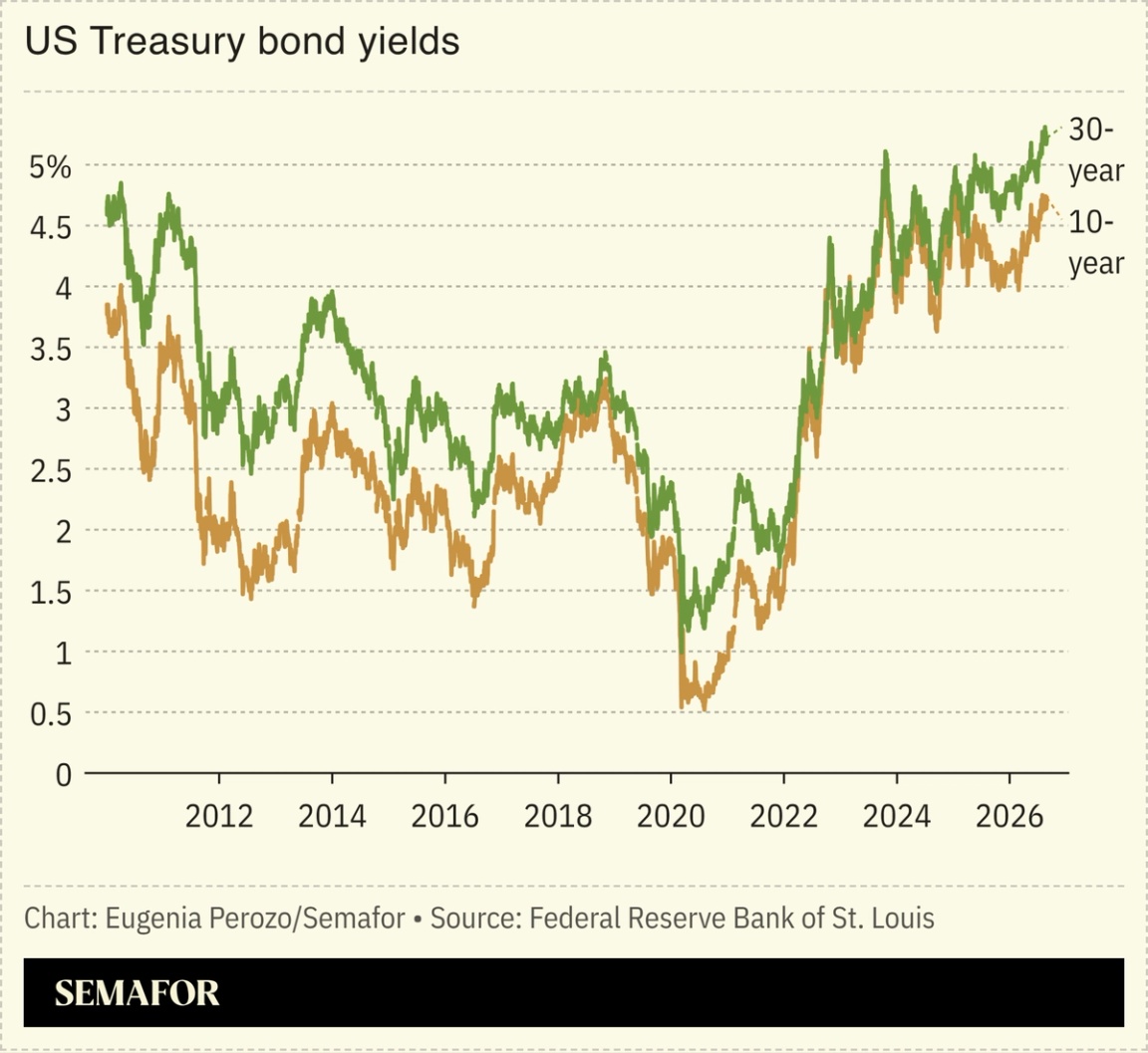 Global bond yields hit their highest levels for decades over concerns about inflation, debt burdens, and central banks raising interest rates. Renewed conflict in the Gulf pushed oil prices up, and the US Federal Reserve chair made hawkish noises last week, while borrowing levels across the rich world look unlikely to abate anytime soon. Japanese 10-year bonds typify the surge, with yields hitting 3% for the first time since 1996. Tokyo is planning a huge economic stimulus and greatly increased defense spending, alongside reduced tax cuts, fueling fears about Japan’s fiscal stability, while inflation has accelerated. But “the bond sell-off has been a global affair,” Deutsche Bank analysts told investors. |
|
Russian drones pummel Kyiv |
 Gleb Garanich/Reuters Gleb Garanich/ReutersRussia is scaling up its assaults on Ukraine, launching non-stop drone strikes across busy areas of Kyiv as it looks to pummel the capital’s residents into submission. The onslaught — typified by a surge in daytime attacks — comes as its battlefield progress stalls and Ukraine strikes deeper into Russian territory. Analysts fear that growing challenges at home, including a slowing economy and rare signs of public discontent, could push Russian President Vladimir Putin into attacking European NATO members, especially those that have supported Ukraine’s military capabilities. “The Russians will expand the war because in their grand strategy,” an expert told The Wall Street Journal’s chief foreign affairs correspondent. “Ukraine is an obstacle and not the prize.” |
|
G20 ‘blindsided’ by Russia |
 Sam Wolfe/Reuters Sam Wolfe/ReutersMeetings and moves worldwide showcased the fracturing of geopolitics in the face of American unpredictability. In the US, G20 finance ministers, “blindsided” by Russia’s attendance, demanded Moscow be excluded from a summit photo, while the host blamed Canada for trade tensions. Elsewhere, Ukraine pushed for air defense support at a meeting of allies — notably not including the US — while Pakistan, Saudi Arabia, and Türkiye institutionalized a recent defense pact and Japan said it would expand military exercises with India as part of Tokyo’s efforts to widen security relationships. Beijing is not standing idly by: Chinese leader Xi Jinping is on a global tour bookended by summits of two China-dominated groups, the Shanghai Cooperation Organization and BRICS. |
|
India deletes 130M voters |
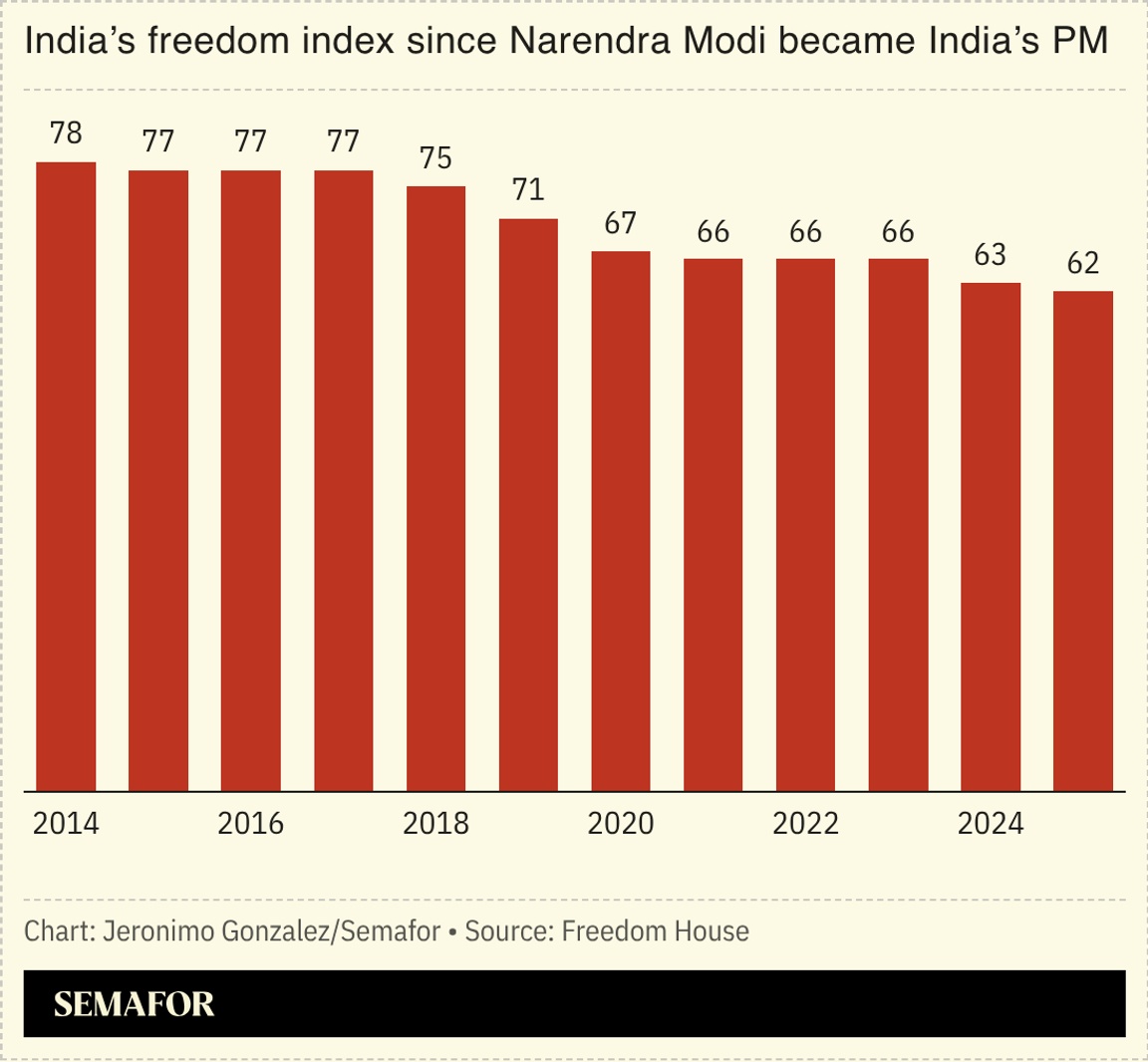 Indian authorities deleted 130 million people from electoral rolls in what opposition figures called a politically motivated move. A third of voters in one region were removed, and millions appear to have been wrongly purged, Indian journalist Krishn Kaushik wrote in the Financial Times, noting that attempts to prove their identity are often rejected. Prime Minister Narendra Modi’s party is suspected of ordering the cull: Its recent first-ever victory in the state of West Bengal followed 2.7 million voters being deleted. India has become increasingly authoritarian under Modi — an autobiography of former opposition leader Sonia Gandhi was dropped, allegedly due to her criticism of Modi — but it remains economically vibrant. Annualized growth reached 7.8% in the second quarter. |
|
Venezuela oil exports jump |
 Gaby Oraa/Reuters Gaby Oraa/ReutersVenezuela’s August crude exports jumped almost 30% from the previous month, as the Trump administration prepares to take greater control of the country’s oil industry. Washington recently took a stake in a firm — run by a former Venezuelan government contractor who faces widespread corruption accusations — in an effort to tap the world’s largest oil reserves and tame fuel prices at home. Though critics say the deal risks entrenching Caracas’ authoritarian rulers and raises uncertainties for other investors in the South American nation, Washington has defended it as necessary to expand US crude reserves and refill the country’s strategic petroleum stocks, which have fallen to record lows as the Middle East conflict draws out. |
|
Nigerian growth at 5-year peak |
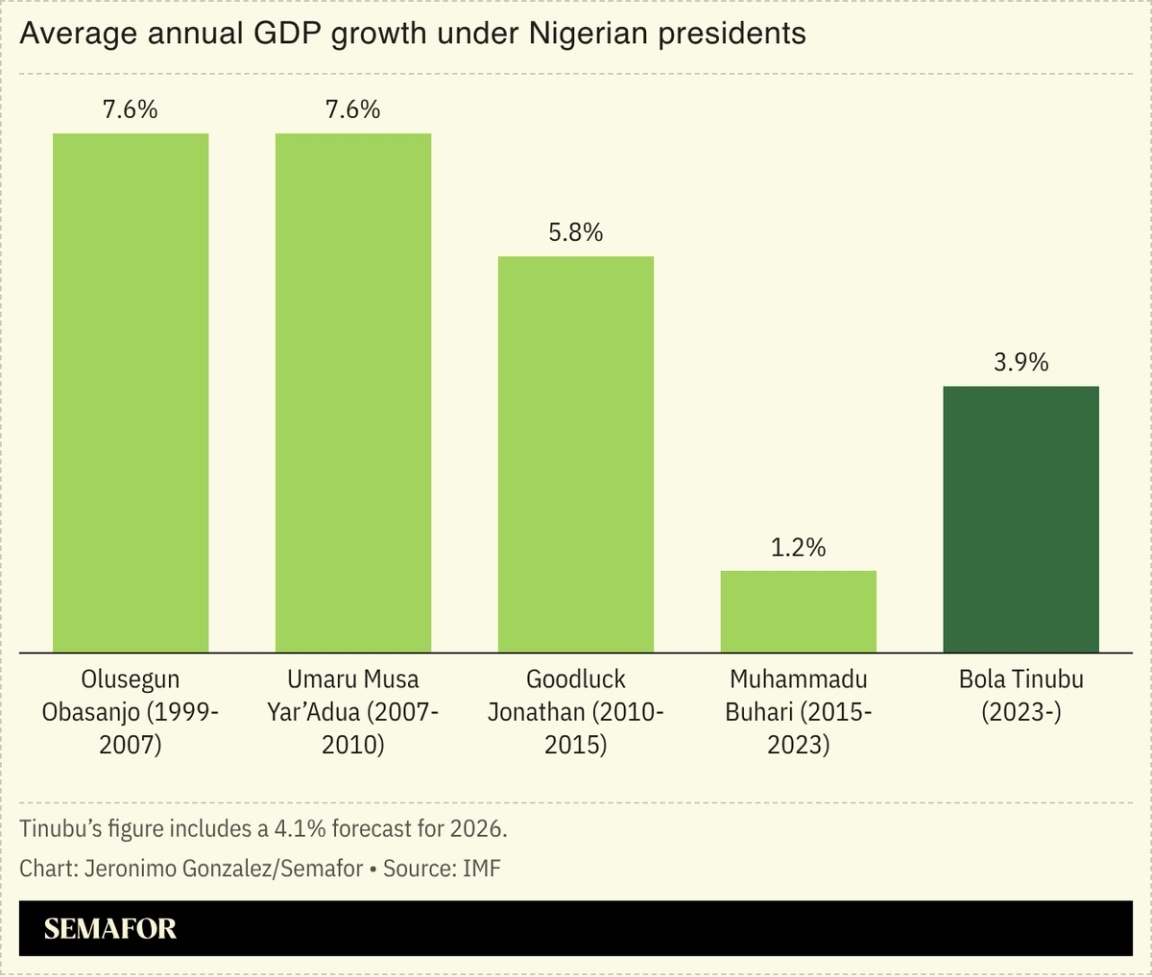 Nigeria’s economy expanded at the fastest pace in five years, welcome news for President Bola Tinubu as he vies for reelection. Though growth remains below official targets, Tinubu has nonetheless overseen a remarkable turnaround of the continent’s third-largest economy since coming to office in 2023: His removal of a costly fuel subsidy has helped reduce a yawning budget deficit, net direct investment inflows have improved significantly, and the oil industry is booming. However, insecurity remains a notable weak point, testing his reelection odds ahead of the vote in January. Despite building security ties with the US, armed conflict and kidnappings remain rampant in much of Nigeria: The three months to June were the most violent in decades, Semafor reported. |
|
Solar is China’s top power source |
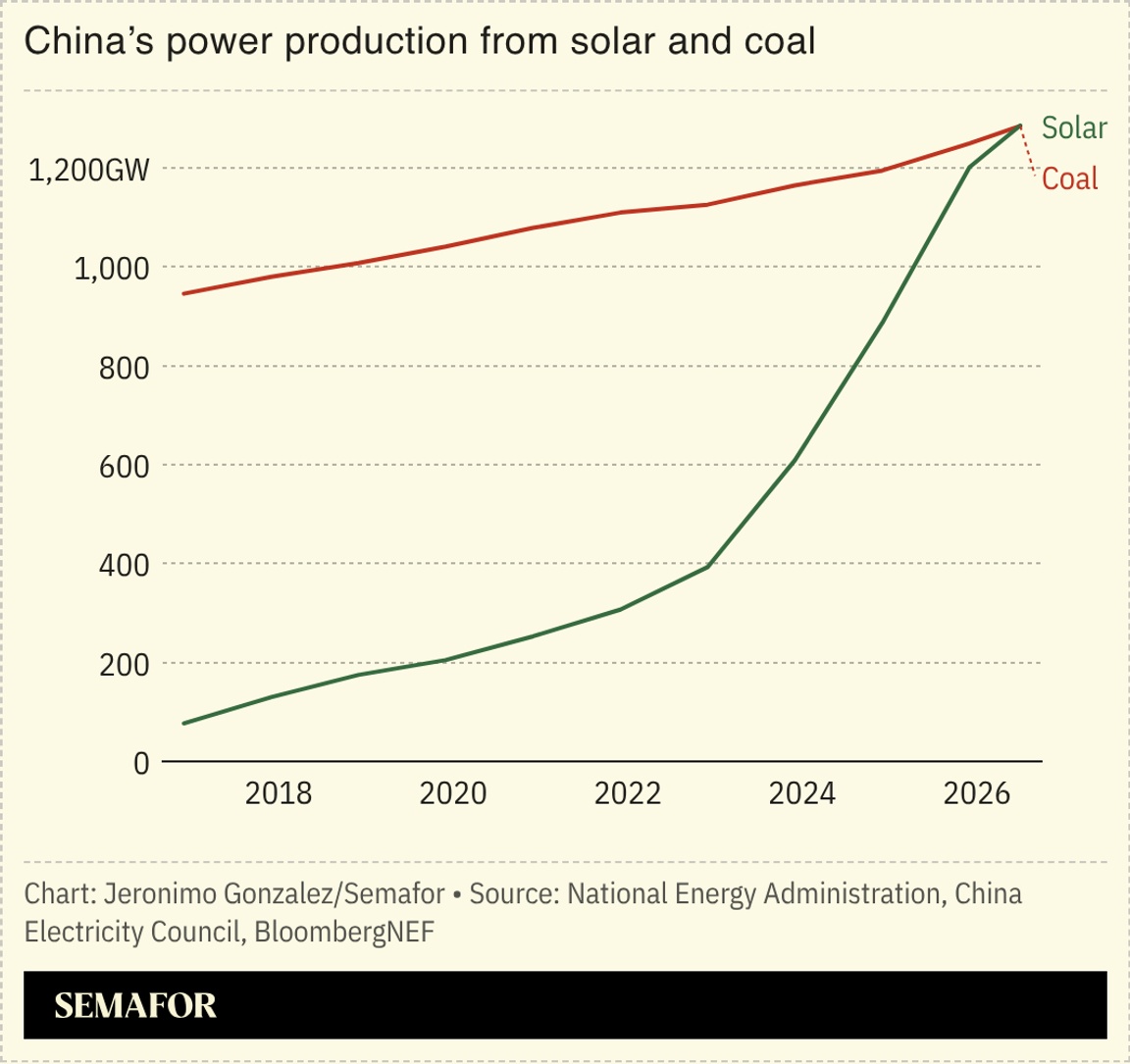 Solar surpassed coal as China’s top source of power for the first time ever, underscoring the country’s remarkable rollout of green energy as it looks to contain the impact of the Iran war. Solar accounted for almost a third of total installed capacity at the end of July, up from virtually nothing just a decade ago. The world’s largest oil importer has ploughed into renewables at an unprecedented scale, expanding overall power generation and boosting energy-intensive industries like AI. The Iran war has proved that Beijing’s long-term energy strategy was prescient, an expert argued: “China’s dependence on imported oil remains substantial, but the geopolitics of energy are shifting,” a researcher at the Oxford Institute for Energy Studies wrote. |
|
Anthropic’s $35B cloud deal |
|
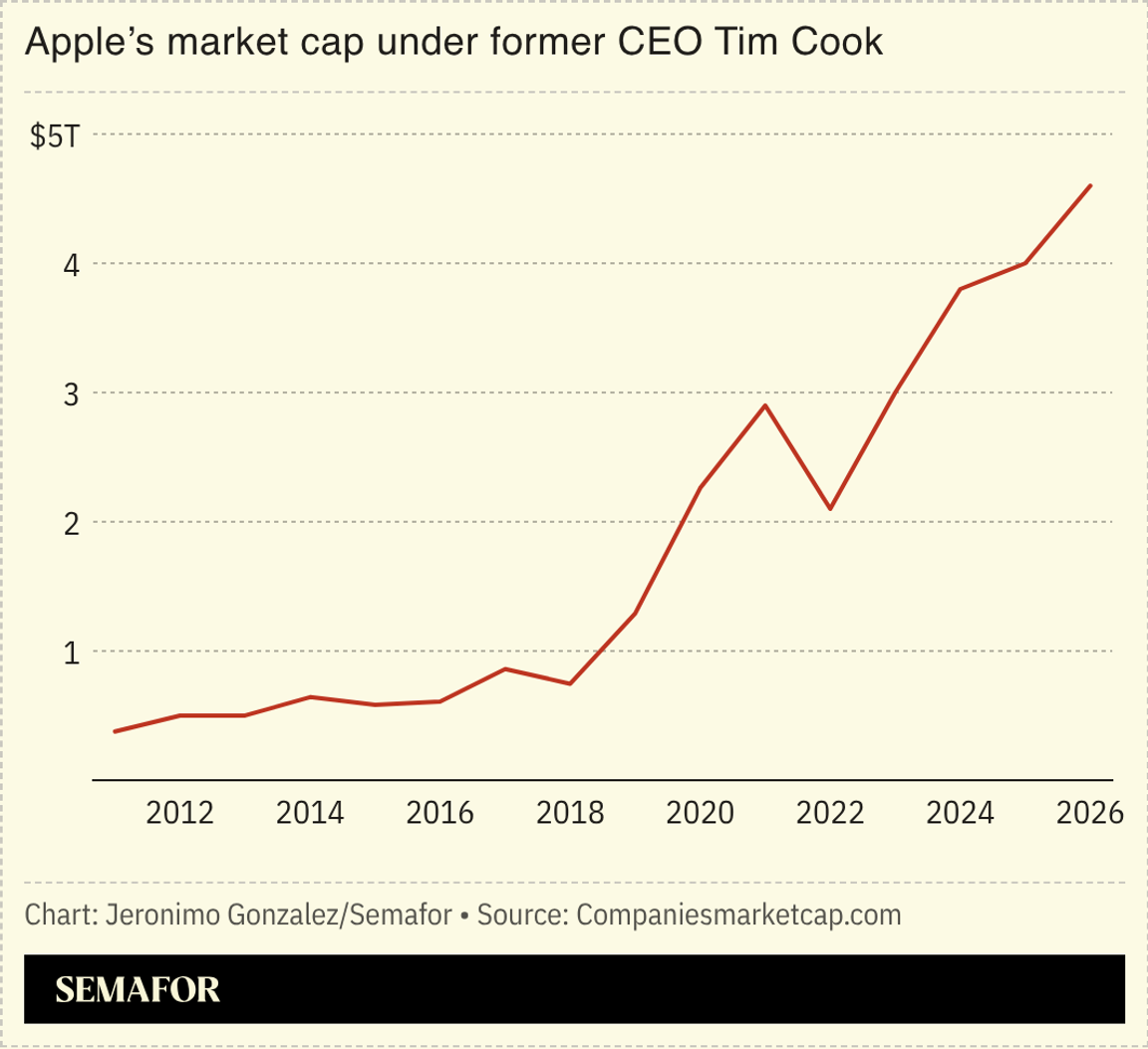 Tim Cook steps down today after 15 years as Apple’s CEO in which he oversaw the tech giant becoming one of the world’s most valuable companies. Since he replaced the late Steve Jobs, Apple has shipped 3.1 billion iPhones and its stock price has risen 2,275%. But he has tied the company closely to China, leaving it vulnerable to geopolitical tensions, the Financial Times noted. His successor, John Ternus, has big shoes to fill and a big job to do, The Economist said: Ternus must “tread carefully between the Trump administration and China” while also driving new product development, given that Apple “has not introduced a truly innovative device in years” and “has struggled to adapt to the artificial-intelligence era.” |
|
|


