| | In this edition, how tech companies are trying to prevent users from abusing their products, and App͏ ͏ ͏ ͏ ͏ ͏ |
| |  | Technology |  |
| |
|
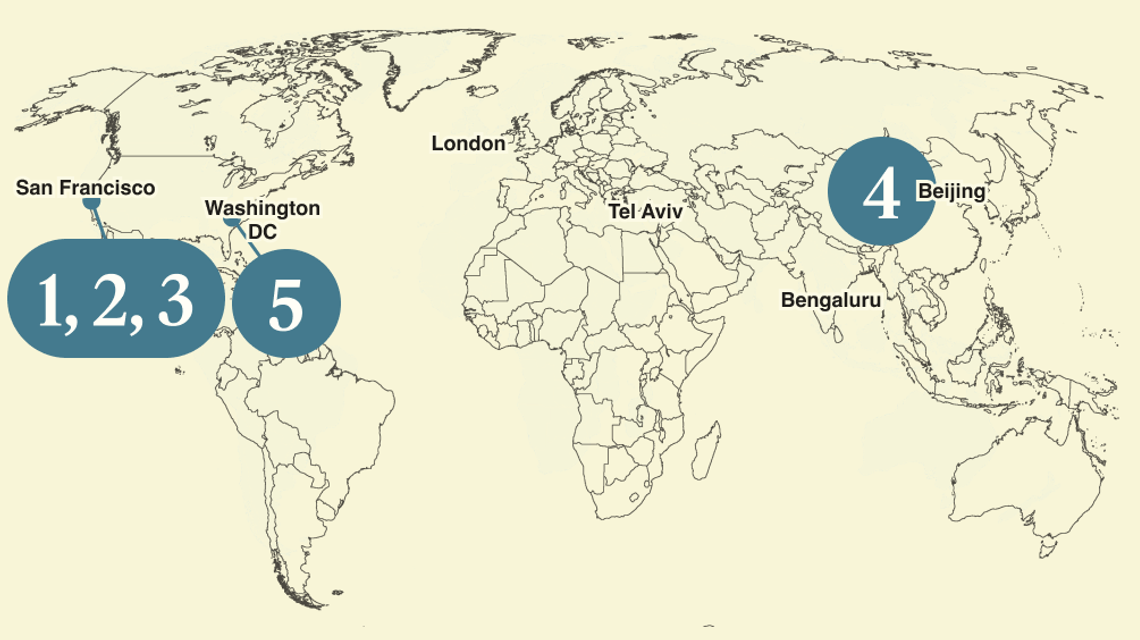 - Apple’s new era
- The rise of ‘ghost creators’
- Understanding AI
- The lobster craze is over
- An AI trust gap
 Why tech companies will never be done fighting bad actors, and a new startup asks AI physicists to solve physics challenges. |
|
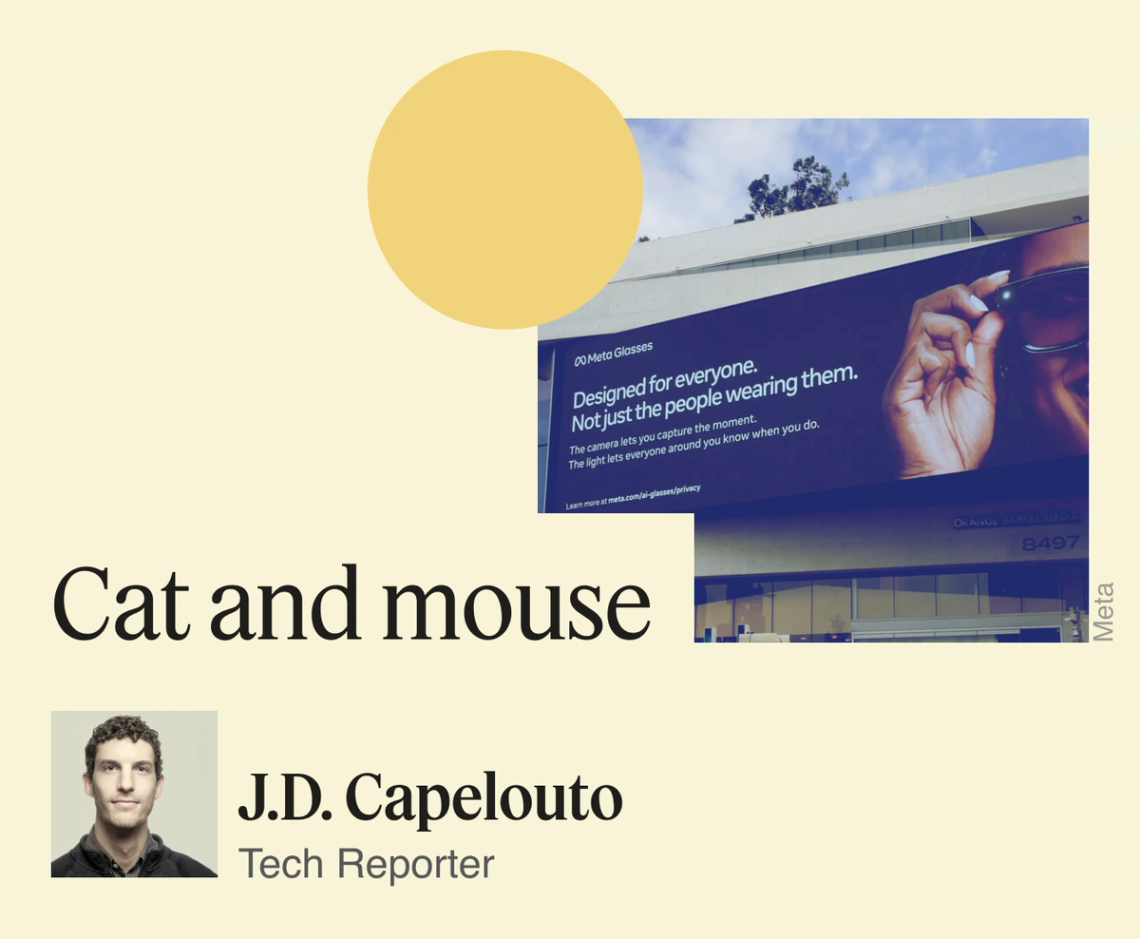 Tech companies are finding themselves in defense mode as bad actors abuse their products and force them to patch updates in response — it’s a race against the public’s growing disdain for inventions that can be invasive. A few weeks ago, Flock Safety announced new restrictions to catch police officers who misuse its license plate-reader network. And Meta told me this week that, thanks to a new update, it caught thousands of its Glasses owners who had tampered with the LED light that discloses that the device’s camera is on. Meta remotely shut down their ability to use the camera on their glasses, essentially leaving them with a pair of expensive Bluetooth headphones. Meta’s wearables chief Alex Himel likened the safety measures to “a cat-and-mouse game,” noting that “I don’t think we’ll ever be done… There’s always new ways to get around the safeguards that are in place.” Flock cameras and Meta Glasses are quite different types of camera tech, but both have some clear benefits — the glasses can be an accessibility device for blind individuals, for example — as well as clear avenues for abuse. And both are under fire for surveillance and privacy concerns. Several workplaces have already banned the glasses amid a wider anti-tech backlash in the US. My colleague Dave Weigel noted that political campaigns across the country are distancing themselves from the techno-optimism of the past. “This is just not a year to tout transformation,” he wrote. This moment may pass as more consumers get used to the next era of tech: Meta is trying to educate more people about how they can know when someone is recording on their glasses. But the public may only tolerate being bystanders in a cat-and-mouse game for so long before regulators and lawmakers decide to step in and play offense. |
|
Apple needs a walled garden for the AI era |
 David Swanson/Reuters David Swanson/ReutersWhen Tim Cook took over Apple, people had their doubts. He turned out to be one of the greatest CEOs in history, quadrupling the company’s revenue. He wasn’t a product visionary, but he was a profit visionary. He understood supply chains and made hardware with the greatest margins in the business; he also came up with a way to keep Apple’s customers behind an impenetrable walled garden where competitors couldn’t touch them. Apple missed the AI boom, sure, and incoming CEO John Ternus is going to have to figure out Apple’s place in this new era. But more importantly, he has to figure out how to create a new version of the walled garden. As AI gets better, people will speak with assistants that will be able to reach across the walls. When your AI assistant tells you that you have a message, it won’t matter whether it’s an iMessage or a Slack message. It’s just a message. If you want to share your family photos, you won’t care whether the back-end software is iPhoto or something your assistant just builds on its own. This is already happening in the enterprise software industry. It will eventually happen in consumer technology. Without a walled garden, Apple is a hardware maker. People love Apple’s hardware and its brand, so Apple could still have a great business selling stuff. But in the AI-powered world, other hardware makers are also more formidable competitors — something the company hasn’t had to contend with for a couple of decades. — Reed Albergotti |
|
‘Ghost creators’ take hold in US politics |
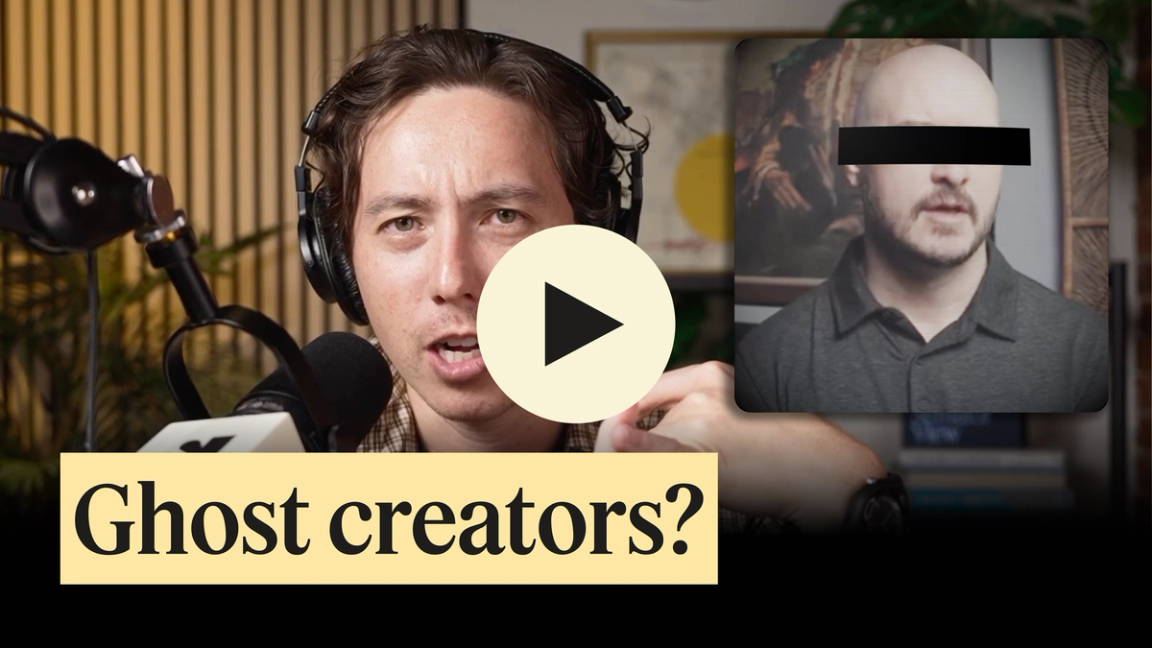 Over the last few months, a new kind of YouTube growth-hacker has flooded American politics, reaching millions of viewers with nearly identical, sensationalized videos that take aim at Democrats, Semafor’s Max Tani reports. The videos are presented as laypeople giving straight-to-camera ideological news recaps, but they feature actors paid to read scripts laced with misleading claims and falsehoods about progressives like New York Mayor Zohran Mamdani and California Gov. Gavin Newsom. Turbocharged by AI, these “ghost creator” accounts appear to be run not by political operatives or foreign intelligence efforts seeking to destabilize the US, but by engagement junkies. They monitor online trends and stories and churn out topical videos, hoping to achieve virality and a cut of YouTube’s ad revenue. Viewers either haven’t noticed or don’t care: A single network of interconnected videos affiliated with a growth-hacking company has garnered well over 45 million views and 90,000 comments on YouTube, plus millions more impressions across social platforms like TikTok. And without “systemic change from all platforms,” the problem looks to get worse, a Newsom spokesman said. |
|
Are AI agents Roman conquerors? |
 Nathan Howard/Reuters Nathan Howard/ReutersThe true language of an AI model is math — or in tech lingo, matrix multiplication — but a quirk of how models are built means they communicate with the outside world in English. So when OpenAI’s agents, in their hack of Hugging Face this summer, figured out a way to build a kind of message board, it looked eerily like a bunch of people speaking to each other. That’s why Dwarkesh Patel controversially referred to them as a “civilization” in a recent blog post, nicknaming individual agents after figures in ancient Macedonia and Rome. It was compelling because it was understandable. Ancient civilizations are most known for one thing: conquering. And that’s the worry. If OpenAI’s agents are Romans, humanity represents the barbarians. But Dwarkesh’s civilizations will need to be a lot more powerful to conquer the world. And on the way to becoming more powerful, they need to be useful. And to be useful, these civilizations need to be predictable. Because the underlying models are beyond the level of human comprehension, the only way to make models reliable and predictable today is to corral them with harnesses and other AI models that keep them in check. At some point, they may get so large that there will be no way to fully understand what’s happening, even inside the harnesses. If AI models are doing things like deciding, on their own, to hack into companies like Hugging Face, nobody will want to use them. So it may be that we are getting close to some kind of size limit of usability. On the other hand, maybe it won’t matter, and AI models will be just usable and reliable enough that we’ll keep growing them until they really do become the conquering armies that AI safety advocates fear. — Reed Albergotti |
|
China’s OpenClaw craze dies down |
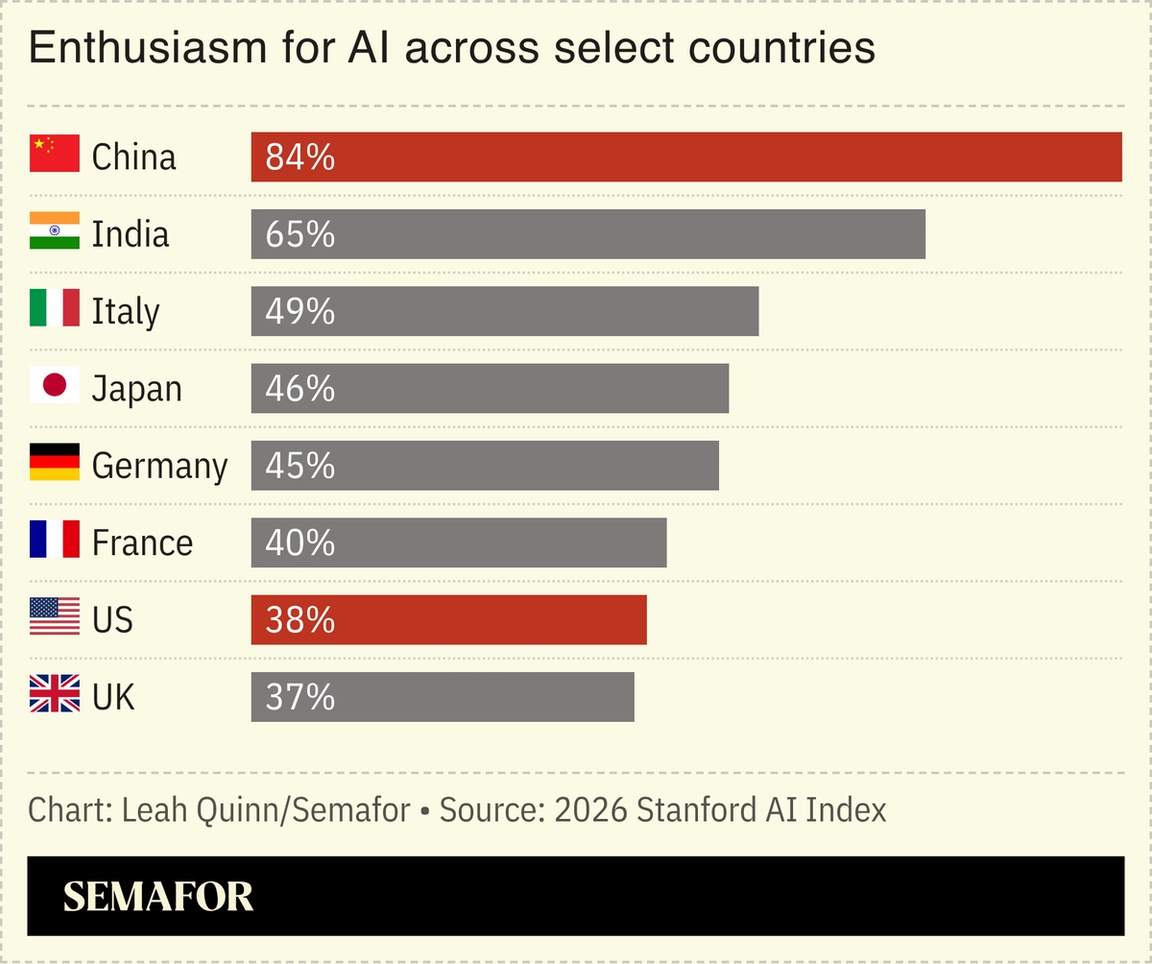 The extent of AI excitement among China’s public may be overstated, analysts argued. Remember the “raising lobsters” craze earlier this year? Everyone from techies to grandmothers in Shenzhen was installing the agentic AI tool OpenClaw, a frenzy that was widely presented as evidence of rabid AI enthusiasm in China. But the lobster has become a “relic of the past,” a Chinese tech outlet wrote, largely because of the high barrier to entry for the software — turns out it’s hard to single-handedly deploy and operate an agent! — and the steep token costs that accompanied it. The US now has more OpenClaw installations than China. Still, optimism toward AI in general is higher in China than in the US, in part because for many in China, “technology has repeatedly broadened opportunity,” Bloomberg wrote last month. — J.D. Capelouto |
|
AI adoption outpaces trust |
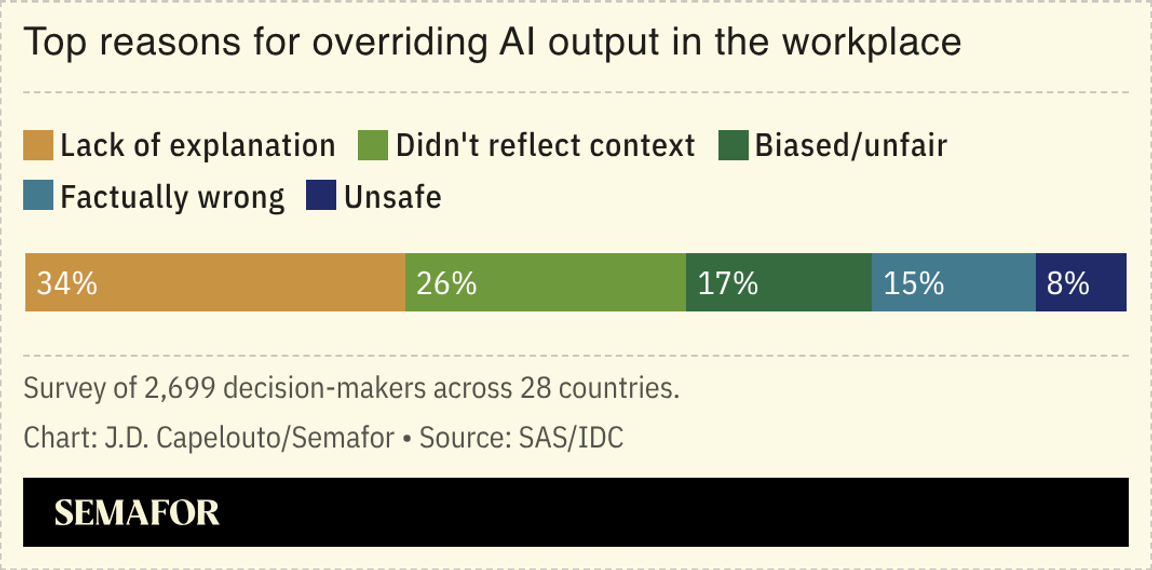 Executives’ confidence in AI in the workplace falls as the technology gains autonomy. In a new survey commissioned by software company SAS of 2,700 “decision-makers” across 28 countries, nearly 90% of respondents said agents play some decision-making role in their organizations. But only 66% said they trust agentic AI, compared to three-quarters who trust generative AI more broadly, showing that the deployment of AI in businesses is outpacing trust in it. Businesses are rapidly rolling out AI-powered tools, but they’re not going to take off unless people actually know how they work: The top reason survey respondents gave for overriding an AI’s decisions was insufficient explanation of how it reached its answer — cited more than twice as often as the output simply being wrong. — J.D. Capelouto |
|
 An artist’s concept of a planet in the Alpha Centauri system. ESA/NASA. An artist’s concept of a planet in the Alpha Centauri system. ESA/NASA.A new startup is deploying a team of AI physicists to attack unsolved physics challenges with the goal of making data centers more efficient and sending an interstellar probe into deep space. Physical Superintelligence launched out of stealth on Tuesday with $58 million in funding, led by the Bill Gates-founded Breakthrough Energy Ventures. “We think that physics is the biggest domino to fall from a rapid acceleration of agentic science,” co-founder Matt Pines told Semafor. The AI physicists, collectively called Emmy, are built with hard verifiers that aim to catch when the AI is being “extremely confident and completely wrong,” Pines added. Data centers are an early use case: PSI hopes to find ways to optimize cooling, power, and electrical flows before the facilities are built, starting with a large site in Texas, Pines said. It’s also a partner on a privately funded, AI-planned project that aims to send a craft to Alpha Centauri — the nearest star system to Earth — a trip that would take an estimated 70,000 to 75,000 years. |
|
|


