|
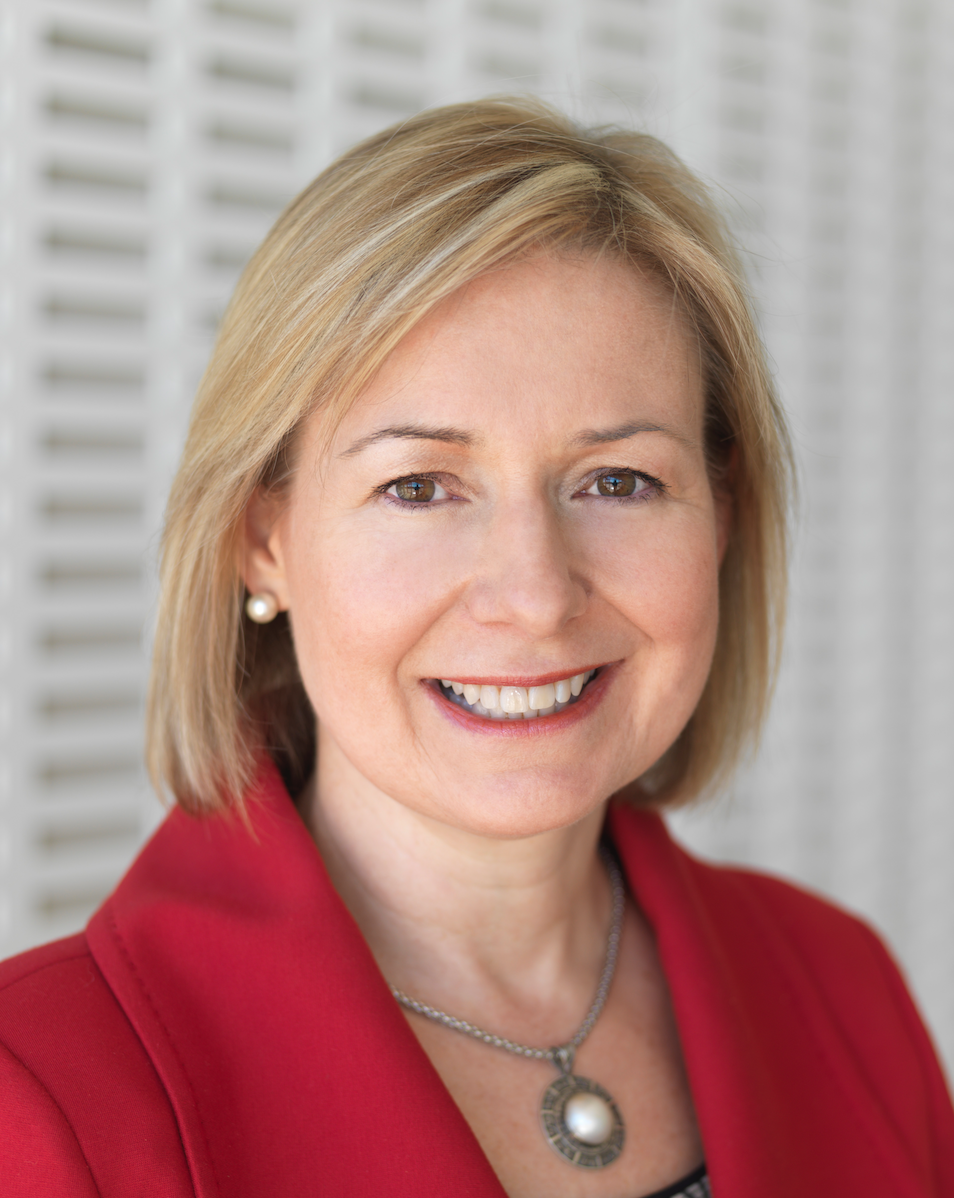
By Stephanie Rasmuson For over three decades, Rosalind Picard has worked at the Massachusetts Institute of Technology to better understand the relationship between technology and human behavior. As a professor, researcher, inventor, and entrepreneur, Picard pioneered the field of “affective computing.” It explores the role of emotion in intelligence and human-computer interaction. Her work has since contributed to advances in artificial intelligence, wearable technology, and health care, including technologies designed to assist people with autism and detect potentially dangerous seizures. Yet, her career didn't start with plans to become an inventor, entrepreneur – or even a scientist. "I actually wasn't even interested in science earlier in my life," Picard said. Adopted as an infant in Boston, Picard grew up alongside her brother in a loving family that would have a lasting influence on her life. Her father was a Navy pilot who studied engineering at the U.S. Naval Academy, while her mother was a teacher who worked with children with special needs. "I knew from the very beginning that I was adopted. My brother and I knew that we were loved and picked out special," Picard said. Looking back, Picard sees different pieces of both parents in the person she became. Her father encouraged her curiosity about how things worked, even teaching her practical skills such as tuning up a car. Her mother emphasized hospitality and presentation while gently pushing her naturally shy daughter into situations that forced her outside her comfort zone. "I was the girl who flunked show and tell," Picard said. "I refused to get up there and talk." Faith was not part of the family's life. Picard described herself as "a proud atheist as a child," a striking contrast to the Christian faith that would eventually become central to the way she approaches her work and life. For undergrad, Picard enrolled at the Georgia Institute of Technology, where she studied electrical engineering. "It was described as the hardest major, and I was attracted to things that were hard," she said. She graduated with highest honors in 1984. Picard became fascinated with the work being done at AT&T Bell Laboratories, where several professors she admired had worked. "I took my lowest-paying offer, which was Bell Labs, because I just wanted to be there," Picard said. She later earned master's and doctoral degrees in electrical engineering and computer science from MIT and joined the MIT Media Lab faculty in 1991. There, Picard established herself through highly technical research before becoming interested in a subject she feared could jeopardize her professional reputation: emotion. As she studied human intelligence, Picard became convinced that emotion played an important role in attention, learning, decision-making, and recognizing what matters. Computers could process information, but they lacked much of the emotional understanding that shapes human interaction. At the time, pursuing emotion within engineering felt risky due to being "branded the emotion woman.” A conversation with Jerome Wiesner, the former president of MIT and a science adviser to President John F. Kennedy, helped change her mind. His advice was simple: "you must take risks." For Picard, it came at precisely the right moment, so she took the risk. Her 1997 book, Affective Computing, helped establish the field of the same name, which has since grown into an international area of research with its own scientific journal, conference, and professional society. Some of Picard's most meaningful work developed not from studying technology, but from listening to the people she hoped it could serve. While working with people on the autism spectrum, Picard initially focused on technologies that could help users interpret facial expressions, voices, and other emotional cues. She soon realized the researchers themselves had more to learn. "They became my best teachers," Picard said. One woman offered an important correction, saying, “You're missing my emotion.” The observation changed Picard's perspective. Rather than asking only how technology could help people with autism understand other people's emotions, she began asking how technology might help others better understand them. That work contributed to the development of wearable sensors capable of measuring physiological signals including pulse and electrodermal activity. The devices let researchers move beyond the laboratory and gather information during everyday life, when stress and other physiological responses could be much greater. Then, the research produced an unexpected discovery: the sensors captured a significant physiological response associated with a seizure. That discovery led Picard toward work on epilepsy and ultimately contributed to Empatica, the wearable health-technology company she co-founded. In 2018, the U.S. Food and Drug Administration cleared Empatica's Embrace wearable to monitor certain convulsive seizures and alert caregivers. For Picard, the potential to reach someone experiencing a dangerous seizure gave the technology a purpose far beyond data collection. "You got to get there fast," she said. Picard had already entered entrepreneurship through Affectiva, which she co-founded in 2009 after her MIT laboratory became inundated with requests for its emotion-recognition technology. "You can't operate a company from an academic lab," Picard said. Affectiva helped move research developed at MIT into commercial applications and was later acquired by Smart Eye in 2021. The transition from professor to entrepreneur brought an entirely different education. "I feel like I should have earned a couple business degrees on top of the engineering and science degrees," Picard joked. As Picard's professional life evolved, so did her personal worldview. Picard said faith strongly influences the problems she chooses to pursue. She described regularly reading Scripture and asking God for wisdom about where to direct her attention. "It's definitely been a strong shaper of the problems I've chosen to work on," she said. Again and again, Picard said, she has felt drawn toward people who are vulnerable or overlooked — from people with autism and epilepsy to those facing depression and other mental-health challenges. That understanding of human worth has become especially important to Picard as artificial intelligence grows increasingly capable. "All people have equal worth," Picard said. "You all have inestimable worth." For Picard, a person's value is not determined by intelligence, productivity, physical ability, or another function a machine might one day imitate or outperform. Picard has also carried those convictions into public conversations about faith, reason, science, and human identity. For many years, she has been a featured speaker with The Veritas Forum, an organization that brings scholars and students together on university campuses to examine life's biggest questions from differing intellectual and religious perspectives. At Veritas events, Picard has spoken openly as both an MIT scientist and a Christian, engaging scholars with different worldviews on questions ranging from artificial intelligence and human uniqueness to whether scientific inquiry and Christian belief can coexist. Her participation reflects a theme that runs through her career: rigorous intellectual inquiry need not exclude questions of faith, meaning, or human worth. That commitment is also visible in Picard's family life. Picard and her husband, Len, met at MIT while she was working on her master's thesis and married in 1988. Len, who also holds an MIT doctorate, has spent his career in technology, including executive and engineering leadership roles connected with publicly traded technology companies such as Cognex and Akamai. He has also served as Secretary of the Board of Massachusetts Family Institute. It's a nonpartisan, faith-based public policy organization that works on issues involving family, life, religious liberty, parental rights, and education in Massachusetts. Together, the Picards raised three sons in Massachusetts. All three attended and graduated from Boston Trinity Academy, a Christian college-preparatory school in Boston serving students in grades 6 through 12. Two of their sons later studied at MIT, and one of them now teaches at Boston Trinity. Picard has served on Boston Trinity's Board of Trustees. Picard said she became a strong supporter of Boston Trinity after watching the school educate three sons with very different personalities, strengths, and needs. "I'm just a huge fan of BTA," Picard said. "I've been so impressed with their high academic standards. I've been impressed with how they truly see each child and get to know them." Despite the demands of an international academic career, she deliberately protected important family dates on her calendar and turned down professional opportunities when they conflicted. "My family is more important," Picard said. Today, Picard is increasingly focused on the next generation and the effects of rapidly developing artificial intelligence. She sees enormous promise in AI, particularly when it's used to improve health and save lives. But she is concerned that some technologies, especially those aimed at young people, are being deployed without enough consideration for their consequences. "I call it AI malpractice," Picard said of some applications she considers irresponsible. She is now interested in AI education and resilience training, as well as efforts to support young people in the child-welfare system; work with particular meaning for Picard as a former foster youth. "I never set out to be an inventor or an entrepreneur or anything," Picard said. "I just set out to learn and try to understand and help people where I was guided to do that."
|