| | In this edition, Deutsche Bank is back from the wilderness, and Indonesia joins the sovereign wealth͏ ͏ ͏ ͏ ͏ ͏ |
| |  | | | Global Capital Edition |
| |
|
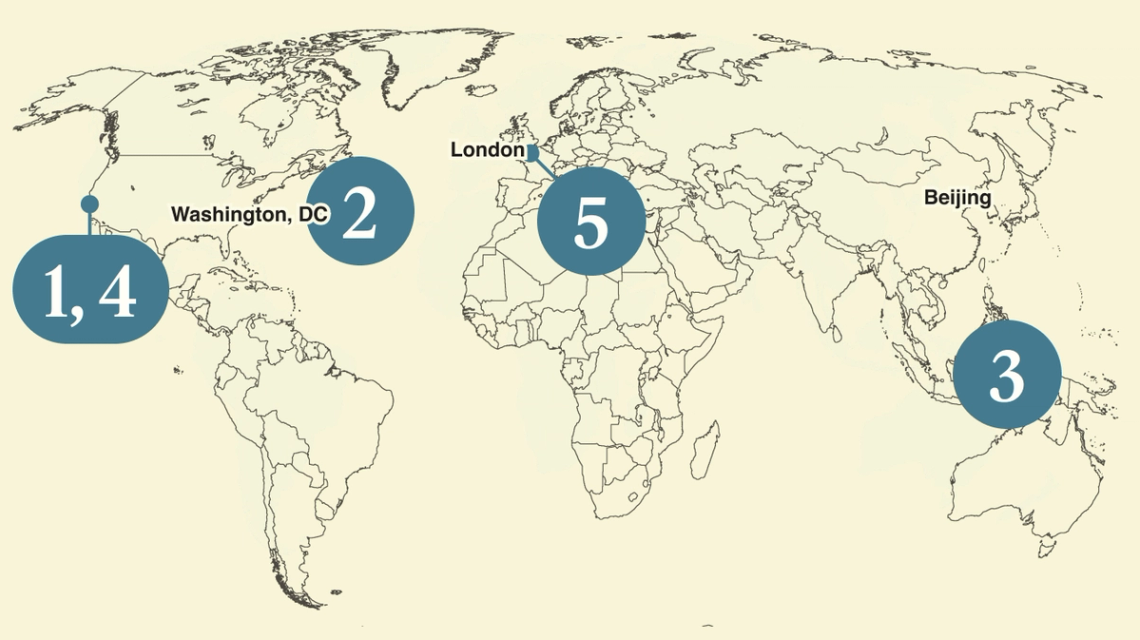 - AI freakout
- Bessent vs. the media
- A smarter SWF?
- Tech’s Hollywood treatment
- The teachings in a tapestry
|
|
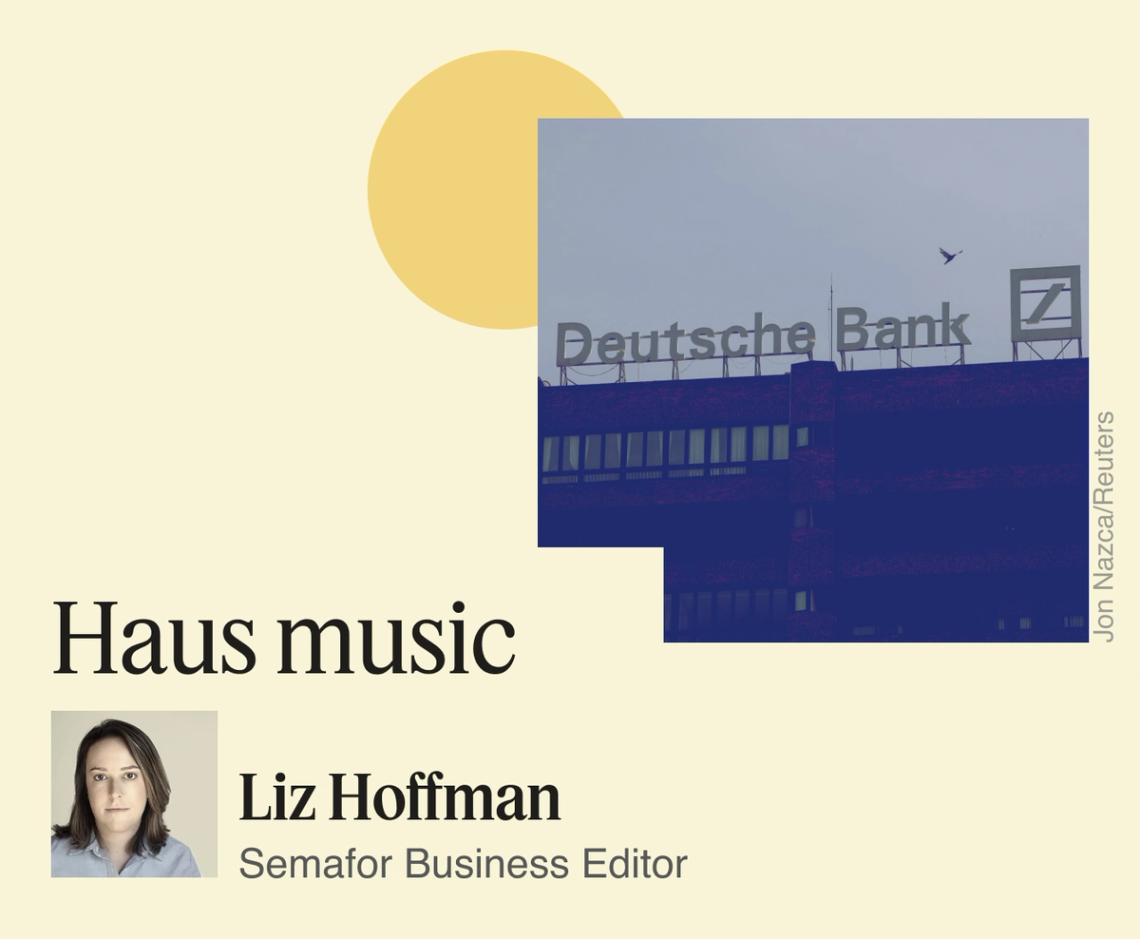 Welcome back from the wilderness, Deutsche Bank. The numbers tell a remarkable, if incomplete, turnaround story for the bank, which a decade ago looked likely to be sold after stepping on a series of rakes. But the clearest sign of its comeback: Its name is nontoxic enough to be restored to its $1.4 trillion asset-management arm, which eight years ago rebranded as DWS, hoping everyone would forget that it remained controlled by the then-undisputed basket case of global finance. Corporate brand toxicity is a moving target — even the Arthur Andersen name found new life after the Enron scandal — but Deutsche Bank’s recovery is a credit to CEO Christian Sewing, who has rebooted the company by narrowing its ambitions. The bank’s repeated efforts, going back to the 1990s, to crack Wall Street’s top tier didn’t work, and so Sewing has refocused Germany’s flagship lender on Germany itself. That pivot carries its own risks as Europe’s biggest economy struggles, but seems to be working for now: Deutsche Bank posted record first-half profits. The question ahead is whether its stability is a springboard to create a European banking champion. Even if continental regulators are serious about encouraging cross-border bank M&A, and even if parochial country leaders get on board, Deutsche Bank has never been a model acquirer. Andrea Orcel at UniCredit is eager to play the part and has a head start. |
|
AI fears break containment |
 Dado Ruvic/Hamad I Mohammed/Illustration/Reuters Dado Ruvic/Hamad I Mohammed/Illustration/ReutersA whirlwind 48 hours in AI leaves us here: Top executives agreed to open up their frontier models to outside inspectors, OpenAI said it wouldn’t IPO this year, President Donald Trump shrugged off their calls for a slowdown in development, and stock futures fell on fears that the breakneck spending that has propped up share prices might ease. The House is also poised to take up a bill this week overseeing the data center buildout, while Democratic lawmakers are circulating their own letter calling on the White House to lead a global effort to set AI rules ahead of an upcoming summit with China’s Xi Jinping. Beijing, for its part, warned that AI advancements threatened China’s political, economic, and social stability, but dismissed US calls to slow the technology’s development. The weekend brought a rare display of unity between Anthropic’s Dario Amodei, OpenAI’s Sam Altman, and xAI’s Elon Musk in agreeing that AI models are getting too capable, too quickly, and with too little human oversight. That alignment sparked concerns from, among others, former White House AI czar David Sacks over the emergence of an AI OPEC — a cartel that controls the rate of production and pricing of a key economic input. Semafor’s Reed Albergotti has a calmer read on the hand-wringing. What to watch today: Shares of companies that supply the AI buildout, like Asian chip and memory makers. |
|
 Sam Wolfe/Reuters Sam Wolfe/ReutersSemafor’s Max Tani goes inside the beef between Treasury Secretary Scott Bessent and the media. Bessent called Bloomberg News Editor-in-Chief John Micklethwait last year furious about a coming story over Bessent’s personal mortgage documentation. Bloomberg didn’t back down, but neither did Bessent, who stopped appearing on the news giant’s TV channel. The deteriorating relationship between the powerful Cabinet secretary and the press corps that covers him comes at a precarious time, as bond vigilantes stir and Bessent’s interventions in the credit markets yield few tangible results. Over the past several weeks, Bessent has railed against Financial Times reporting as “tabloid trash for market participants.” He has called out “Bloomberg terminal bros” and WSJ’s chief economic correspondent, and iced out journalists he and his team feel have been unfair from covering the G20 event. A Treasury spokesperson said Bessent “has consistently made himself available to reporters across the political spectrum and has conducted hundreds of media engagements.” |
|
Joining the sovereign wealth club |
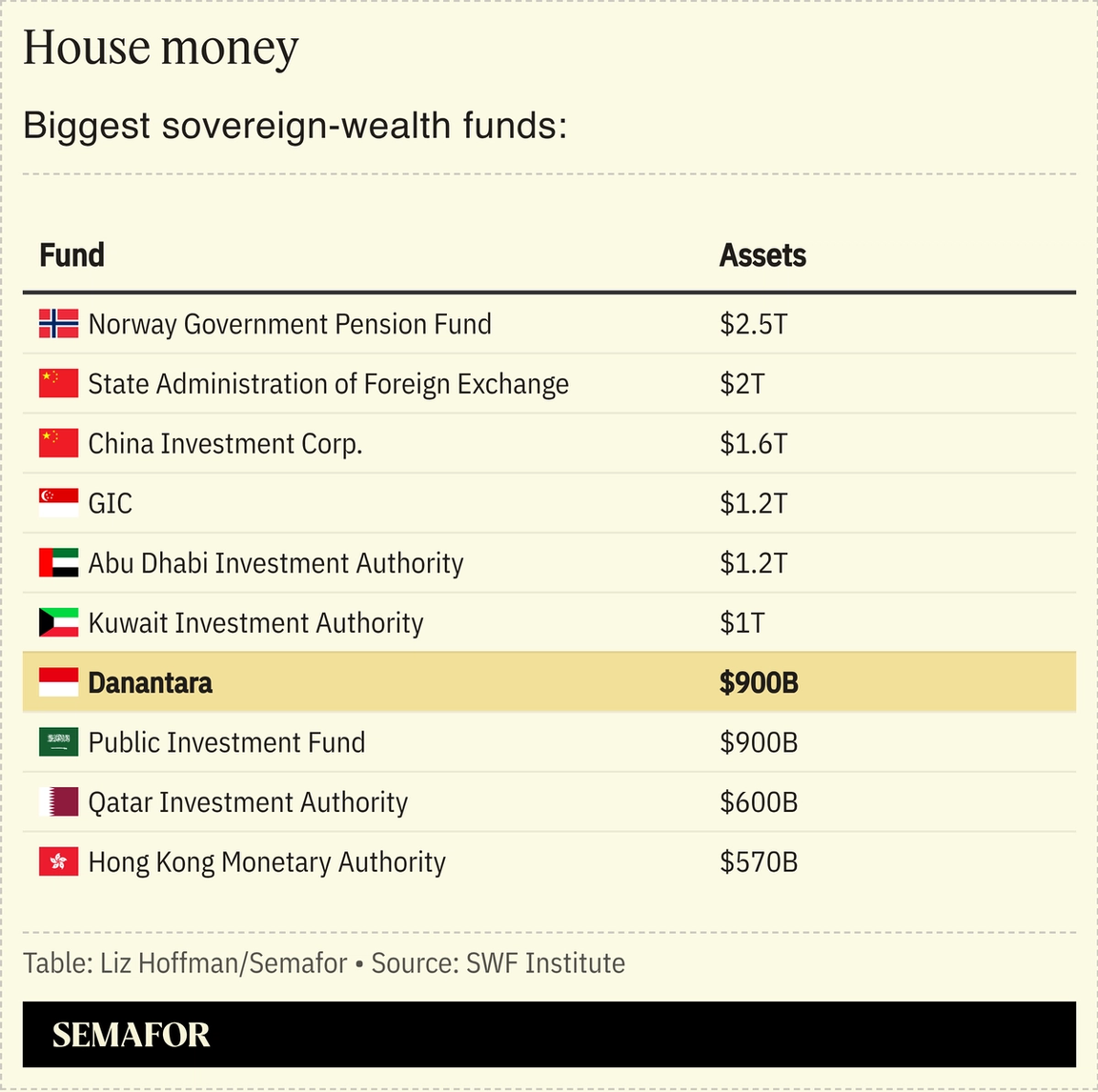 Middle Eastern governments spent decades writing checks to Wall Street before they started resetting the balance of power: If you want our money, help build our economy. One of the newest members of the sovereign-wealth fund club wants to cut to the chase. Indonesia’s Danantara launched in 2025 with a mandate to rationalize inefficient and unprofitable state-owned banks, telecoms, and industrial giants into a modern private sector. It’s doing global deals and sending money to Wall Street firms, but driving a harder bargain from the start and aiming to compress the Gulf’s long expensive education in how not to be seen as dumb money. “I’m trying to learn from all the other sovereigns,” chief investment officer Pandu Sjahrir said in an interview with Semafor. Danantara is embedding its own staff with the Wall Street firms it hires. A recent deal with meatpacker JBS swaps a stake in the company’s Australian business for help building out Indonesia’s own meat industry. “There’s a reason [global asset managers and companies] exist. They know what they’re doing. So partner with them, but say, ‘if we become a customer or partner of yours, can you also bring some of that skill set back to our country?’” Sjahrir said. “Our country is large enough — 300 million people, fifth-largest in the world. It can also be an addressable market for you.” |
|
Silicon Valley takes over Hollywood |
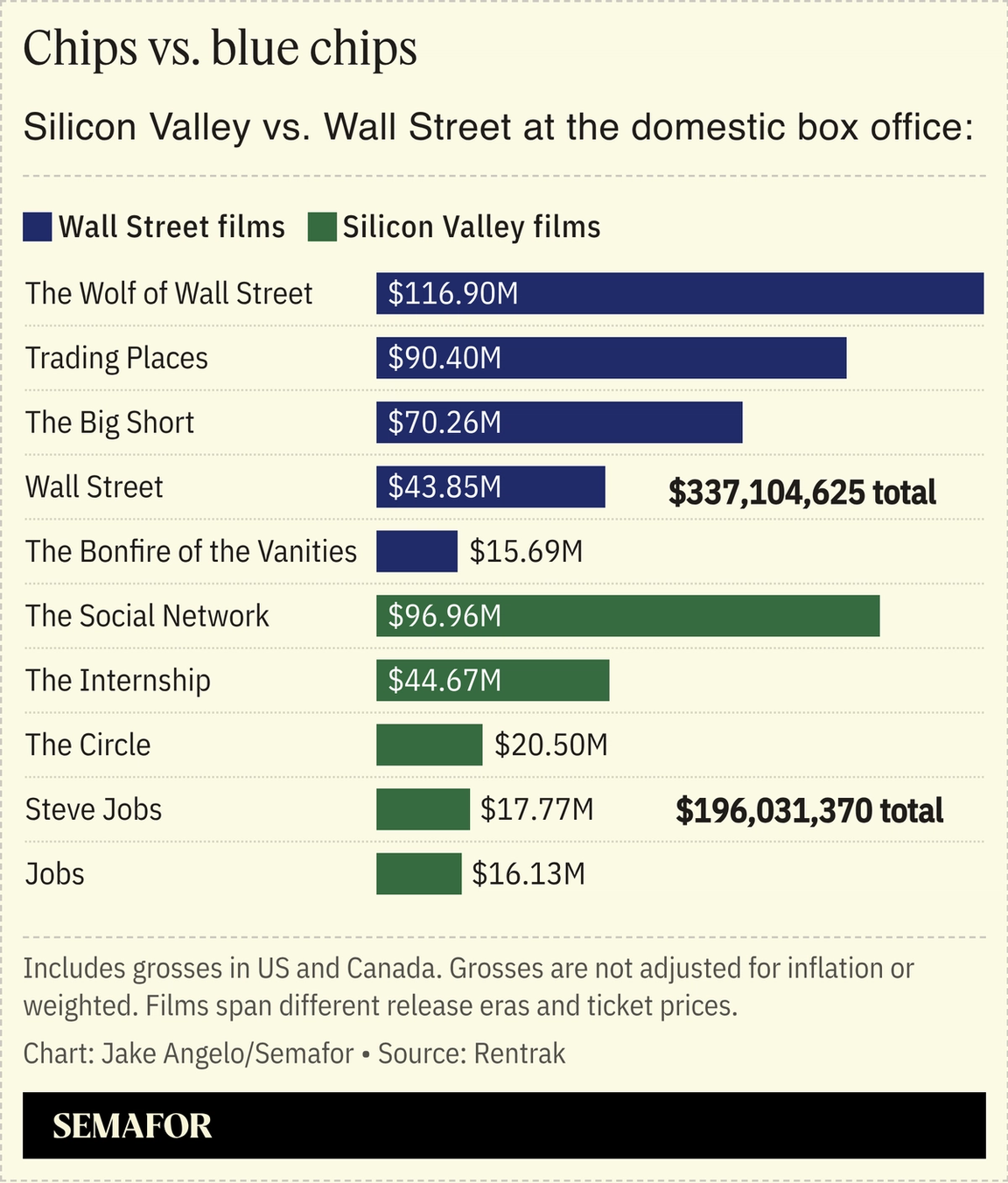 Hollywood is betting that AI angst, which went mainstream last week with apocalyptic warnings from tech insiders, will be box-office magic. Four movies about Silicon Valley will debut this fall. The three-hour-and-52-minute Musk documentary from Alex Gibney (who took on Theranos founder and convicted fraudster Elizabeth Holmes in The Inventor) got a standing ovation at the Venice Film Festival and a pan from its subject. The Social Reckoning, a follow-up to 2010’s The Social Network starring Jeremy Strong, who even sits like Mark Zuckerberg, will test whether anyone is still outraged about social media in the age of AI. We’ll get another look at Holmes in Nathan Fielder’s documentary You Can See Everything. And Artificial tells the story of the weekend coup at OpenAI in 2023 that briefly ousted Sam Altman. (Dropped by Amazon’s movie studio after Amazon invested $50 billion into OpenAI, the film is being released by Neon, an independent studio.) Silicon Valley has historically paled in comparison to Wall Street as a reliable audience magnet, according to data firm Rentrak. I’m not sure anything can beat Charlie Sheen and Michael Douglas in Wall Street (“Lunch is for wimps”), but it will be telling to see which of this fall’s four tech films break out — and whether audiences favor facts or fiction. — Liz Rappaport |
|
The lessons in the Bayeux Tapestry |
 Toby Melville/Reuters Toby Melville/ReutersThe Bayeux Tapestry, which went on display in the British Museum this week, is one of the wonders of the medieval world. To Igor Tulchinsky, the founder of hedge fund WorldQuant who gave £5 million to fund the embroidery’s exhibit, it’s “a very, very old data set.” Tulchinsky’s donation is an outlier in a country where business and individual sponsorship of cultural institutions has been falling. But to his eyes, the 11th-century record of the Norman conquest offers an extreme example of the value of studying history’s patterns to anticipate future developments: “Everything is information. Information is opportunity. Opportunity is infinite,” he told Semafor’s Andrew Edgecliffe-Johnson, a bit cryptically. |
|
 - Sept. 15-16: The Fed’s meeting is Kevin Warsh’s biggest test yet. Hot August inflation data sent market expectations of a hike soaring — odds are 86% as implied by futures markets, a bit lower on Kalshi. But Trump hired him explicitly not to hike rates, and a Fed chair hasn’t been outvoted on a rate move since 1986.
- Sept. 17: Lennar provides the first big earnings read on housing demand since mortgage rates ticked back toward 7% as borrowing costs climb alongside the broader bond selloff.
- Sept. 18: It’s “quad-witching” day, the simultaneous expiration of stock options, index options, and futures. It’s historically one of the highest-volume trading days of the year and lands two days after the Fed decision, capping a week likely to be gripped by bond and oil volatility.
|
|
 Anwar Hussein/PA Images via Reuters Anwar Hussein/PA Images via ReutersThe most famous little black dress in history is up for auction. Princess Diana’s “revenge dress,” worn to a Vanity Fair party the same night in 1994 as Prince Charles’ televised confession of infidelity aired, will get a global tour with showings in London, Geneva, and Hong Kong before a Sotheby’s listing in New York, where it’s expected to sell for up to $300,000. Audrey Hepburn’s iconic Breakfast at Tiffany’s LBD sold in 2006 for four times as much, adjusted for inflation. |
|
|


