
| Forwarded this email? Subscribe for more |



 |
| By The Free Press |
It’s Monday, September 21. This is The Front Page, your daily window into the world of The Free Press—and our take on the world at large. Today: Tyler Cowen considers the other scary AI future. Coleman Hughes meets the Harvard economist bucking progressive orthodoxy. A new book goes behind the scenes of the post–October 7 war and asks: Who really won? All that and much more.
But first: The flawed data driving the climate news.
What happens when an influential climate organization, one based out of the prestigious Imperial College London, uses flawed science to produce a preferred outcome? And what happens when they do this again and again, year after year, churning out press releases that quickly find their way into newspapers around the globe?
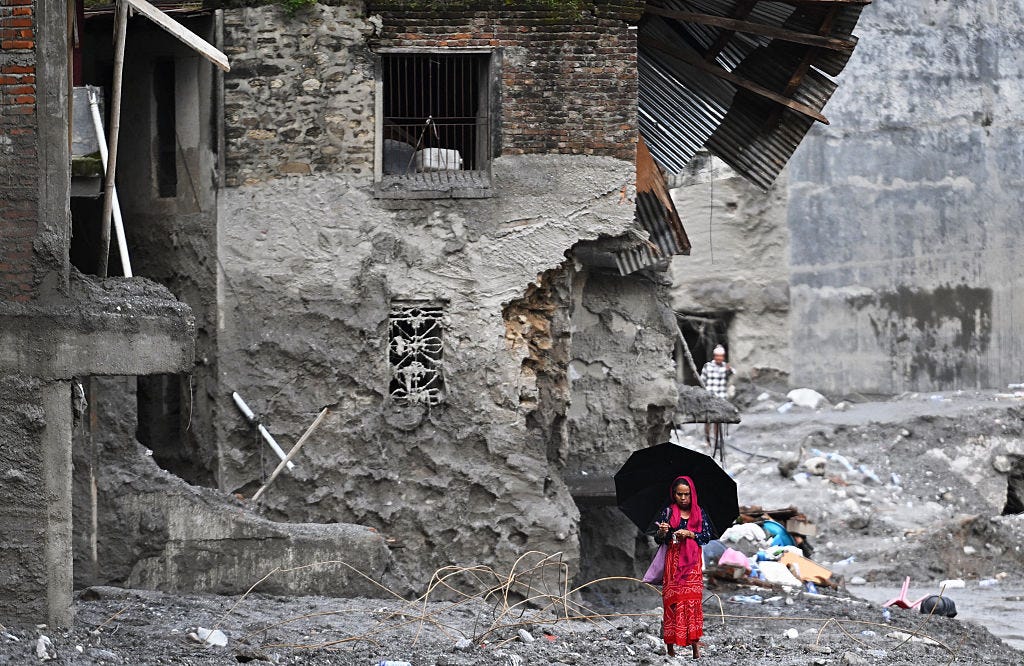
Less than a month after thousands of people died in a catastrophic Himalayan flood, that organization, called World Weather Attribution (WWA), published a report linking the disaster to human-caused global warming. Now Nepal is seeking $20 million in UN compensation on the basis of that report.
For more than a decade, the WWA has been churning out these reports whenever an extreme weather event like the Himalayan flood takes place—and invariably chalking up the disaster to climate change. Though the media accepts WWA’s conclusions as gospel, Roger Pielke Jr. asked what ought to be a pertinent question: How sound is their methodology? Pielke, a professor emeritus at the University of Colorado Boulder, went for a deep dive into the group’s work and found it lacking.
Pielke replicated 96 WWA reports and found that rather than analyzing whether climate change caused the event, the organization simply assumes it did. On the one hand, this shouldn’t be surprising: The group’s leaders have been explicit that they are trying to alarm the public about the threats posed by climate change. But what Pielke found was that, using WWA’s approach, you can link almost any trend to climate change, from an increase in baseball players hitting home runs to a rise in patent applications. It’s a model designed to produce all manner of absurd results, garnering headlines while doing a disservice to real climate science.
Read Pielke’s investigation into the group shaping global climate policy and whether any of the science behind it holds up.
—The Editors
 |
Tyler Cowen: A Doomsday Scenario for American AI | |||||
 | |||||
|
The President Versus the Press | |||||
 | |||||
|
Israel Won the Battles. Did It Lose the War? | |||||
 | |||||
|
Roland Fryer on the Cost of Telling the Truth | |||||||||
 | |||||||||
|


