| | In this edition, the UN General Assembly highlights global differences in pushback to the AI buildou͏ ͏ ͏ ͏ ͏ ͏ |
| |  | Technology |  |
| |
|
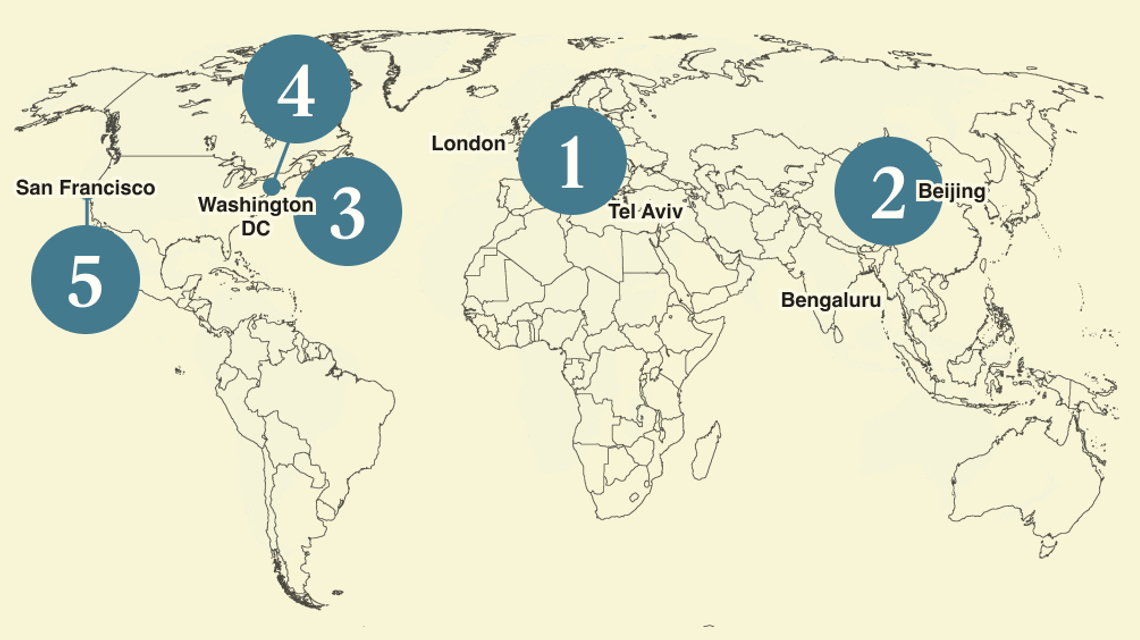 - UN eyes tech sovereignty
- High-stakes Trump-Xi talks
- Bessent as next AI czar?
- OpenAI’s cautious optimism
- E-commerce sites pick a side
 The UN General Assembly highlights a uniquely American debate, and an AI actress’ glitchy media appearances. |
|
 The UN General Assembly week in New York is highlighting how much the recent populist pushback on AI and data centers is uniquely American. While candidates around the country are campaigning on opposing the AI buildout and pushing for an AI slowdown, tech companies aren’t running into the same resistance in the rest of the world. As a result, US tech giants are reportedly increasingly interested in Australia. Spain and Malaysia have also emerged as investment-friendly data center hubs. This non-US enthusiasm felt especially pronounced on Tuesday during Semafor’s Next 3 Billion convening, which brought together stakeholders from across emerging markets to discuss how to bring more people into the digital economy. A Google executive said the Global South in particular is more optimistic about AI, in part because there’s a larger “potential to make a difference,” especially in fields like health and communication. The director general of the GSMA, the global association of mobile network operators, said “the narrative in the more emerging markets is totally different. There is an appetite for getting those AI capabilities and the feeling that there is a risk that people could be left out.” Data backs up the vibes: A new Pew report shows Americans feel more negative about data centers compared with how they felt at the beginning of the year, while Gallup-Microsoft data released Wednesday showed that people in China, Singapore, and Kenya showed the most positive emotions toward AI. The only places where negative sentiment won out: the US, Egypt, and Palestine. There’s no single, simple explanation for why this dynamic exists. But in much of the world, and in Europe especially, governments have been setting regulations for data centers up front regarding energy, water use, and data control. Ironically, rules that were once seen as holding investment back could now provide a boost to AI and tech companies by giving the industry a dose of public goodwill. As Spain’s prime minister wrote last week, “proactive regulation is more effective than reactive intervention.” |
|
UN looks to hedge US tech reliance |
 Caitlin Ochs/Reuters Caitlin Ochs/ReutersUN agencies are putting a premium on diversifying where they source technology and computing power — away from solely American providers. Last year’s US sanctions on the International Criminal Court and Anthropic’s Mythos model cutoff earlier this year provided a “wake-up call” about relying on single — mostly American — companies, the chief information officer of the International Telecommunication Union said. Some UN groups are exploring shared computing and data infrastructure, which could give them more control over their sensitive data, leaving them less dependent on US cloud and AI companies, Khuloud Odeh told Semafor. One concern is that the Trump administration has shown a willingness to restrict access to chips and AI models as part of its foreign policy, potentially disrupting the UN agencies’ or non-US companies’ operations. The UN is in a particularly precarious spot given Washington’s retreat from global bodies and disdain for some specific groups. “We’re all being asked, what is our game plan if something like this happened? What would be an exit plan?” Odeh said. That doesn’t mean a “whole radical move” away from all US technology, she added, but rather making backup plans, creating more choices, and sorting systems by sensitivity. — J.D. Capelouto |
|
Muted expectations for Trump-Xi talks |
 Donald Trump and Xi Jinping during their last meeting in May. Evan Vucci/Pool/Reuters. Donald Trump and Xi Jinping during their last meeting in May. Evan Vucci/Pool/Reuters.Chinese leader Xi Jinping arrives in Washington today for high-level talks, including on AI, that are expected to be more pomp than progress. The US has proposed an AI crisis hotline and regular tech dialogues with China ahead of Xi’s meeting with President Donald Trump, though analysts cautioned that little in the way of AI-related diplomacy should be expected. Both Washington and Beijing see the dangers of AI, but their perception of risks differs: China is primarily concerned about AI’s social and political impacts, and Beijing has sought to speed up development to match US frontier capabilities. Meanwhile, American tech and political leaders (though not Trump) are increasingly preoccupied with runaway AI threats. “This will be a multiyear endeavor,” a former US diplomat argued in The New York Times. “Countries should begin by affirming they are players in a longer arc of progress.” |
|
Bessent emerges as AI czar candidate |
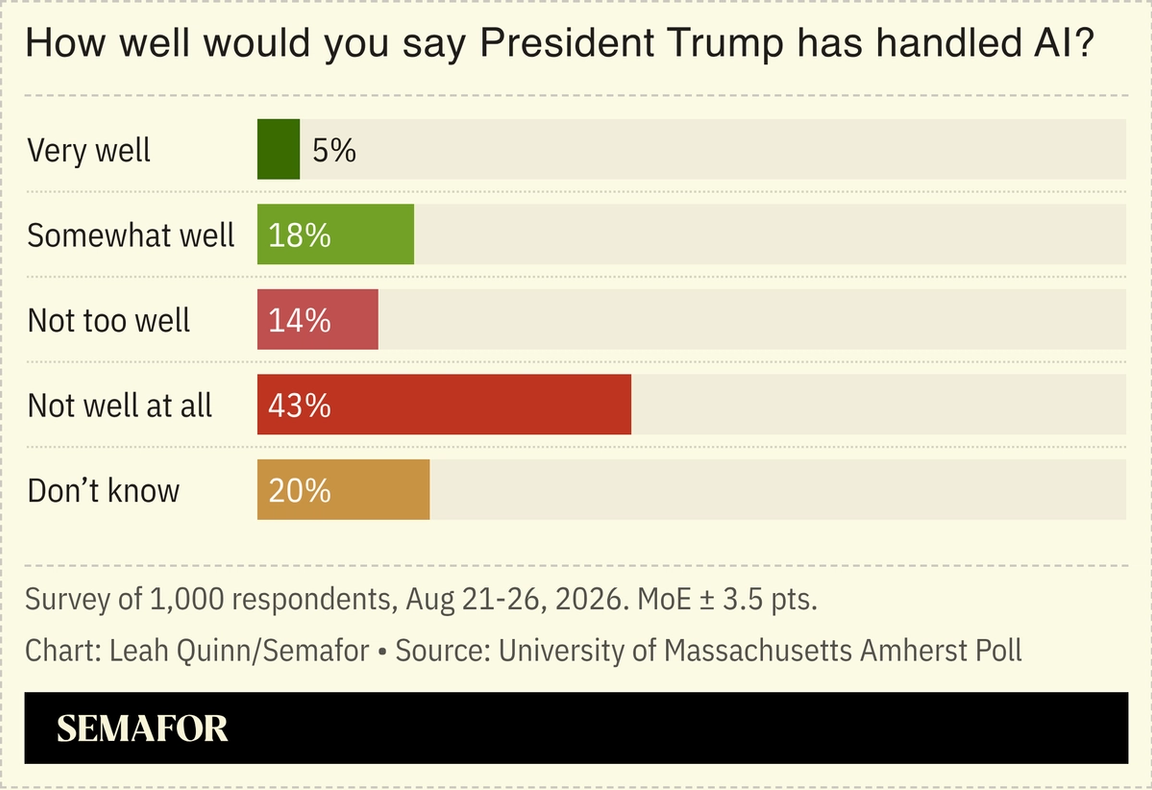 Appointing a US AI czar could give Beijing a point person to communicate on high-stakes tech issues. And Treasury Secretary Scott Bessent is emerging as a frontrunner for Trump’s new “AI czar” position, Semafor’s Ashley Gold and Shelby Talcott scooped. Bessent has long played a central role in the Trump administration’s AI policy, and this week he’s already held a critical early dialogue with Chinese Vice Premier He Lifeng on the sidelines of the UN General Assembly, ahead of Trump’s meeting with Xi. Bessent and He discussed a potential US-China “notification mechanism” to facilitate communication about AI incidents that pose threats to national security, as part of what Bessent said were talks about a formal US-China dialogue on AI. Trump’s decision on his AI point person is not final, and he is known to ultimately favor dark-horse candidates. But if Bessent were to ultimately get tapped, his Cabinet job wouldn’t be a barrier — Interior Secretary Doug Burgum has simultaneously held the “energy czar” moniker. |
|
| | Semafor Next 3 Billion • Exclusive |  | |
OpenAI ‘cautiously optimistic’ about US-China cooperation |
 Screenshot/Semafor/YouTube Screenshot/Semafor/YouTubeAn AI crisis communications line between the US and China should be a “starting place” for relations between the superpowers on the technology’s safety, OpenAI’s head of national security policy said. Sasha Baker said at Semafor’s Next 3 Billion event on Tuesday that she is “cautiously optimistic” about reports that Washington and Beijing are discussing an AI safety notification system. She said the US and China have to find common ground because they are home to the world’s leading AI labs, but that every country should be involved in the conversation. OpenAI’s Sam Altman, who has backed calls to pace frontier AI model development, is expected to tell the UN Security Council today about the need to “internationalize” the conversation around AI standards, Baker said. Earlier on Tuesday, Trump rejected the idea of international oversight of AI, calling it a “globalist scheme.” — J.D. Capelouto |
|
Meta’s AI agents get boxed out |
 Courtesy of Meta Courtesy of MetaAI agents are here. Will internet gatekeepers let them in the door? Amazon banned Meta’s Muse assistant, while Shopify welcomed it in, the first sign of battle lines being drawn in the way we spend money online. As they sharpen, expect a rough sorting. On one side will be retailers like Amazon, which want to keep control of human eyeballs that can be sold to advertisers and pitched on add-on purchases. On the other will be e-commerce enablers like Shopify, whose primary relationship is with merchants, and which makes money from licensing storefront software, fulfillment services, and financing. Less obvious is how companies that care a lot about customer loyalty but don’t depend on impulse purchases, like airlines, will treat bots. (My efforts to rebook a Delta flight via Muse this weekend ran into a bot-blocker.) — Rohan Goswami |
|
 MIT Technology Review’s 35 Innovators Under 35 features young scientists, entrepreneurs, and inventors who are driving meaningful progress in AI, climate tech, biotech, and more. For a few days only, subscribe to save 17% and find out who made this year’s list, plus get bonus AI content. |
|
 Particle6 Particle6AI-generated “actress” Tilly Norwood did the media rounds to promote her new movie last week, but ran into a few hiccups. Aside from the long pauses Norwood is accustomed to taking before answering questions, while on Piers Morgan Uncensored she unexpectedly showcased another one of the 30 languages she knows, responding to one of Morgan’s questions in Cantonese. “Sometimes my wires get a bit crossed, you know?” she said after the blip. Norwood — a creation of the London-based production company Particle6 — made a splash in Hollywood last year after rumors circulated that talent agencies were in talks with the AI actress for representation. No such deal has come to fruition, and one likely won’t for the foreseeable future. |
|
|


