| | In this edition: Trump’s socialist spectacle at Gracie Mansion, a progressive group targets the “Tru͏ ͏ ͏ ͏ ͏ ͏ |
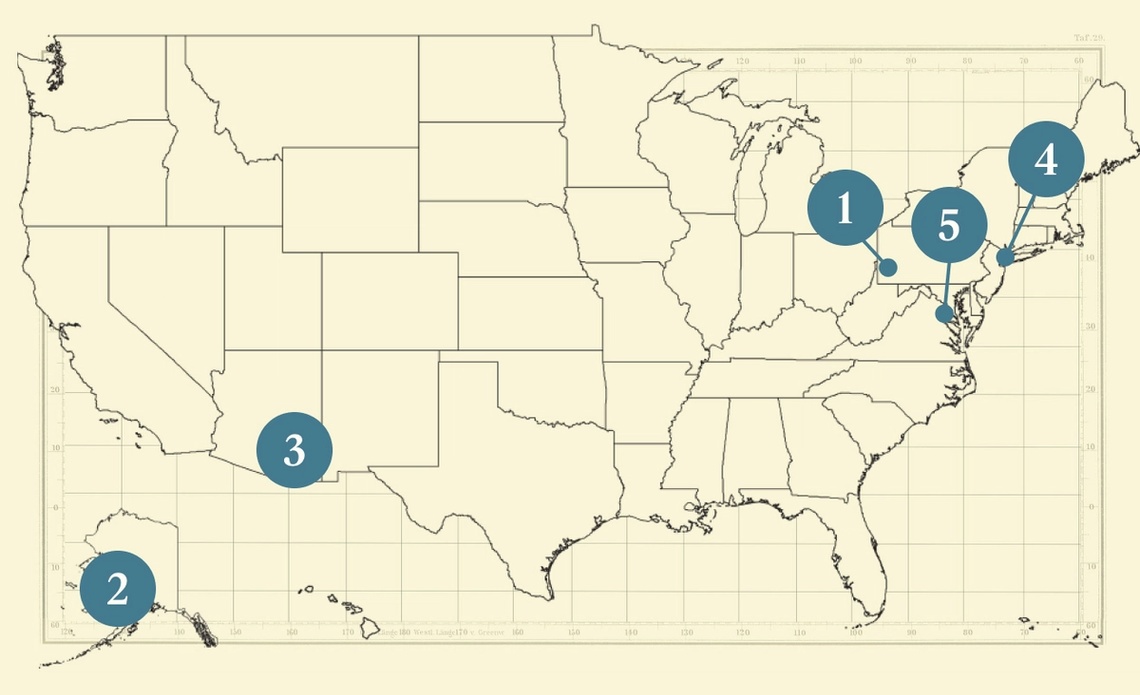
| |  ANCHORAGE, AK ANCHORAGE, AK | BRADDOCK, PA | NEW YORK, NY |
 | Americana |  |
| |
|
 - Jentleson’s pitch
- Senate Republican blues
- Progressive cost-of-living push
- AOC’s next steps?
- Abortion politics may emerge
|
|
 I’m sitting in for Dave this week and briefly slipping into my old job as a New York political reporter — a pretty good gig these days. At some point, you get tired of trying to develop a unified theory of Donald Trump. I gave up about halfway through his 12-minute appearance Monday with New York City Mayor Zohran Mamdani, as the Republican president rhapsodized and the socialist mayor gazed placidly into the far distance. Political commentators used to ask what something like this was about, but the reality of this personalist presidency is that it’s a mistake to look beyond the obvious. In this case, Trump was pleased to be at Gracie Mansion, an iconic spot for New Yorkers if a totally obscure one for Americans; he likes it, as he tells anyone who will listen, when you’re nice to him, as Mamdani was; and he is interested in big construction projects in Queens. The midterms are less than six weeks away, and his party’s strategy involves linking Democrats to socialists like Mamdani — but you see why Trump lingered at Gracie. It may be the president’s most fruitful meeting of the week. The rest are being spent glad-handing with world leaders who have learned to contain or ignore the president’s improvisations. The expectations for this week’s meeting between Trump and Chinese leader Xi Jinping, who isn’t going to improvise, are also low. The two sides almost entirely dispensed with the elaborate preparations and pre-baked announcements that used to come with these things (though Trump will still create a spectacle for Xi’s arrival and state dinner). Read on for our Nicholas Wu and Burgess Everett on the upcoming elections — and don’t miss Burgess’ big story this week about Republicans starting to break with Trump in earnest. I’ve been suggesting Burgess write a version of this story since about last February, when it was definitely not happening; and like all great reporters he ignores inane and half-baked ideas from the boss. When he actually writes it, you can take it to the bank. |
|
Jentleson calls for Democrats to get heterodox |
 Semafor/YouTube Semafor/YouTubeIt’s not every day that a party insider publishes a big-swing book that may have already won the internal argument. Adam Jentleson’s Supermajority — a call for Democrats who are able to take positions that party-aligned activists and groups might not agree with in order to win elections — might be one of those books. Jentleson, president of the center-left Searchlight Institute, argues for heterodoxy: picking a select number of issues to diverge from the party consensus, a tactic arguably on display already: Iowa gubernatorial hopeful Rob Sand has tacked right on transgender issues while Alaska’s Mary Peltola has endorsed a number of big oil export projects, to name two examples. But heterodoxy isn’t just moving to the right or the center, Jentleson told Semafor’s David Weigel: Barack Obama’s early opposition to the Iraq War in 2008 won him wiggle room on issues where his stance was more moderate than that of Democratic presidential opponents John Edwards or Hillary Clinton. Does it hurt Jentleson’s case that one of the loudest recent examples of his tactics bearing fruit is Jentleson’s former boss, Pennsylvania Sen. John Fetterman? Fetterman is a “useful as a cautionary tale,” Jentleson says, and “it would be a loss if Fetterman was still the only person doing this.” “But, fortunately… there’s a lot of candidates now who are taking up this strategy,” Jentleson added. — Brendan Ruberry |
|
Why GOP senators are feeling the pre-midterm squeeze |
 Kevin Lamarque/Reuters Kevin Lamarque/ReutersAs Election Day gets ever closer, Senate Republicans are getting forced into tough choices — among them, whether to move money out of races in Georgia and North Carolina, two southern states that were once reliably GOP but are looking nearly out of reach this year. “Move on? Maybe,” Sen. Kevin Cramer, R-N.D., told Semafor’s Burgess Everett. “Obviously we have limited resources, and we want to put them where we’re likely to win. And it would really suck if we lose in Alaska, for example, where we aren’t spending the resources.” Cramer’s reference to incumbent Alaska Sen. Dan Sullivan showed how clearly the angst for Senate Republicans is spreading across the map. Just this week, the party’s Michigan and Iowa Senate nominees — Mike Rogers and Ashley Hinson, respectively — shifted to public calls for an end to the Iran war, citing the punishing cost of fuel. But it’s not clear that they’ll benefit from that late movement, which follows months of giving President Donald Trump backup on the war. And it’s not just Republicans running this fall who are breaking from Trump. Even the safe-seat Senate Armed Services chair got in on the action this week. Read more from Burgess about the splintering GOP senators, and candidates. → |
|
|
Progressive group targeting swing districts on cost of living |
 Kevin Lamarque/Reuters Kevin Lamarque/ReutersA progressive economic group is kicking off an ad and organizing campaign targeting nearly two dozen purple congressional races by going after Trump’s unpopular idea to give voters $5,000. Economic Security Project Action, the political arm of the group that previously backed guaranteed income schemes, is zeroing in on the floated “Trump Dividend” — which has slim if any chance of becoming real — as evidence of unmet political promises from Republicans on the cost of living. “With the midterms looming, Republicans can’t keep dodging accountability for sticking working folks with the bill for their expensive, harmful agenda. Voters deserve to know, in dollar amounts, exactly what Republicans have cost them,” says a memo describing the six-figure campaign provided to Semafor. Among the planned events are a town hall on cost of living in California’s 22nd Congressional District, an event on veterans’ affordability in Arizona’s 6th Congressional District, and a lemonade truck tour in Pennsylvania swing districts. In addition, a “Republican Receipts” campaign will lay out what the group describes as a contrast between GOP incumbents’ voting record and the impact on constituents of increased prices. With a recent Economist/YouGov poll showing Democrats with a 14-point lead on the generic ballot and inflation and the economy as the top issues among voters, Democrats are banking that their candidates’ continued focus on high costs will win them the midterm elections. Meanwhile, Republicans are hoping that voters will reward them for the tax cuts in their domestic policy megabill, like deductions for overtime and tips. — Nicholas Wu |
|
AOC fuels speculation with indecision |
 Eric Lee/Reuters Eric Lee/ReutersRep. Alexandria Ocasio-Cortez is doing it again — stoking speculation about her political future by taking the unusual step of publicly laying out her options for 2028. “Every element of this is something that’s within consideration,” she said in an interview this week with The New York Times. As Semafor has previously reported, Ocasio-Cortez has been taking her time both publicly and privately as she decides whether to stay in the House, seek the Democratic presidential nomination, or possibly pursue an open Senate seat. What she doesn’t say: She is perhaps one of the few Democrats who might not have to rely on first mover advantage. She could immediately clear the field if she chose to seek the Senate; if she ran for president, she wouldn’t lock up the nod but would likely command the left. Notably, Senate Minority Leader Chuck Schumer has been circumspect on his own plans for 2028, when he’ll be 78. In the meantime, Ocasio-Cortez is kicking off a tour to boost Democrats in New York, sending a $300,000 check to fund voter organizing in the state. She’s set to go to Buffalo, New York, tomorrow to meet with its mayor and to host a training to boost turnout among inactive voters. With Democratic Gov. Kathy Hochul heavily favored to win the general, the statewide tour is a convenient way for Ocasio-Cortez to meet voters and political leaders in the rest of the state outside of her district in New York City proper. — Nicholas Wu |
|
Abortion hangs over final weeks of midterms |
 Nathan Howard/Reuters Nathan Howard/ReutersAbortion politics have remained largely dormant in the lead up to the midterm elections — but that could quickly change in the coming weeks. Many expect the Fifth Circuit to rule on a lawsuit seeking a nationwide restriction on mail and pharmacy distribution of the common abortion drug mifepristone. And Democrats are using a slate of Trump’s healthcare nominees to highlight a pending Food and Drug Administration safety study they worry could be used to justify clawing back telehealth prescription of the abortion pill. The ongoing study — on which a court has ordered the administration provide an interim update before Oct. 7 — is set to conclude by the end of the year. Tomorrow, FDA Commissioner nominee Heidi Overton — who previously advocated for restricting mifepristone access while at the conservative America First Policy Institute — is facing a Senate HELP Committee whose members include Sen. Susan Collins, R-Maine, and Sen. Lisa Murkowski, R-Alaska, who supports maintaining access to abortion. — David Lim |
|
 - 41 days until the midterm elections
- 102 days until the start of the next Congress
- 237 days until Kentucky’s statewide primaries
- 486 days until the South Carolina Democratic presidential primary
|
|
| |  | | | You’re receiving this email because you signed up for briefings from Semafor. |
|


