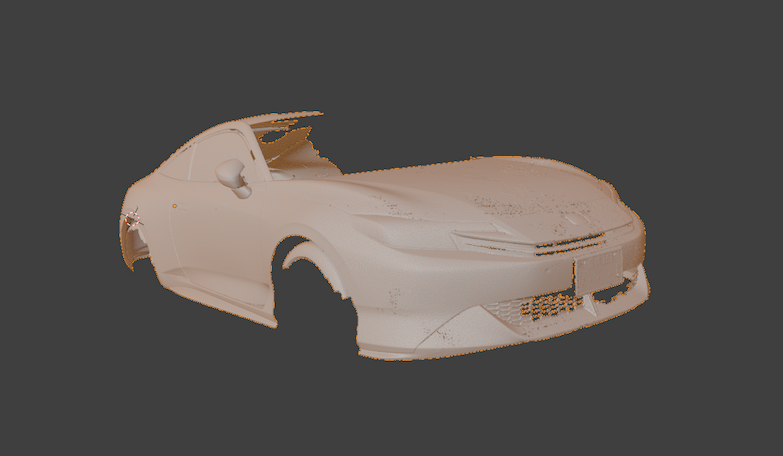
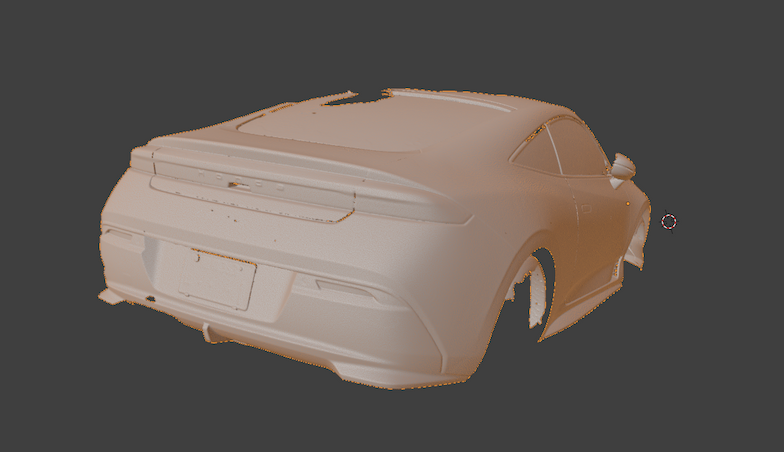
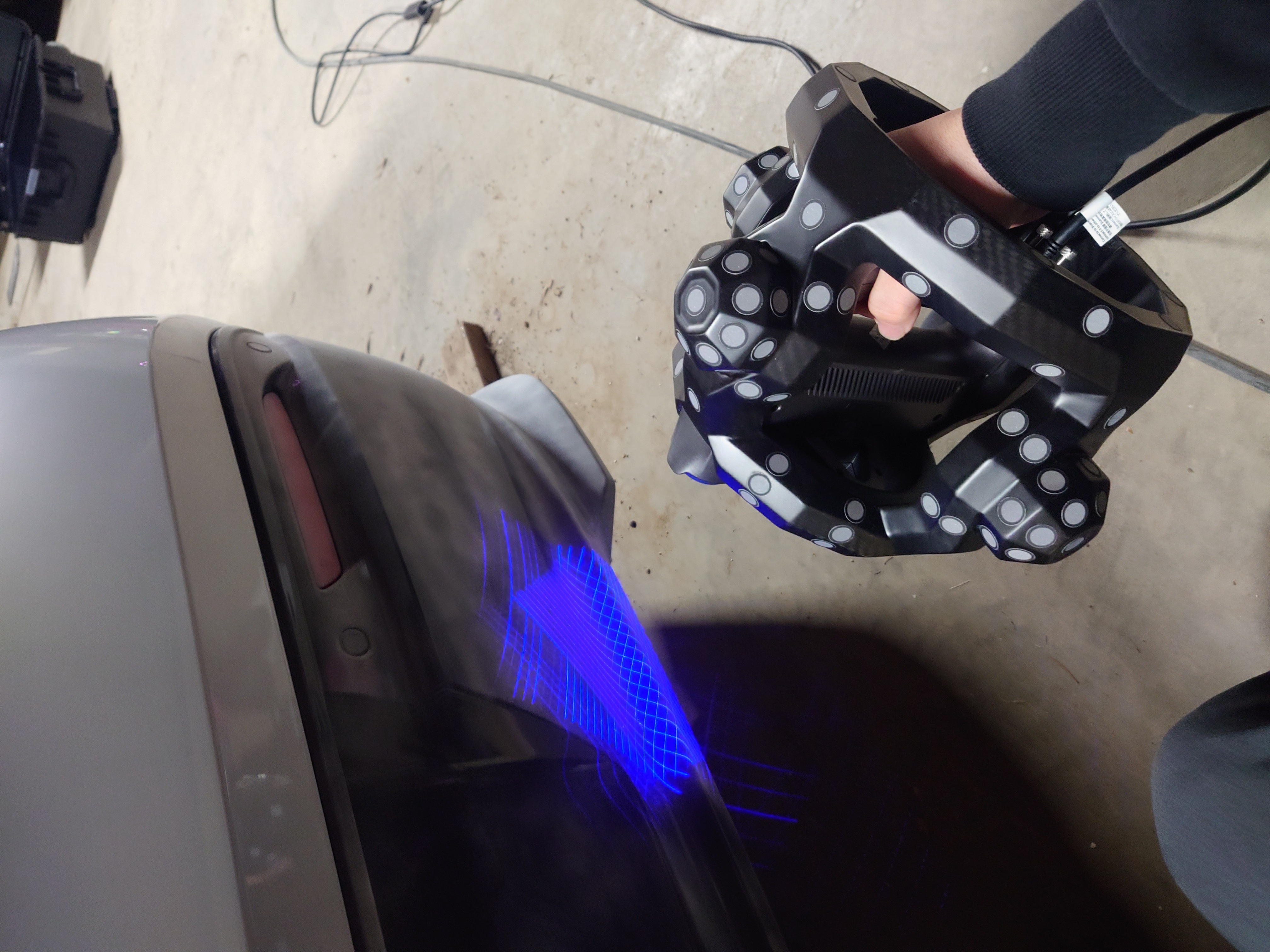
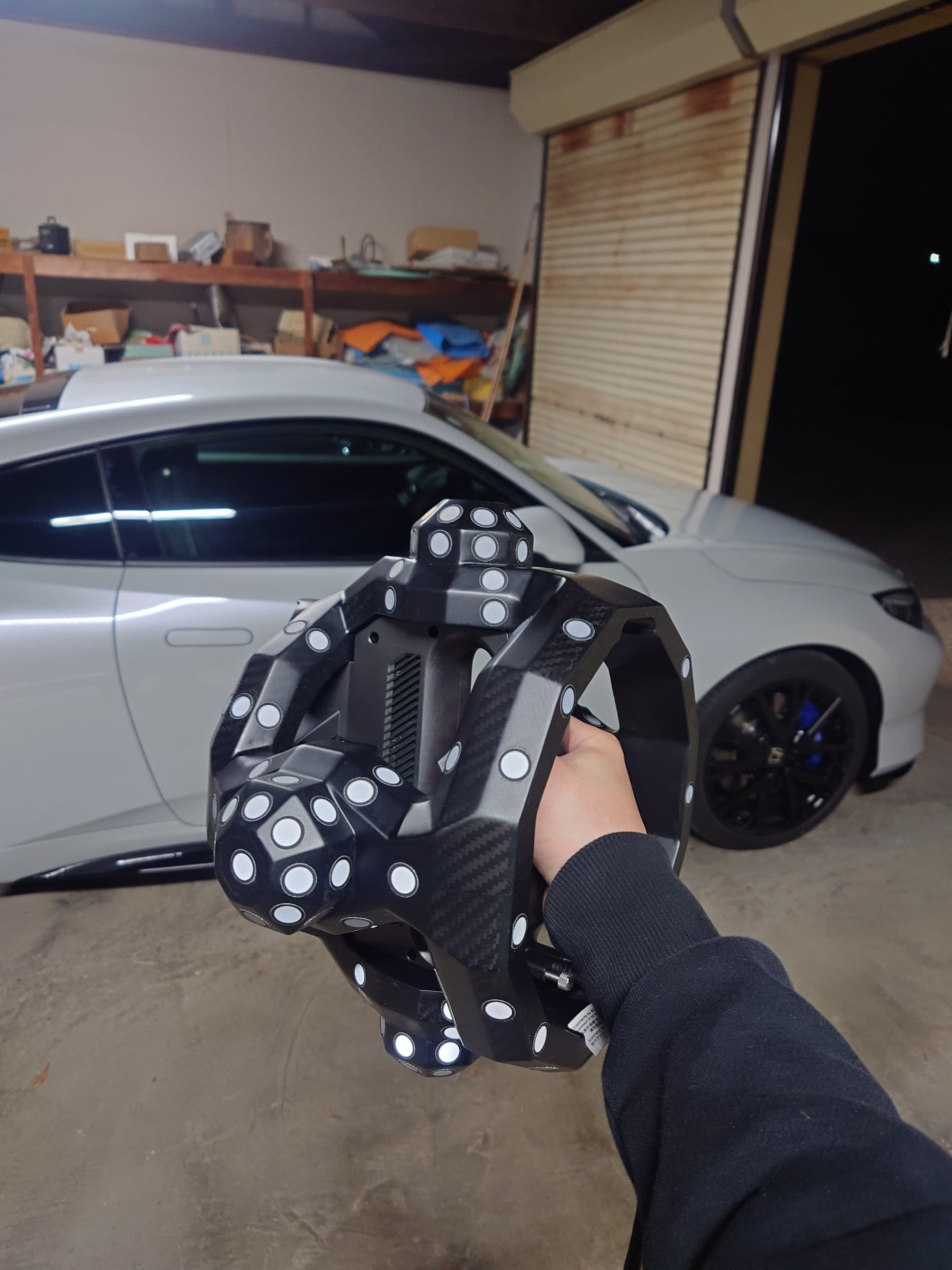
How Trackit Transformed the Development WorkflowTo solve these challenges, Studio FinalTAKE adopted Trackit. In the early stages of development, Trackit is used to capture the vehicle's overall exterior data along with the layout points needed to mount parts. Because Trackit supports markerless optical tracking, there is no need to attach large numbers of markers to the vehicle body as before. Even with large vehicles, high-precision 3D data can be acquired quickly without worrying about positional drift. The acquired 3D data is imported directly into CAD to design the body kit. From there, CFD analysis is used to verify aerodynamic performance, and the shape is refined to balance both design and functionality. The completed CAD data is then used to produce prototypes with a 3D printer, or to manufacture finished products in FRP or CFRP. By building this end-to-end digital workflow — "Scan → CAD design → CFD analysis → Prototype → Manufacture" — the team has significantly improved both development efficiency and product quality. |