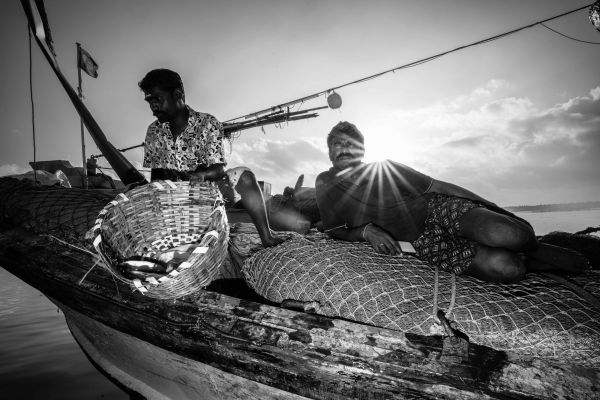
I was scrolling through my Facebook feed a few months ago and saw some gorgeous black-and-white photos posted by Viraj Nayar, a photographer in India who often contributes to our website.
The photos showed men working by the sea. Their weary faces were full of lines and yet there was a light in their eyes. And the lighting was captivating: silvery, magical, enticing.
I reached out to Viraj to learn more. He said he had some time before a flight out of the coastal city of Chennai so went to the harbor and took out his camera.
One of my goals as an editor is to show people what life is like in the Global South -- and here were images that did just that. But I also wanted to know the stories behind the photos. Viraj had not interviewed the folks he photographed, so I asked one of our freelance contributors in India, Kamala Thiagarajan, if she'd go to the harbor and look for the men. She must have been a detective in a previous life because she found several of the fisherfolk Viraj had photographed. They told her of battling the sea to catch fish, of lives lost and of carrying fish in pitch darkness along slippery paths for the early morning market.
And they spoke of their undying love for the sea that gave them their livelihood. A fisherman-turned-fish vendor Kumar said: "It's like your mother's lap. You may travel far and wide, and don't need it anymore, but you will return for the warmth and comfort it gives you."
Is Nepal's flood a harbinger of what's to come in the Himalayas?
Building dams and hydropower plants in the Himalayas holds great promise for providing electricity. In the wake of the Nepal disaster, experts are asking about the risks of such construction.
NPR's Tiny Deskpresents the music of Los Mirlos: "For more than 50 years, Los Mirlos has cultivated its own Peruvian twist on cumbia, featuring reverb-heavy, surf-rock guitar."
What do you think of today's email? We'd love to hear your thoughts, questions and feedback:globalhealth@npr.org
Enjoying this newsletter? Forward to a friend! They cansign up here.
You received this message because you're subscribed to Global Health emails. This email was sent by National Public Radio, Inc., 1111 North Capitol Street NE, Washington, DC 20002