Dear Educator,
Educators and students have long turned to the Council on Foreign Relations’ Global Conflict Tracker as a trusted window into the world’s most pressing conflicts. Nonpartisan, expert-informed, and continuously updated, it’s a resource built for moments exactly like this one, when global uncertainty makes it more important than ever to stay informed.
The team behind the tracker has recently made significant updates, including new ways to access the latest news on conflicts and a section that highlights key actors.
In response, CFR Education created a new lesson plan and a standalone activity to bring the Global Conflict Tracker into high school and higher education classrooms.
Keep reading for more information on what’s new and how to use this resource with your students. Happy learning, Caroline Netchvolodoff
Vice President, Education
Council on Foreign Relations |
|
|
|
Global Conflict Tracker 101 |
|
|
What is the Global Conflict Tracker? |
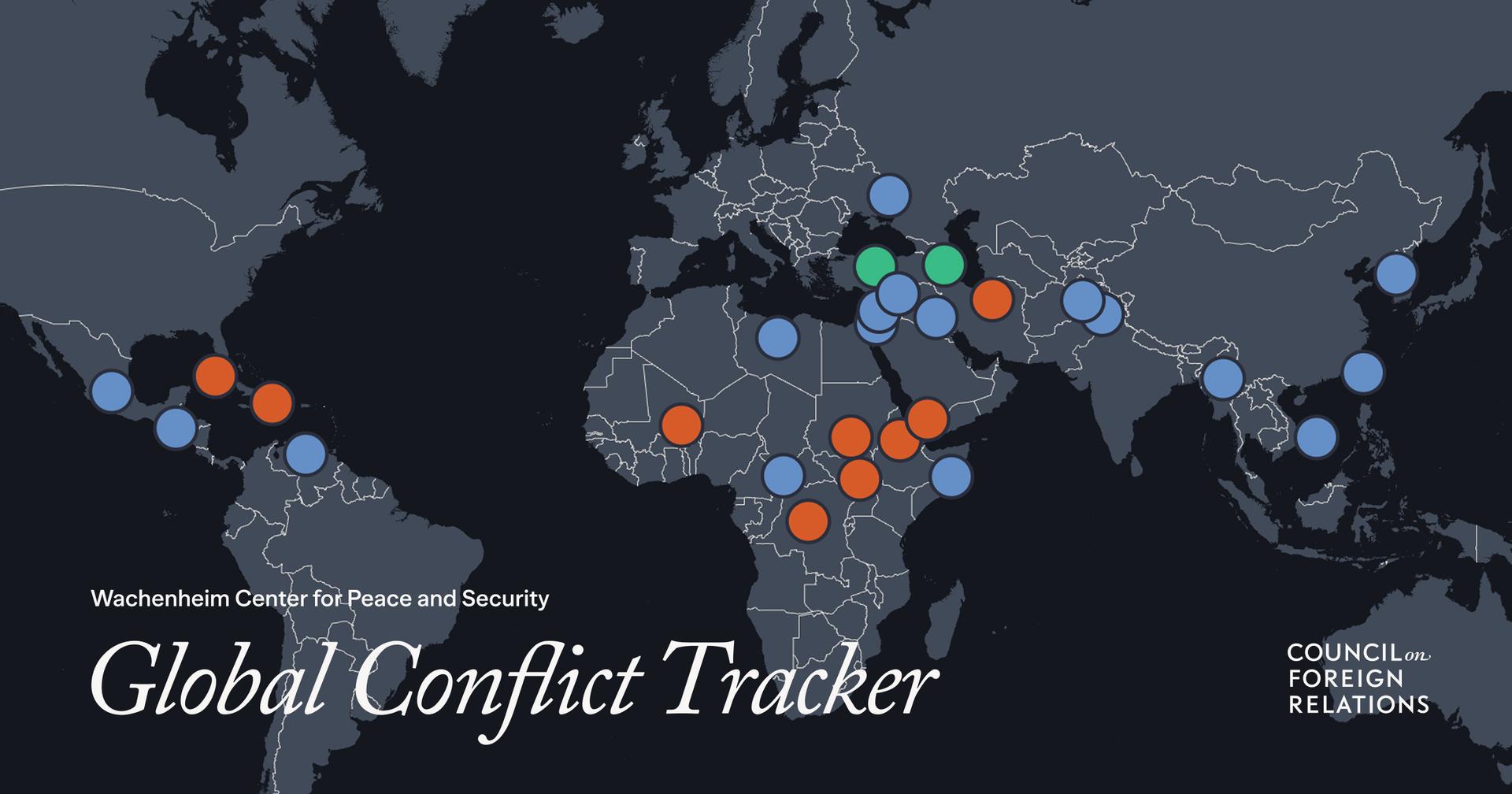
The Wachenheim Center for Peace and Security’s (WCPS) Global Conflict Tracker is an interactive tool that documents ongoing armed conflicts around the world. Conflicts can be viewed through the conflict map or the conflict dashboard and are assessed by type, region, status, and potential consequences for U.S. interests. The 27 conflicts currently on the tracker are selected by WCPS analysts, in consultation with CFR experts, based on criteria outlined in the methodology.
|
|
|
|
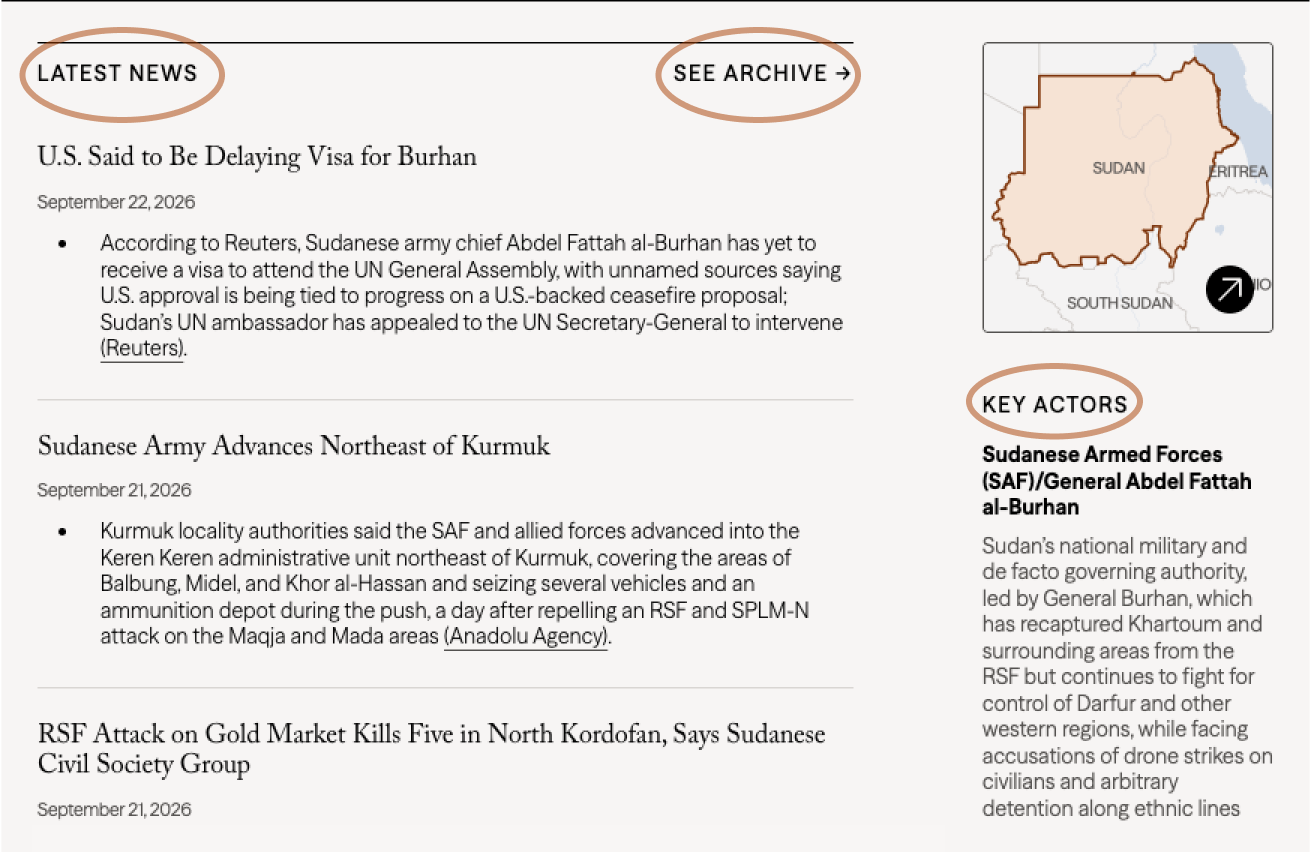
Each conflict has its own page where users can dive deeper. At the top, a quick overview and key stats indicate the type of conflict, its impact on the U.S., and its current status: Developing, Improving, Unchanging, or Worsening. Further down, you'll find in-depth background, recent developments, latest news, and recommended resources, including analysis from CFR experts. New to these pages is the Key Actors section, which makes it easier to understand who is involved in each conflict, from countries to non-governmental actors. |
|
|
|
Teaching with the Global Conflict Tracker |
The Global Conflict Tracker is a versatile tool for high school and higher education classrooms alike. Here are two new resources to help you integrate it into your curriculum:
Full Lesson Plan: A structured, multi-part lesson featuring a video on how conflict is changing, a reading on the civilian consequences of conflict, an independent pattern-finding activity, and a culminating discussion about the causes and costs of conflict. |
Standalone Activity (20-30 min): A hands-on activity in which students navigate the tracker, discuss their takeaways, and respond to a series of reflection prompts, including one that asks them to imagine they’re in charge of updating the tracker themselves. |
|
|
|
Tips for Reading the Maps |
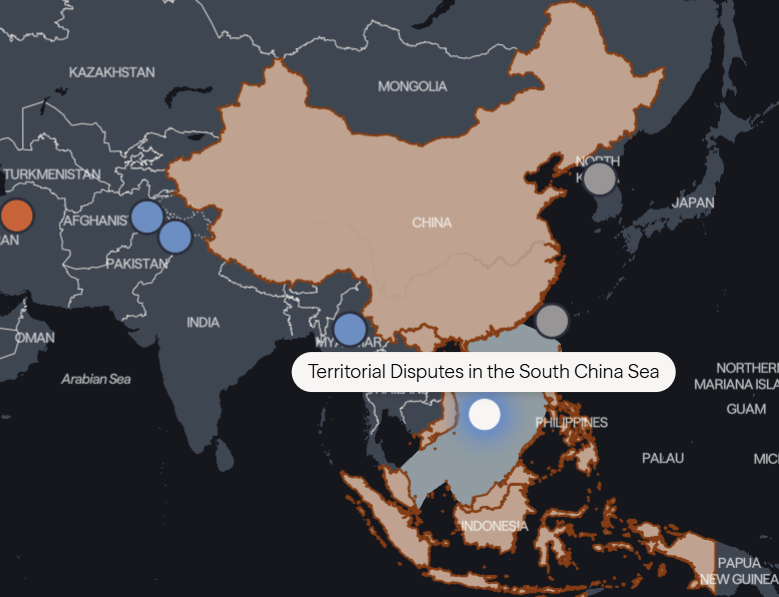
Hover over any conflict on the map to highlight the countries or territories involved. This visual layer helps distinguish between interstate conflicts (spanning multiple nations) and intrastate conflicts (contained within a single country) and makes the geographic reach of each crisis immediately clear. |
|
| |
|
Explore the Latest News Features |
In an era of widespread misinformation, having reliable, curated news built directly into the tracker is more valuable than ever. Breaking conflict-specific news can now be accessed through the tracker in two new ways: -
News Alerts: Click the bell icon in the site navigation to surface alerts from the last 7 days.
- News Archive: Browse past alerts for deeper context on any conflict, with the option to filter by date.
|
|
|
|
Taku Suzuki, Denison University (OH)
|
Student Level: 4-year undergraduate
Courses: International Studies, Global Research Methods, Migration and Border Control, Anthropology of Citizenship |
|
|
|
I love using CFR Education’s simulations, such as those on civil wars, immigration control, and trade policies, in my interdisciplinary International Studies (IS) courses because they encourage my students to be solution-oriented while recognizing that real-life challenges rarely have one perfect solution. I sometimes customize simulations by adding non-state actors, such as human rights advocacy NGOs, as key stakeholders, allowing my students to move beyond a state-centric approach and broaden their horizons regarding potential solutions to global problems.
|
|
| |
|
|