(Kevin Dietsch/Getty Images) |
|
|
|
Dutch company Robin Radar was formed five decades ago to produce unique radar systems designed to detect birds, mostly to ensure that planes landing at major airports can avoid dangerous flocks. This was a solid and reliable business for a while, a charming little niche of detecting speedy, small airborne organisms that can cause large problems for expensive infrastructure and endanger human life.
Then, of course, came drones, and then the Russian invasion of Ukraine, and then the shifting reality of warfare towards cheap, flimsy drones loaded up with explosives. Yet again, a new form of the core problem solved by Robin Radar — detecting speedy, small airborne robots that can cause large problems for expensive infrastructure and endanger human life — emerged, and needless to say business has really taken off.
Stocks rose on Thursday. |
|
|
|
Soon, public market investors will get their pure-play AI lab. |
- On one hand, the good numbers: Revenue 12x’d in 2025, hitting $4.6 billion, though they lost $8 billion on an operating basis.
- They spent $7.33 billion on compute alone, which was more than half of the $12.65 billion in operating expenses. Big numbers, but not exactly shocking.
-
On the other, the bad ones: “On an operating basis” excludes writedowns of liabilities related to previous fundraising; the company reported a net loss of $42 billion in 2025. Still, those numbers are still downright small, compared to…
- The crazy one? Anthropic plans to spend $518 billion on cloud. A half-trillion on cloud. That’s the kind of number that gets people thinking this better be worth it.
- Then, of course, the only one that really matters: how much this company's gonna be worth. For that, SpaceX is the bar to beat, and reportedly Anthropic is eyeing $1.8 trillion to $2 trillion.
|
Earlier this year, SpaceX's IPO managed to underscore just how little revenue investors really needed to see to grant a multi-trillion dollar valuation. |
|
|
|
One reason for the interest at any price?
So far, the only way that investors in public markets have managed to invest in AI laboratories has been indirectly. Either they've bought the companies that supply these labs — the chip manufacturers, the data center operators — as an implicit bet on the ultimate demand for this tech. The other alternative is investing in the hyperscalers — Alphabet and Meta — who have an AI lab as a subsidiary, the downside being that the actual AI laboratory's impact on their share prices is a mere drop in the bucket compared to the vast amounts of valuation derived from their mature advertising business. The last way to get in on the trade as an investor in public markets would, presumably, be to bet against the long-term performance of the companies that will be disrupted by the tech.
When one public company does something that takes market share from another public company, investors are able to react by buying the former and selling the latter, in the aggregate increasing the valuation of the former and reducing the valuation of the latter.
But when a non-public AI lab revealed that they were able to compete with the core offerings of a public company, things are less direct: recall the hits taken by the trucking business, the cybersecurity business, the SaaS business, and the consulting business whenever a white paper implied that OpenAI or Anthropic was poised to eat their lunch.
This led to the interesting paradox where, essentially, private Anthropic would release tech demonstration that would destroy a lot of the value of a cohort of public companies, but there was no direct commensurate creation of value elsewhere in the stock market. This is irritating for investors, potentially irritating enough for them to overlook the eye-watering value-to-revenue ratio on display here. |
|
|
|
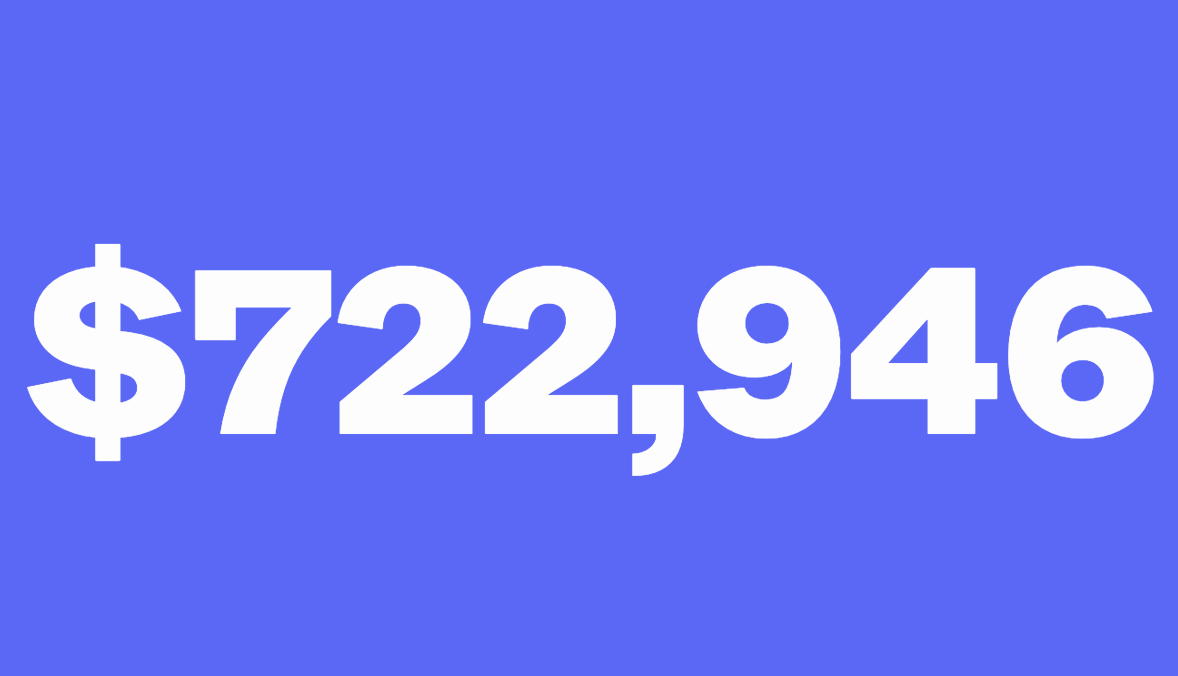
That’s the daily benchmark price on the Baltic Exchange VLCC index as of mid-September, which tracks how much it costs to hire a supertanker. Up from $79,700 per day a year ago, that’s made the market for used VLCCs incredibly weird, with a 15 year old supertanker now selling for about as much as a new order would, because of the astonishing amount money a buyer can make in the years between ordering a new VLCC and getting it delivered.
|
|
|
|
Apple Corps posted an income of 44 million in the 11 months ending 2025, and if that sounds wrong, it’s because we’re not talking about Apple Inc., the American technology company, but rather Apple Corps Limited, which oversees the intellectual property and licensing of The Beatles. Solid year even though they’re between film projects and also have been broken up for over half a century.
|
|
|
|
-
September non-farm payrolls report due out at 8:30 a.m. ET.
|
|
|
|
Sherwood Media, LLC produces fresh and unique perspectives on topical financial news and is a fully owned subsidiary of Robinhood Markets, Inc., and any views expressed here do not necessarily reflect the views of any other Robinhood affiliate... See more |
|
|
|
SHERWOOD MEDIA, LLC, 85 Willow Road, Menlo Park, CA 94025 |
|
|
|
|