Policy changes, but facts endure. AP delivers accurate, fact-based journalism to keep the world informed in every administration. Support independent reporting today. Donate. |
|
|
By Holly Meyer and David Crary |
|
| |
|
By Holly Meyer and David Crary |
|
| |
|
Greetings, World of Faith readers,
This week, we look at the how the first Muslim mayor of New York City is addressing antisemitism and how Kenya’s Quaker community became one of the biggest in the world. Also, you may have seen those witty sayings on church signs across the U.S. We explore how they became a part of the fabric of America. |
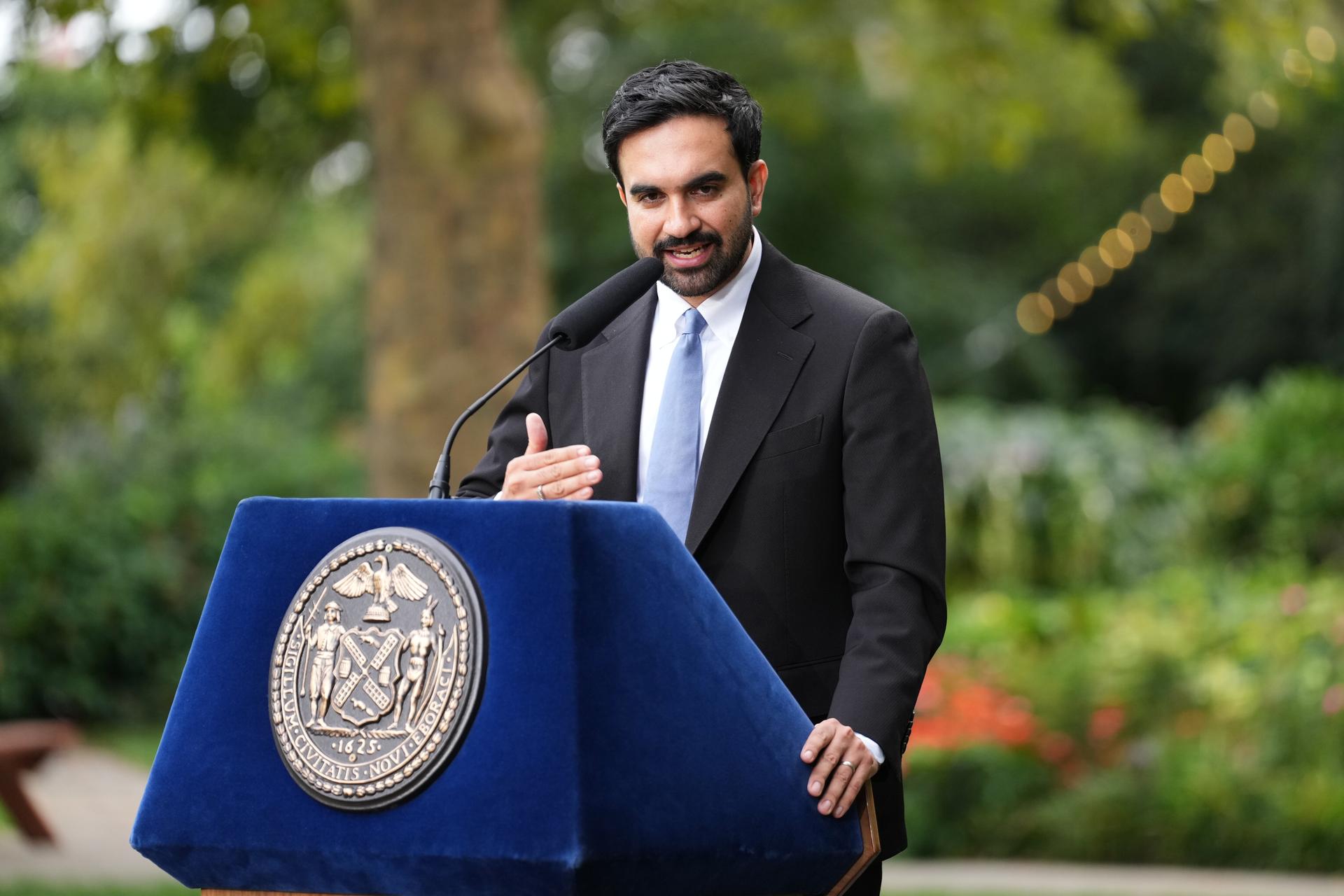
New York City Mayor Zohran Mamdani speaks to media after his meeting with President Donald Trump on Sept. 21 in New York. (AP Photo/Adam Gray) |
Mamdani releases plan to combat antisemitism as concerns linger over his criticism of Israel |
Mayor Zohran Mamdani has unveiled a sweeping plan to combat antisemitism and hate crimes against Jewish people in New York City, moving to assuage concerns from critics who see his steadfast denunciations of Israeli policies as antisemitic. The strategy includes increased security funding for synagogues, an increased focus on folding Jewish history into public school education, and a pledge to highlight important Jewish cultural and religious sites in Mamdani's day-to-day governance of the city. Read more.
|
|
|
-
Under the plan, City Hall will increase grant funding to community organizations that focus on hate crime prevention and survivor support. It will also work with public schools to address complaints of discrimination and launch public awareness campaigns on the city's human rights law and how to report suspected discrimination.
-
Mamdani, the city's first Muslim mayor, has long been a vocal supporter of Palestinian civil rights and has accused the Israeli government of committing a genocide in Gaza. He says his criticism of Israel doesn't amount to antisemitism, though his opponents argue his heated rhetoric has made Jewish people feel unsafe in the city.
-
Rabbi Rick Jacobs, president of the Union for Reform Judaism, praised elements of the mayor's plan but called on Mamdani to lower the temperature on his rhetoric about Israel.
|
|
|
Loud worship and other contrasts set apart Kenya's large community of Quakers |
Inside a Quaker meeting house in western Kenya, loud music complete with modern instruments can be heard from a few miles away, a sharp contrast to the silence that is the norm among Quakers in the U.S. There are an estimated 400,000 Quakers worldwide. About half live in Africa; most are in Kenya. Read more.
|
|
|
-
In most Quaker houses of worship worldwide, there is no clergy, pulpit or altar. No one sings or chants, burns incense or lights candles. They do not speak until a message from God moves through them. In Kenya, the Quakers worship loudly.
-
When Quaker missionaries arrived in Kenya in 1902, they introduced a version of Quakerism that featured slow hymns and evangelism. Over the years, Kenyan Quakers grew in numbers after adding more tempo to the music and incorporating modern instruments to attract young people, who found the previous music boring.
-
Robert Wafula, head of a Quaker theological college in Kenya, says that Quaker doctrine, which is founded on peace, has been useful during ethnic tensions and postelection violence in Kenya, as well as in regional conflicts.
|
|
|
Giggle for God: America’s witty church signs aim to inspire, attract drivers and passersby |
Many U.S. churches have roadside signs with frequently changing messages that range from the practical to the witty to the profound. It’s an effort to inspire and attract drivers and passersby that’s uniquely popular among churches across America, the quintessential land of open roads and advertisements. Read more.
|
|
|
-
In recent decades, pastors have gotten creative, aiming to brighten a commuter’s day, spur a reflection while chauffeuring to football practice, and maybe convince a lapsed Christian that it’s not all fire and brimstone inside.
-
Among the classics are weather jokes, such as: “Too hot to keep changing sign. Sin bad. Jesus good. Details inside.” At Madison Avenue Baptist Church in New York City, a sign during the latest heatwave caught many eyes — “Lord, whatever you’re baking, it’s done.”
-
This story is part of the AP’s American Objects series, which is exploring the country's cultural tapestry — one piece at a time.
|
|
|
|