With early voting already underway, a question worrying some voters is what role — if any — immigration enforcement officers might have at polling places through Election Day. Plus, how constituent focus may have shifted midterm sands for two Senate incumbents, Washington bureau chief Anna Johnson's weekly picks and what I'm reading this week. |
|
|
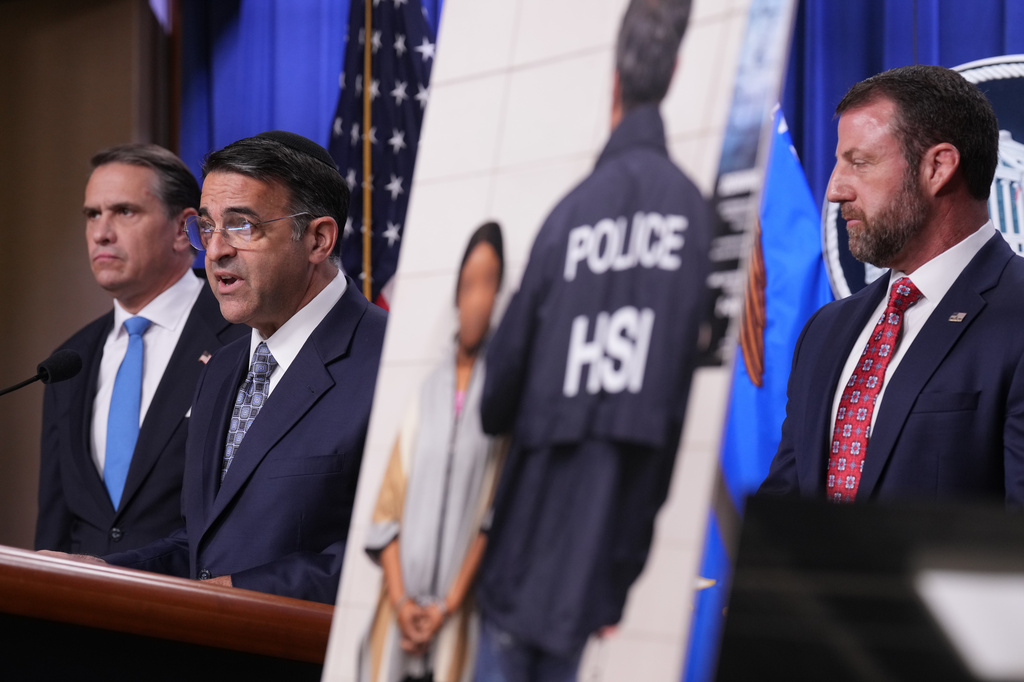
Daniel Rosen, U.S. Attorney for the District of Minnesota, speaks during a news conference at the Department of Justice, Wednesday Sept. 30, 2026, in Washington, as Attorney General Todd Blanche, left, and Secretary of Homeland Security Markwayne Mullin, look on. (AP Photo/Jacquelyn Martin) |
Trump administration says it has no plans for ICE officers at polls. Activists are preparing, anyway — By Rebecca Santana and Ali Swenson
Department of Homeland Security officials say they don't plan to send immigration enforcement officers en masse to patrol the polls and dismissed concerns that they plan to do so as “fearmongering."
President Donald Trump, who has repeatedly raised the specter of widespread illegal noncitizen voting even as research and investigations show it is incredibly rare, hasn't said he would direct ICE officers to be at polling places but also hasn't ruled it out.
Election legal experts say federal law clearly prevents the government from deploying any armed troops, agents or officers to election sites except to “repel armed enemies of the United States.”
But organizations who represent Latino, Black and Asian American voters say the rhetoric and ICE's own activity make them worried at a time the number of immigration arrests is soaring as Trump carries out his mass deportation agenda.
Read more from Santana and Swenson on the polling place concerns. |
|
|
|
Ossoff and Collins hope track records of helping back home matter on Election Day |
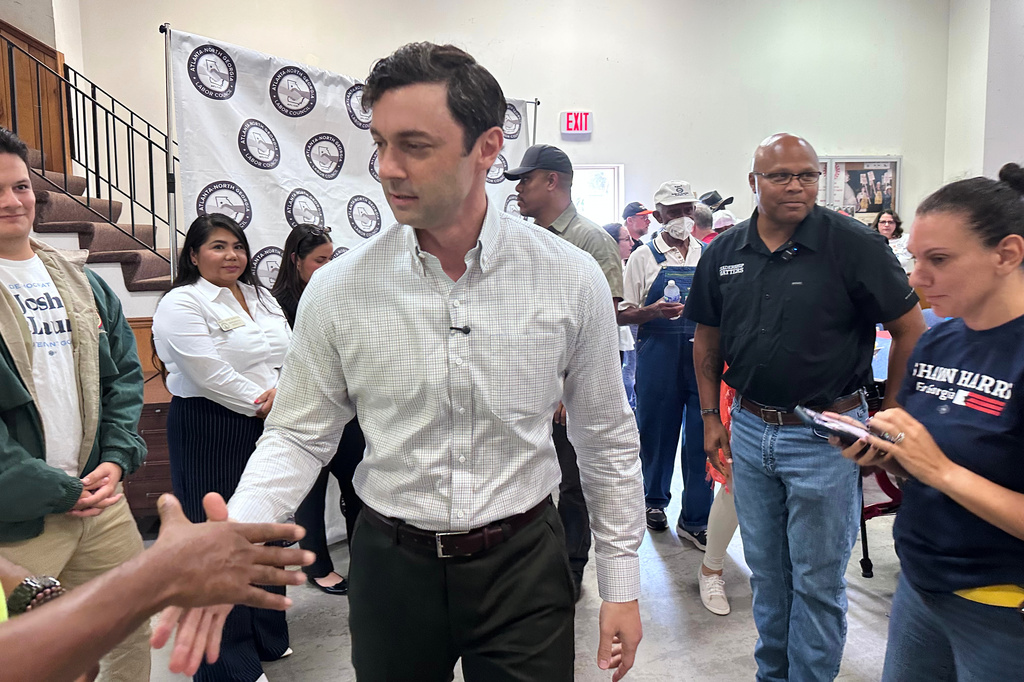
This photo taken with a smartphone shows Sen. Jon Ossoff, D-Ga., greeting union members at an Atlanta-North Georgia Labor Council (AFL-CIO) Labor Day lunch in Hapeville, Ga., Sept. 7, 2026. (AP Photo/Bill Barrow) |
How Jon Ossoff and Susan Collins are turning a mundane part of their jobs into a reelection pitch — By Bill Barrow and Patrick Whittle Democratic Sen. Jon Ossoff of Georgia and Republican Sen. Susan Collins of Maine began this election cycle widely viewed as their respective parties’ most vulnerable members. But as Trump's second presidency and partisan fights on Capitol Hill dominate national political conversation, the senators' campaigns have played out differently than expected in part because of the more mundane part of their jobs: helping the people back home. For Ossoff, it means attracting endorsements from Republican officials, including Valdosta Mayor Scott James Matheson, that have made it harder for Mike Collins to land attacks claiming that the liberal first-term senator from Atlanta doesn’t represent Georgia. For Susan Collins, it means a go-to buffer argument as she runs with the weight of Trump’s lagging popularity and her support for various parts of his agenda.
A month from Election Day, Ossoff has gone from a top GOP target to a widely perceived favorite to defend a seat that Democrats cannot afford to lose as they try to regain a Senate majority.
And as Republican incumbents like Ohio Sen. Jon Husted are increasingly viewed as underdogs, strategists in both parties still view Susan Collins’ race as a tossup.
Read more from Barrow and Whittle on these two incumbents. |
|
|
|
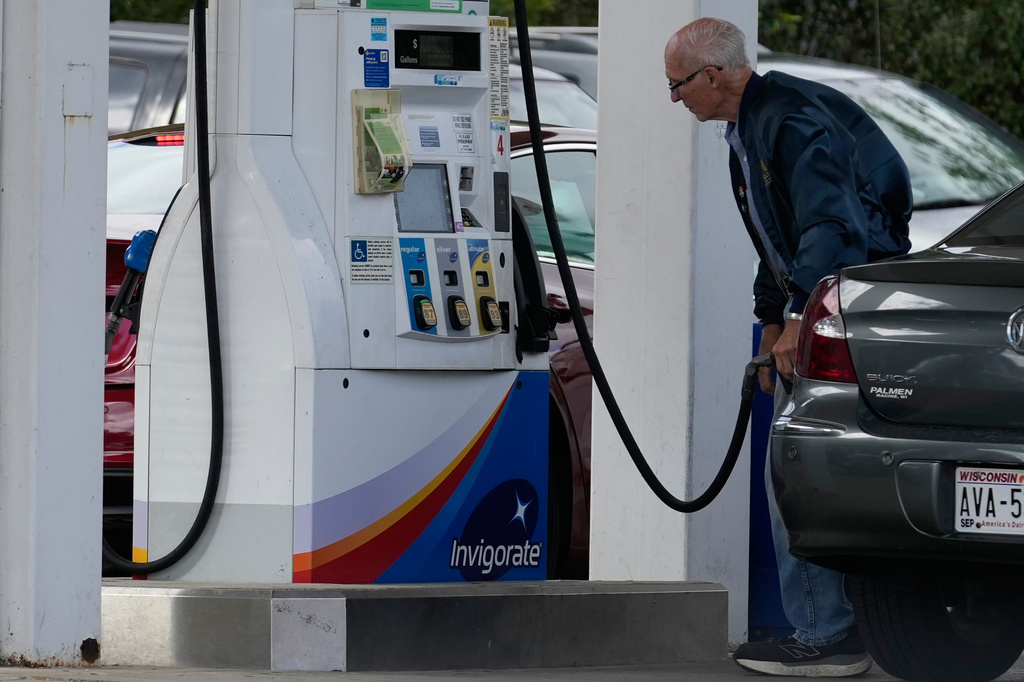
A customer checks gas price while he fills up his vehicle’s tank at a gas station in Racine, Wis., Tuesday, Sept. 22, 2026. (AP Photo/Nam Y. Huh) |
Most Americans blame Trump for high prices as his economic approval hits new low, AP-NORC poll shows — By Jill Colvin and Linley Sanders
— Jill, Linley and our polling team were out this week with a very newsy AP-NORC poll, less than five weeks before Nov. 3. There is a lot packed in here, and you will see more from this poll in the days to come.
In GOP Speaker Mike Johnson’s district, the political mood is mixed for the party in power — By Lisa Mascaro
— Lisa spent time in House Speaker Mike Johnson’s district, talking to a variety of people about how their lives have been impacted by the GOP’s “Big Beautiful Bill.”
Trump touts America.gov, but its government-sourced AI answers undercut many of his statements — By Meg Kinnard, Chris Rugaber and Will Weissert
— We asked the Trump administration’s newly revamped America.gov website questions on several topics including the 2020
election and climate change. Read this story by Meg, Chris and Will to find out what the government-sourced AI answers were. |
|
|
|
Political book club: What's on Meg Kinnard's reading list |
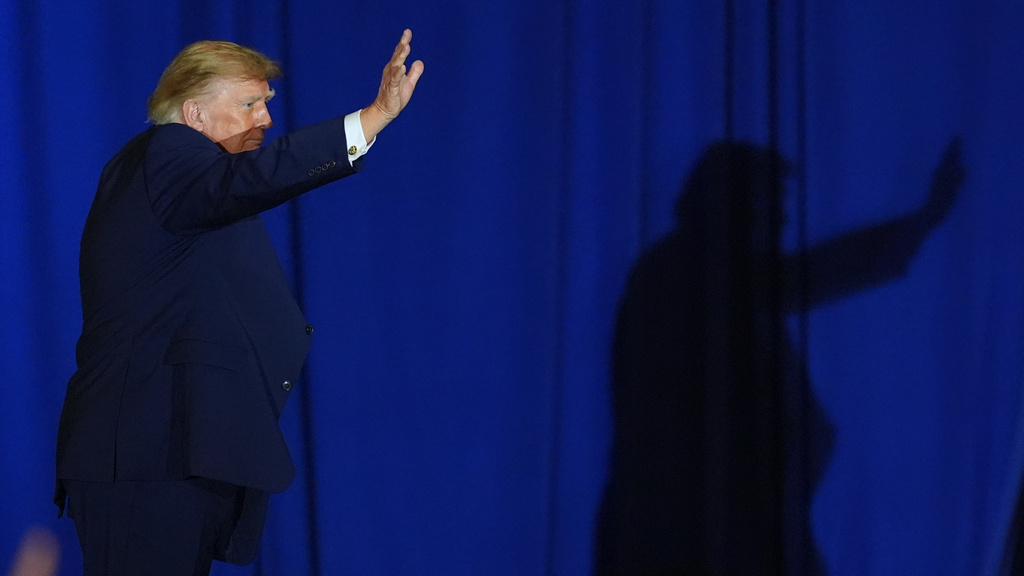
President Donald Trump waves at a campaign rally at the Choctaw Event Center, Thursday, Oct. 1, 2026, in Durant, Okla. (AP Photo/Julio Cortez) |
Covering a presidential administration sometimes feels like drinking out of a firehose, with a nonstop barrage of multifaceted news and a plethora of major themes all emerging at the same time. Periodically stopping to take stock of what's transpired — not to mention the how or why — is hard to do but is necessary, to try to get the full picture.
In that vein, this week I picked up "Regime Change: Inside the Imperial Presidency of Donald Trump" by Maggie Haberman and Jonathan Swan of The New York Times.
Delving into the first year of his second term in office, "Regime Change" encapsulates how different Trump’s return to the White House in 2025 has been from his first term — and also gets at how much losing the 2020 election changed Trump's thinking on how he'd carry out his second go round as president.
Read more on Haberman and Swan's book from Will Weissert. |
|
|
|
A plane flies over an anti-arch structure lifted up by demonstrators at Memorial Circle to protest the proposed Triumphal Arch, Thursday, Oct. 1, 2026, in Arlington, Va. (AP Photo/Allison Robbert) |
|
|
|
|