| | Bolsonaro unexpectedly wins Brazil’s first round, Spain’s PM calls snap election as housing bill fai͏ ͏ ͏ ͏ ͏ ͏ |
| |  | Flagship |  |
| |
|
The World Today |  - Bolsonaro wins first round
- The Brazil-US parallels
- Spain’s PM calls snap election
- Euro drops on debt worries
- Trump reups cash payments
- Hormuz traffic rebounds
- Japan seeks China détente
- Tigray conflict flares again
- The FlyDubai debacle
- A new Richard II adaptation
 The London Review of Substacks, and a recommendation for an engrossing biography of an 18th-century botanist. |
|
Brazil heads for election runoff |
 Diego Herculano/Reuters Diego Herculano/ReutersBrazil’s presidential election will go to a runoff on Oct. 25, after conservative challenger Flávio Bolsonaro unexpectedly emerged as the favorite in the first-round vote. Polls seesawed in the runup to the election as both Bolsonaro — whose father was banned from running after having led a coup attempt — and left-wing incumbent President Luiz Inácio Lula da Silva traded corruption allegations, a key issue that defined the race. A Bolsonaro win would confirm Latin America’s shift to the right: The seven most recent elections there have all been won by conservative candidates, most of them friendly to the Trump administration and its ambition of reasserting hegemonic power in the region to counter China’s growing influence. |
|
Brazil and US election parallels |
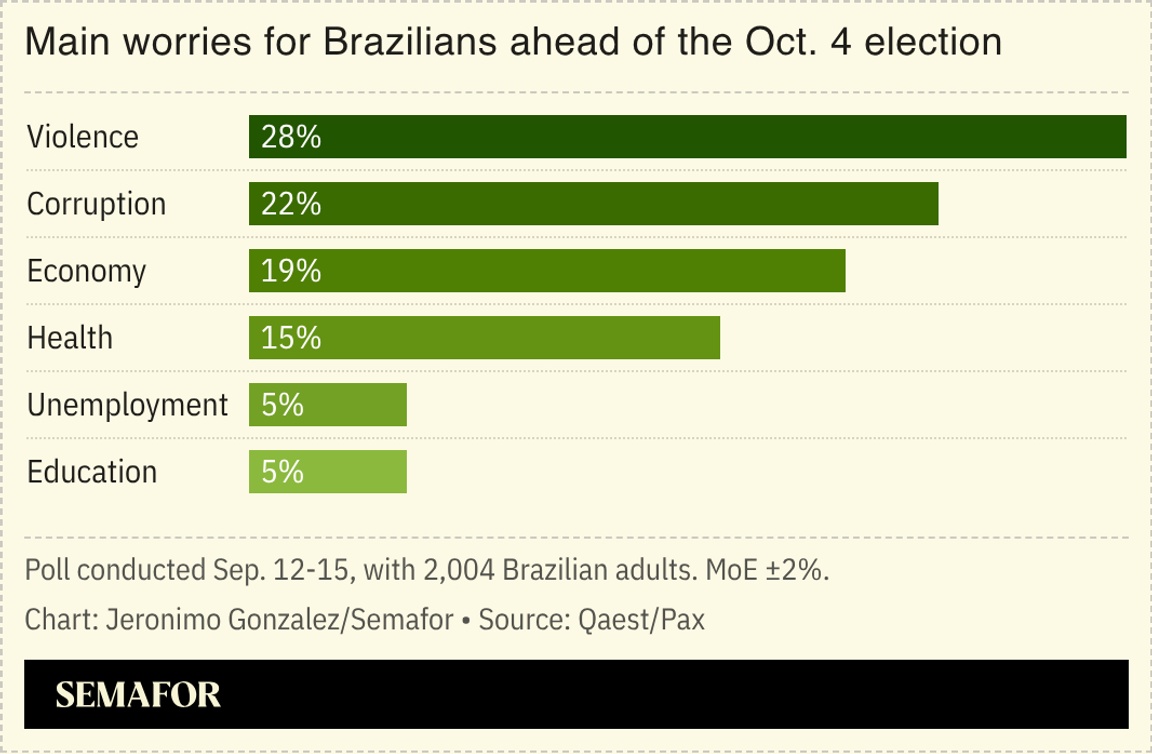 The first round of Brazil’s election paralleled US politics, a prominent analyst argued. Like in the 2024 race for the White House, pocketbook issues, scandals, and street crime distracted voters from the sins of the previous right-wing government: Flávio Bolsonaro — whose father attempted a coup, and whose brother was accused of courting US tariffs in response to the alleged political persecution — surprisingly emerged as the leader. The rightists also made major gains in Congress and governor races, setting the stage for an emboldened return. Meanwhile, a Bolsonaro win, much like US President Donald Trump’s last year, would allow him “to pursue [an] agenda and exact revenge upon enemies including the so-called Deep State,” Americas Quarterly’s editor wrote. |
|
Spain’s PM calls snap election |
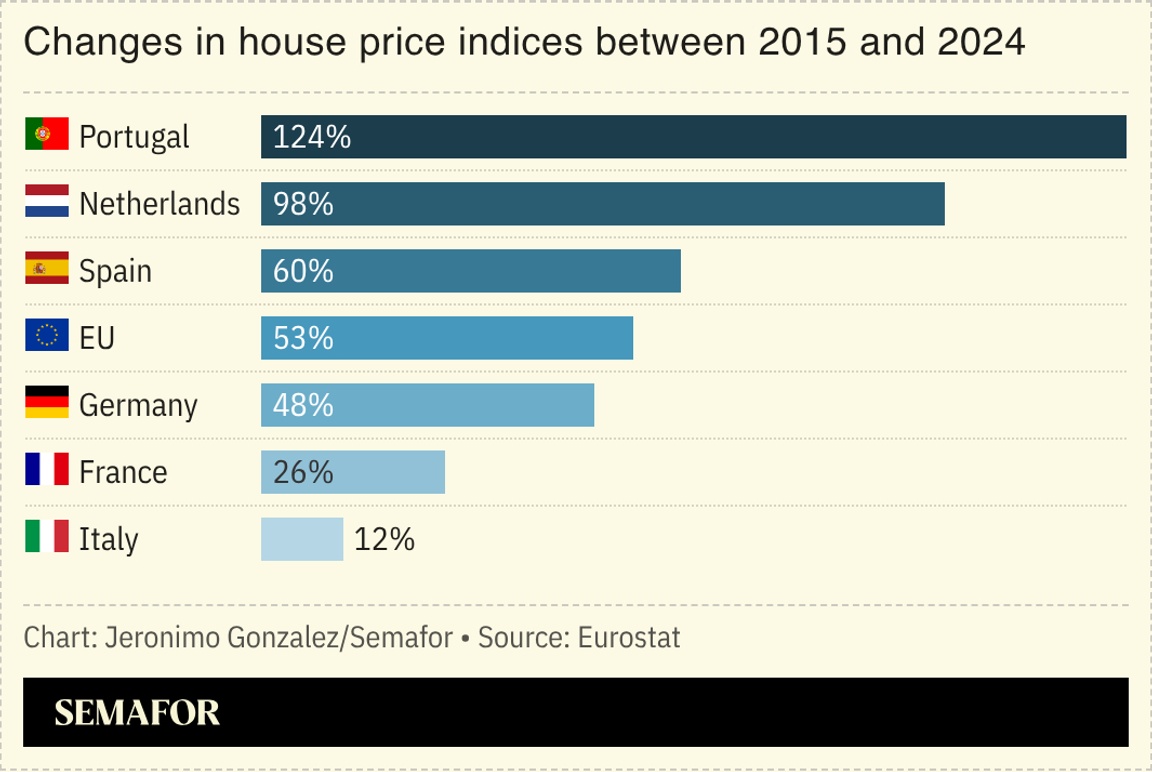 Spanish Prime Minister Pedro Sánchez called a snap election next month after parliament rejected his proposed plan to tame public anger about the country’s housing crisis. A temporary eviction of an 87-year-old pensioner from her Madrid home has galvanized demonstrations that have spread across Spain. Soaring property prices have upended European politics from Portugal to Germany, with the issue rising to the top of voter worries in several countries as prices race ahead of incomes. Home ownership in the EU declined last year, data showed. Experts say the continent should take a page from the US: “If Europeans want to meet their housing needs, they will probably have to revisit their zoning systems, just like Americans,” Works in Progress wrote. |
|
Euro plummets on economic fears |
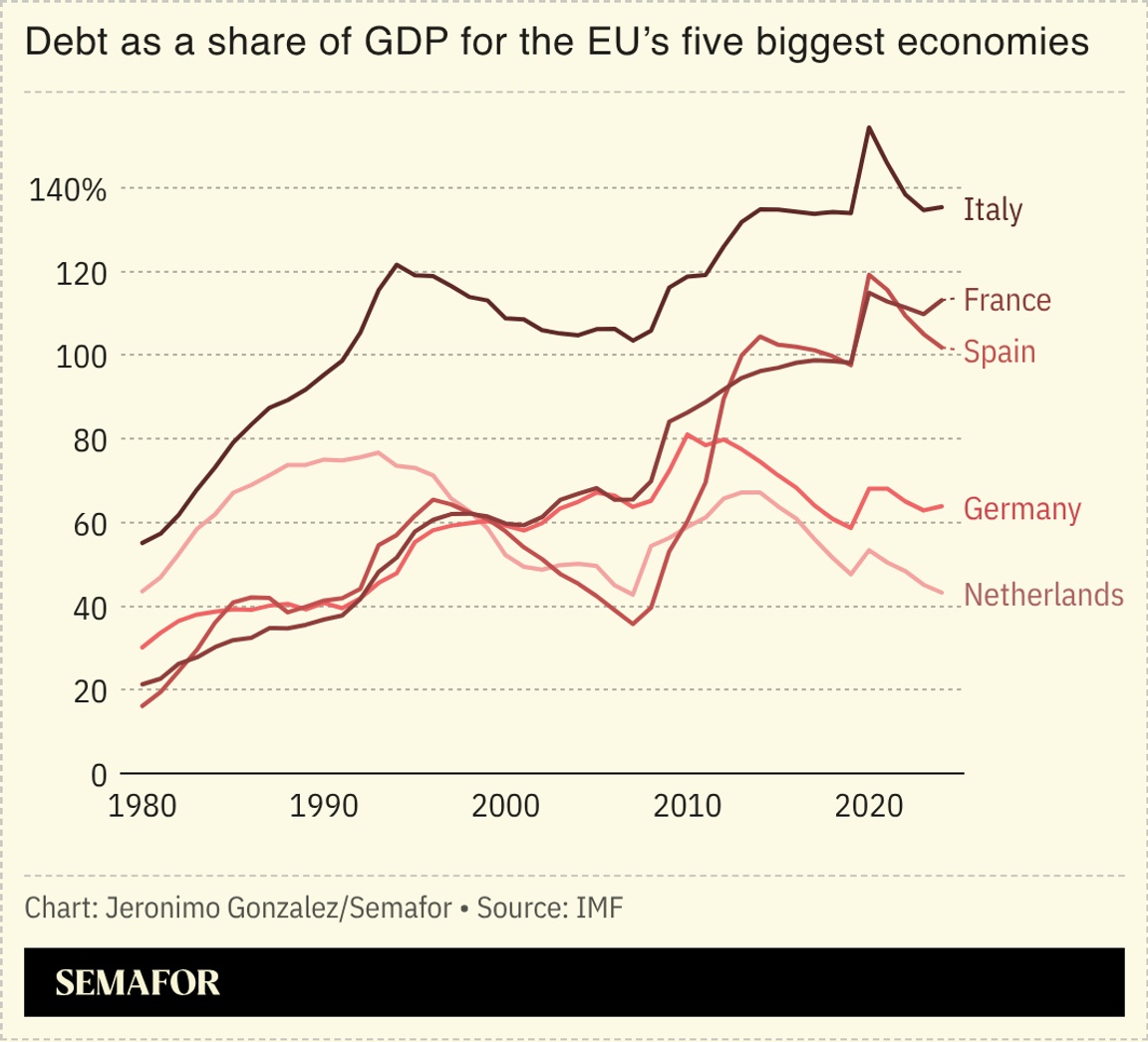 The euro sank to its lowest level against the dollar since May 2025 over Spain’s snap elections added to mounting fiscal and political worries across the region. Investors have grown increasingly alarmed over the eurozone’s debt burden, moribund economic growth, and persistent inflation. France is a particular cause for concern: The spread on 10-year French bond yields above German ones — the European benchmark — briefly surged to more than 150 basis points due to concerns about Paris’ huge debt pile and political uncertainty, with far-right and far-left parties ascendant ahead of presidential elections next year. Previous efforts to corral France’s public finances with spending cuts have, however, been “economically and socially disastrous,” a leading economist wrote in Le Monde, arguing that Paris should prioritize “fiscal responsibility, not austerity.” |
|
Trump pledges cash ahead of vote |
|
Oil drops as Hormuz traffic rebounds |
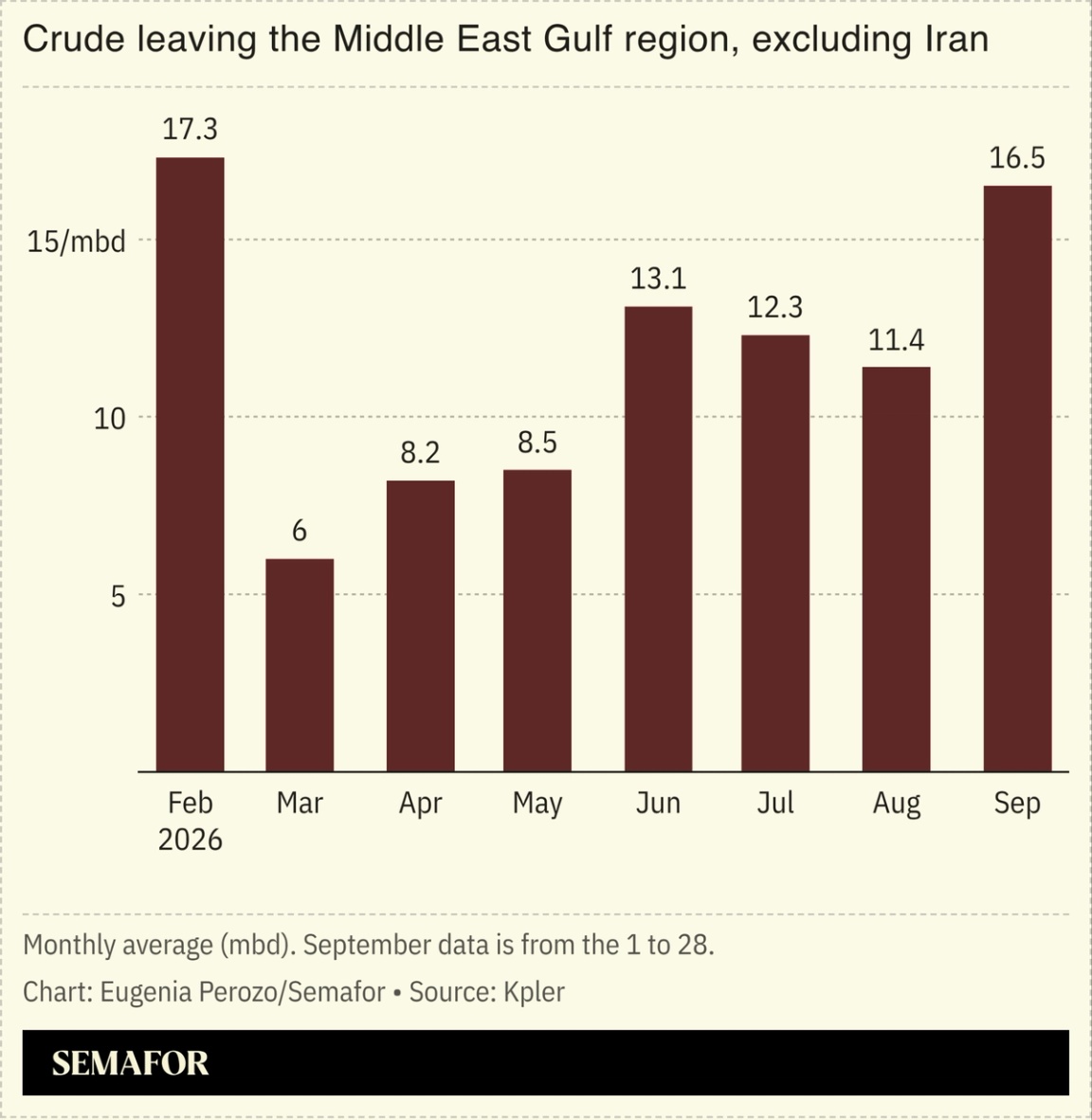 Oil prices fell as new data showed crude exports from the Middle East surpassed prewar levels, though any respite may be short-lived as attacks on tankers traversing the Strait of Hormuz increased. The rise in sales, according to data compiled by research firm Kpler, came alongside G7 nations releasing energy stockpiles in a bid to tame surging diesel prices. Separately, liquefied natural gas cargoes exiting Hormuz also reached their highest level since the war erupted. The rebound has largely been due to a US naval protection program and strikes against Iranian radar sites, but Tehran has upped the number of strikes on vessels near Hormuz, threatening any energy trade resurgence. “Iran’s Hormuz leverage is fading,” RFE/RL noted, “but it isn’t gone.” |
|
Japan seeks détente with China |
 Edward Grattan/Reuters Edward Grattan/ReutersJapan’s prime minister promised to stabilize relations with China, the latest sign of thawing relations between the Asian powers. Sanae Takaichi set off a diplomatic firestorm last year when she said Japan’s military could intervene were China to try to take Taiwan by force; Beijing threatened Tokyo and demanded she apologize, though analysts pointed out she was largely stating longstanding Japanese policy. Her latest, more conciliatory remarks came after an unofficial Japanese envoy met with senior Chinese officials, the first such meeting since the row erupted. Still, tensions remain between the historical foes: Japan has begun debating whether it should obtain nuclear weapons and Japanese firms are exiting China in record numbers. |
|
Ethiopia captures Tigray capital |
 Tigrai Peace Force Handout via Reuters Tigrai Peace Force Handout via ReutersEthiopia said it had recaptured the capital of Tigray, dealing a major blow to the military alliance that launched an offensive against government forces last month. Experts fear a renewed conflict between Ethiopia and the Tigray People’s Liberation Front could lead to a severe humanitarian crisis, after hundreds of thousands of people died during the 2020-2022 civil war. The renewed conflict also threatens to spiral into a regional one: Ethiopia and Eritrea, which borders Tigray to the north, severed ties last week after Addis Ababa accused its neighbor of backing the rebel alliance alongside Egypt and Sudan. The decision marks a dramatic reversal, after Ethiopian and Eritrean forces united in fighting the TPLF during the previous conflict. |
|
Security blunders behind FlyDubai threat |
 Ammar Awad/Reuters Ammar Awad/ReutersA slew of revelations underlined the catalogue of security blunders behind last week’s FlyDubai incident, in which a co-pilot was blocked from trying to crash an airliner bound for Israel. Omani, Israeli, and Emirati authorities all missed clear warning signals — from months prior to the flight through to its takeoff — that should have barred Hamam al-Hammammi from having come so close to carrying out a major attack. In Israel in particular, where the episode has become intensely politicized with weeks to go before tight parliamentary elections, officials and politicians have largely tried to deflect blame: “The buck, in this country, often stops nowhere,” a senior Jerusalem Post writer said. |
|
Actress to play Richard II in new play |
|
|


