
| Forwarded this email? Subscribe for more |



 |
| By The Free Press |
|

It’s Wednesday, October 7. Today, we’re bringing you a different Front Page. It’s dedicated to one thing: the third anniversary of Hamas’s attack on Israel—what it meant then, and what it means now.
Many of the ways in which the world changed over the last three years are by now familiar. A disorienting new normal for Israelis, who suddenly found themselves in a fight for national survival. A region turned upside down by the attack and the wars that followed. The celebration in the West of terror attacks as “resistance.” The emergence of Israel as a litmus test in American politics. The explosion of antisemitism across the world.
But on that terrible day three years ago, none of these consequences were clear.
Today, we bring you stories on the world October 7 made. Douglas Murray on Israel’s determination to fight on—and why it is winning. Eli Lake on how the American foreign policy establishment is rewriting the history of the Gaza war. Simon Sebag Montefiore on the October 7 wars and how they will change the Middle East. Former British prime minister Tony Blair on the latest example of how October 7 has helped mainstream antisemitism in Western politics. And MIT engineering systems professor Yossi Sheffi on what happened after he published a book about antisemitism on campus following the attacks.
But first we want to tell you about the people on the ground who October 7 left behind, starting with those who survived the day, but never fully recovered.
 |
Some 1,200 people were slaughtered three years ago today, and 251 taken hostage. But there were countless others whose lives were forever changed.
Today, Polina Fradkin talks to the families of those lost to suicide in the wake of October 7, the therapists who work around the clock to spot suicidal ideation before it’s too late, the lingering fear among Israelis that their loved ones could be next—and the people who refuse to lose hope in their home. Read her story about the long psychological shadow cast by the atrocity.

For Avinatan Or, October 7 was the start of what would become 738 days in Hamas captivity, after he was abducted from the Nova festival. Last month, his memoir was published in Hebrew in Israel, and swiftly became a No. 1 bestseller. Today, we’re proud to bring you an exclusive English excerpt from the book—about the experiences that led him, five months into captivity, to literally dig his way to freedom. His tale is one of extraordinary resilience and bravery in the darkest circumstances imaginable. Read Avinatan on his time in the tunnels.
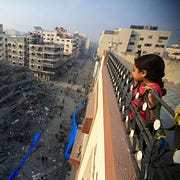
And now we turn to the Palestinian people, for whom the shadow of October 7 is impossible to escape. They live among its consequences: Much of Gaza has been reduced to rubble, their cause has been warped into a Western protest movement and, somehow, Hamas still operates amid the wreckage. The attacks three years ago, writes Ahmed Fouad Alkhatib, a Gazan who himself lost family members and his childhood home in Israel’s retaliatory response, triggered “the most catastrophic chapter in contemporary Palestinian history.” Read his piece on how Hamas turned Gaza into the “fulcrum for instability, devastation, and conflict in the Middle East,” and what Gazans—and their ostensible allies across the West—must do to chart a path forward.
| ADVERTISEMENT | |||
|

 |