| | In today’s edition: Houthi strikes widen the war, the Gulf counts the cost of living with Iran, and ͏ ͏ ͏ ͏ ͏ ͏ |
| |  Jeddah Jeddah | Damascus | Kuwait City |
 | Gulf |  |
| |
|
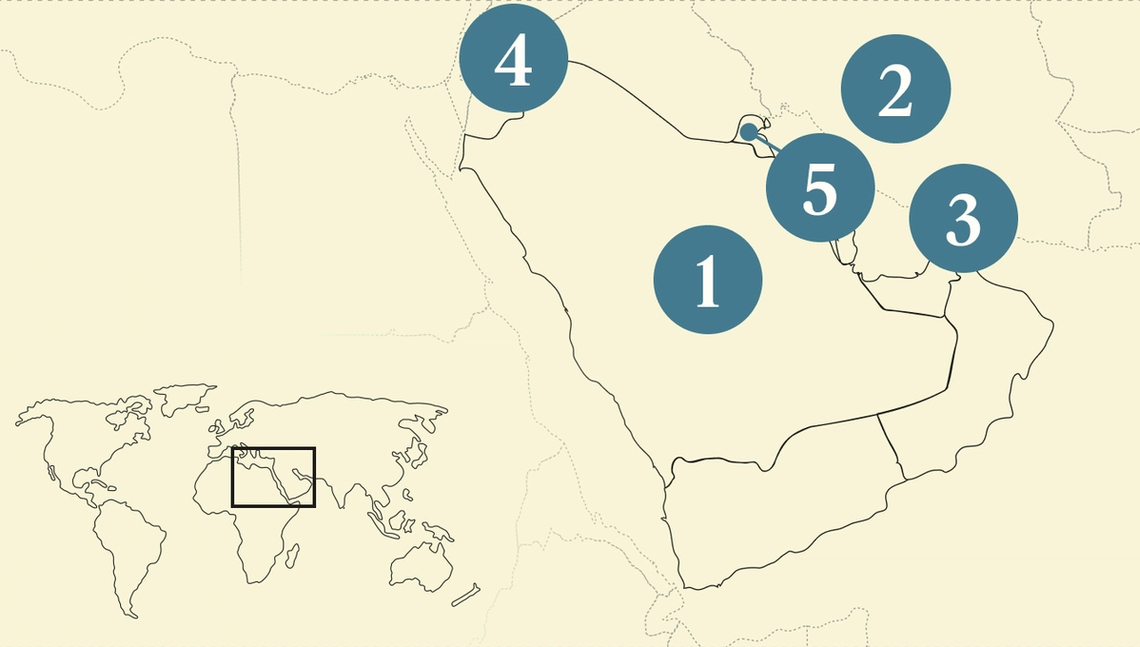 - Houthis target Riyadh
- Iran, a costly neighbor
- Tanker crunch looms
- Alabbar’s Syria bet
- Kuwait’s citizenship purge
 Saudi Arabia crowned Khaleeji champions in raucous final. |
|
Houthis fire on Saudi cities |
 Houthi Military Media Handout via Reuters Houthi Military Media Handout via ReutersTensions in the Gulf spiked again as Iranian attacks on ships crossing the Strait of Hormuz increased and Houthi militias in Yemen launched missile or drone attacks on Aden airport and the Saudi cities of Khamis Mushait and Riyadh. Although intercepted, the Houthi attacks showed the group remains able to threaten Saudi infrastructure and shipping through the crucial Bab el-Mandeb waterway, despite progress by Saudi-backed Yemeni government forces in reclaiming territory lost last month. The Houthis’ advances were enabled by a failure of Saudi and US forces to respond to requests for air support from Yemeni generals, The New York Times reported. The Iran-backed group has become a stronger, more organized fighting force with more advanced technology since a 2022 truce, while the Yemeni government’s forces have splintered. US Senator Chris Murphy, who has spent the past few days in Riyadh, said on X “this is now a full blown regional war.” — Matthew Martin |
|
The new price of national security |
 IRGC/WANA/Handout via Reuters IRGC/WANA/Handout via ReutersThe Gulf is entering a costly new era of accommodating Iran, regardless of whether Tehran and Washington break their stalemate. Spending on defense, protecting energy and infrastructure assets, and creating redundancies in trade and energy flows will become standard, according to Karen E. Young, a senior fellow at the Washington-based Middle East Institute. These bills arrive as oil prices — expected to plunge if the Strait of Hormuz reopens — are unlikely to return to the levels that financed earlier waves of public investment, she writes. Gulf states won’t have to foot the bill alone. Blackstone, Brookfield, and KKR agreed to invest $16 billion in July for a 49% stake in Kuwait’s oil pipeline network, the largest foreign investment in the country’s history. And BlackRock is stepping up its investments and hiring in the region, Semafor reported. |
|
Tankers could be next energy bottleneck |
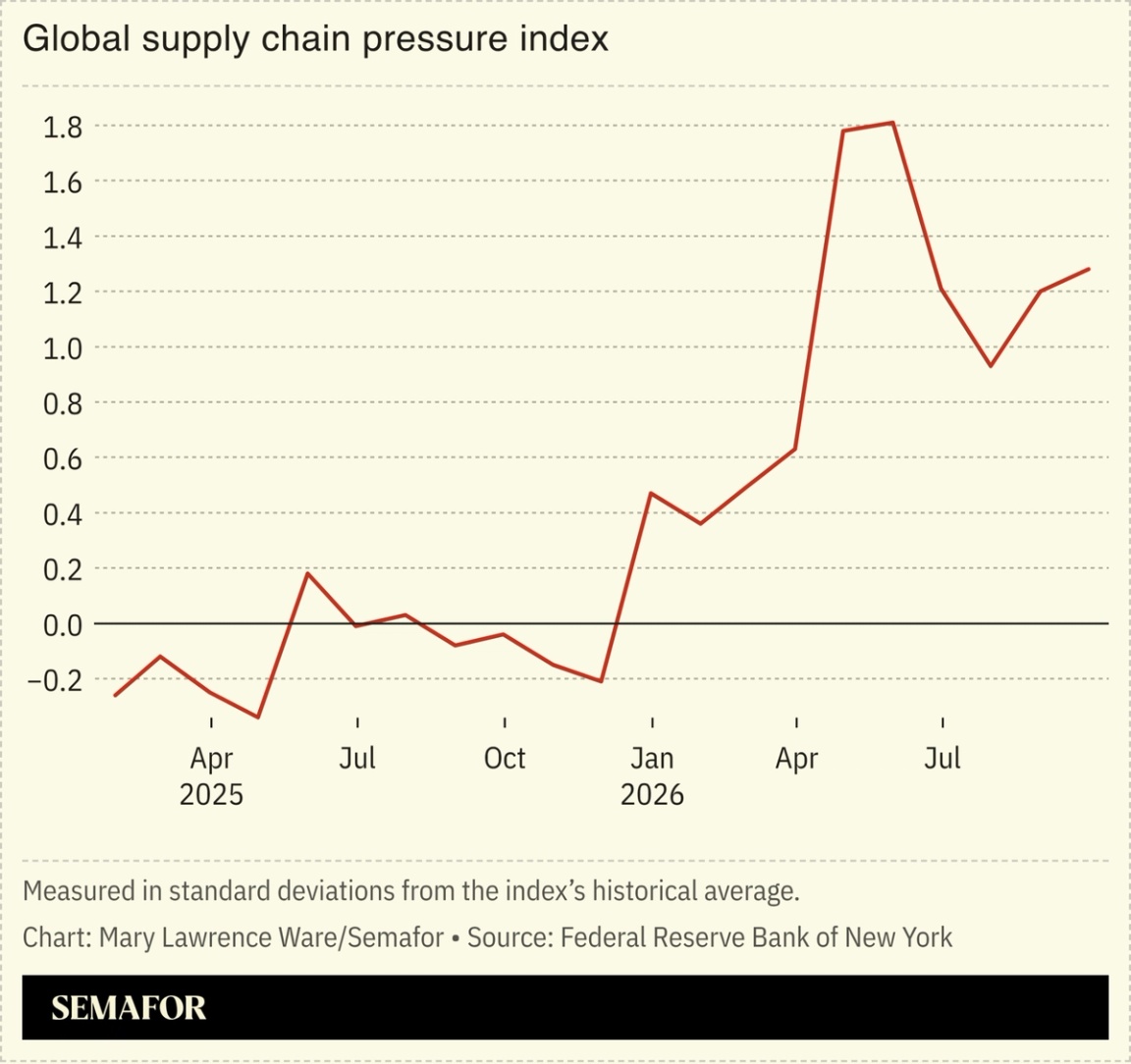 Drones struck two tankers in the Black Sea near Bulgaria on Tuesday, in the first attack on shipping in the NATO member’s exclusive economic zone. The strikes come during wars in Europe and the Middle East in which commercial shipping is regularly targeted, raising fears that the supply of tankers could become the next energy bottleneck. While crude oil shipments through the Strait of Hormuz have largely rebounded, the recovery has come at greater risk to tankers, 20 of which have been struck in the past month while passing through the Gulf waterway. The Iran conflict began “with a crude crisis … [that] turned into a product crisis,” the CEO of Vitol, the world’s largest independent oil trader, told the Financial Times. “It is turning into a shipping crisis.” |
|
Alabbar advances Syria projects |
 Latakia, Syria coastline. Courtesy of Eagle Hills Syria. Latakia, Syria coastline. Courtesy of Eagle Hills Syria.Abu Dhabi-based Eagle Hills signed a framework agreement with Syria’s government to build a housing development in Damascus and a tourism project in the coastal city of Latakia, advancing founder Mohamed Alabbar’s plan to invest $18 billion in the country. Alabbar said he would prioritize using Syrian contractors and sourcing supplies locally for the projects, which are expected to create more than 40,000 jobs but the value of which wasn’t disclosed, according to The National. Gulf developers are piling into Syria’s reconstruction, part of a broader effort that’s aligned with US interests to fill the gap left after Iran and Russia lost influence with the fall of the previous regime in 2024. It also offers the UAE’s real estate titans growth away from their saturated domestic market — Sharjah-based Arada plans a $7 billion project west of Damascus.
— Ed Clowes |
|
Kuwait revokes more citizenships |
 Stephanie McGehee/Reuters Stephanie McGehee/ReutersKuwait has stripped another 415 people of their nationality under sweeping new decrees. Billionaire investor Mahmoud Haidar was among those listed in the country’s official national gazette, adding to a growing number of public figures who have been ensnared in the crackdown, The New Arab reported. The latest purge follows new rules introduced in August that replaced paper nationality certificates with electronic ones. Kuwait’s emir dissolved the legislature — once viewed as one of the most powerful elected bodies in the Gulf — in May 2024 before embarking on a regulatory overhaul that has stripped at least 50,000 people of citizenship. Authorities say some of them held dual nationality, which is illegal for Kuwaitis, while others had obtained citizenship through fraud; rights groups say the government’s political opponents have also been targeted. |
|
 Technology is at an inflection point. From AI to the forces reshaping business, science, and daily life, the pace of change is accelerating. Future Proof from Semafor Technology offers a direct look at the breakthroughs, risks, and questions defining what comes next. Hosted by Semafor San Francisco Bureau Chief Reed Albergotti, each episode features conversations with the builders, policymakers, and industry leaders shaping how technology is developed, adopted, and governed. In Future Proof’s debut episode, Cognition CISO and former Facebook security chief Alex Stamos takes aim at Silicon Valley’s “nihilism” and separates what he sees as the real — and imagined — risks of AI. Plus, he talks about how he plans to tackle cybersecurity’s coming “dark age” and why Aaron Sorkin’s version of Mark Zuckerberg wouldn’t attract employees. |
|
 AI- Egypt’s Hassan Allam Construction and India’s Sterling & Wilson won a contract worth an estimated $200 million to build the first phase of a Riyadh data center for Saudi AI company HUMAIN and Center3, the digital infrastructure arm of telecom operator STC. Construction is scheduled to take 16 months. — MEED
Food and Bev- Dubai-based Vision Hospitality, which runs the McGettigan’s chain of Irish pubs, will open three venues in the UAE this quarter, even though its revenue roughly halved in March and April after the Iran war began. “We have been exceptionally hurt, like everybody in our industry has been,” its CEO said. — AGBI
Real Estate- Dar Global, the Trump Organization’s main Gulf development partner, says it is ready to buy distressed homes in London’s Mayfair, Belgravia, and Knightsbridge. The developer is funding the hunt through its Saudi parent, drawing $151 million from a Dar Al Arkan shareholder loan this year. — AGBI
Sport- BC Partners Credit, a unit of UK-based private equity firm BC Partners, committed $300 million to LIV Golf as the bankrupt league rebuilds without Saudi Arabia’s Public Investment Fund. Players will become equity owners in the league and its teams under the plan, which needs bankruptcy court approval. — BBC
|
|
Saudi Arabia was crowned 27th Arabian Gulf Cup champions after beating the UAE in Jeddah on Tuesday. The home fans in the 60,000-strong crowd dwarfed some 12,000 traveling Emirati fans and smoked out the stadium, forcing an early stoppage. When play resumed, Saudi Arabia struck twice in quick succession to put the match to bed.  Ibraheem Abu Mustafa/Reuters Ibraheem Abu Mustafa/Reuters |
|
In yesterday’s column “The other coast,” Sharjah’s Khor Fakkan port on the Gulf of Oman was described as “a sliver of a terminal.” This was incorrect — the terminal is a major facility; the description was intended to refer to the patchwork of the emirate’s eastern coastline, where pockets of Sharjah territory are surrounded by Fujairah. |
|
|


