| | In this edition: Africa’s first credit rating agency launches, fuel price fears grow in South Africa͏ ͏ ͏ ͏ ͏ ͏ |
| |  | Africa |  |
| |
|
 - African ratings agency
- S. Africa’s fuel price fears
- Abiy renews port push
- DRC’s $20B payment problem
- Zambia reins in spending
- Oil security controversy
 An acclaimed Senegalese writer dies. |
|
Africa launches credit rating agency |
| | Tiisetso Motsoeneng and Yinka Adegoke |
| |
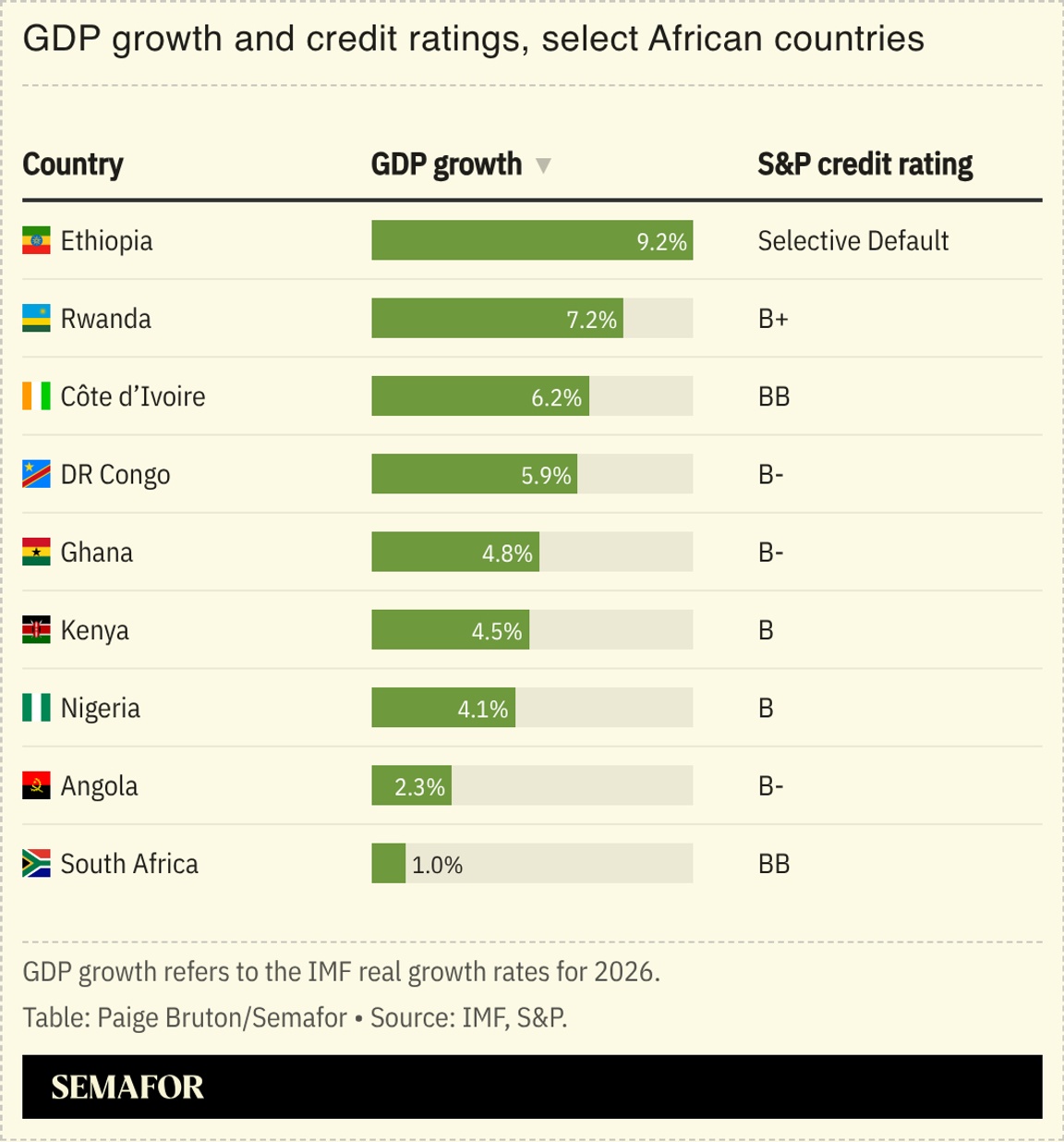 The African Union today launches the continent’s first pan-African credit rating agency, which regional leaders hope will redress decades of what they say has been unfairly high borrowing costs. The launch of the Africa Credit Rating Agency is part of a wider push by developing countries, at the G20 and the UN, to change how global finance prices the risk of investing: South Africa used its 2025 G20 presidency to put borrowing costs on the agenda. Only three African sovereigns hold investment grade ratings, 13 are rated at very high risk or in default, and 23 have no rating from the big agencies, which cuts them from international bond markets. The AU says this is a key reason why the continent’s external debt servicing costs climbed from roughly $60 billion in 2010 to more than $160 billion in 2024. |
|
S. Africa faces $600M fuel relief calls |
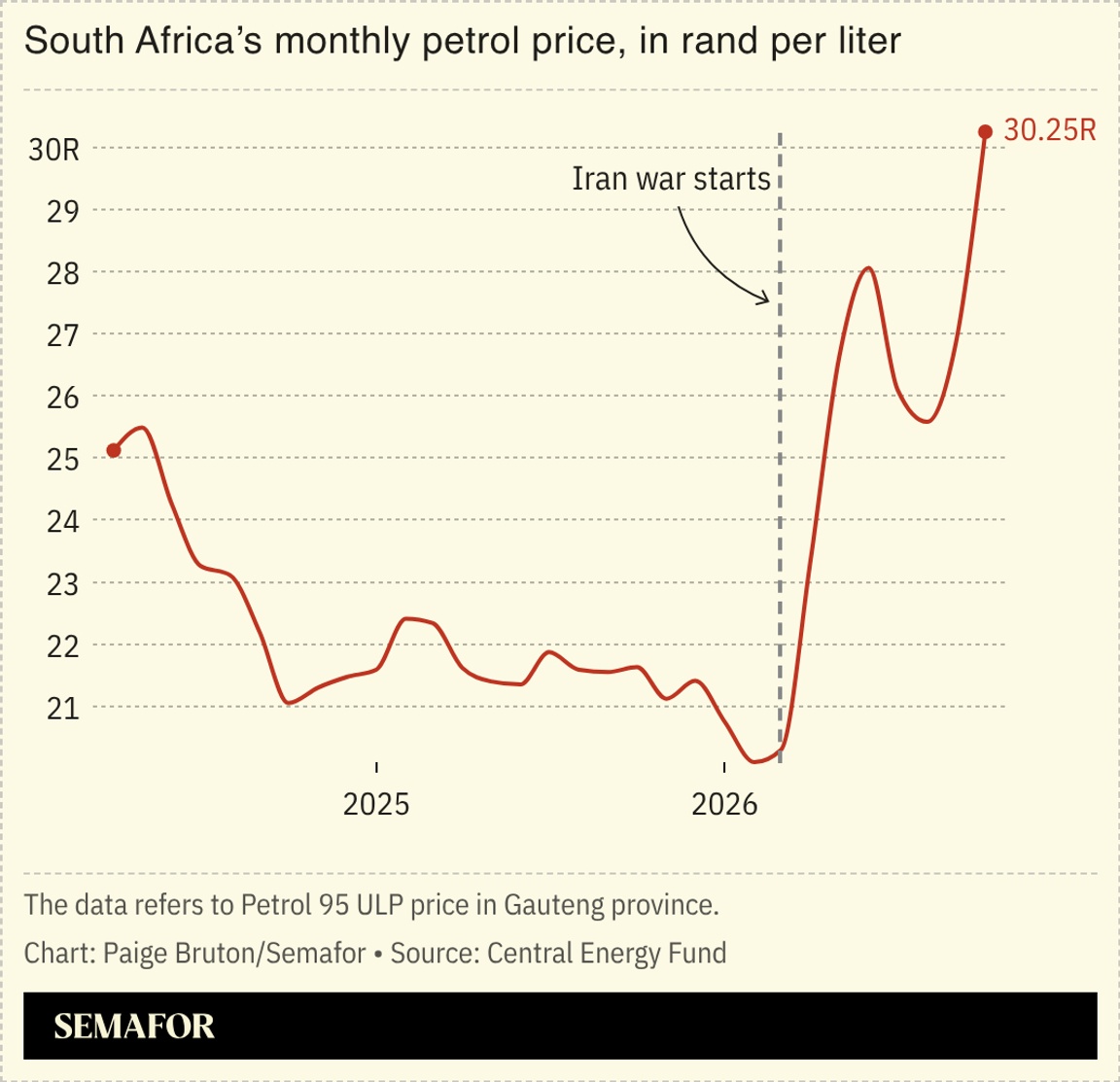 South Africa is facing growing pressure from labor unions and business groups to provide around $600 million in fuel relief, after the Iran war drove petrol prices to record highs in the continent’s biggest economy. The calls heap pressure on the coalition government to loosen its purse strings, threatening to undermine its reputation for fiscal discipline just as Finance Minister Enoch Godongwana prepares to present his three-year fiscal plan later this month. South Africa’s biggest labor federation, Cosatu, described the price shock, which sent a liter of fuel above 30 rand (almost $2) for the first time, as “a cost of living crisis” because workers spend nearly a third of their wages on transport. In response, the central bank has raised its main interest rate twice this year and warned in its monetary policy review this week that it has adopted a “firefighting” stance before energy prices spill over into broader inflation. The raised borrowing costs apply a secondary squeeze on households and businesses demanding fiscal relief. — Tiisetso Motsoeneng |
|
Ethiopia eyes Red Sea port |
 Ethiopia’s Prime Minister Abiy Ahmed being sworn in. Prime Minister’s Office/Handout via Reuters. Ethiopia’s Prime Minister Abiy Ahmed being sworn in. Prime Minister’s Office/Handout via Reuters.Ethiopia’s prime minister reignited the issue of sea access for his landlocked country, potentially further inflaming regional tensions amid renewed fighting in its northern Tigray region. After being sworn in for a second full term, Abiy Ahmed told parliament his government would work diligently to ensure Ethiopia had “an outlet to the sea.” Abiy, who has described this as an existential issue for his country, was not specific but neighboring Eritrea’s Red Sea port of Assab has long been seen by some in the government as a possible prize. It was part of Ethiopia until Eritrea seceded in the 1990s, leaving Ethiopia without a coastline. In a statement prior to Abiy’s remarks, Eritrea, along with Egypt, Somalia, and Sudan, said control of the Red Sea was the “exclusive responsibility” of countries that border it. The tensions over maritime access come with Ethiopia locked in a domestic conflict, as well: An alliance of rebel groups have pledged to overthrow the government four years after the end of a civil war in which hundreds of thousands of people died. — Damian Zane |
|
DRC uncovers $20B in ineligible payments |
| |  | Ruben Nyanguila |
| |
 Baz Ratner/Reuters Baz Ratner/ReutersFourteen mining companies in DR Congo paid at least $20 billion to ineligible subcontractors between 2020 and 2025, the country’s regulator told Semafor, as officials look to intensify inspections at a time when Kinshasa is courting foreign investment in the sector. Among the companies identified were Glencore, which declined to comment, and Ivanhoe Mines and Sicomines, which did not immediately respond to requests for comment. DR Congo wants new mining investment, but also insists that Congolese partners genuinely own and help run the businesses supplying its miners. Regulator Juan Ted Beleshayi said the violations found included the use of Congolese figureheads to disguise foreign control: “We are open to partnership,” he said. “But we don’t want people to come just for an extractive economy and leave us with holes.” |
|
 Technology is at an inflection point. From AI to the forces reshaping business, science and daily life, the pace of change is accelerating. Future Proof from Semafor Technology offers a direct look at the breakthroughs, risks, and questions defining what comes next. Hosted by Semafor San Francisco Bureau Chief Reed Albergotti, each episode features conversations with the builders, policymakers, and industry leaders shaping how technology is developed, adopted, and governed. In Future Proof’s debut episode, Cognition CISO and former Facebook security chief Alex Stamos takes aim at Silicon Valley’s “nihilism” and separates what he sees as the real — and imagined — risks of AI. Plus, he talks about how he plans to tackle cybersecurity’s coming “dark age” and why Aaron Sorkin’s version of Mark Zuckerberg wouldn’t attract employees. |
|
 Zambia plans to raise state spending by 7% next year, the smallest rise in budgeted expenditure in at least three years. The plans, presented at public hearings ahead of the budget, come about a month after President Hakainde Hichilema won a second term on promises to “double the size of the economy” and create 2 million new jobs over five years in Africa’s second-largest copper producer. Global demand for AI data centres, power grids, and electric vehicles has pushed prices to record highs in recent months, driving economic growth in Zambia. The country’s copper output is projected to rise to 1.08 million tonnes in 2027. That would be roughly 20% above this year’s likely total. The new budget is being written while Lusaka holds talks with the IMF about a new support program. The previous arrangement, a $1.7 billion rescue package agreed after Zambia defaulted on its Eurobonds in 2020, expired in January. — Tiisetso Motsoeneng |
|
Nigeria oil security sparks controversy |
 Marvellous Durowaiye/Reuters Marvellous Durowaiye/ReutersThe Nigerian state oil company’s disclosure that it spent $8 billion in 2025 to protect energy infrastructure has sparked calls for an inquiry into how the funds were used and cast fresh light on the country’s inability to protect key economic assets. NNPC said the amount rose by 26% compared to the previous year, but analysts and government critics have now raised questions about the vague nature of the expenditure. “What was paid? Who was paid? For what work? Where are the results?” Atiku Abubakar, a leading challenger to President Bola Tinubu in January elections, said. Nigeria is Africa’s top crude oil producer and exporter, with sales accounting for around 90% of foreign exchange earnings. But the oil sector has been constrained by theft and pipeline vandalism that has cost the country about $300 billion in recent years, compounding a worsening security crisis that has hampered the overall economy. And there have long been concerns about the alleged misuse and diversion of Nigeria’s oil money, with the state company NNPC often at the center of the storm. It did not respond to Semafor’s request for comment on its latest spending disclosure. |
|
 Business & Macro |
|
|


