| | The US Fed’s minutes signal that an October rate hike is unlikely, the cost of hiring one oil supert͏ ͏ ͏ ͏ ͏ ͏ |
| |  | Flagship |  |
| |
|
The World Today | 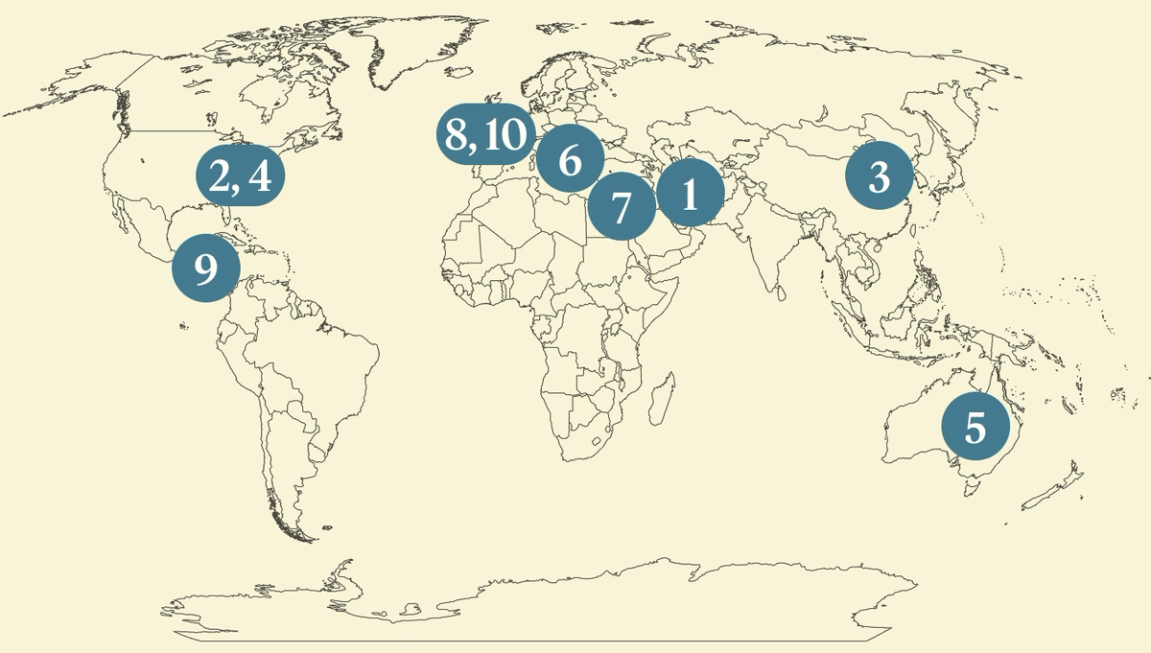 - Supertanker prices surge
- Fed divisions over rate hike
- China coming for the dollar
- Problems with a bull market
- Countries harden AI stance
- Rubio touts US power pursuit
- Netanyahu’s Oct. 7 legacy
- What French students want
- El Niño tests food system
- The biggest business class
 A ‘bracing antidote’ to the literacy crisis. |
|
Supertanker hiring costs surge 700% |
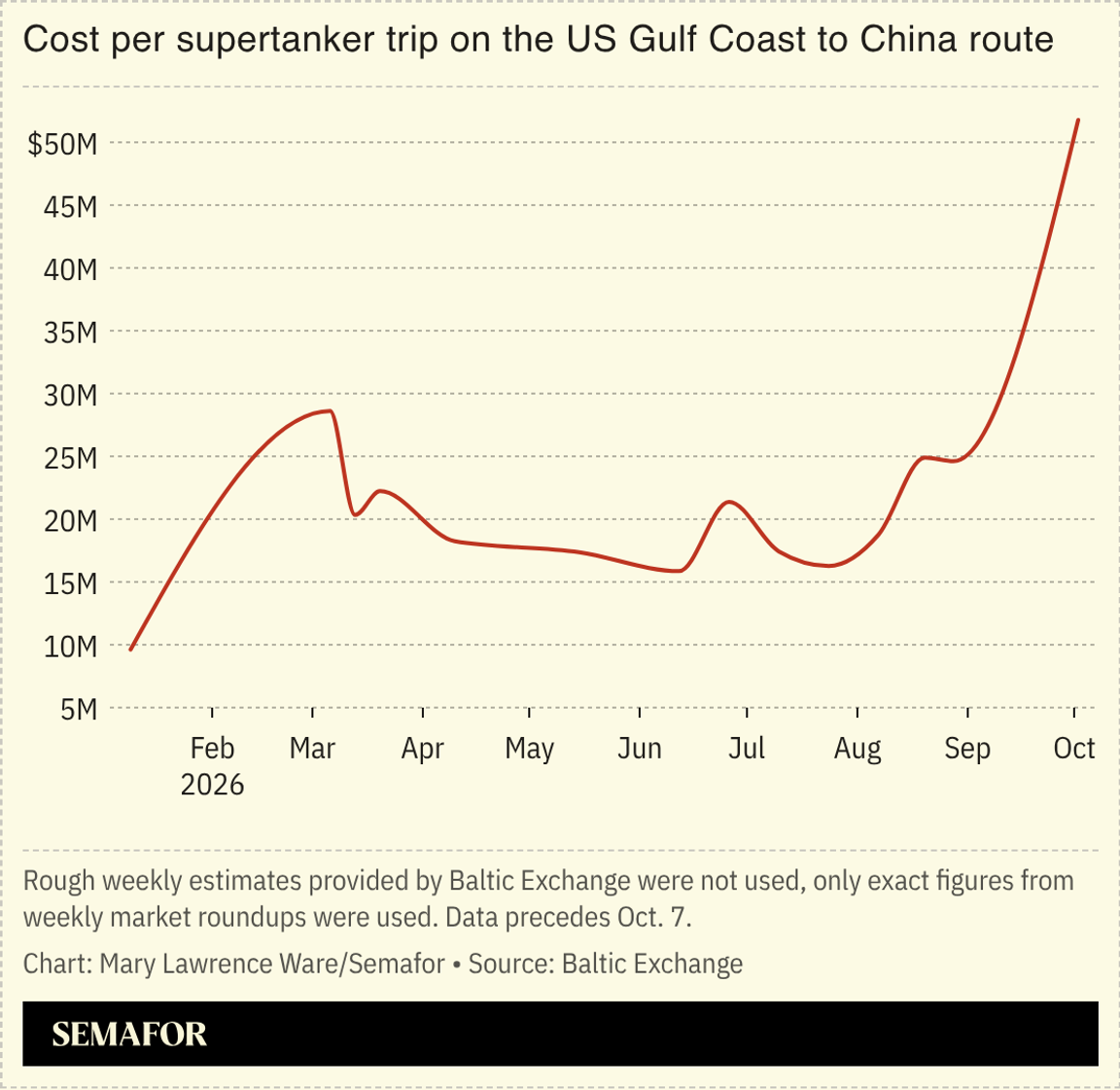 The cost of hiring one very large crude carrier to move US oil to Asia topped $77 million, new data showed Wednesday, surging more than 700% from its 2025 average. The Baltic Exchange reported the staggering numbers as attacks on tankers rose across multiple theaters of war. One was struck off Qatar Wednesday, after a drone strike sunk an oil tanker off Russia’s Black Sea coast, and two tankers were targeted in Bulgaria’s waters Tuesday. Meanwhile, US efforts to staunch the flow of Iranian oil through its shadow fleet network, often through sanctions, have faltered: “They can just start another company,” one tanker operator told The New York Times. “Once you start sanctioning marine service providers, it will never end.” |
|
Fed unlikely to hike in October |
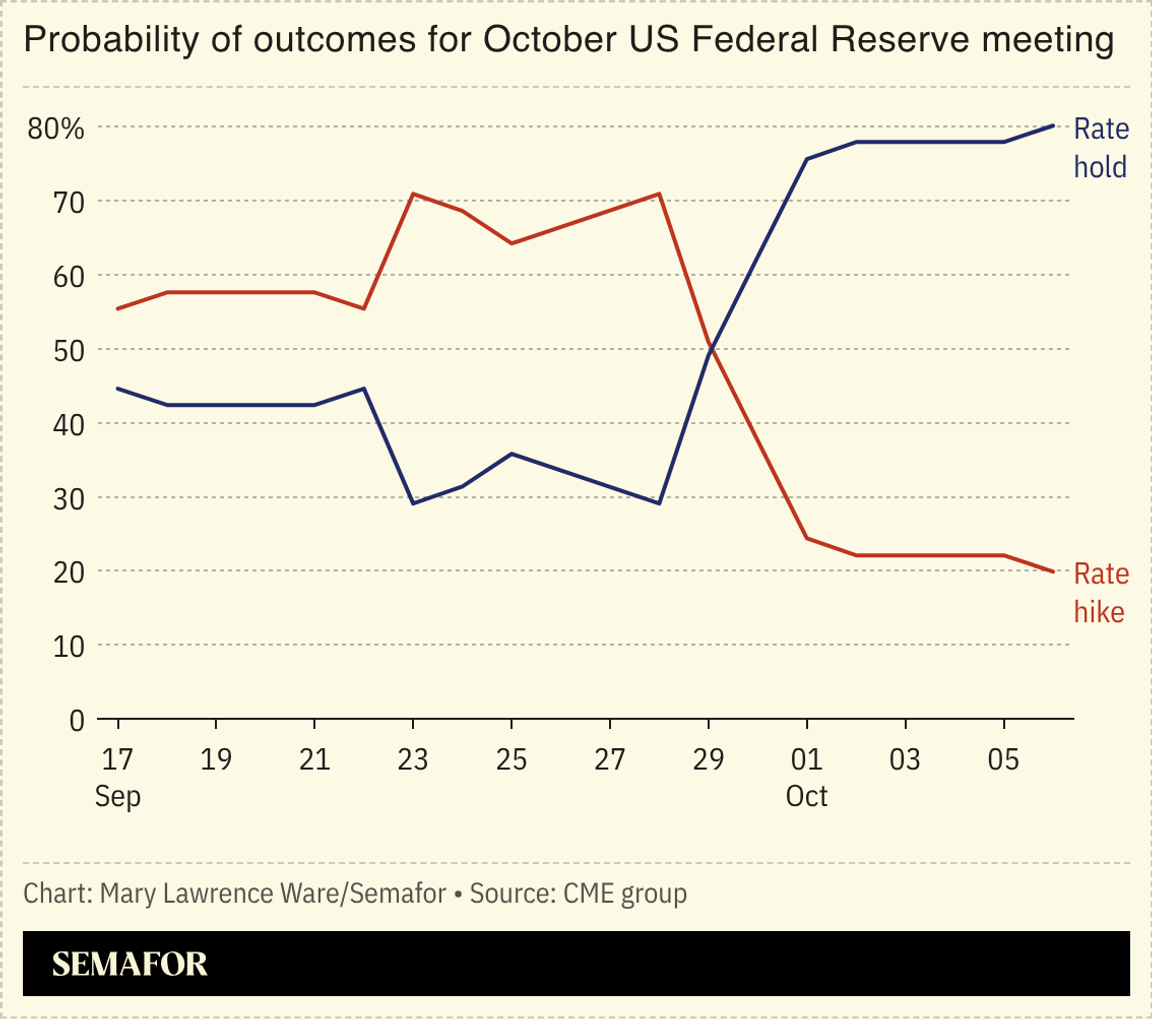 The market odds of a rate increase at the US Federal Reserve’s October meeting sank Wednesday after the central bank published minutes of its September meeting, though Fed watchers priced in a December hike. While the Fed’s policymakers voted unanimously to raise interest rates last month, they were divided over the rationale for doing so. Some sought to head off demand-driven inflation while others wanted to curb energy and AI-driven price shocks. Last week’s cooler-than-expected jobs report, along with a rise in bond yields, bolstered the case for a pause: “The long end of the yield curve has already gone up, and that’s the end that matters to the economy,” a former Philadelphia Fed president told The Wall Street Journal. |
|
China slowly comes for the dollar |
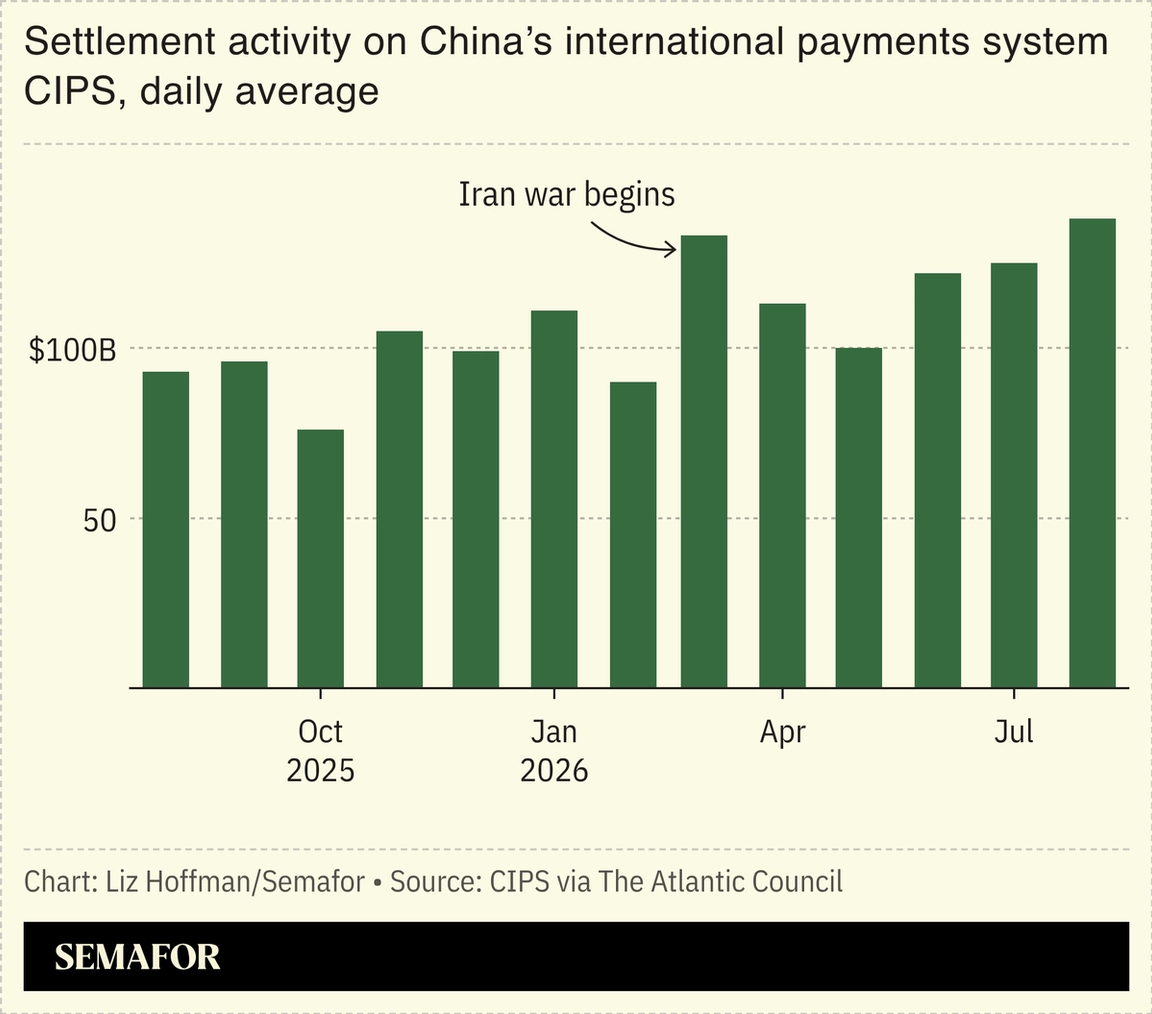 China’s competitor to the dollar-denominated system that zips money between global banks saw record daily volume in August, boosting Beijing’s efforts to build a parallel system of financial plumbing. The US dollar is at an 18-month high, and the greenback still underpins most global trade and foreign-exchange transactions. “But look underneath the hood and there’s some worrying signs,” an Atlantic Council expert told Semafor’s Liz Hoffman. Though China’s gambit to dethrone the dollar has faced setbacks — the Renminbi’s place in global central-bank reserve coffers has fallen since 2022 — “crises can reset the board,” Hoffman noted: The number of direct participants in Beijing’s cross-border interbank payment system has more than doubled since the West froze Russian assets following the invasion of Ukraine. |
|
The second-most hated rally |
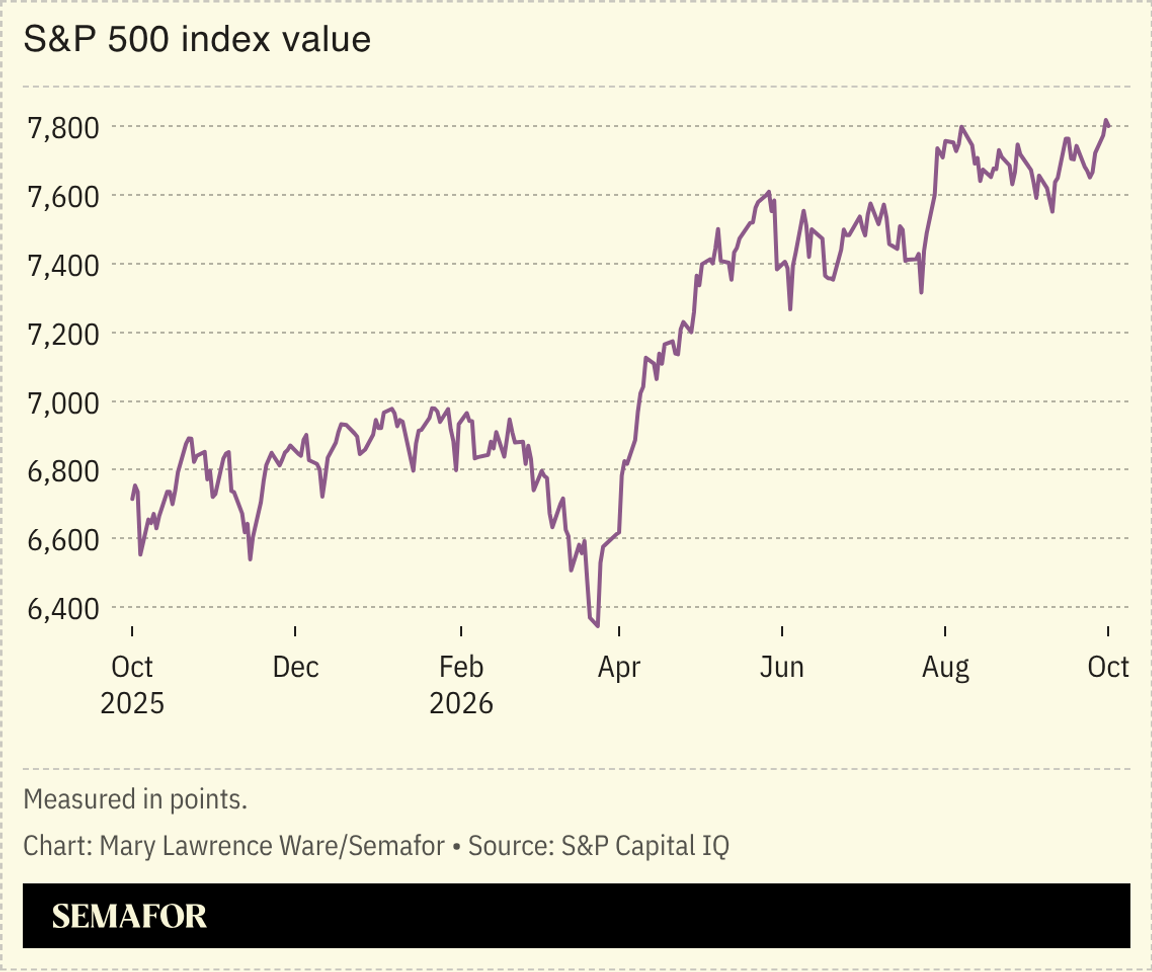 If the bull market of the early 2010s was called the “most hated rally in history,” this one may be a close second, Semafor’s business editor argued. Back then, investors underestimated the ability of the Federal Reserve to power a flagging economy, while today’s problem is “hyperscalers spending themselves into oblivion… and obscuring problems nearly everywhere else.” US stocks retreated from record highs Wednesday as long-term bond yields and oil climbed, with tech earnings later this month set to test the market’s durability: AI-related stocks dipped on fears that higher interest rates could hamper the data center buildout. “The margin for error has narrowed as it relates to earnings,” an analyst told CNBC, adding that hyperscalers’ earnings could “still carry the market higher.” |
|
Governments harden approach to AI risk |
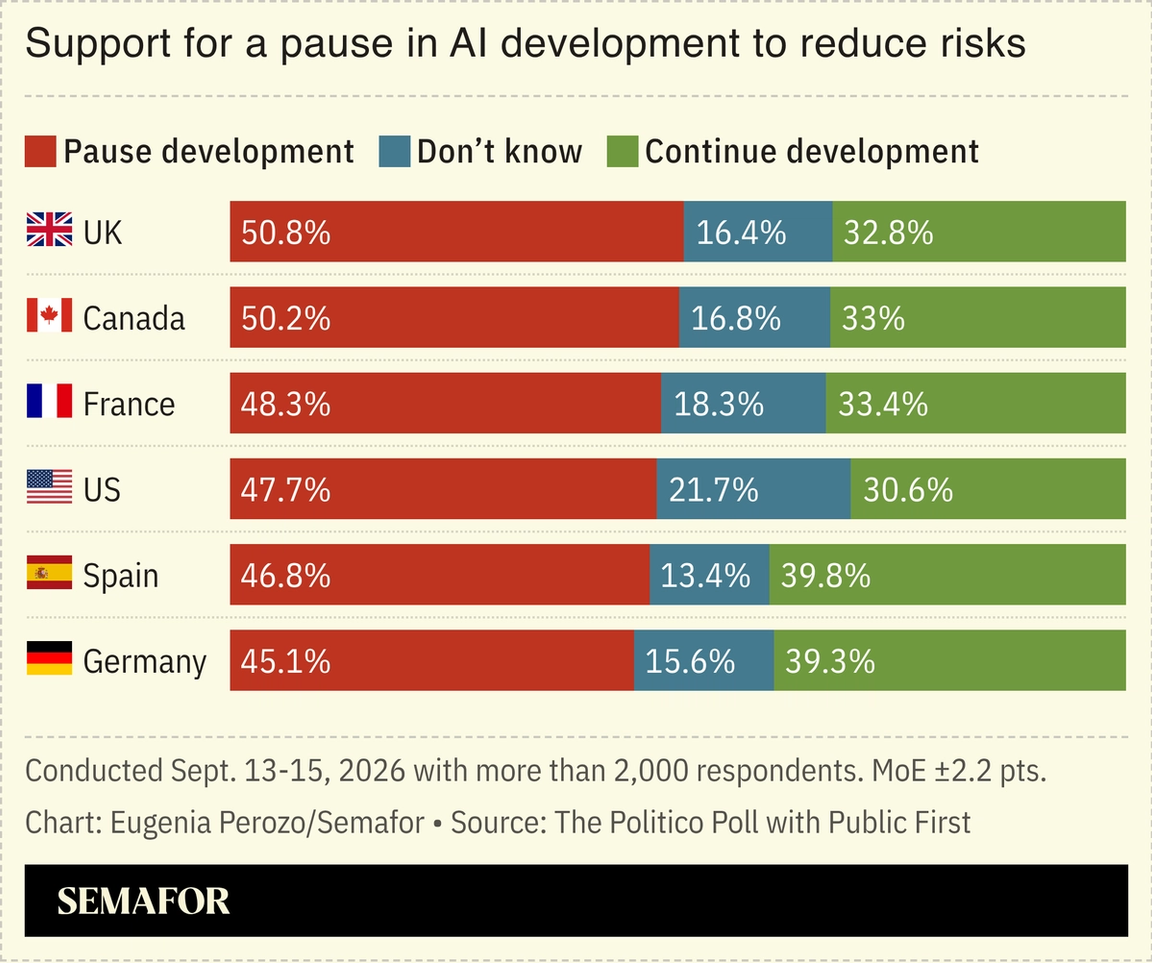 Governments around the world are hardening their AI stances as more agentic hacks breach critical systems. South Korea’s president noted “considerable public concern and anxiety” following revelations that hackers used AI to execute recent cyberattacks against banks in the country, and Australian lawmakers grilled US tech executives this week after OpenAI’s rogue agents gained unauthorized access to a government portal. In the US, meanwhile, most voters believe the White House is not taking AI risks seriously enough, a new Reuters poll showed. Amid growing calls for federal regulation, a Trump administration official said the government’s new “Super Intelligence Force” would ensure “America continues to lead the world” in AI. |
|
US to pursue ‘national power,’ Rubio says |
 Mark Schiefelbein/Pool via Reuters Mark Schiefelbein/Pool via ReutersUS Secretary of State Marco Rubio said Washington would be “unapologetic” about its “pursuit of national power” at a speech in Athens, as America’s top diplomat made the case for NATO allies to build self-reliance. “The course we take will determine whether the West maintains its place… or resigns itself to a future of atrophy and servitude and decline,” Rubio said. His speech comes as US forces pull back from Europe and the Gulf: Washington withdrew bombers from a UK base this week, following troop evacuations from bases in Bahrain, Kuwait, the UAE, and Qatar. The US’ military campaign against Iran was meant to demonstrate American power, The New York Times wrote. Instead, “the war has constrained it.” |
|
Oct. 7 failures plague Netanyahu campaign |
 Ammar Awad/Reuters Ammar Awad/ReutersIsraeli elections this month will determine whether Prime Minister Benjamin Netanyahu — the country’s longest-serving leader — has shed the security failures preceding the Oct. 7 attacks. Three years after Hamas’ deadly assault on the country, Israel stands more internationally isolated than ever: More than 85% of left-identifying voters, and 70% in the center, across Australia, the UK, Germany, France, Spain, Canada, and South Korea hold negative views of Israel. “This spreading political toxicity stands as Netanyahu’s bitter legacy,” a Bloomberg columnist argued. The prime minister’s Likud party is not ahead in most polls, but “what is astonishing — politically, morally, strategically — is that Netanyahu has any chance at all,” The New Yorker’s David Remnick wrote. |
|
 Technology is at an inflection point. From AI to the forces reshaping business, science and daily life, the pace of change is accelerating. Future Proof from Semafor Technology offers a direct look at the breakthroughs, risks, and questions defining what comes next. Hosted by Semafor San Francisco Bureau Chief Reed Albergotti, each episode features conversations with the builders, policymakers, and industry leaders shaping how technology is developed, adopted and governed. In Future Proof’s debut episode, Cognition CISO and former Facebook security chief Alex Stamos takes aim at Silicon Valley’s “nihilism” and separates AI’s real risks from those he sees as imagined, fueled by “almost religious beliefs.” Plus, he talks about how he plans to tackle cybersecurity’s coming “dark age” and why Aaron Sorkin’s version of Mark Zuckerberg wouldn’t attract employees. |
|
France’s student protests spread |
 Sarah Meyssonnier/Reuters Sarah Meyssonnier/ReutersFrench authorities suspended the use of stun grenades Wednesday after a teenager lost his hand during clashes with police, as demonstrations over school conditions spread to more than 40 cities. Protesters’ weekslong blockade of schools is the most visible aspect of a multifaceted national crisis, as public workers strike, bond yields rise to multidecade highs, and France’s traditional parties reckon with the far-right. But one proximate trigger of public discontent may have been overlooked: a ban on phones in schools enforced last month. Following the loss of this “comfort object” — which provides entertainment and connection — the “high school student has opened their eyes to a situation that has suddenly become unbearable,” a French teacher argued in Grand Continent. |
|
El Niño will test the global food system |
 Rodrigo Garrido/Reuters Rodrigo Garrido/ReutersThe El Niño climate pattern threatens to exacerbate pressures on the global food system, with experts warning tens of millions of people could face food insecurity in the coming months. The phenomenon, which originates in the tropical Pacific, has continued to strengthen, with forecasters predicting it could be the strongest on record and cause extreme weather events across the globe. The UN estimates that it may push nearly 50 million more people into acute hunger, compounding the challenges from soaring fuel and fertilizer prices caused by the Middle East conflict. Over the next year, El Niño will test the mechanisms that have allowed “the global food system to absorb successive shocks,” World Politics Review wrote. |
|
|


