






October Surprise: 30% OFF Bulwark+ for a year. Upgrade now. |
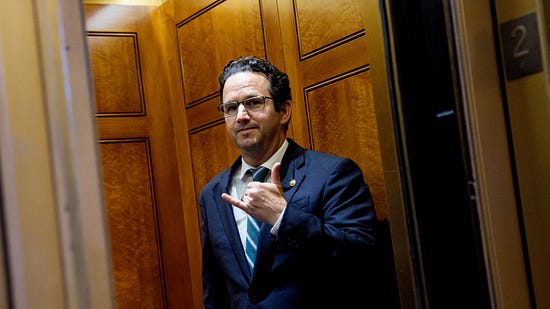 |
IF YOU WANT A REAL GUT-CHECK of how Democratic party leadership is feeling headed into the final stretch before Election Day, few people are better to turn to than Hawaii Sen. Brian Schatz. The 53-year-old is set to be the next party whip after Sen. Dick Durbin retires in the next Congress, making him the youngest person to be chosen for the number-two Democratic leadership position in fifty years. So the man knows the mood of his party. He also suffers from (self-diagnosed) “pundit brain,” meaning he likes to talk about politics with confidence and has his share of takes.
Late last week, my colleague Sam Stein (the best editor ever!!!¹) caught up with Schatz to talk about the state of the Senate map, whether candidates like Abdul El-Sayed and Troy Jackson would actually vote against Chuck Schumer becoming majority leader, and what type of oversight of the Trump administration Dems should (and shouldn’t) explore if they take back both chambers.
The transcript of their conversation below has been edited for length and clarity.
Sam Stein: Democrats look like they’re in a better place from a Senate perspective than they were even just a couple months ago. What has been the biggest thing that has changed over the past couple months?
Brian Schatz: We’ve got a significant amount of momentum. But the problem is, for the Senate, we’ve got a significant amount of momentum in a bunch of red states. If it ends up that we fall short, everyone’s gonna have this after-the-fact explanation, like, ‘Well, that was obvious, how could we win Kansas?’ But the truth is, I’m pretty bullish on Kansas.
Stein: One thing that was hanging over the Democratic party’s head has been money. There’s a huge amount of mega-donors on the Republican side who have thrown hundreds of millions of dollars into these political action committees.
Schatz: The challenge is that in the last three or four weeks, two things have happened. They’re both good, but one of them creates a money crunch.
The first is that we actually had a pretty big infusion [of money] to candidates and non-candidate committees that got us at least a little closer to parity between our side and the Republican side. We’re never gonna be at parity just because they have basically unlimited money, but we had enough to get our message out.
Now, here’s the high-quality problem that happened basically simultaneously to that: ...
