Thanks for reading The Briefing, our nightly column where we break down the day’s news. If you like what you see, I encourage you to subscribe to our reporting here.
Greetings!
If it’s Monday, it must be time for another AI model release. This time, it was Meta Platforms’ turn, unveiling Muse Wonder, which it claims can “deliver state-of-the-art performance” on certain tasks. It was a triumphant moment for the company, whose AI efforts previously went through a slump that prompted a massive hiring binge over the past 14 months or so. It now claims it is “pushing the frontier” of AI.
That would be notable if only everyone wasn’t claiming to be doing the same thing. Two weeks ago, Google unveiled its latest model, Gemini 4 Argon, which it says “delivers frontier performance in complex workflows” across various subjects (you wouldn’t want it to deliver frontier performance in simple workflows, would you?). In early September, OpenAI announced GPT-6 Astra, which it said was “state of the art on computer use, browsing, software engineering, cybersecurity, science and professional work.” Also in September, Anthropic introduced Claude Fable 5.1 and Mythos 5.1, which it claimed to be “the world’s most advanced models for coding and knowledge work.”
We get it—AI executives want to trumpet every advance, hoping it will draw more customers and in some cases investors. You have to wonder, though, whether anyone can keep up with the blizzard of announcements, much less care about them all. As we’ve reported, businesses are increasingly opting for less advanced models to save money for much of their computing needs, reserving any use of the most advanced (and priciest) models for very specific tasks.
Indeed, we reported today that only 14% of the AI model usage via OpenRouter ran through the 10 highest-quality models in the third quarter, down from 55% in the first quarter of last year. That’s a result of the falling cost of less advanced models that are “good enough” for most tasks.
Consumers, who are the target audience for Meta’s Muse personal agent, certainly don’t need the most advanced AI models for everything they do. Yet Meta said its latest Muse Wonder model will “soon power experiences in Muse.” The only impact of that might be on the company’s costs. One of these days the AI firms will realize the frontier is a lonely place to be.
Bumble’s Big Stumble
The IPO class of 2021 is gradually getting taken off the public market, very often at a huge discount to where its members entered. The latest is dating app Bumble, which is in talks to go private at a $1 billion valuation, The Wall Street Journal reported on Monday.
While that implies a higher takeout price than where Bumble’s shares have lately been trading—the stock jumped 50%, or $1.26, to $3.80—it crystallizes the huge drop in the company’s value since it went public. Bumble sold shares in the IPO at $43 each, and the stock nearly doubled in the first few days, giving the company a market capitalization of $9.5 billion. Unfortunately, growth has slowed in the crowded data app market.
If this deal gets done, Bumble will be the problem of Ravi Gupta, a former Sequoia partner, and John Hegeman, former chief revenue officer at Meta. The two formed a new company that is looking for acquisitions—starting with Bumble. At least they’ll pick it up at a reasonable price.
In Other News
• Meta has banned advertisements from ByteDance on its platforms in the U.S. and several other markets, Bloombergand other media outlets reported.
• Bain Capital–owned Bridge Data Centres is in talks with banks to increase the size of a loan from $2.8 billion to about $6.6 billion for its Malaysia operations, Bloomberg reported. The fundraising would be one of the largest debt financing deals in Asia’s data center industry.
• Microsoft on Monday announced the latest generation of its homegrown AI chips, dubbed Maia 300, and said it plans to set up “multigigawatt deployments” of the chip starting next year.
Today on The Information’s TITV
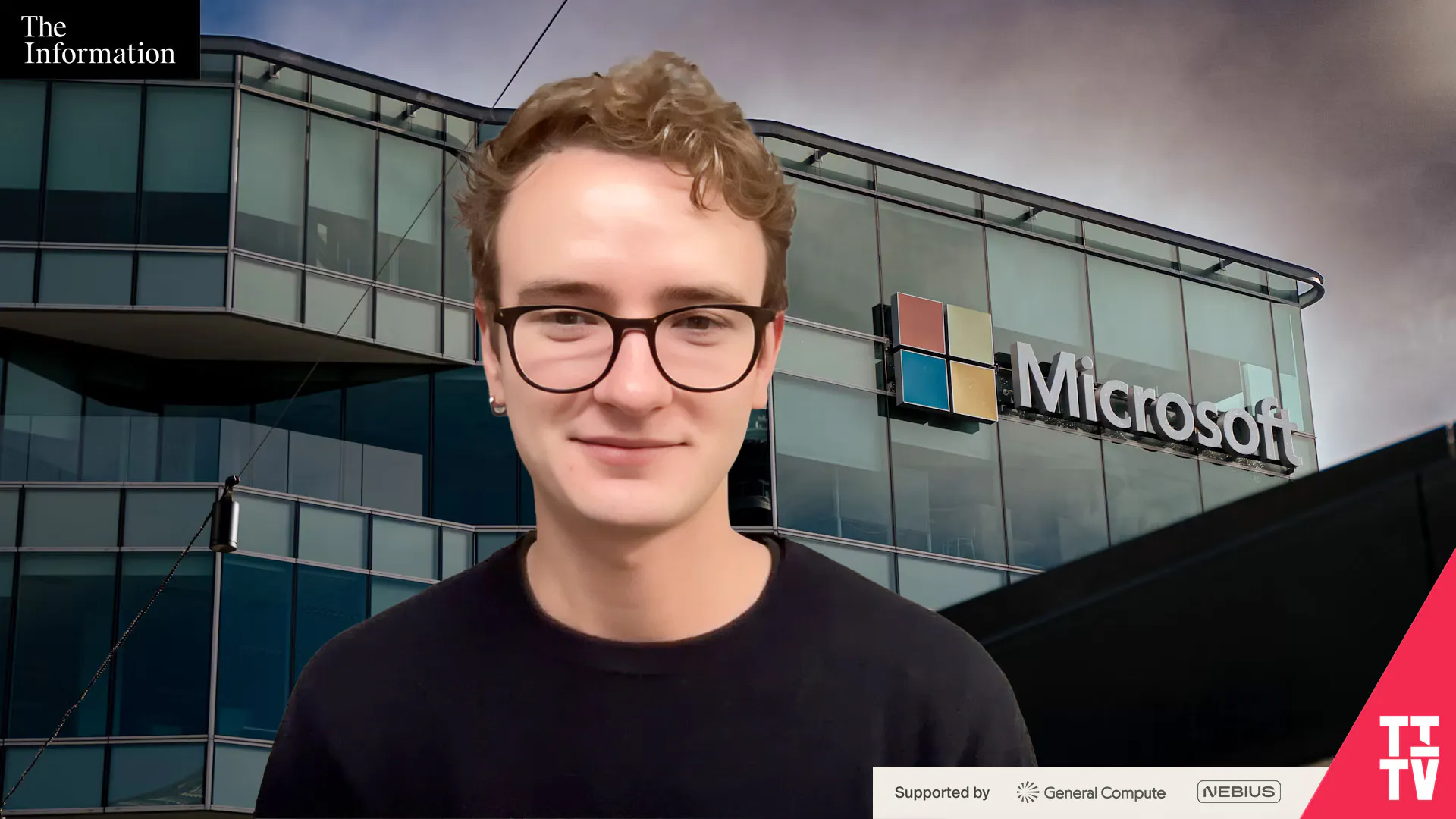
Check out today’s episode of TITV in which Akash Pasricha speaks with Aaron Holmes about his profile of a key Microsoft executive you should be paying attention to.
Recommended Newsletter
Start your day with Applied AI, the newsletter from The Information that uncovers how leading businesses are leveraging AI to automate tasks across the board. Subscribe now for free to get it delivered straight to your inbox twice a week.
The Information's WTF Summit returns to Napa Valley, bringing together the women shaping tech, media and finance. Confirmed speakers include Whitney Wolfe Herd (Bumble), Anne Wojcicki (23andMe Research Institute), Kim Posnett (Goldman Sachs) and comedian & entrepreneur Whitney Cummings, with more to come. Expect candid conversations and a room built for meaningful exchange. Tickets are selling fast—reserve your spot now.
The Information's Dakin Campbell will host a panel discussion on the evolving landscape of public listings and exit opportunities during SF Tech Week, sponsored by NYSE.