| | In today’s edition: Houthis strike heart of Saudi oil, Gulf funds sit in the red on Paramount, and S͏ ͏ ͏ ͏ ͏ ͏ |
| |  Dhahran Dhahran |  Doha Doha | Santa Monica |
 | Gulf |  |
| |
|
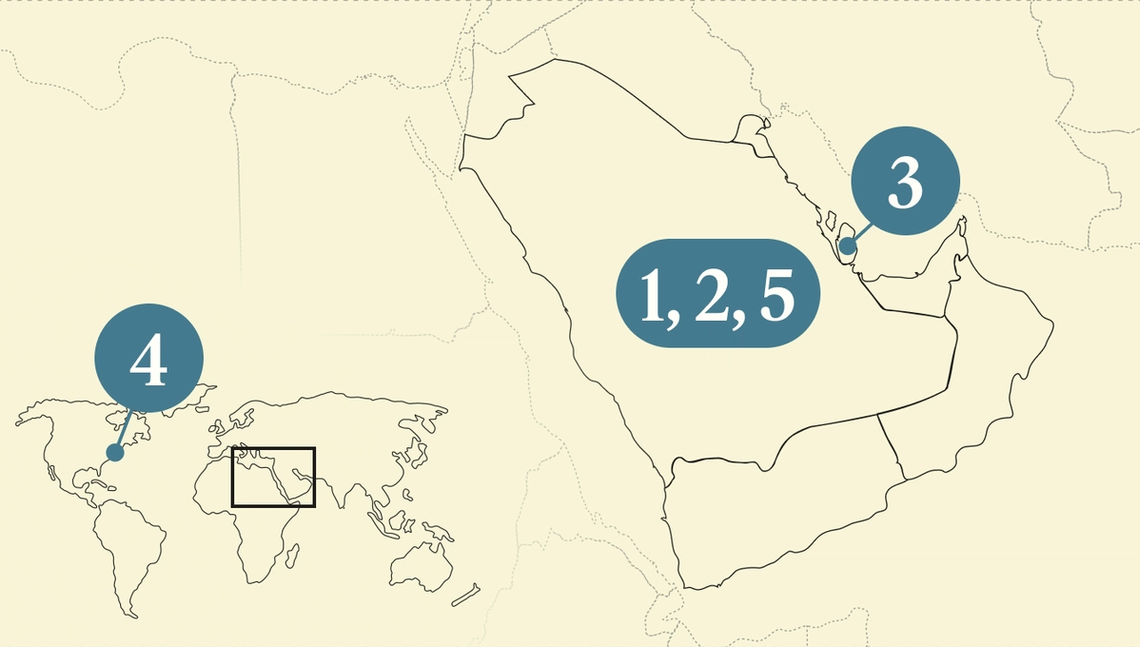 - Houthis hit Aramco HQ
- Riyadh cancels stadiums
- QIA on business as usual
- Skydance bet in the red
- Saudi still swing producer
 The long history of Iranian attacks on the Gulf. |
|
Houthis strike Aramco headquarters |
 A satellite image taken on July 2, 2026, showing the headquarters of Saudi Aramco in Dhahran. Pleiades Neo Airbus DS 2026/Handout via Reuters A satellite image taken on July 2, 2026, showing the headquarters of Saudi Aramco in Dhahran. Pleiades Neo Airbus DS 2026/Handout via ReutersThe Iran-allied Houthis struck Saudi Aramco headquarters in Dhahran, causing extensive fire damage, and targeted other critical energy and civilian infrastructure in Saudi Arabia, according to Reuters. In a sign that Riyadh is no longer pressing on with business as usual, the Future Investment Initiative, the Wall Street-heavy “Davos in the desert” aimed at enticing foreign capital to the kingdom, will go hybrid when it convenes later this month, Reuters also reported. Meanwhile, attacks in the Strait of Hormuz are intensifying. Sunday was the most violent day in the waterway since the start of the conflict, according to the Financial Times. Iran is adopting new tactics to target ships, Reuters reported, aiming to keep oil prices high ahead of the US midterm elections. |
|
Saudi set to scrap World Cup stadiums |
 Hamad I Mohammed/Reuters Hamad I Mohammed/ReutersSaudi Arabia’s sovereign wealth fund is preparing to inform organizers of the 2034 men’s soccer World Cup that it plans to drop five new stadiums it proposed to build for the tournament, according to people familiar with the matter. Public Investment Fund will likely narrow its focus to three new stadiums as it cuts spending on some of its signature domestic investments, the people said. That would leave the kingdom with 10 stadiums for World Cup matches. The kingdom is still proceeding with plans for other new stadiums, including one in Dhahran being developed by Saudi Aramco, the King Salman International Stadium, and the Prince Mohammed bin Salman Stadium in Riyadh. It’s not uncommon for countries to tweak their plans as the tournament gets closer: Qatar dropped four of the stadiums it had proposed to build for the 2022 World Cup. — Matthew Martin |
|
QIA still spending despite war |
 Bassam Masoud/Reuters Bassam Masoud/ReutersQatar’s sovereign wealth fund isn’t slowing its dealmaking, a senior executive said, even as the Iran war gutted the state’s revenue in the first half of the year. The conflict “hasn’t impacted our progress,” Mohsin Pirzada, head of funds at Qatar Investment Authority, told Semafor. “We continue to invest, we continue to deploy.” QIA, with around $580 billion in assets, is a significant backer of Wall Street firms and US technology. Its business-as-usual stance mirrors that of its Gulf peers: With the exception of Saudi Arabia’s Public Investment Fund, all are on track for one of their most active years of dealmaking ever, according to fund tracker GlobalSWF. — Kelsey Warner and Matthew Martin |
|
Gulf SWFs’ paper losses on Paramount |
 David Ellison and Ynon Kreiz. Jeenah Moon/Reuters. David Ellison and Ynon Kreiz. Jeenah Moon/Reuters.Gulf investors that backed David Ellison’s Hollywood ambitions are already underwater on that bet. Sovereign wealth funds of Saudi Arabia, Qatar, and Abu Dhabi that helped finance Paramount’s $110 billion takeover of Warner Bros. have wired their $24 billion slice, according to people familiar with the matter, buying into the deal at $12 per share. Skydance shares are trading just over $9. Ellison and his newly hired co-CEO Ynon Kreiz suggested on CNBC last week that they could beat their projected cost savings of $6 billion by 50%, promising significant upside to the stock. And while Gulf investors may be in the red now, it’s not purely a financial play for them. Content giants like Paramount are useful as they look to build cultural and entertainment hubs in their home locales. — Rohan Goswami
|
|
View: Another oil crisis Saudi pays for |
| |  | Wael Mahdi |
| |
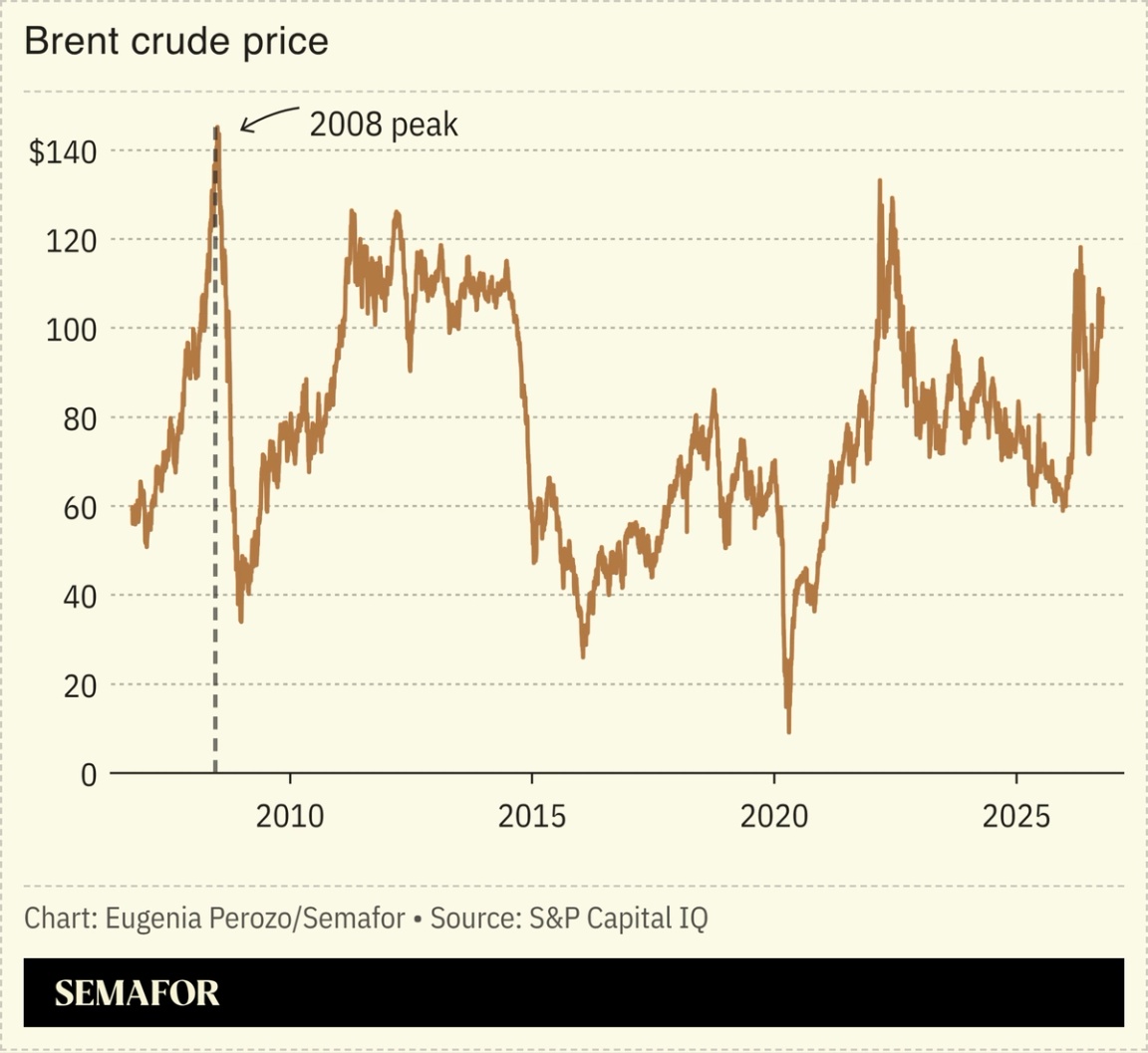 At the peak of the energy crisis in 2008, Saudi Arabia refused to meaningfully increase output, blaming record prices on speculators. This time, the kingdom is once again preparing to be the swing producer, even in a post-OPEC era, independent energy commentator Wael Mahdi wrote in a column for Semafor. “If Hormuz is opened tomorrow, the new logistics of moving crude will weigh on producers,” Mahdi writes. “It will also change the relationship between states: Iraq is planning to build a pipeline through Syria to the Mediterranean, while Kuwait and Qatar may lean on their Gulf neighbors to reach ports outside the strait.” The kingdom “will soon have to revert to its role as the global swing producer, keeping prices fair to producers paying for new infrastructure, and consumers who won’t tolerate high prices forever.” |
|
| Healthcare from Semafor Washington, DC |
 Behind closed doors, a new era of healthcare policy is taking shape. With US healthcare spending projected to hit $9 trillion annually by 2034, Medicaid cuts hanging in the balance ahead of the midterms, and increasing calls for regulation of clinical AI, the forces remaking healthcare policy are accelerating. Introducing Healthcare from Semafor Washington, DC, your weekly briefing on the politics, policy, and business driving the industry. Delivered every Thursday from David Lim, each edition will provide essential reporting and analysis on the forces reshaping healthcare, and what comes next. Sign up to receive the first edition this week. |
|
 Deals- Saudi Arabia Railways doubled its order of intercity trains from Swiss manufacturer Stadler to 20, adding 10 new trains in a $361 million deal. They will run on the line linking Riyadh and Dammam, with passenger service due to start in the second half of 2029. — AGBI
Fitness- Boston-based wearables maker Whoop launched an Arabic version of its app, after its membership across the Gulf grew more than 75% year-over-year. The move fulfills a pledge Whoop made to Mubadala, which invested in the company’s Series G round.
Technology Courtesy US Department of Justice Courtesy US Department of Justice- A Saudi national was charged by US federal prosecutors with secretly planting a recording device in one of OpenAI’s California offices. Abdulrahman Alfozan, who worked at the ChatGPT maker as an engineer, was allegedly trying to capture information about the company’s AI product and could face up to five years in prison. Alfozan is also a venture partner at RAED Ventures, a Saudi venture capital firm backed by Saudi government-owned funds.
- Aramco Digital is partnering with UAE-headquartered OrbitronAI to develop and sell AI products designed to help asset-intensive industries, like oil and gas, identify and recover billions of dollars in lost value.
|
|
 Ulli Michel/Reuters Ulli Michel/ReutersIran’s playbook has long been familiar to the Gulf, though the scale of its attacks over the past six months is not. This week in 1987, an Iranian missile struck the US-flagged tanker, the Sea Isle City, in Kuwaiti waters. Washington responded within days, destroying an Iranian platform used to stage attacks, and Iran retaliated by hitting Kuwait’s offshore oil terminal. The conflict between Iran and the Gulf didn’t start there. An Iran-backed group attempted a coup in Bahrain in 1981; Tehran was blamed for bombing the US and French embassies in Kuwait in 1983; and in 1996, a truck bomb killed 19 US airmen and a Saudi at Khobar Towers, an attack a US court later found Iran directed. — Manal Albarakti |
|
|


