Hi! Forbes released its “30 Under 30” for 2026 yesterday — it might be an honor to make the exclusive cut, but, by the publication’s own admission, they don’t always get it right… Today we’re exploring:
|
- Track record: Spotify just dropped its year-end Wrapped for 2025.
- Amassed media: What could the victors of the Warner Bros. Discovery bidding war actually win?
- Big cat blues: Industry giants are circling Puma, after a bad year for the German brand.
|
Have feedback for us? Just hit reply - we'd love to hear from you! |
Spotify Wrapped 2025 is finally here |
If you’ve spent the year publicly panning the new Taylor Swift album, but streaming it on a loop behind closed doors, the season of reckoning is finally upon you: Spotify Wrapped is officially here.
Yes, the streaming giant released its viral year-end feature this morning, just one day after Apple Music rolled out rival annual summary “Replay” — not to be confused with YouTube Music’s “Recap” or Amazon Music’s brand new offering, “Delivered,” which also both dropped yesterday.
|
While the feature has spawned countless imitators, none come close to the splash that Wrapped makes every year. And, since its 2015 launch, Wrapped has only gained more online traction with each iteration, as confirmed by Google Trends data.
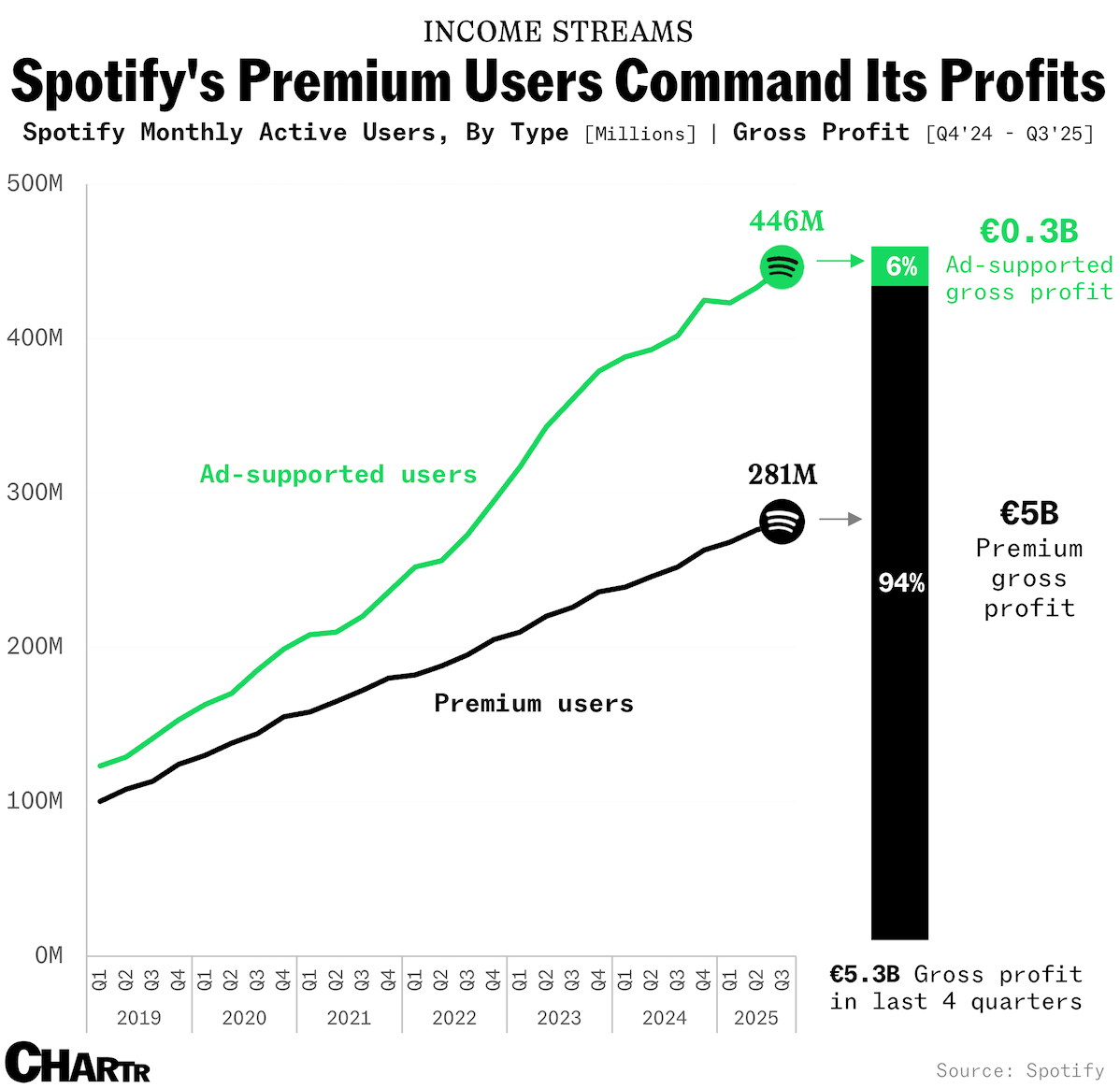
Though you might only see your social feeds inundated with top 5 lists, posts related to Wrapped will continue to provide invaluable brand visibility for Spotify — which, as we’ve noted before, relies heavily on its Premium users to make money. |
While paid subscribers currently notch only two-thirds the amount of ad-supported users, this cohort drives almost all (94%) of Spotify’s gross profit. However, in contrast with Apple Music, which doesn’t have an ad-supported tier, Wrapped is available to both paying and nonpaying users, unlocking 446 million additional leads for free Spotify marketing.
But, just like last year, when certain features of Wrapped were kept only for paid users, Spotify will likely gatekeep some more personalized elements once again — particularly with AI-powered features, including reports on five of your most notable days of listening, taking center stage in this year’s offering.
For Spotify, it’s all about music driving “layers, stories, and connection”... and gently nudging those millions of ad-supported users who can’t stop listening to Bad Bunny to fork out $11.99 a month. |
Netflix reportedly made a mostly cash offer for Warner Bros. Discovery over the weekend |
To the victor belong the spoils… and, possibly, the world of film and TV as we know it.
While we enjoyed the long holiday weekend, a host of huge names like Paramount Skydance, Comcast, and Netflix had their bankers and lawyers working on a new round of bids for Warner Bros. Discovery (WBD), according to reports. |
Whichever way you slice it |
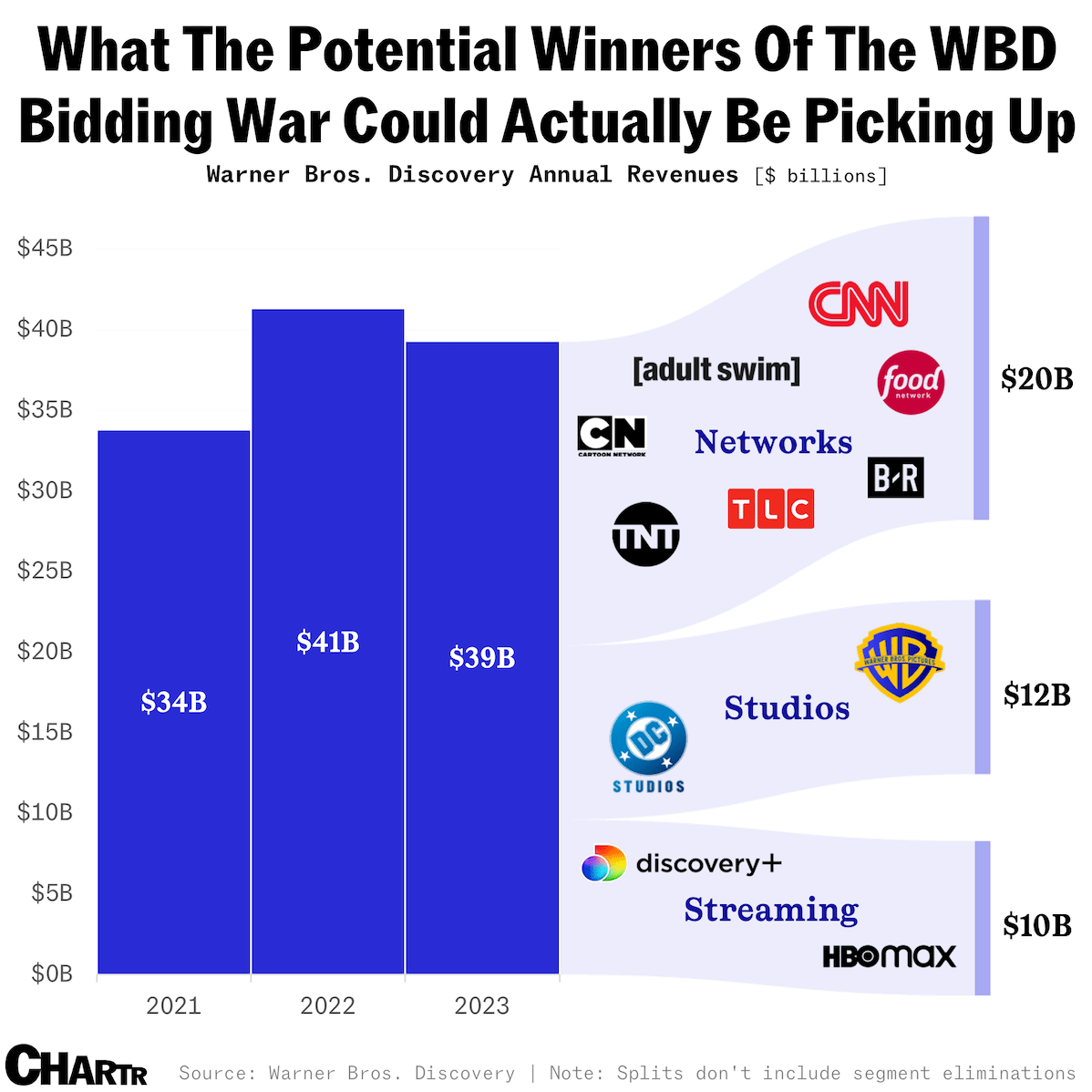
The latter of those companies, Netflix, already the biggest streaming service in the world, is reportedly interested in just the studio business and HBO Max streaming platform from WBD, offering a bid consisting mostly of cash for those assets, Bloomberg reported at the start of the week.
Comcast has a similar idea. The telecoms and media giant wants to merge the same two segments with its NBCUniversal division, meaning that a successful bid from either would allow WBD — the home of mega media brands like HBO and CNN, as well as huge chunks of IP like the “Harry Potter” franchise and DC Comics characters via its studio business — to still go ahead with plans to spin off its major networks, per the reporting.
But what of the companies that want the entire WBD pie? What would they get in a deal that could nudge toward the $75 billion mark, if suitors stump up the $30-per-share price that Warner execs want? |
In a particularly dramatic-sounding Bank of America note on Monday, a group of analysts wrote: “The global media industry stands at the precipice of historic transformation.”
Still, when you look at the brands under the Warner Bros. Discovery umbrella (assembled after a merger between the companies that make up each half of its name) and consider the behemoths that could one day possess some of them, the BofA writers might have a point. |
|
|
With futures, you can take your trades further |
Trading stocks and ETFs? It could be time for futures.
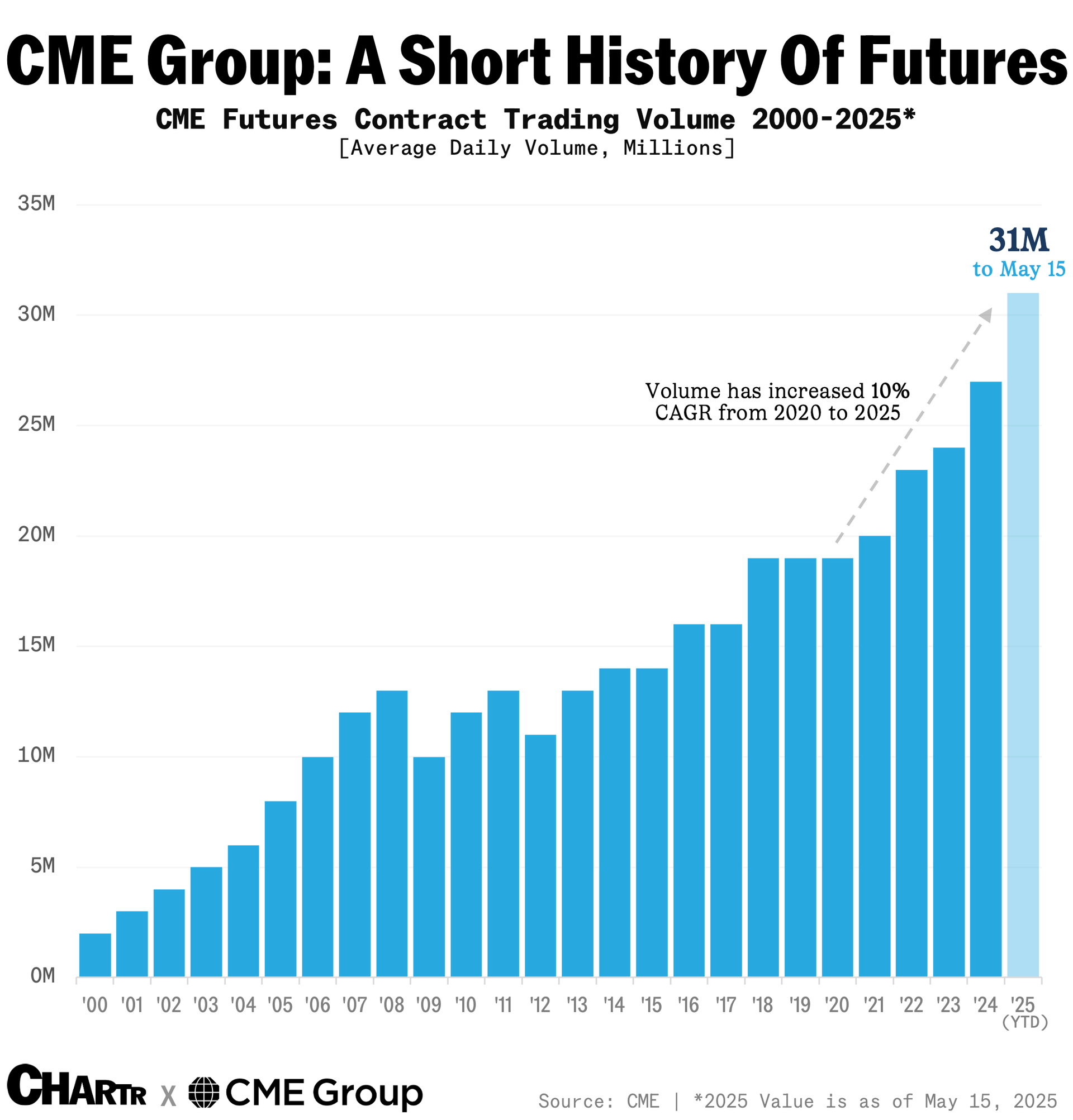
Average daily trading volume of futures on CME saw a 10% CAGR between 2020 and May 2025.1 That suggests more traders are switching onto the potential benefits of futures: |
-
Capital efficiency. With only 5-10% margin required, equity futures offer more margin savings compared to top S&P 500 ETFs.2
- Go short as easily as you go long. Take a long or short position on your favorite index, without the restrictions of locate requirements and borrow costs.3
-
Trade around the clock. With stocks and ETFs, overnight opportunities may be missed as markets move outside of regular trading hours. You can trade futures nearly 24 hours a day and act on market volatility.
|
CME Group offers both standard- and micro-sized futures contracts for those who want to trade with less margin.
1 Source: CME Group.
2 Margin comes with increased risks. Losses as well as gains will be magnified with the greater amount borrowed. 3 Shorting increases the risk of investing. With short sales, the potential for loss is unlimited. |
|
|
With Puma’s stock under pressure, Chinese giants are circling the storied brand |
Last week, Bloomberg reported that Fila and Jack Wolfskin owner Anta Sports was mulling a potential takeover of Puma — sending shares of the German sportswear maker up some 19% on Thursday, the most since late 2001. And Anta Sports isn’t the only suitor eyeing the discounted Puma, per sources cited in the report, as rival Chinese apparel firm Li Ning and Japan’s Asics might also be interested.
That news finally gave investors something to smile about, but it’s still nowhere close to repairing the damage of Puma’s miserable year, in which the stock has shed more than 50%. Furthermore, any potential sale is unlikely to be straightforward, as the Pinault family, who own a 29% stake in the company, could prove an obstacle to any sale.
|
No room to swing a big cat |
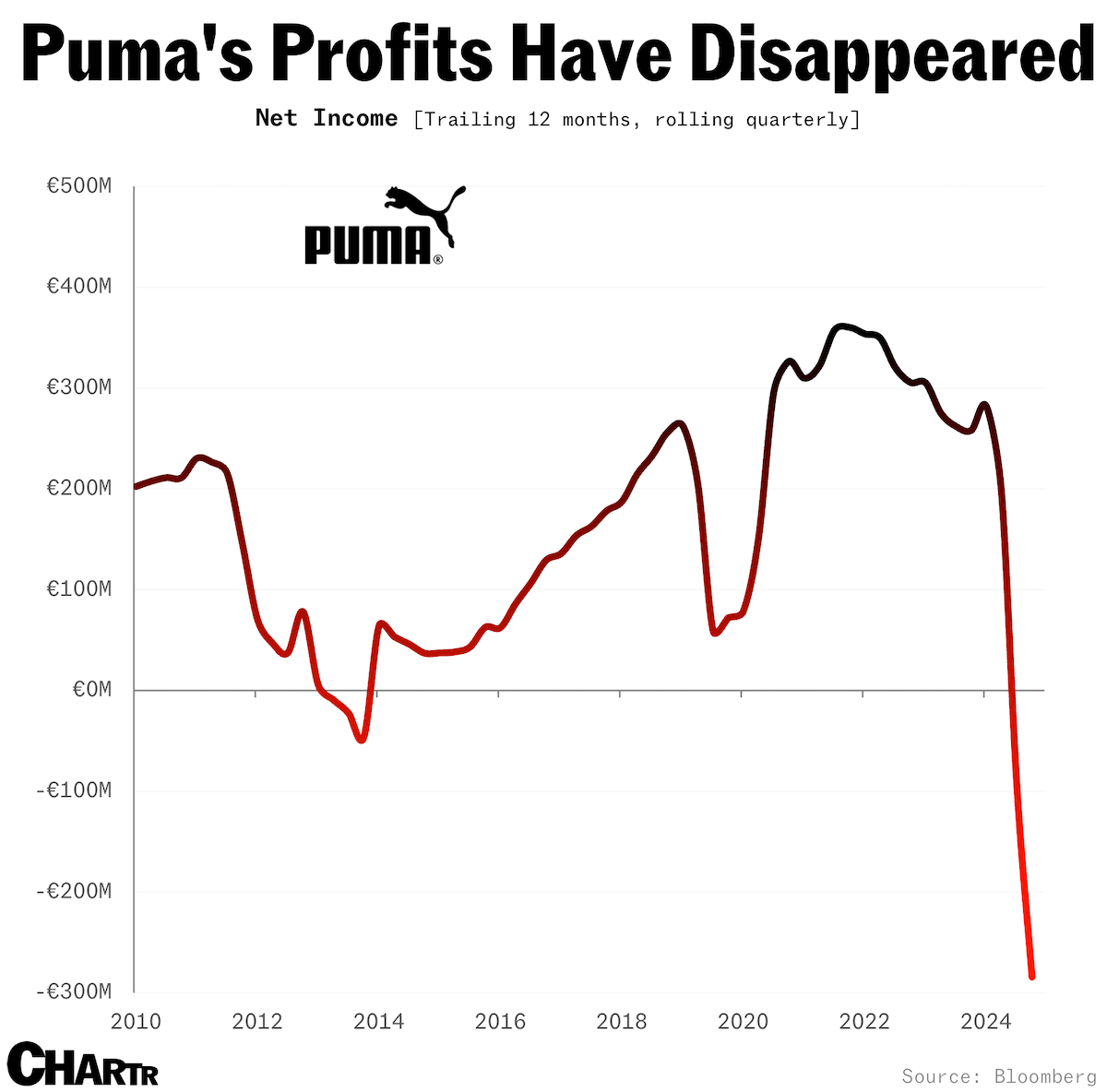
Puma has long tried to straddle the fine line between athletic apparel and fashion appeal. But now, squeezed by new competition in the running space from brands like On and Hoka and facing fading customer enthusiasm even with heavy discounts, the brand’s profits have vanished.
Over the last four quarters, the company has racked up the equivalent of nearly ~$330 million worth of losses, and its market cap has shrunk from nearly $20 billion in 2021 to just $3.5 billion at the time of writing.
Under its new CEO, Puma aims to return to growth by 2027 and become one of the top three sports brands globally. However, with swelling excess inventory and a customer base used to seeing marked-down prices, that’s not going to be easy — even with the success of the company's latest elite running shoe, Fast-R.
|
|
|
-
Two Italian fashion houses, both alike in dignity… Prada just acquired Versace for $1.38 billion — some way below the $2 billion that previous owner Capri Holdings paid just 7 years ago.
-
Apple is projected to ship a record 247.4 million iPhones this year, surpassing its 2021 high, thanks to its iPhone 17 series and a rebound in China, per IDC.
-
Septopus, surely? The remains of a rare, deep-sea “7-armed octopus” were spotted washed up on a beach in Scotland over the weekend.
-
After an impressive Q3 featuring that Sydney Sweeney ad campaign, which got the presidential seal of approval, American Eagle was up double-digits this morning.
- In the fold: Samsung is debuting its first trifold smartphone in South Korea this month, joining Huawei in the market already, with Apple expected to debut a folding iPhone in 2026.
|
|
| -
See which professions make more than you with FlowingData’s salary-comparison tool.
-
Pew Research Center charted the most trusting nations in the world, where the vast majority feel they can put their faith in “most people.”
|
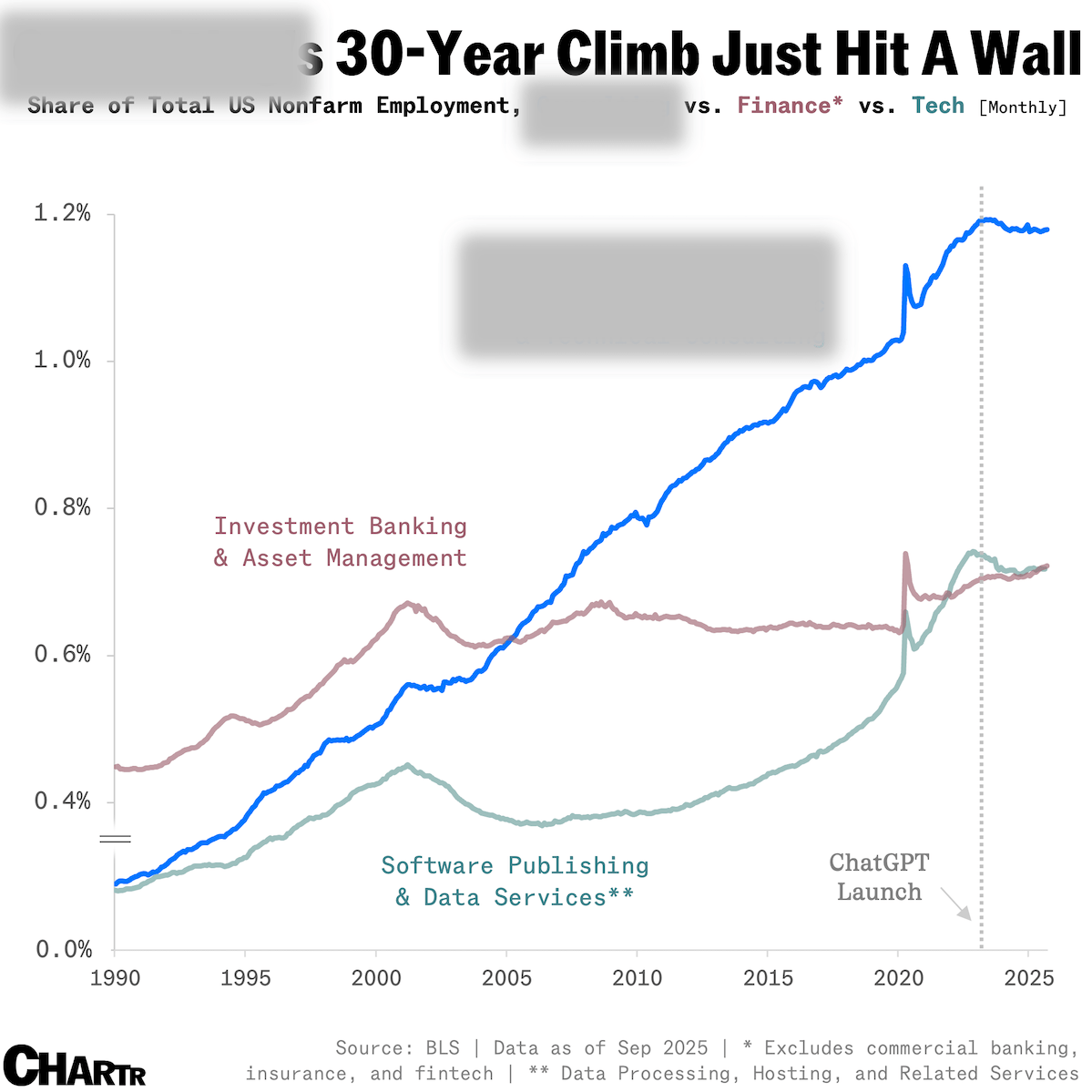
Off the charts: Which white-collar industry has seen its US employment growth stall for pretty much the first time in 30 years, just as ChatGPT arrived? [Answer below]. |
|
|
|