How one man revolutionised ski-slope grooming, Monoware’s Barista collection and Sotheby’s in Abu Dhabi.
|
Thursday 4/12/25
|

|
|
London
Paris
Zürich
Milan
Bangkok
Tokyo
Toronto
|
|
|
|

Grüezi. Monocle’s winter newspaper, ‘Alpino’, has left the printers in Konstanz, Germany, and is now lining newsstands at the world’s higher altitudes. In it, we meet the unlikely Olympians preparing to hit the slopes at Milano Cortina 2026, sit down with Norwegian-Brazilian singer Charlotte Dos Santos to discuss her Alpine-inspired new release and share 25 tips on where to eat, drink and stay in Switzerland. Plus: why you should book a table at Bolzano’s Pramol Alto. Pick up your copy today. For now, here’s what’s coming up in The Monocle Minute:
THE OPINION: Turkic television is Erdoğan’s latest soft-power grab
CULTURE: Sotheby’s debuts Collectors Week in Abu Dhabi
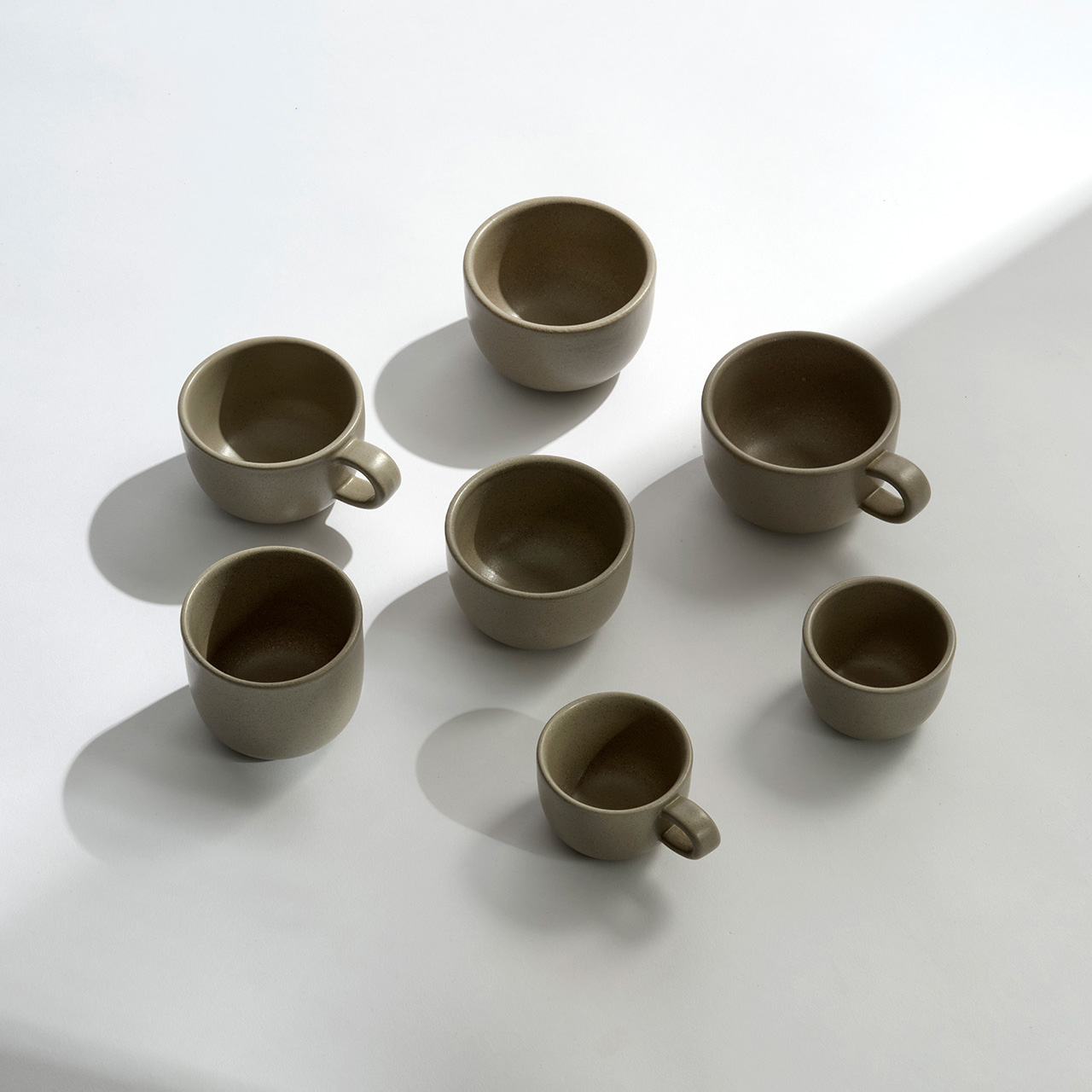
DAILY TREAT: Sip an espresso from a Monoware Barista cup
IN PRINT: How one man revolutionised ski-slope grooming
|
|
Turkic states are investing in soft power but it’s Ankara that seeks to steal the show
By Hannah Lucinda Smith
|

|
Central Asia has been pulled between Russian and Turkish spheres of influence for centuries but today it is increasingly gravitating towards the latter. Many countries in the region, such as Kazakhstan and Uzbekistan, are in the process of swapping the Cyrillic alphabet (imposed during the Soviet era) for Latin in school textbooks and official documents so as to be more in line with Turkish. Military co-operation is ramping up too. At the recent summit of the Organisation of Turkic States (OTS) – a multilateral body founded by Turkey that includes Azerbaijan, Kazakhstan, Kyrgyzstan and Uzbekistan – agreements were made to co-develop military technologies and conduct joint-military exercises with Ankara in 2026. With influence over petrochemical resources and trade routes, Turkey’s president, Recep Tayyip Erdoğan, is cementing his nation’s position as the regional hegemon. But drills and summits aren’t always enough. Soft power is key and now Turkish television series are also proving to be hits in Central Asian living rooms.
OTS members have agreed to set up a common television channel for the Turkic world (a collection of countries with a shared linguistic and cultural heritage that stretch from the Bosphorus to the Mongolian Steppe) – a sign that traditional broadcasting is still a powerful medium. Turkey is already using television as a diplomatic tool by selling its historical productions, which show glamourised, glossy dramas of the Ottoman Empire, to dozens of countries in the Middle East, Southeast Asia and Latin America. Ankara’s biggest hits include The Magnificent Century, a paean to the 16th-century reign of Sultan Suleyman the Magnificent, and Payitaht, which puts a falsely positive spin on the era of one of the last Ottoman sultans, Abdulhamid II. Elsewhere, TRT World is targeted at Anglophone Muslims worldwide. The English-language version of Turkey’s state-television channel presents Erdoğan as fighting back against Islamophobia in the West and supporting Palestinians against Israel.
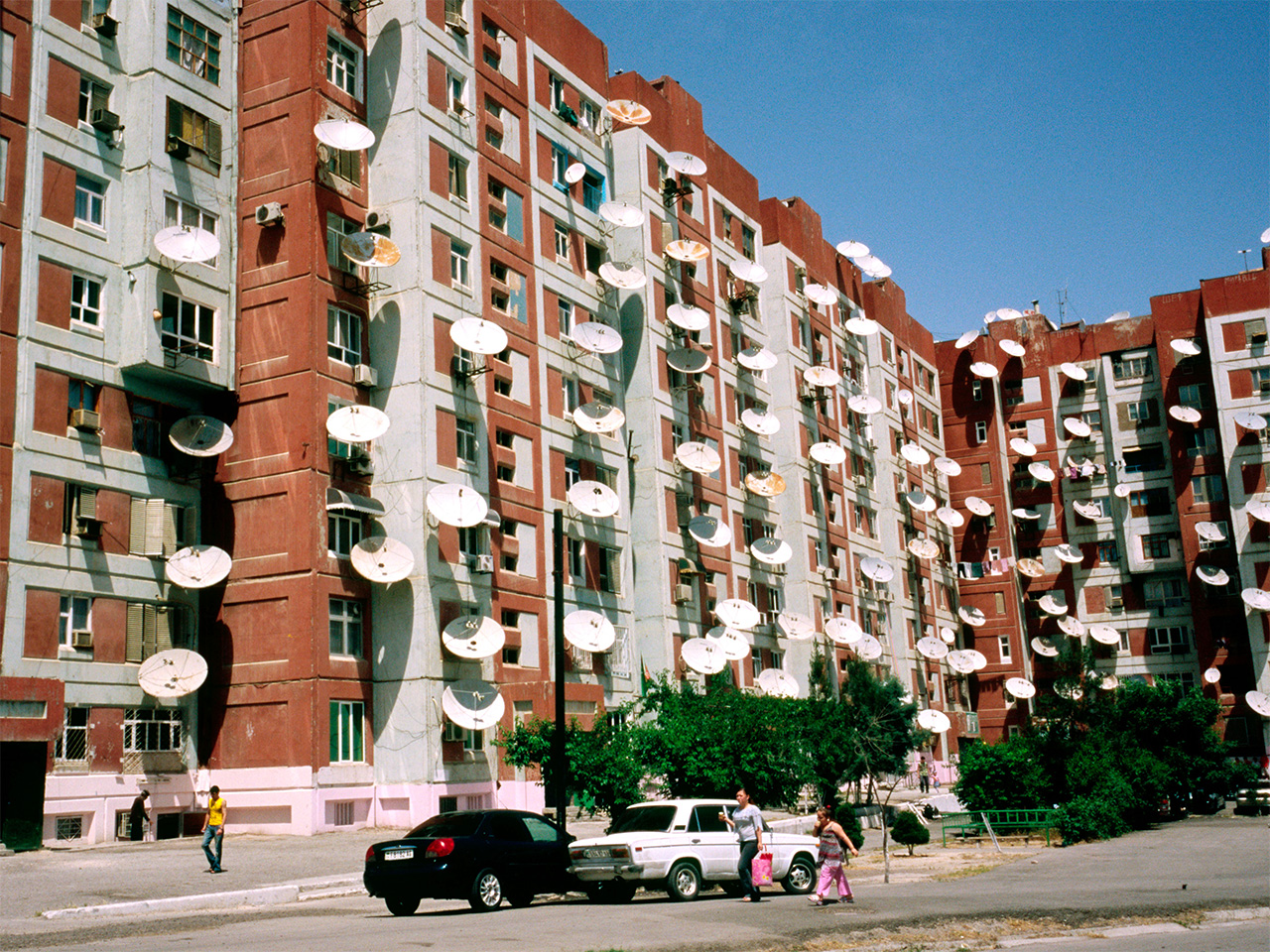
Same wavelength: Satellite dishes outside a Soviet style apartment block in the Turkmen capital of Ashgabat
Sharing broadcasting services for statecraft and as an alliance-building tool is a well-tested idea. The European Broadcasting Union (EBU), an alliance of public broadcasters, was launched in 1950, partly as a technical oversight body but also to promote international understanding after the Second World War. Today the EBU’s remit stretches far beyond Europe’s geographical borders, including to Azerbaijan, which won the EBU’s Eurovision Song Contest in 2011 and hosted the event a year later.
The new OTS broadcaster will have a far greater scope, including joint development of both satellite and AI technology. But the political imperative remains the same as it did for the EBU 75 years ago: to shape a common culture among states. The OTS summit in October ended with the Gabala Declaration, an agreement that outlines a vision for the Turkic world as a cultural, economic and security bloc. For viewers, the union will provide access to programming from across the vast region, including domestically produced documentaries, children’s shows and feature films.
Many of the foundations for a Turkic broadcasting union are already in place. Turkey and Azerbaijan have been co-operating bilaterally in the media sphere since 2020, when they formed a joint media platform to shape coverage of the Nagorno-Karabakh war. A Turkic radio station and song contest already exist.
But the new proposals for shared Turkic broadcasting go beyond light entertainment or propaganda, aiming to shape an evolving region’s idea of itself. Turkey hopes to foster shared norms and aspirations among communities from the Caucasus to the border of China. It is a bet that Erdoğan is making as traditional soft-power titans such as Europe and the US are pulling funding from public media. Meanwhile, Turkey’s traditional rival in the region, Russia, is distracted by war. Ankara is looking to cement itself as the major power in Central Asia in 2026. Tune in.
Hannah Lucinda Smith is Monocle’s Istanbul correspondent. For more opinion, analysis and insight, subscribe to Monocle today.
|
|
EDO TOKYO KIRARI  MONOCLE MONOCLE
|
|
culture: uae
Sotheby’s has picked just the right time to debut its Collectors Week in Abu Dhabi
Abu Dhabi is in the spotlight this week and not just because the Formula 1 circus has returned or Abu Dhabi Finance Week is drawing in the world’s dealmakers (writes Inzamam Rashid). Sotheby’s has read the room, timing its debut Collectors Week to coincide with the capital’s most high-octane stretch of the calendar and bringing with it $1bn (€857.5m) worth of art, luxury and design for the region’s deep pockets to size up.
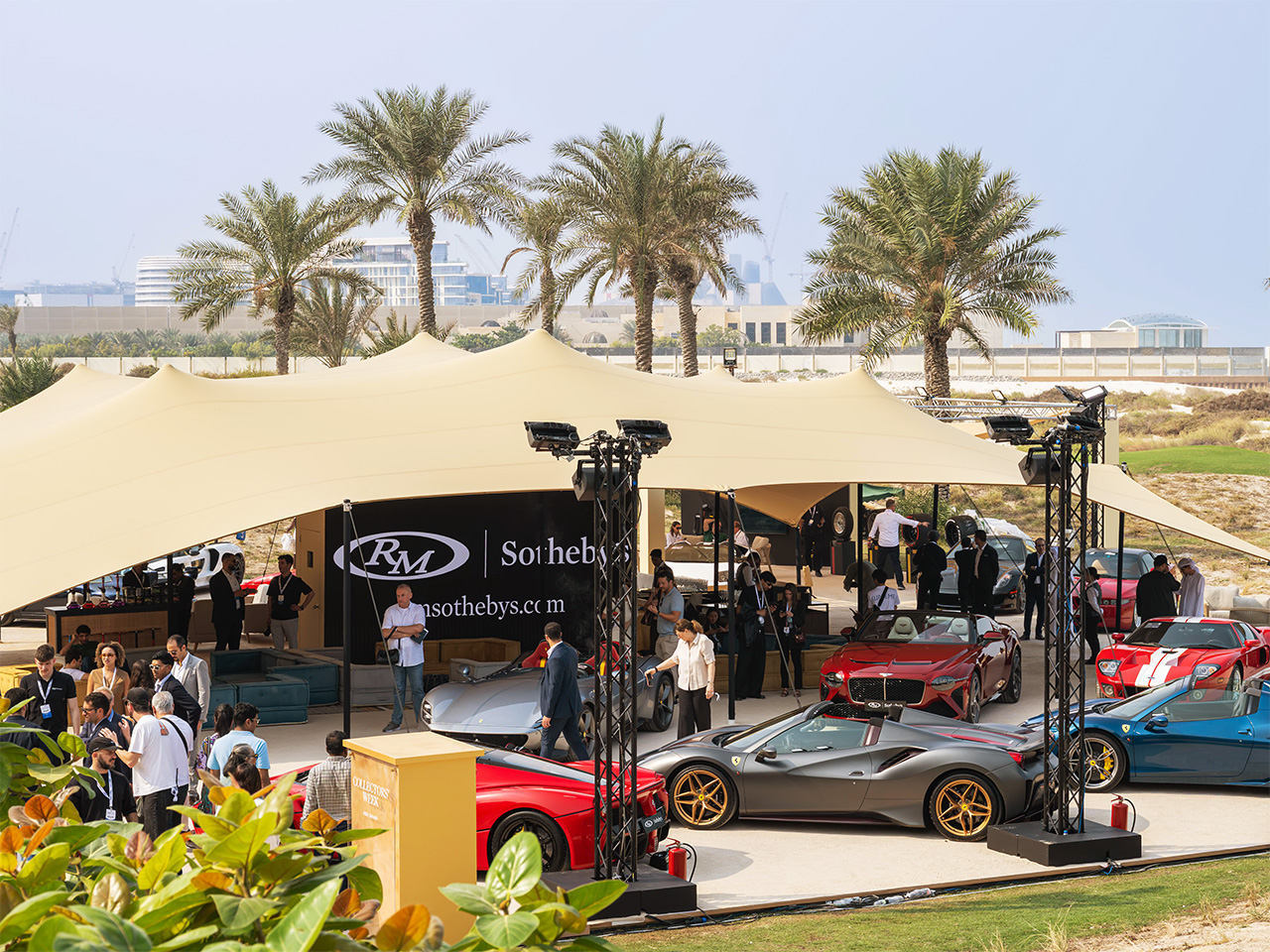
Wheels of fortune: Collectors Week
In partnership with the Abu Dhabi Investment Office, the auction house has staged a four-day programme (part cultural festival, part shopping theatre) at the St Regis Saadiyat – culminating on Friday in the UAE’s first live Sotheby’s auction. With $150m (€128.6m) of property going under the hammer, it will be the most valuable auction series ever held in the Middle East.
The ensemble is suitably lavish: Jane Birkin’s personal Le Birkin Voyageur bag, the world’s largest Fancy Vivid Orangy Pink diamond and a trio of McLarens. “Ambitious is absolutely the word,” says Josh Pullan, Sotheby’s global head of luxury. “To have a billion dollars’ worth of goods on view anywhere in the world is remarkable and Abu Dhabi felt like the right place to set the bar high.”
Sotheby’s decision to anchor itself here reflects a market that is maturing quickly. Pullan notes that 38 per cent of Sotheby’s UAE first-time clients are under 40. “It’s a digitally native, highly engaged audience,” he says. “There’s a long collecting journey ahead for many of them and that’s incredibly exciting for us.”
|
|
• • • • • DAILY TREAT • • • • •
sip your morning brew in a handmade mug from Monoware
Swiss creative consultant Daniel Baer founded British tableware brand Monoware in 2019. Its Barista collection features a range of Portuguese-made, matte-glazed stoneware cups, mugs and saucers.
Designed to improve the everyday ritual of drinking coffee, the vessels’ soft shape makes them an attractive addition to any kitchen.
monoware.com
|
|
|
Sponsored by Edo Tokyo Kirari
|
|
|
|
|
|
IN PRINT: germany
From idea to icon: Kässbohrer Geländefahrzeug and the evolution of ski-slope grooming
German engineer Karl Kässbohrer had an epiphany while skiing in the Dolomites in 1967 (writes Jessica Bridger). With the wind in his face and snow all around, his mind turned to how vehicles made by his firm might one day help to clear the slopes.
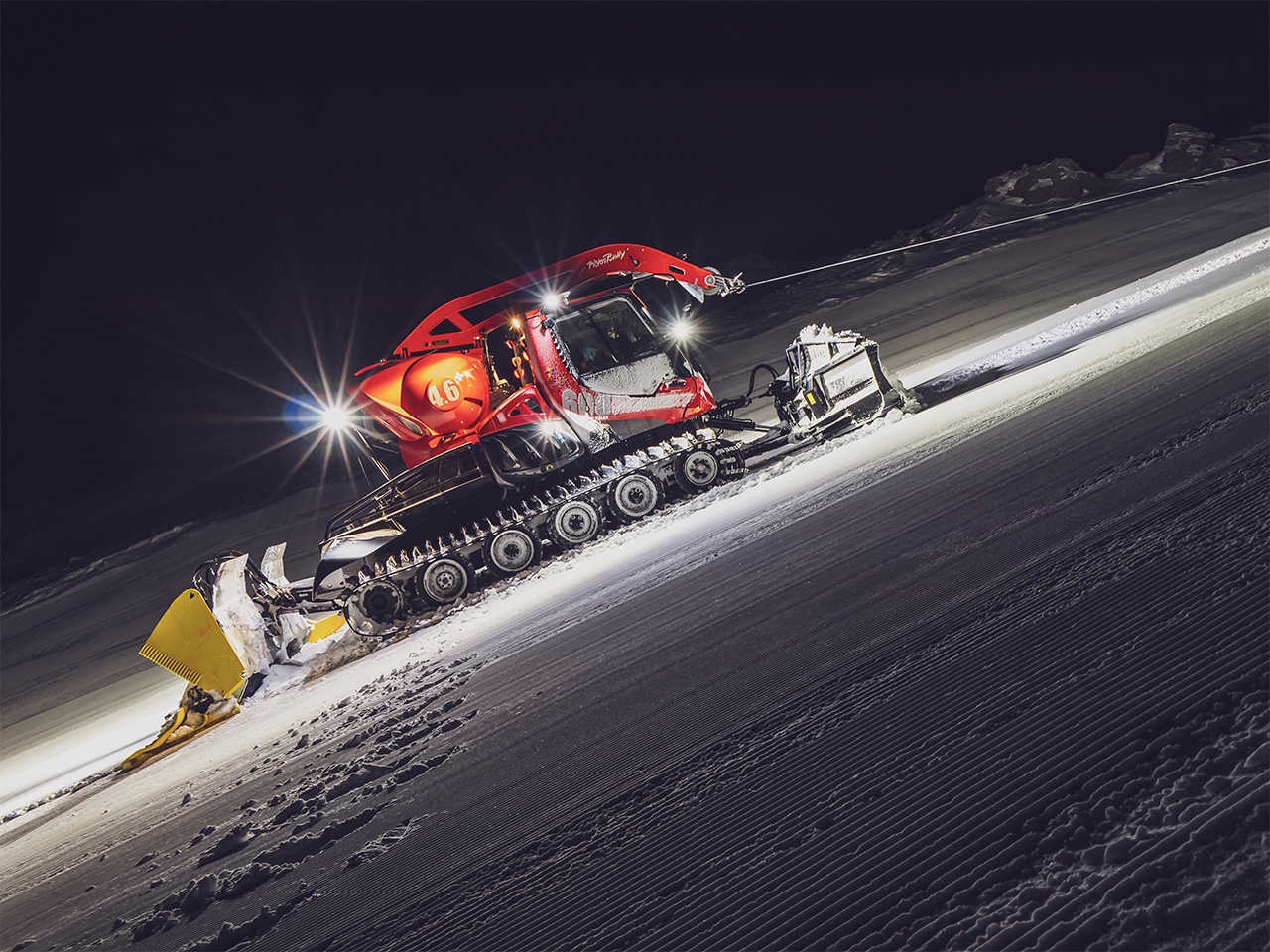
Snow problem: A Pistenbully in action
Within two years, his company – now called Kässbohrer Geländefahrzeug – added snow groomers to its stable. By 1972 these were busy at work at the Sapporo Winter Olympics in Japan, nudging the company ahead of the competition and into global expansion as alpine tourism gained momentum. Over the next six decades, it industrialised slope grooming. In 2022, Straits Research estimated that the sector would be worth $468m (€406m) by 2030 – of which Kässbohrer’s products, seen in resorts in countries from France to Japan, account for about 60 per cent.
For our new ‘Alpino’ newspaper, we visited the company’s HQ in Laupheim. Click here to read more.
|
|
| | |