| | In today’s edition: Paramount’s last-minute Trump outreach. ͏ ͏ ͏ ͏ ͏ ͏ |
| |  Hollywood Hollywood |  Brussels Brussels | New York |
 | Media |  |
| |
|
 - OpenAI vs. the media
- Remnick looks back
- EU outrage
- Agita at Atlas Obscura
- CNN staffers exhale
|
|
 In the days and hours before Netflix announced a deal to buy Warner Bros. Discovery, allies of Paramount owner David Ellison sought the one thing that they thought could stop it: a public statement from President Donald Trump opposing the deal. Trump demurred. They had to settle for a string of anonymous gripes from administration officials, channeled through the New York Post’s irrepressible Charlie Gasparino. The message those anonymous quotes sent was two-sided, a well-placed MAGA lawyer notes: that Republicans hate the deal, and that “Ellison does not have that much juice.” Everyone hates the Netflix deal — creatives facing a monopsony; arbitrageurs worried it won’t close; Democrats wary of consolidation; and rightists who view Netflix as the last FAANG company whose executives haven’t publicly kneeled, and paid, for MAGA peace. But it turns out, as Bloomberg’s Lucas Shaw scooped, that Netflix’s Reed Hastings had played a subtler private game with Trump, who is often loath to let outsiders profit by trading on his name. And now the Ellisons and the Washington right are scrambling to figure out what comes next. With or without a push from Trump, the Department of Justice or Federal Trade Commission could sue on traditional anti-monopoly grounds — claiming that streaming services constitute a market, and that the merged company would have too much power over consumers. The Ellisons must also reverse course and ensure that Trump doesn’t attack Netflix on Truth Social. A statement that could have blocked the deal could now weigh against the government in court. Netflix and WBD, too, may have a way out in today’s openly politicized regulatory environment, the lawyer suggested: “The way they don’t get sued is by spinning off CNN to a conservative.” Also today: CNN staffers’ reactions, plus a dustup in Europe. |
|
AI critics funded AI coverage |
 Dado Ruvic/Illustration via Reuters Dado Ruvic/Illustration via ReutersLast month, NBC News broke the news that the artificial intelligence behemoth OpenAI had quietly issued a series of legal threats against nonprofit organizations that have criticized it. OpenAI reacted with frustration — not with the reporting, but with who paid for it. The company privately complained to NBC News that the author of the story had been paid by the Tarbell Center for AI Journalism, as part of a fellowship program that embeds journalists within news organizations for several months to write stories about artificial intelligence and its growing impact. The center has supported fellows at NBC News and other outlets like Bloomberg, Time, The Verge, and The Los Angeles Times. Its funders include Open Philanthropy, since renamed Coefficient Giving, as well as the Future of Life Institute, an AI-skeptical group mentioned in the NBC News piece. NBC News appended a note to the story. Now, as Max reports, the Tarbell fellowship itself has become the latest front in a widening battle between pro-AI accelerationists and those who want to impose guardrails on it. Increasingly, that ideological debate has played out in the media, as OpenAI and its allies attempt to brighten the dark portrait of their industry that’s become common in media coverage. |
|
David Remnick’s New Yorker century |
 A hundred years after The New Yorker’s first issue, its editor-in-chief has become Netflix’s newest star. On this week’s Mixed Signals, Max and Ben talk with David Remnick about the new Netflix documentary on The New Yorker and the magazine’s past, present, and uncertain future. David also shares what he’s learned from steering the magazine for nearly a third of its history, Max’s reporting on who might one day take his job, and why he’s grateful he never joined Twitter. |
|
The (speech) war in Europe |
The Trump administration unleashed a furious round of posts on X this weekend after the European Commission levied a nearly $140 million fine on the company. It had violated the Digital Services Act in technical ways, the commission said, by “deceiving users with blue check marks, obscuring information on ads and shutting out researchers.” The focus wasn’t false information or propaganda — two more topics the EU worries about — but the ruling came as Elon Musk unapologetically shared a false story about a terror attack in France. This is a few things at the same time: a very traditional attempt by the US to use muscle on behalf of a domestic industry; a genuine effort to stand up for US speech values, as one State Department official argued; a demonstrative tribute to the richest man in the world; and a bizarre fight to pick when the US is deporting people for speech. 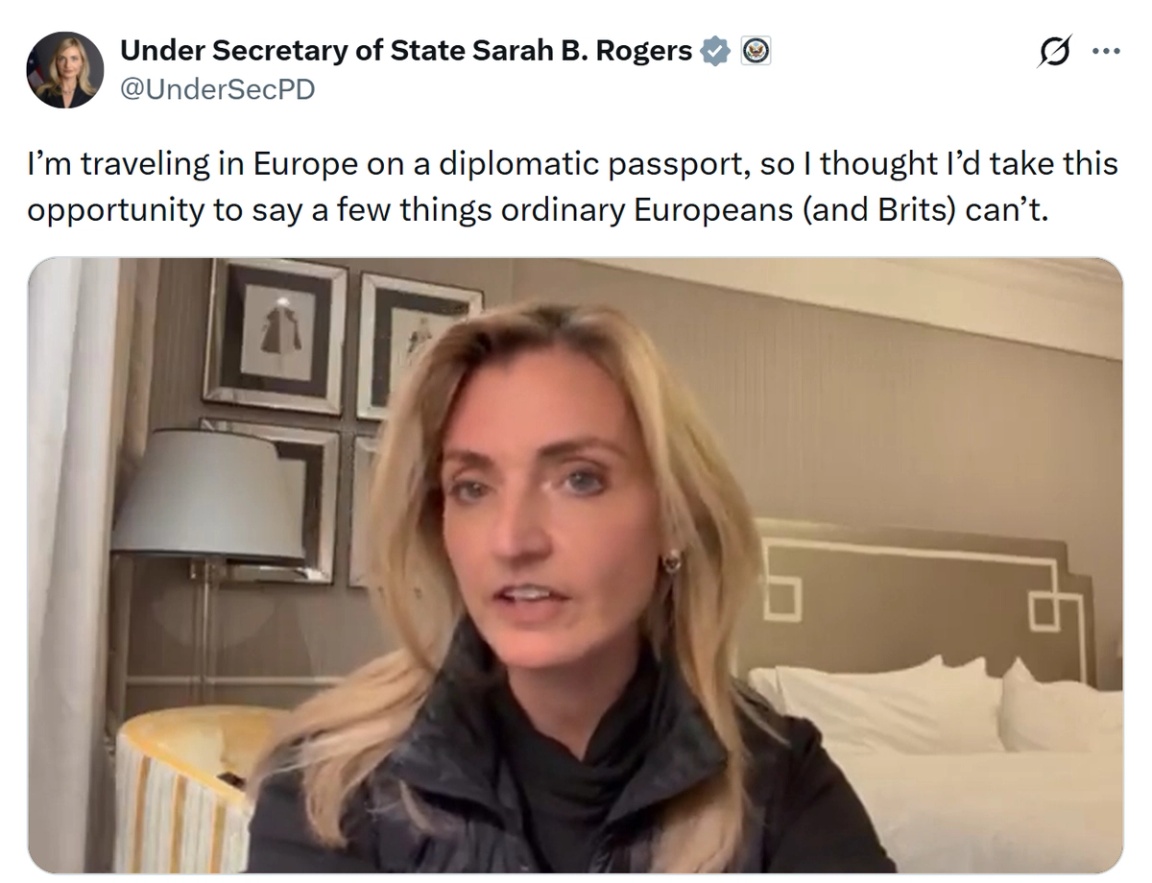 One clue that this is as much about advancing global right-wing populism as anything else: The Trump administration has been silent on the one speech fight in the UK that has actually brought hundreds of arrests, involving allegations of “supporting a proscribed organisation” called Palestine Action. Most of all though, the emotional tenor gives you a sense of the personal priorities of many in the Trump administration. Their politics were formed in battles over free speech on social media, and they take those fights more personally than they do, for instance, the shooting war with Russia. — Ben Smith |
|
 How the world’s top brands stay ahead of social trends. Geekout is the go-to for 30k+ marketers at Netflix, Apple, Disney, and beyond. Each week, it reveals the latest updates, expert takes, and viral content before it hits big. Stay ahead. Subscribe to Geekout — free. |
|
Staffing schisms at Atlas Obscura |
 Bill O’Leary/The Washington Post via Getty Images Bill O’Leary/The Washington Post via Getty ImagesMonths into her tenure as CEO of Atlas Obscura, Louise Story’s relationship with founders Joshua Foer and Dylan Thuras — and their relationship with some of the company’s investors — appears to have fractured. According to three people familiar with the situation, Foer and Thuras have been effectively pushed out of the company they founded over competing visions for its future. In September, Thuras left the company after 15 years; Foer, who does not have a day-to-day role within the company but serves as its executive chairman, had also expressed frustration earlier this year. In a note to shareholders on Nov. 28 shared with Semafor, Atlas Obscura said common stock shareholders had voted to remove and replace the two men. (Foer, Thuras, and Story declined to comment.) Story has enacted swift changes in her new role, such as a revamped editorial strategy that deemphasizes original material and leans into user-generated content. She also laid off more than 10 employees this year, prompting others to leave in protest. |
|
CNN staffers, braced for takeover, relax |
 Chris Aluka Berry/Reuters Chris Aluka Berry/ReutersWhile much of the entertainment and media industry has expressed concern about Netflix’s acquisition of Warner Bros. Discovery, CNN staffers are breathing a sigh of relief. Paramount had signaled that if it acquired the company, it would likely combine CBS and CNN, almost certainly resulting in staff cuts and major changes. CNN employees would’ve also had a new boss in CBS News editor-in-chief Bari Weiss, who reportedly told people privately that she would have been in charge of the combined news unit. People inside CNN told Semafor that some newsroom staff had feared reporting to her. Instead, as federal regulators weigh Netflix’s acquisition of WBD’s studio and streaming business, WBD will continue spinning off its cable assets, including CNN, into a new company, Discovery Global. In a note to staff on Friday shared with Semafor, CNN CEO Mark Thompson said that the spinoff would “enable us to continue to roll out our strategy to secure a great future for CNN by successfully navigating our digital transition.” He noted that the head of the newly-spun-off company, Gunnar Wiedenfels, had agreed to “increased investment” in CNN and a continued promise of editorial independence. “I can’t promise you that the media attention and noise around the sale of our parent will die down overnight. But I do think the path to the successful transformation of this great news enterprise remains open,” he wrote. |
|
 The Signal Interview: Bill McDermott sees AI creating “chaos” inside some companies — and sees opportunities for his own. → |
|
|
| |