| | The US escalates its campaign against Venezuela, Kyiv considers making territorial concessions, and ͏ ͏ ͏ ͏ ͏ ͏ |
| |  Yamoussoukro Yamoussoukro | Tokyo |  Canberra Canberra |
 | Flagship |  |
| |
|
The World Today | 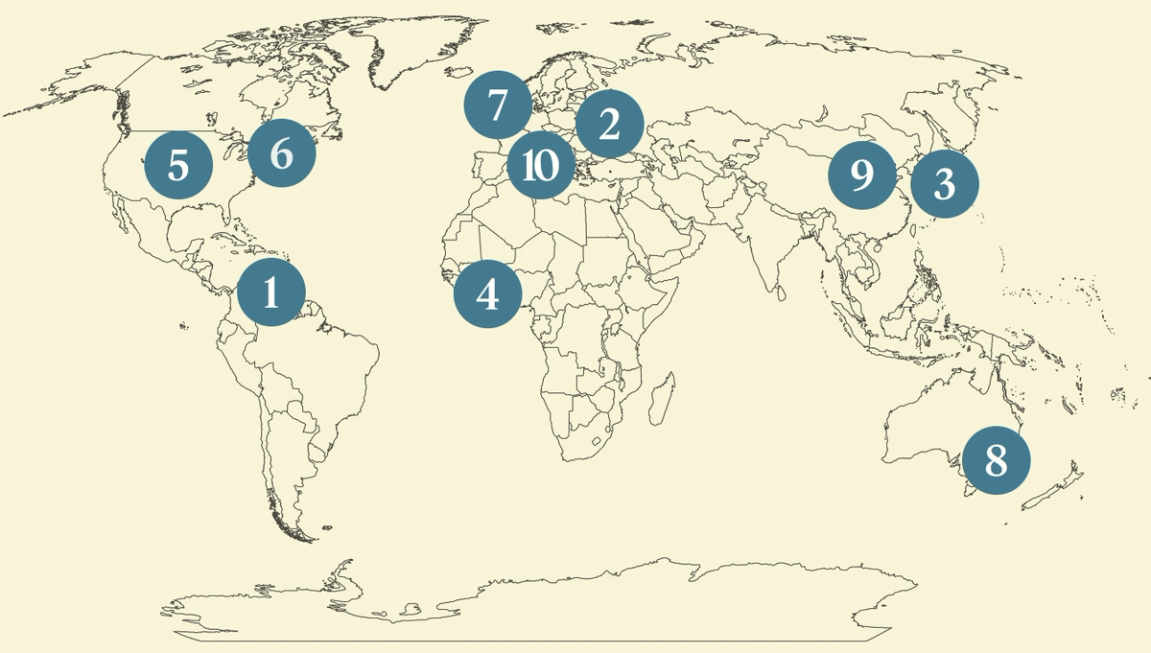 - US squeezes Venezuela
- Kyiv weighs land handover
- US-Japan military drills
- I. Coast seeks US help
- Rising health costs in US
- Trump blocks states on AI
- Europe’s populist march
- Reddit sues Canberra
- IMF issues China warning
- Italian cuisine gets UN nod
 An opera in London featuring a Kurt Cobain alter ego. |
|
US escalates Venezuela campaign |
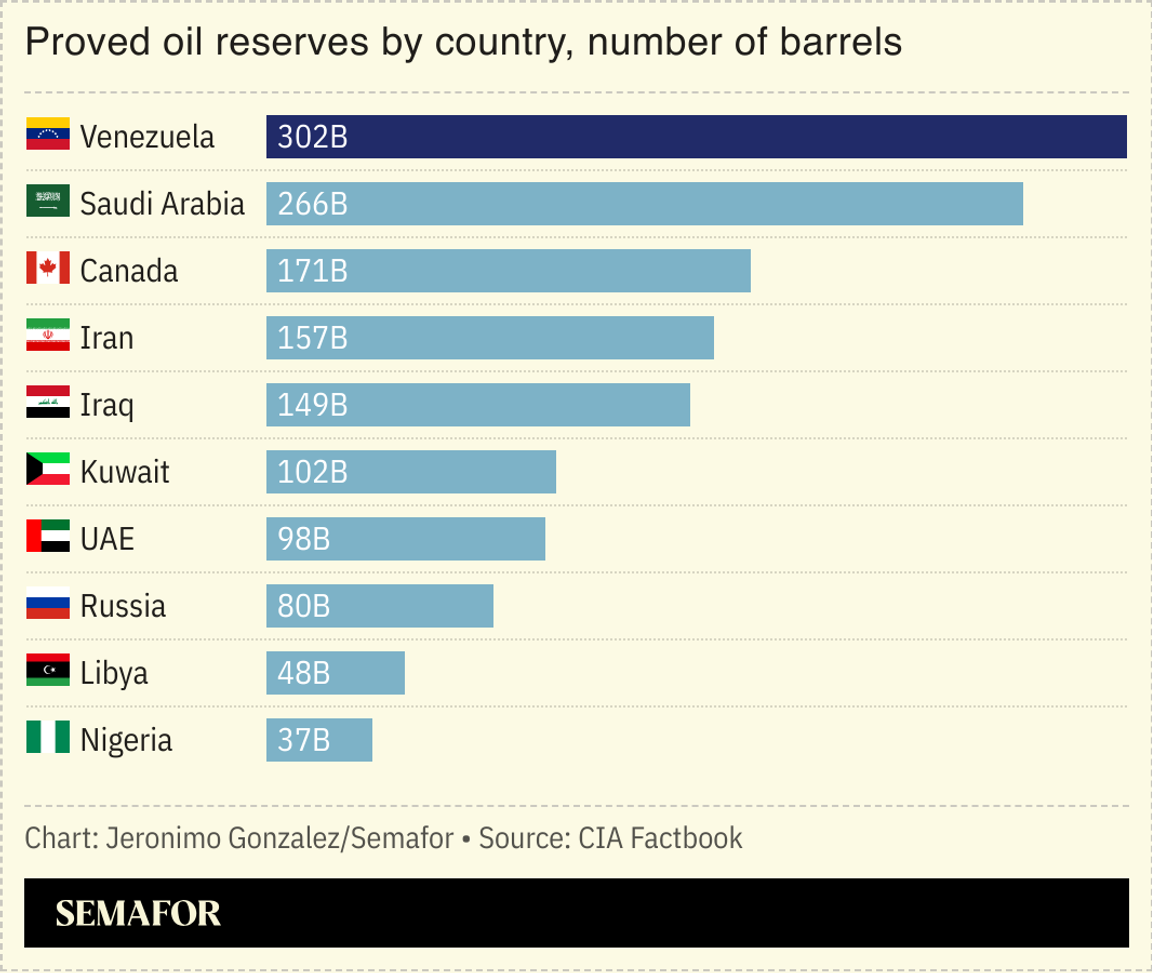 The US escalated its campaign against Venezuela with a series of moves that risk sparking an international crisis. Washington imposed sanctions on the family of President Nicolás Maduro — whom the Trump administration claims is running a drug cartel — and vowed to intercept more oil-carrying vessels that Venezuela’s economy relies on, after seizing a tanker on Wednesday. “The risks are now higher to depart from Venezuelan waters,” an expert told Reuters. In response, Russian President Vladimir Putin spoke to Maduro and reassured him of Moscow’s support. Washington’s threat against oil tankers also risks angering China, which buys the vast majority of Venezuela’s crude. |
|
Ukraine could cede land for peace deal |
 Isabel Infantes/File Photo/Reuters Isabel Infantes/File Photo/ReutersUkraine has reportedly agreed to make territorial concessions as part of a peace deal with Russia, potentially a major step towards reviving a flagging US-backed proposal. According to Le Monde, Kyiv and its European backers have accepted a US push for a demilitarized zone in its Donbas region: Washington had proposed that the territory be turned into a “special economic zone,” Ukrainian President Volodymyr Zelenskyy said. The Trump administration is pressuring Zelenskyy to accept a deal, while Moscow says that there are no longer any “misunderstandings” with Washington. However, Zelenskyy remained skeptical that an agreement could be reached. “The final mile is the hardest. Everything could fall apart for many reasons,” he said. |
|
US, Japan conduct joint military drills |
 Andrew Caballero-Reynolds/AFP via Getty Images Andrew Caballero-Reynolds/AFP via Getty ImagesThe US and Japan conducted joint military drills, a symbolic boost for Tokyo, which is locked in a tense feud with Beijing. Japan has accused China of stepping up naval activity in disputed waters, and has said it could get involved if Taiwan were threatened, remarks that triggered economic boycotts and efforts at defense intimidation by Beijing. Japan has reportedly voiced frustration that the US has not offered its high-level support, and Washington may be changing its tune: The countries’ defense ministers agreed recently that China’s activities were “not conducive to regional peace,” while US jets — including two nuclear-capable bombers — took part in the drills and an American aircraft carrier docked at a Japanese port. |
|
Ivory Coast seeks US help to fight jihadists |
 Ivorian President Alassane Ouattara. Issouf Sanogo/AFP via Getty Images Ivorian President Alassane Ouattara. Issouf Sanogo/AFP via Getty ImagesIvory Coast reportedly wants the US to station spy planes in the country to help it fight jihadists who have gained territory across much of West Africa in recent months. Extremist groups, including some linked to al-Qaida, have turned the region into the world’s terrorism epicenter, forcing millions to flee and further destabilizing some of the world’s poorest regions. Their territorial expansion has been aided by several regional countries breaking long-term security alliances with Western nations, replacing their assistance with help from Russia, which analysts say is a far weaker partner. Some experts now fear that fighting between jihadi groups could turn West Africa into an “insurgency corridor” spanning 1,000 miles, Bloomberg reported. |
|
US health costs likely to rise |
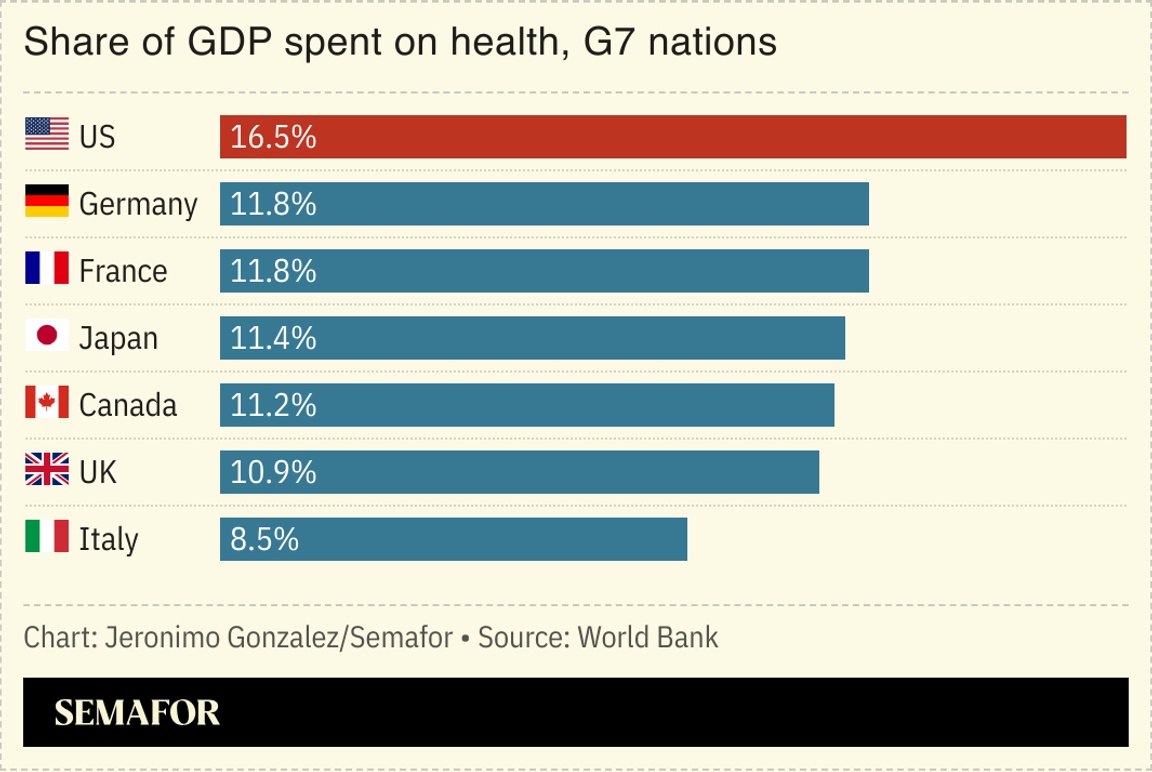 Health insurance premiums will likely jump for around 20 million people in the US after lawmakers failed to reach an agreement over extending tax credits on Thursday. Key Obamacare provisions expire this month, a political problem for President Donald Trump: The credits are popular, and his Republican Party is struggling in the polls ahead of next year’s midterm elections. But Congressional Republicans are confused over whether Trump wants to make a deal with Democrats or have his party go it alone, Semafor’s politics team reported. Some Republicans are breaking ranks and backing votes on an extension, a sign perhaps of his weakening power over the party as his popularity wanes. |
|
Trump bans states from regulating AI |
 Al Drago/Reuters Al Drago/ReutersUS President Donald Trump signed an executive order aimed at banning states from regulating AI. Several state governments have tried to place guardrails on the technology, which the AI industry and the White House say creates a legal patchwork that hampers innovation. But Congress has twice failed to pass a moratorium on state-level regulation. Trump’s order cannot override state laws, but directs federal agencies to circumvent them, The Verge reported. It will almost certainly face legal challenges, NPR reported, and drew criticism from some Republicans trying to pass laws limiting children’s AI use. The order will have the greatest impact on California, which passed a wide-ranging law in September and is home to many of the world’s largest AI firms. |
|
Europe failing to curb populism |
 Nigel Farage. Jeff Mitchell/Getty Images Nigel Farage. Jeff Mitchell/Getty ImagesCentrist parties across Europe are not doing enough to block the rise of populism, by failing to address voter concerns and by not enacting reforms necessary to win back wider public support, multiple outlets argued. Warnings about the end of democracy issued by the leaders of Britain, France, and Germany “smacks of an attempt to draw attention away from their own failures,” The Economist said in its latest cover story, while a European politics expert wrote in The New York Times that mainstream politicians must quickly enact economic policies that give their bases “reasons to hope again.” Their options are limited, however: “In most cases, their economies are so moribund that they lack the fiscal firepower,” Politico noted. |
|
 Over three decades on screen, Andy Richter has adapted to every twist in the media world. The comedy veteran and longtime Conan O’Brien sidekick joins Mixed Signals this week for an existentially funny conversation about surviving three decades in entertainment. Max and Ben ask Andy about how he became late night’s most adaptable performer, whether he ever worried about becoming “the next Ed McMahon,” and why acting work has become so elusive in Hollywood. Andy also talks about the decline of late-night television as a cultural force, and how Dancing With the Stars accidentally turned him into a TikTok phenomenon. Listen to the latest episode of Mixed Signals now. |
|
Reddit sues Australia over new law |
 Brendan McDermid/Reuters Brendan McDermid/ReutersReddit sued Australia’s government over the country’s social media ban. Canberra enacted the world’s first social media age limit this week, blocking all under-16s’ accounts. Reddit said that the law breached Australia’s constitution, which establishes freedom of political communication; a separate lawsuit from two Australian teens argues the same. Other countries are watching Australia with great interest — partly to see if the lawsuits are successful, but also to see if the ban has the desired effect of safeguarding mental health. Previous legal efforts, for example South Korean and Chinese laws banning video games at night, were found to be flops. Australia’s ban is a “natural experiment,” researchers wrote in Nature, and should be carefully observed. |
|
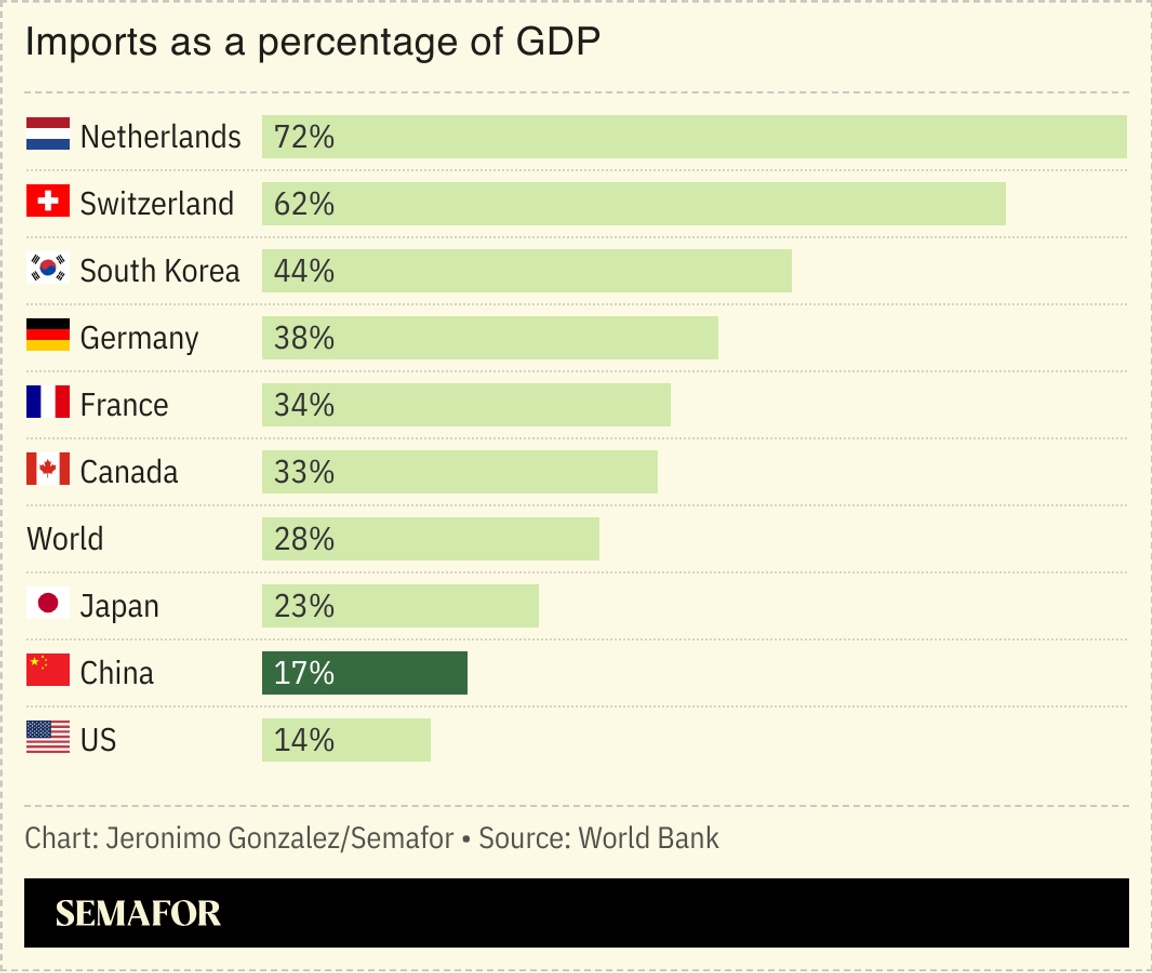
IMF urges Chinese economic reforms |
|
|