| | The US and Europe offer NATO-style security guarantees for Ukraine, carmakers delay their pivot to E͏ ͏ ͏ ͏ ͏ ͏ |
| |  | Flagship |  |
| |
|
The World Today |  - Kyiv gets security promises
- US strikes Pacific again
- The enduring threat of IS
- Autocrat regimes on the rise
- Trump sues BBC for $10B
- AI bubble fears grow
- Carmakers reverse on EVs
- Mistaking China’s economy
- S. Africa to cut back on cash
- Recipe writers lament AI
 A fashion-forward remake of La Vie Parisienne at Versailles’ Royal Opera House. |
|
Kyiv gets security guarantees |
 Lisi Niesner/Pool/Reuters Lisi Niesner/Pool/ReutersUS and European officials agreed to provide Ukraine with NATO-style security guarantees, potentially overcoming a major hurdle to a flagging peace deal with Russia. US President Donald Trump said a deal was now “closer than ever,” while German Chancellor Friedrich Merz said there was now a small but “real chance” at peace. More talks are expected this week in the US. Kyiv appears to have dropped its bid to join NATO, but remains steadfast in its ambition to become an EU member, a move that US officials said would not be opposed by Moscow. However, Russian officials were skeptical that a peace deal may be agreed quickly: A Kremlin spokesperson said predicting a timeline was a “thankless task.” |
|
US wages more Pacific strikes |
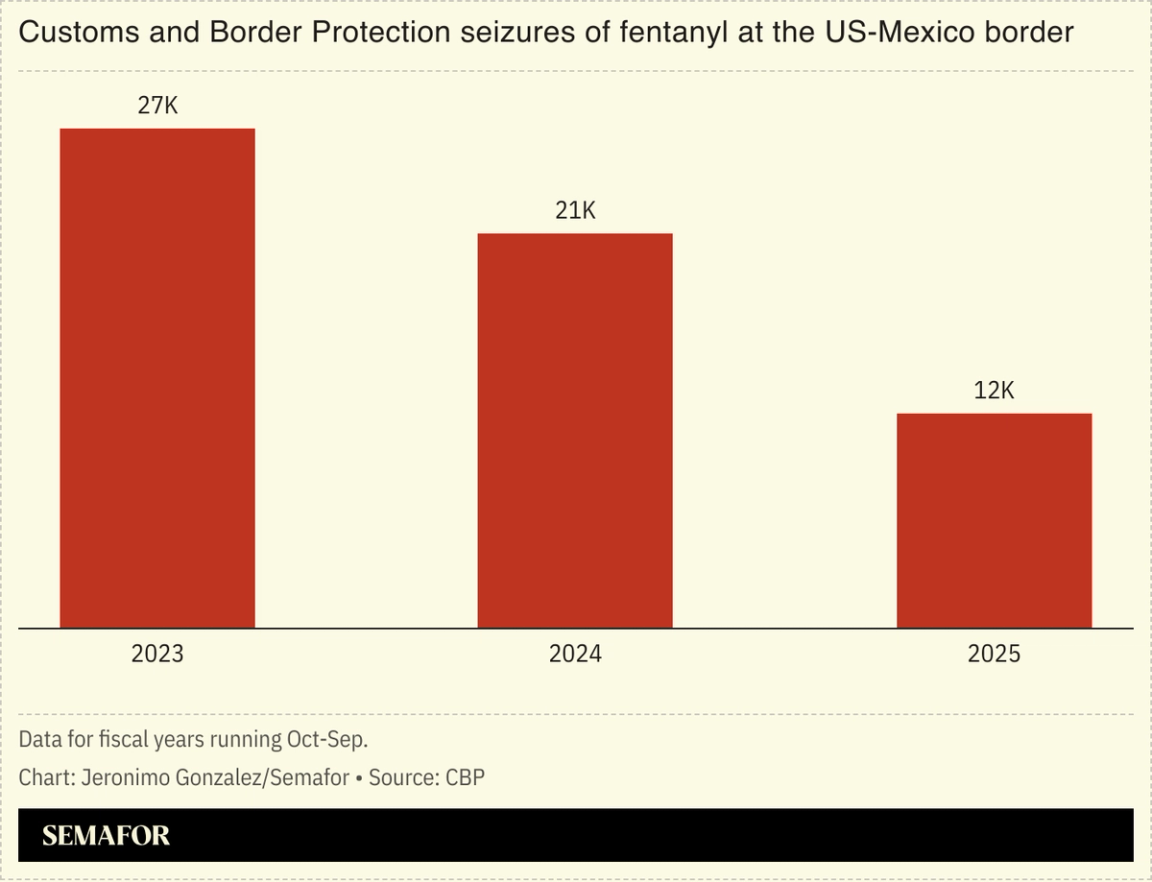 The US military carried out more strikes on alleged drug traffickers in the Eastern Pacific as the White House ramped up its campaign on what it alleges are narcoterrorist groups. The US — which for months has been carrying out attacks off the coast of South America that critics argue are illegal — said three vessels had been hit, killing eight people. Meanwhile, US President Donald Trump announced that fentanyl would be classified as a weapon of mass destruction, a move that expands Washington’s authority to crack down on the synthetic opioid’s trade, while raising the risk of the war on drugs expanding far beyond South America: The vast majority of US-bound fentanyl is produced in Mexico by cartels using Chinese precursor chemicals. |
|
The IS group’s enduring threat |
 Flavio Brancaleone/Reuters Flavio Brancaleone/ReutersThe father-and-son gunmen who killed 15 people on Sydney’s Bondi Beach had homemade Islamic State group flags and traveled to a Philippines region known as a hotspot for extremist groups. IS is a shadow of its mid-2010s heyday, when it controlled much of Iraq and Syria, but remains a threat, The Telegraph reported. Islamist attackers in Canada and the UK this year both pledged allegiance to IS, and there are signs that affiliated groups are exploiting a post-Assad vacuum in Syria: The organization claimed responsibility for the killing of two US soldiers and a civilian interpreter on Saturday. There is little overall coordination, but IS leadership can claim incidents like Bondi as a “block in the rebuilding of the caliphate.” |
|
Autocratic regimes on the rise globally |
 Courtesy of Foreign Affairs. Courtesy of Foreign Affairs.Autocratic cooperation is strengthening, and longtime US allies are being complacent in thinking Washington will resume its leadership of the liberal international order, essays in the new issue of Foreign Affairs argued. A combination of illiberal leaders in free societies and the growing power of authoritarians has created a “capability gap” that has made “democratic backsliding harder to combat,” one piece said, while another warned that “US allies may not have a Plan B now — but they had better start developing one fast.” Still, as a biographer of Stalin’s noted, autocratic regimes are “shot through with weaknesses… They last far longer than generally anticipated but all the while remain prone to sudden runs on their political banks.” |
|
Trump sues the BBC for $10B |
 Isabel Infantes/File Photo/Reuters Isabel Infantes/File Photo/ReutersUS President Donald Trump filed a $10 billion lawsuit against the BBC. The UK state broadcaster ran a documentary last year which edited his Jan. 6, 2021 speech at the US Capitol, giving the impression that Trump called for violence. The BBC acknowledged the error, but rejected the defamation claim, saying the show was never broadcast in the US. The furore could hurt the BBC: The corporation’s UK income has declined 30% since 2010. It has bet heavily on its overseas commercial arm, and especially the US, the only country so far where it has rolled out its paywall. Even if Trump’s lawsuit fails, he “has the power to make the BBC’s stateside life very difficult,” The Telegraph reported. |
|
Bubble fears mount over AI outlays |
|
Carmakers reverse on EV production |
 Major carmakers are delaying efforts to pivot to electric vehicles as they come under pressure from Chinese rivals and shifting political priorities. Ford dropped plans for an all-electric truck, accepting a $19.5 billion writedown, while Volkswagen is expected to extend its investment in gas-driven cars. Chinese models dominate the global EV market, and the US has dropped EV-purchase incentives, making it “all but impossible” for Western carmakers to give up the better profit margins available on internal combustion vehicles, The Wall Street Journal reported. Canada, the EU, and the UK are also rethinking their EV mandates. But firms also want to avoid falling behind technologically, and “it will be difficult to do both,” the Journal noted. |
|
 Semafor will be on the ground in Davos next month for the World Economic Forum, the annual gathering where the world’s most powerful come together to strike deals, tout their good deeds, and navigate the snow — sometimes getting stuck long enough to share a scoop or two with us. We’ll deliver exclusives on the high-stakes conversations shaping the world. Expect original reporting, exclusives, and insights on all the deal-making, gossip, and lofty ambitions — with a touch of the pretentious grandeur Davos is famous for. Get the big ideas and small talk from the global village — subscribe to Semafor Davos. |
|
Mislabelling China’s economic trends |
 cnsphoto via Reuters cnsphoto via ReutersWestern experts and policymakers analyzing China are misusing economic terms and risk misunderstanding Beijing’s priorities as a result, a leading research firm said. Western officials have long railed against Chinese manufacturing overcapacity as a threat to their own domestic producers, and ultimately to entire sectors by hollowing out suppliers. Many point to Beijing’s warnings of involution — excessive competition that ultimately damages markets — as proof that China is in agreement. “You can kind of see how that overlaps with overcapacity,” a Trivium analyst said on its podcast. But “when the Chinese talk about involution, the goal here isn’t to bring about a global equilibrium… The real issue here is they want to stop Chinese firms from eating each other’s lunch.” |
|
South Africa to slash cash |
|
|


