| | US unemployment rises, oil prices fall, and Europe ponders its future.͏ ͏ ͏ ͏ ͏ ͏ |
| |  | Flagship |  |
| |
|
The World Today | 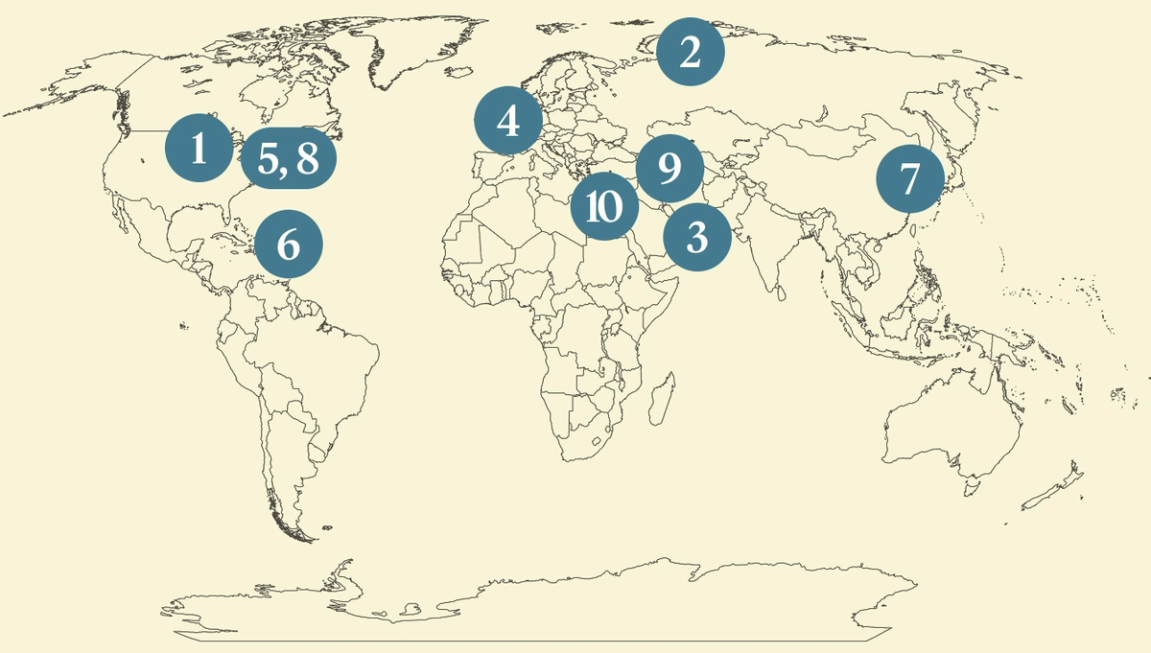 - US unemployment rises
- Oil prices fall on peace hopes
- China-Gulf ties deepen
- Can Europe recover?
- Is banking sexy again?
- How Epstein made millions
- Chinese schools face criticism
- Fewer students in NY
- Iran displays missiles
- Ancient pleasure barge
 A Tiffany lamp coveted by Steve Jobs tops auction records. |
|
US unemployment rate ticks up |
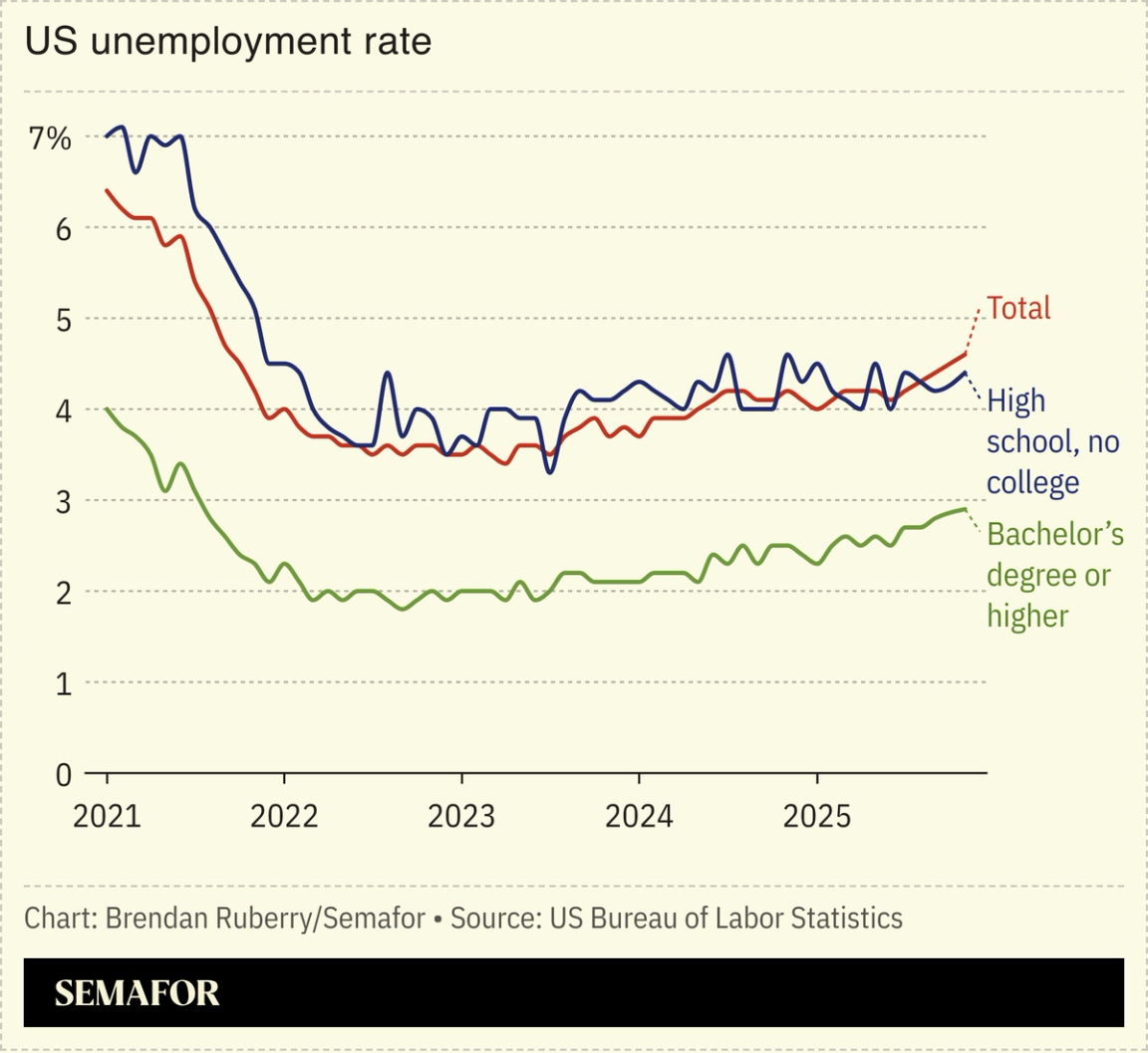 The US unemployment rate on Tuesday rose to its highest level since September 2021, the latest warning sign for the country’s labor market. Even as the number of jobs added in November beat expectations, the 4.6% jobless rate underscored that the market is “undergoing a structural adjustment that may take several months to unfold,” one trader said. But it likely won’t be enough to spur the US Federal Reserve to cut interest rates again in January, analysts said. The White House, which is aiming to counter souring public sentiment about President Donald Trump’s economic agenda, cast the report as a positive, noting a gain in private-sector employment. A recent poll showed Trump’s economic approval rating fell to a 10-month low. |
|
Oil prices sink on Ukraine peace hopes |
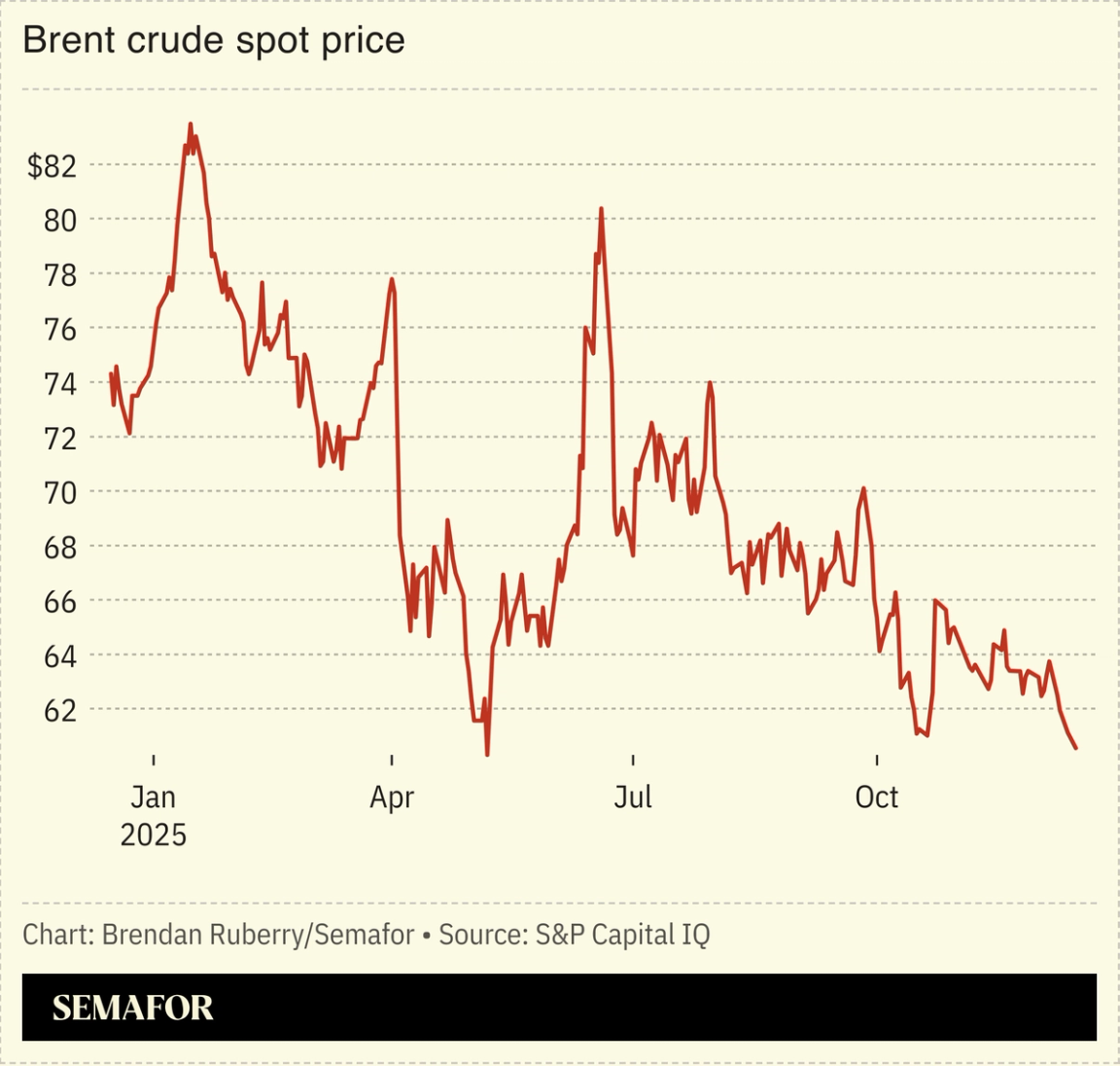 US crude oil prices fell below $55 per barrel on Tuesday, the lowest level since early 2021, over expectations of a surplus and optimism around Ukraine peace talks. OPEC+ members have ramped up production this year, spurring fears of a “super glut.” And while peace in Ukraine likely remains a ways off, some traders are pricing in lower geopolitical risk. A Rystad Energy analyst noted that an end to the conflict could bring millions of barrels of Russian oil back to the market. Prices might have been dragged down further but for disruptions to Venezuela’s oil exports after the US seized a tanker in the Caribbean: Oil has played a central role in Washington’s pressure campaign against Caracas. |
|
China-Gulf free-trade deal a tough sell |
 China Ministry of Foreign Affairs China Ministry of Foreign AffairsThe Chinese foreign minister’s tour in the Middle East underscored Beijing’s deepening economic relationship with the region, even as a long-awaited trade agreement faces hurdles. Saudi Arabia pledged closer ties with Beijing on energy and AI, and Riyadh’s sovereign wealth fund-backed clean power giant is eyeing China as its “next big hub,” ACWA Power’s CEO told Semafor. During Wang Yi's trip, the diplomat urged the region’s leaders to seal a free-trade deal, but the Gulf is trying to boost domestic manufacturing, and “unfettered Chinese imports would dramatically undermine those efforts,” an expert on China-MidEast relations argued. “Free trade with China isn’t an easy sale these days.” |
|
Where Europe goes from here |
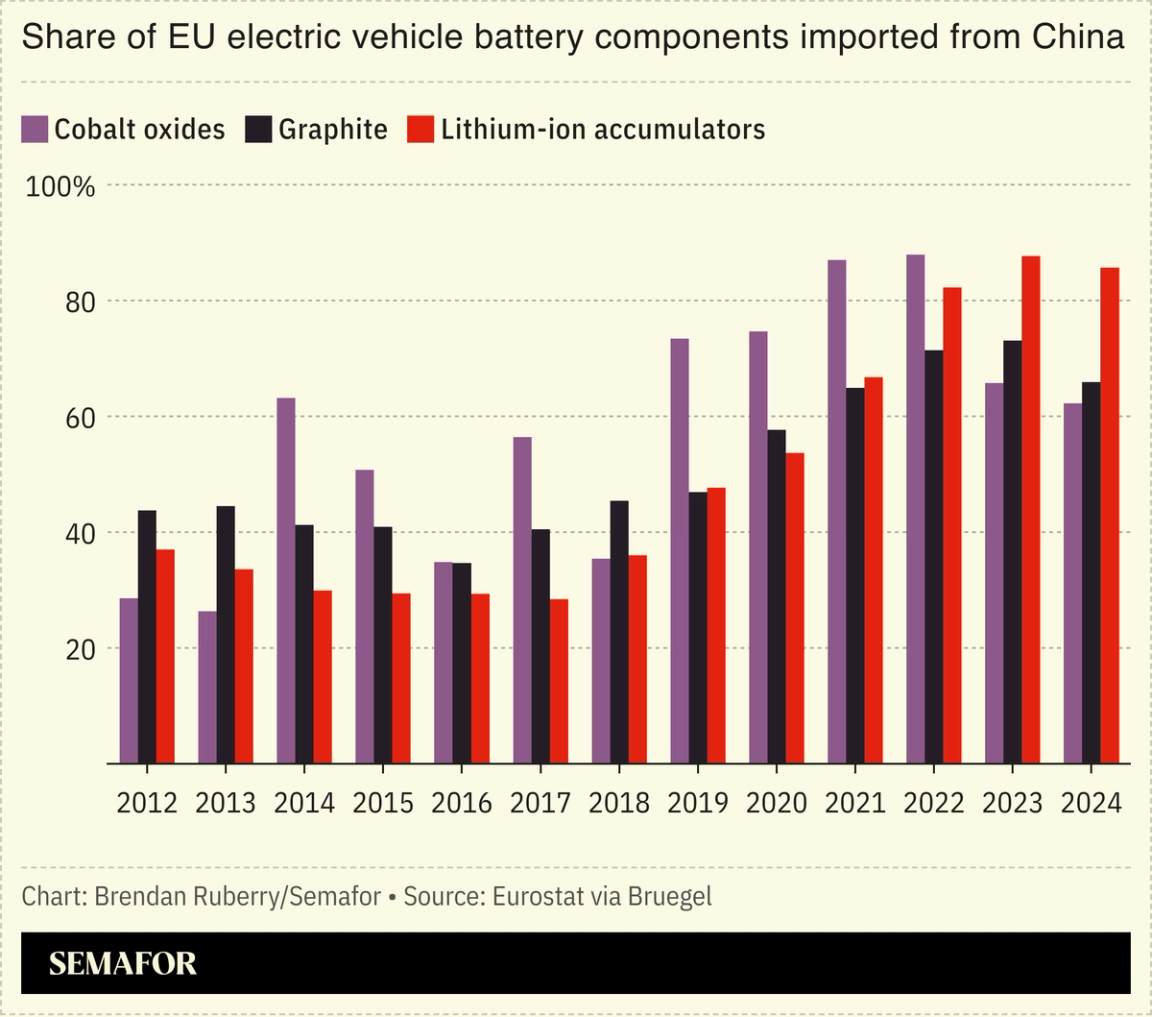 Europe is facing generational economic, geopolitical, and technological challenges, but it can reinvent itself to remain relevant in the future world order, analysts argued. Europe’s “sloth” in boosting competitiveness means it is losing the high-tech race to China, whose supply chain advantages and mass production strategy are squeezing out European giants, a Chatham House fellow wrote. Politically, European leaders’ strategy of appeasing Washington has resulted in a “self-defeating trap” that strengthens those who want to weaken the continent, experts argued in Foreign Affairs. But this “demotion need not be traumatic,” an Oxford lecturer wrote in The New York Times: Europe’s decline offers it an opportunity to rightsize its goals, further integrate with China, and abandon its grandeur visions of being “the star player.” |
|
 PayPal CEO Alex Chriss. Kris Tripplaar/Semafor PayPal CEO Alex Chriss. Kris Tripplaar/SemaforThe trendiest thing a fintech firm can do these days is become a bank. PayPal on Monday applied to establish a bank, following in the footsteps of SoFi, Varo, Lending Club, and Revolut, which launched proudly as antibanks to avoid the regulatory overhead. Meanwhile, a handful of crypto companies including Circle got conditional licenses to become trust banks, meaning they can’t take deposits or make loans but have access to other parts of the financial system. After the Joe Biden administration failed to approve a single fintech bank charter application, Donald Trump has “rolled out the welcome mat,” a fintech consultant told Semafor: New applications are at their highest levels since 2020. |
|
‘Prosaic’ answer to Epstein’s fortune |
 House Oversight Committee Democrats/Handout via Reuters House Oversight Committee Democrats/Handout via ReutersA sweeping New York Times investigation of Jeffrey Epstein’s career delivers a “prosaic” answer to the big question: How the sex criminal and power broker made his millions. “Epstein was less a financial genius than a prodigious manipulator and liar,” the Times wrote; he “demonstrated a remarkable knack for separating seemingly sophisticated investors and businessmen from their money.” Former Vanity Fair editor Tina Brown describes the US Congress’ release of Epstein’s “typo-filled emails to his private-jet circle” and celebrity-stacked photo dump as “a big bust.” These developments should — but probably won’t — put an end to the vast and unfounded web of speculation about the disgraced financier that Semafor’s editor-in-chief described as “QAnon for people who went to college.” |
|
China, SK officials call for testing reform |
 Song Kyung-Seok/Pool via Reuters Song Kyung-Seok/Pool via ReutersEducation leaders across East Asia called for reforms to their countries’ notoriously grueling testing cultures and benchmarks. A group of prominent Chinese academics said at a recent conference that the nation’s intensely competitive system — in which a pupil’s future hinges on their performance in a college entrance exam — fails most students and fuels a “spiritual crisis” among young people, Caixin reported. “Simply chasing university admission rates is a dead end,” argued the head of a Beijing school centered on “happiness education.” In South Korea, Seoul’s education chief proposed scrapping a similar admissions test, the latest version of which forced the national exam administrator to resign following outrage over how difficult it was. |
|
Fewer children in NY and London schools |
 Jeenah Moon/Reuters Jeenah Moon/ReutersEnrollment in New York’s schools has declined by quarter of a million children in a decade, thanks to an aging population and an increase in homeschooling. The state’s population has remained flat, but the number of enrollments in K-12 dropped from 3.1 million in 2013-14 to 2.8 million in 2023-24, research suggested, driven largely by an aging demographic, including people having fewer children, a researcher noted. The number of children in London is also declining, and primary schools there have been forced to close or merge as they fail to fill their rosters. Falling birth rates are a driver, but local authorities said the cost of housing also made it hard for young families to stay. |
|
 Semafor is heading to Davos to deliver exclusive interviews and sharp insights on the deals, power plays, and ambitions shaping the global stage. Stay in the know on the big ideas, small talk, and behind-the-scenes happenings at the World Economic Forum’s annual gathering — subscribe to Semafor Davos. |
|
Iran displays weapons to project strength |
 Majid Asgaripour/WANA via Reuters Majid Asgaripour/WANA via ReutersIran is putting its military might on display — literally. A recent exhibition in Tehran featured the Islamic Republic’s weapons, including armored vehicles and ballistic and hypersonic missiles. The arsenal showcase was part of the government’s attempt to project strength after a series of military setbacks in the past year: Iran’s proxies in the region are weakened, and US strikes hindered its nuclear ambitions. Many Iranians feel stuck in a state of “no war, no peace,” the Financial Times wrote; Tehran wants to show it is prepared if conflict flares up again, and that bolstering its missile stash is key to that effort. |
|
Ancient pleasure boat unearthed |
|
|


