And, fixing AI to find cancer in low-risk groups.

Get full access to Reuters.com for just $1/week. Subscribe now.


Health Rounds

Health Rounds

By Nancy Lapid, Health Science Editor

Hello Health Rounds readers! Today we look at a potentially simple solution to protect babies from malaria where the disease is endemic, and a complicated issue in training artificial intelligence to better diagnose cancers in various patient populations.

See these breaking news stories from our Reuters team: Kennedy approves adding two rare disorders to newborn screenings; measles cases in South Carolina rise by nine to 135; FDA has no plans to put most serious warning on COVID vaccines; and Harvard-affiliated Dana-Farber to pay $15 million to settle US claims over flawed studies.

Also: Trump weighs order to loosen federal marijuana restrictions. which might help cannabis companies. 


Industry Updates

  • Lawsuits against Novo Nordisk, Lilly claim GLP-1s led to blindness.
  • US FDA sends warning letters to Walmart, Target for selling recalled baby formula; grants priority voucher to J&J's blood cancer treatment; and approves AstraZeneca, Daiichi breast cancer drug as first-line treatment.
  • Sanofi to pay Dren Bio up to $1.7 bln to develop autoimmune disease therapies; signs $1 bln Alzheimer's drug development deal with ADEL.
  • Gilead's HIV treatment non-inferior to blockbuster drug in trial.
  • UK approves GSK's twice-yearly asthma drug.
  • Pfizer foresees challenging 2026; signs deal with Adaptive worth up to $890 mln for rheumatoid arthritis research.
  • Fitch downgrades Humana's credit ratings.
  • Kyverna's cell therapy improves mobility in mid-stage study.
  • Immunome reports 'knockout' late-stage results for rare tumor drug.
  • Cencora to take majority control of OneOncology for $5 bln.
  • Caris, Genentech sign deal worth up to $1.1 bln for rare cancer targets.


Alzheimer's drug hunt learns from cancer fight's multi-target playbook

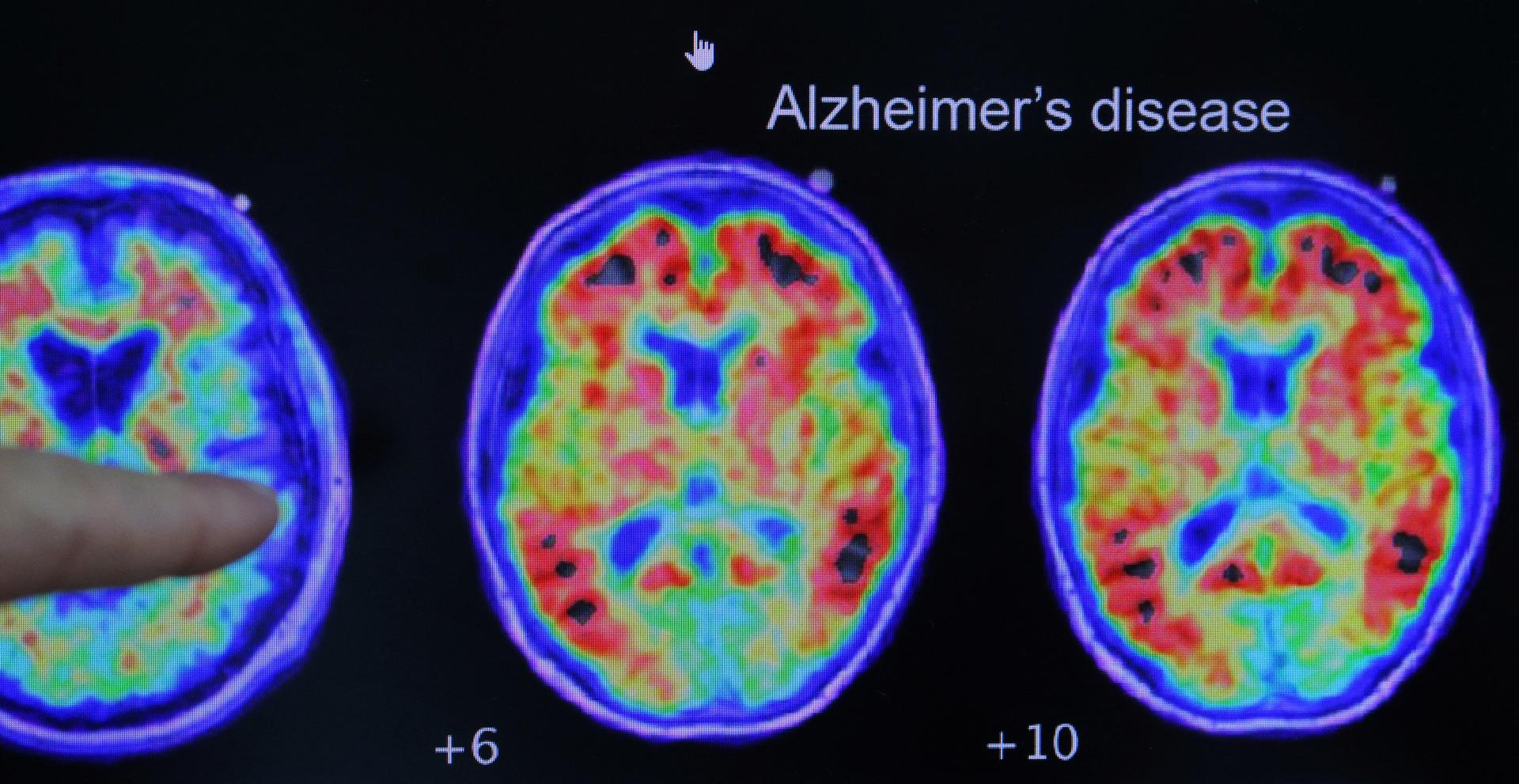
REUTERS/Brian Snyder. A physician shows evidence of Alzheimer’s disease on PET scans 

Alzheimer's trials testing the GLP-1 drug semaglutide, despite their failure, underscore a shift to approaching the disease as a system of complex pathways, much the way the field of cancer therapeutics has been transformed in recent years, experts say.


Study Rounds

Insecticide-treated cloths protect babies from malaria


Applying an insecticide treatment used for soldiers’ uniforms to the cloths used to carry babies significantly reduced incidence of malaria in the children, researchers found.

The six-month study conducted in regions of Uganda where malaria is endemic included 400 mothers and their babies, ages 6 months to 18 months. Half were randomly assigned to use cotton cloth wraps treated with Sawyer Products’ permethrin, while the others received cloths treated with plain water as a control group. The wraps underwent retreatment every 4 weeks.

All of the pairs received insecticide-treated sleeping nets.

The permethrin-treated baby wraps reduced malaria cases in infants by 66%, according to a report of the study published in The New England Journal of Medicine.

Adverse events were mild, and the frequency was low and  similar in the treatment group and the sham group, the report said.

“Given the anticipated duration and frequency of use... extended follow-up of children, particularly for neurodevelopmental effects of permethrin exposure, is needed,” the researchers acknowledge.

“Yet malaria, both severe and uncomplicated forms, can cause long-term cognitive impairment, and a careful weighing of potential risks and benefits will be required.”


Read more about malaria on Reuters.com

  • Malaria deaths rose in 2024, funding cuts risk surge, WHO says
  • Uganda to receive up to $1.7 billion of US funding under Trump health plan
  • New, effective anti-malaria drug could help fight rising resistance, says Novartis
 

AI requires nuanced training to find cancers in lower-risk groups

Two recent studies highlight the potential for artificial intelligence tools to be less accurate in some patients than  others, if the tools are not trained properly.

It’s well known that if AI tools are trained on data collected from unequal proportions of patients from various demographic groups, they have a harder time making an accurate diagnosis in minority groups that aren’t well-represented in the training set.

But in the current analysis, the models sometimes performed worse in one demographic group even when the sample sizes were comparable, researchers reported in Cell Reports Medicine.

The reason may be that some cancers are more common in certain groups, so the models become better at making a diagnosis in those groups. As a result, the models may have difficulty diagnosing cancers in populations where they aren’t as common, the researchers discovered.

In addition, subtle molecular differences may exist in biopsy samples from different demographic groups, and AI may detect those differences and use them as a proxy for cancer type, potentially making it less effective at diagnosis in populations in which these mutations are less common.

“We found that because AI is so powerful, it can differentiate many obscure biological signals that cannot be detected by standard human evaluation,” study leader Kun-Hsing Yu of Harvard Medical School said in a statement.

As a result, the models may pick up signals that are more related to demographics than disease - and inferring demographic information from pathology slides could affect their diagnostic ability across groups.

Together, Yu said, these explanations suggest that bias in pathology AI stems not only from the variable quality of the training data but also from how researchers train the models.

When his team applied a new framework to the models they'd tested, it reduced the diagnostic disparities by some 88%, they said.

“We show that by making this small adjustment, the models can learn robust features that make them more generalizable and fairer across different populations,” Yu said.