| | Trump orders a blockade of Venezuelan oil tankers, the EU and China ease trade tensions, and Rome’s ͏ ͏ ͏ ͏ ͏ ͏ |
| |  | Flagship |  |
| |
|
The World Today | 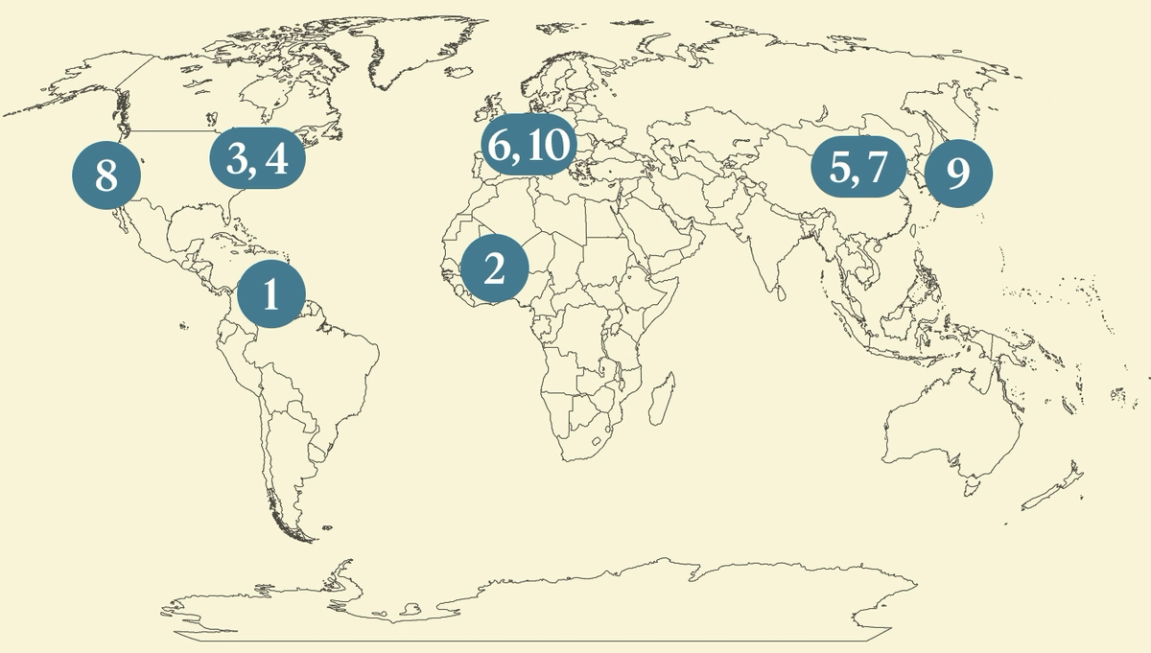 - US blocks Venezuela tankers
- New Trump migration push
- Vance talks affordability
- Trump backs top aide
- China-EU tensions ease
- EU shifts on ICE car ban
- Coal could peak in 2030
- WBD favors Netflix bid
- Japan’s new property rules
- Rome’s Colosseum subway
 A new dystopian novel from US journalist George Packer, his first in three decades. |
|
US blockades Venezuela oil tankers |
 Isaac Urrutia/Reuters Isaac Urrutia/ReutersUS President Donald Trump ordered a “complete blockade” of oil tankers leaving Venezuela, ratcheting up tensions with Caracas and driving global crude prices higher. Trump said Venezuela was surrounded by the “largest Armada” in the region’s history, which includes the world’s largest aircraft carrier. Despite the massive deployment, experts have questioned Washington’s intentions: Its troops are far too numerous for the tasks they’ve been assigned — anti-narcotics operations — yet too few for a ground invasion of Venezuela, while the White House chief of staff recently said Trump’s true ambition was to dislodge Venezuela’s president from power. The blockade announcement wiped out a recent drop in oil prices, which had fallen amid hopes for a peace deal in Ukraine. |
|
US toughens immigration rules |
 Detention facilities at Guantánamo Bay. Navy/AFN Guantánamo Bay Public Affairs/Handout via Reuters. Detention facilities at Guantánamo Bay. Navy/AFN Guantánamo Bay Public Affairs/Handout via Reuters.US President Donald Trump intensified his immigration crackdown, expanding a travel ban and threatening to deport some migrants to Guantánamo Bay. Travelers from five nations — four of them in Africa — will be banned altogether, while citizens of 15 other countries and the Palestinian Territories will face tougher restrictions. Meanwhile, the US transferred 22 Cuban migrants to its facility in Guantánamo Bay, sparking concern from one civil liberties lawyer, who told The New York Times: “Guantánamo is largely operating as a black box.” Trump has toughened immigration curbs since an Afghan national shot two US National Guard members last month; undocumented migration has plummeted since the start of his second term. |
|
Vance faces voters’ cost concerns |
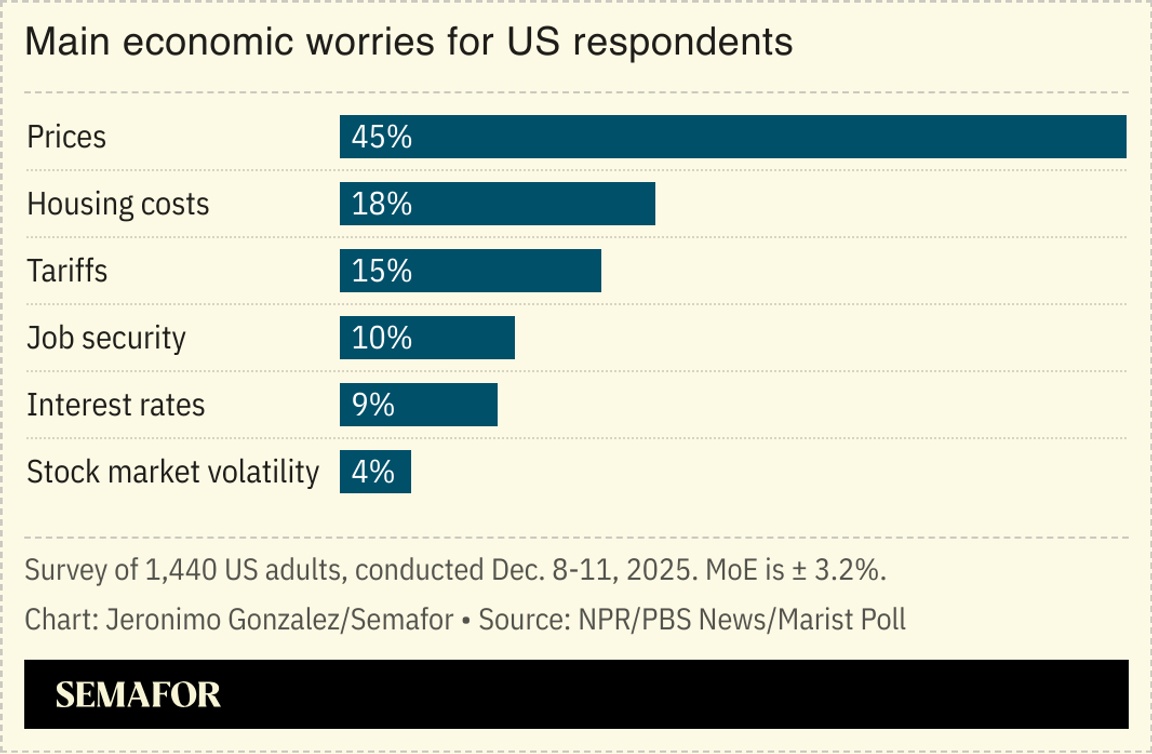 US Vice President JD Vance urged voters to be patient as officials work to address cost of living concerns, pointing to the Trump administration’s political vulnerability over its handling of the economy. Vance’s remarks at a rally in Pennsylvania are part of a push by the White House to combat criticism ahead of next year’s midterm elections, and US President Donald Trump made a similar trip last week. But the administration faces a steep challenge: The president’s approval rating has dipped recently, in large part because of frustration over the economy. Trump himself acknowledged to The Wall Street Journal that he was uncertain whether his economic program would ultimately benefit his Republican Party in the midterms. |
|
Trump defends top aide’s comments |
 Susie Wiles. Nathan Howard/File Photo/Reuters Susie Wiles. Nathan Howard/File Photo/ReutersUS President Donald Trump is in the Epstein files, Vice President JD Vance is a conspiracy theorist, and Elon Musk is a ketamine-microdosing “odd duck,” according to Trump’s chief of staff. In a series of interviews with Vanity Fair, Susie Wiles also said Trump has “an alcoholic’s personality” and uses criminal prosecution of enemies as “score settling,” adding that Vance’s conversion to Trumpism was “political” rather than heartfelt. Wiles, Trump’s most important aide, also said she pushed back on some policies, such as tariffs and deportations, and particularly Musk’s dismantling of foreign aid. Trump defended her remarks, and Wiles herself said her comments were taken out of context. |
|
China lowers EU pork levies |
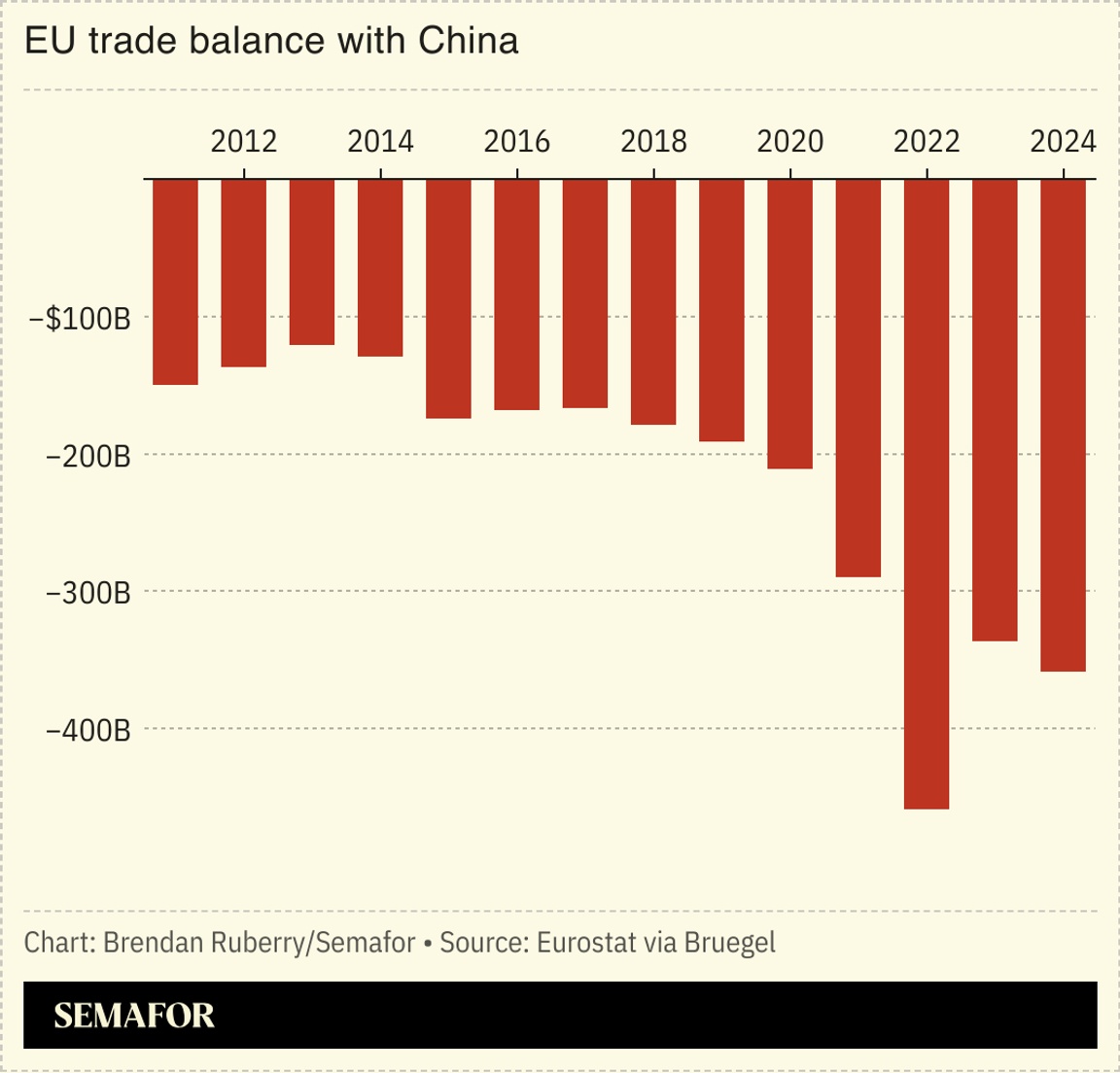 China imposed a reduced tariff rate on EU pork imports, offering hope of easing trade tensions between the two. Beijing had threatened duties of over 60% on the bloc, the world’s biggest pork exporter, during a summer row that encompassed industries from semiconductors and cars to rare earths. Brussels said it was still concerned by the new — albeit lower — levies, though several EU member states voiced relief. The bloc is seeking to balance promoting cooperation with the world’s second-biggest economy and fending off competition from it. Emphasizing this challenge, French President Emmanuel Macron wrote in the Financial Times: “Either we rebalance economic relations co-operatively… or Europe will have no choice but to adopt more protectionist measures.” |
|
EU may reverse ICE car ban |
|
IEA predicts 2030 coal use peak |
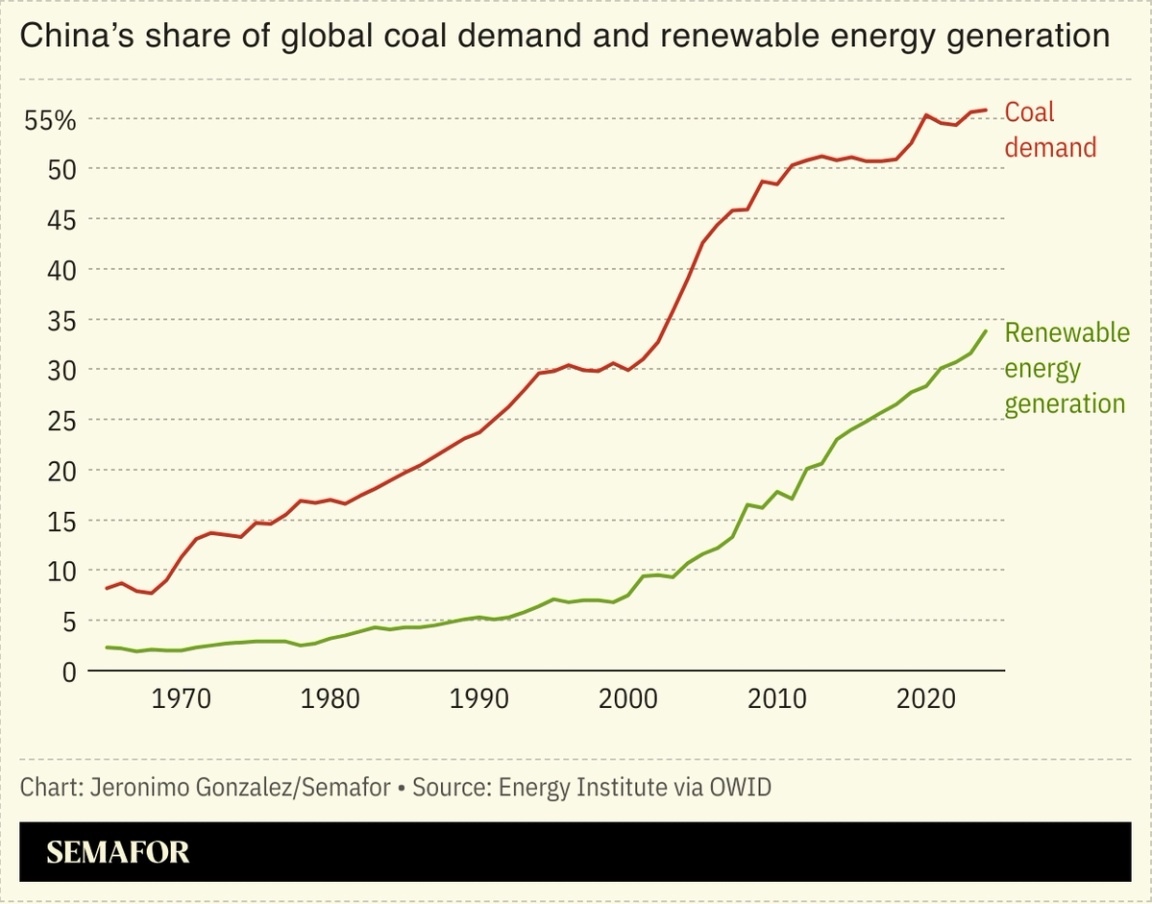 Global coal use may peak by 2030, the International Energy Agency said. Renewables, nuclear power, and natural gas are squeezing demand for the dirtiest fossil fuel, although it remains the single largest source of electricity and has seen record use this year. In another positive sign for global carbon use, China’s emissions have been flat or falling for 18 months, Carbon Brief analysis found. But the carbon emitted so far has already led to almost 1.5°C in warming, with more locked in, and the effects of climate change are already being felt: The Arctic has lost 95% of its oldest, thickest ice in 20 years, and 2025 is likely to be tied for the second-hottest year ever. |
|
 In a GZERO world, no single power — or club, like the G7 or G20 — sets the international agenda. The GZERO Daily newsletter decodes this chaotic era with insightful weekday briefings and analysis. Wednesdays feature Ian Bremmer’s perspective on global challenges. Sign up today — it’s independent, timely, and free. |
|
Warner Bros. urges Netflix deal |
 Mike Blake/File Photo/Reuters Mike Blake/File Photo/ReutersWarner Bros. Discovery will reportedly tell its shareholders to reject a hostile takeover bid by Paramount and instead back Netflix’s offer. Netflix bid $82.7 billion for WB’s streaming and studio arms, but Paramount tried to gazump the deal with a larger offer straight to shareholders. The deal is politically charged: US President Donald Trump’s son-in-law Jared Kushner backed the Paramount deal, although he has now pulled his support, and Trump is close to Paramount CEO David Ellison. WB is concerned about Paramount’s ability to pay, despite Ellison’s father, billionaire Larry, agreeing to backstop the deal. Any merger will be investigated by regulators, although Netflix said that even when combined with WB, its market share would be less than YouTube’s. |
|
Japan tightens property rules |
|
|


