| | Russia and Ukraine try to sway Donald Trump amid peace talks, Gulf markets take a hit on Saudi-UAE t͏ ͏ ͏ ͏ ͏ ͏ |
| |  BIAŁYSTOK BIAŁYSTOK |  MUMBAI MUMBAI | SHENZHEN |
 | Flagship |  |
| |
|
The World Today |  - UAE-Saudi rift widens
- China’s LNG imports fall
- Swaying Trump on Ukraine
- Poland builds bomb shelters
- Wall Street’s 2026 optimism
- Big year for Chinese AI
- Iceland’s hot Christmas Eve
- UK turns to Bollywood
- Tests for British drone pilots
- The tech we lost in 2025
 Semafor’s CEO editor recommends a book that explores how Apple helped make China competitive in tech. |
|
Gulf stocks fall on Yemen spat, oil shrugs |
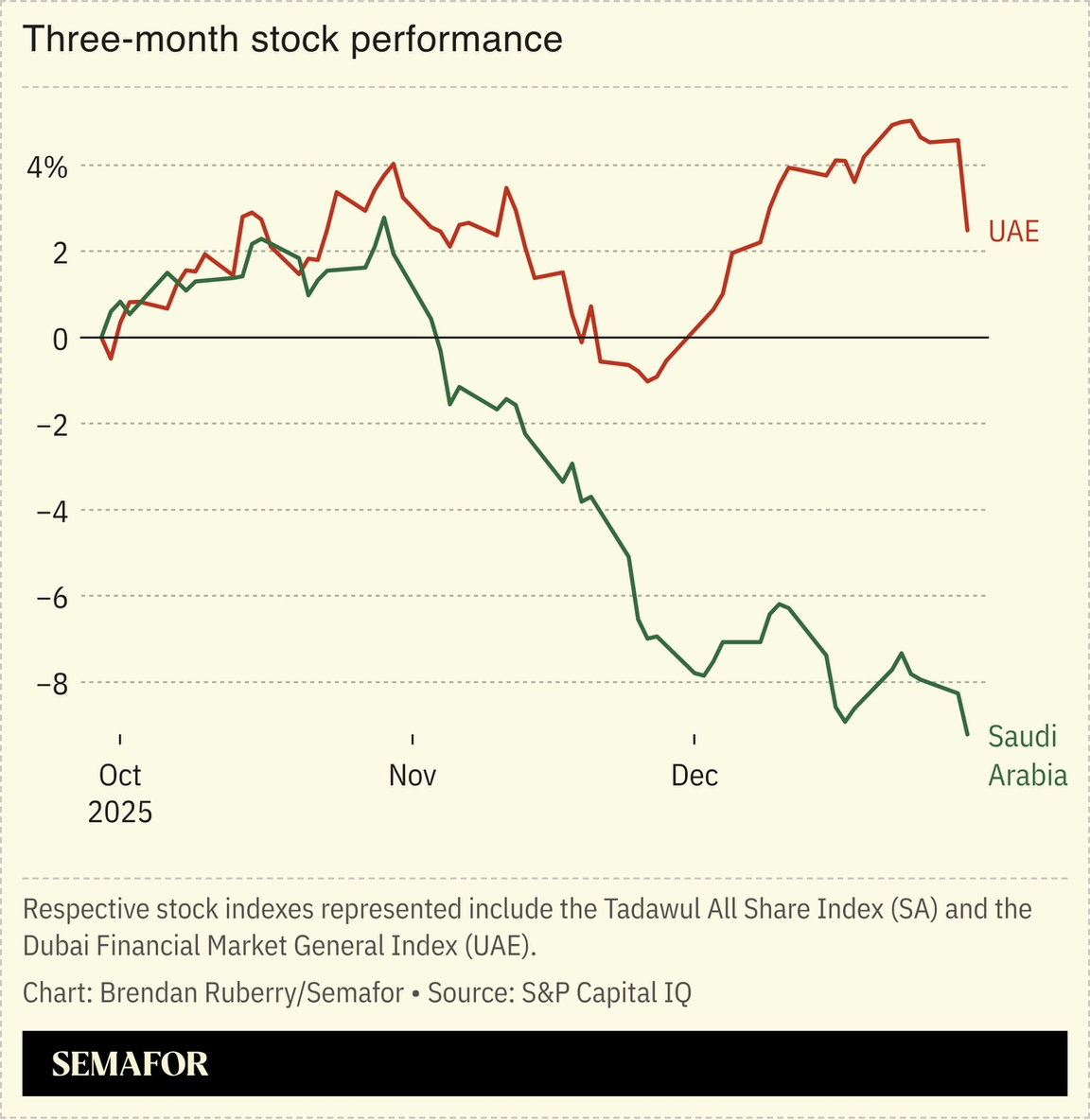 Gulf stock indexes fell on Tuesday over escalating tensions between Saudi Arabia and the UAE, though the flare-up didn’t dent oil markets. Saudi forces struck a shipment in Yemen that Riyadh said was bound for an Emirati-backed separatist group. While the UAE vowed to pull its remaining troops out of Yemen, the strike laid bare simmering tensions between the Gulf oil powers, both of which are US allies, over Yemen and broader regional influence. Crude markets, though, care more about Riyadh and Abu Dhabi maintaining cohesion on OPEC policy, Oilprice.com wrote: OPEC members “can disagree (even loudly) on politics while still coordinating production plans… That dynamic is far more relevant heading into 2026 than any Yemen-related spat.” |
|
Expect LNG competition in 2026 |
 cnsphoto via Reuters cnsphoto via Reuters2026 will see competition heat up in the liquefied natural gas market, as new capacity comes online amid flattening demand. China’s LNG imports hit a multi-year low this year, according to commodities data firm Kpler, due to a weakening economy and trade tensions with the US. Market share has also started to flatten in Europe, just as several new US export facilities come online in 2026 competing with new terminals in Australia, Qatar, and elsewhere. The world will be closely watching China’s domestic consumption of fossil fuels, Semafor’s climate and energy reporter wrote, as choices made by the world’s second-largest economy will “have enormous ramifications for the economic and security prospects of other countries.” |
|
Moscow, Kyiv fight to sway Trump |
 Jonathan Ernst/Reuters Jonathan Ernst/ReutersRussia ramped up warnings and shows of force against Ukraine on Tuesday as the Kremlin looks to sway US President Donald Trump in peace talks. A top Russian official lobbed personal threats against Ukrainian President Volodymyr Zelenskyy after Moscow accused Kyiv of attacking Vladimir Putin’s residence with drones, an allegation Ukraine denied. Russia also claimed it moved nuclear-capable missiles into active service in Belarus. Kyiv and Moscow are also waging a war to shape Trump’s “perception of the battlefield,” The New York Times wrote. Putin wants to achieve his war aims through a one-sided peace deal, while Zelenskyy’s goal is “to stop Trump from siding with Putin,” the Financial Times’ Europe editor argued. “It is proving a Sisyphean task.” |
|
Poland to build more bomb shelters |
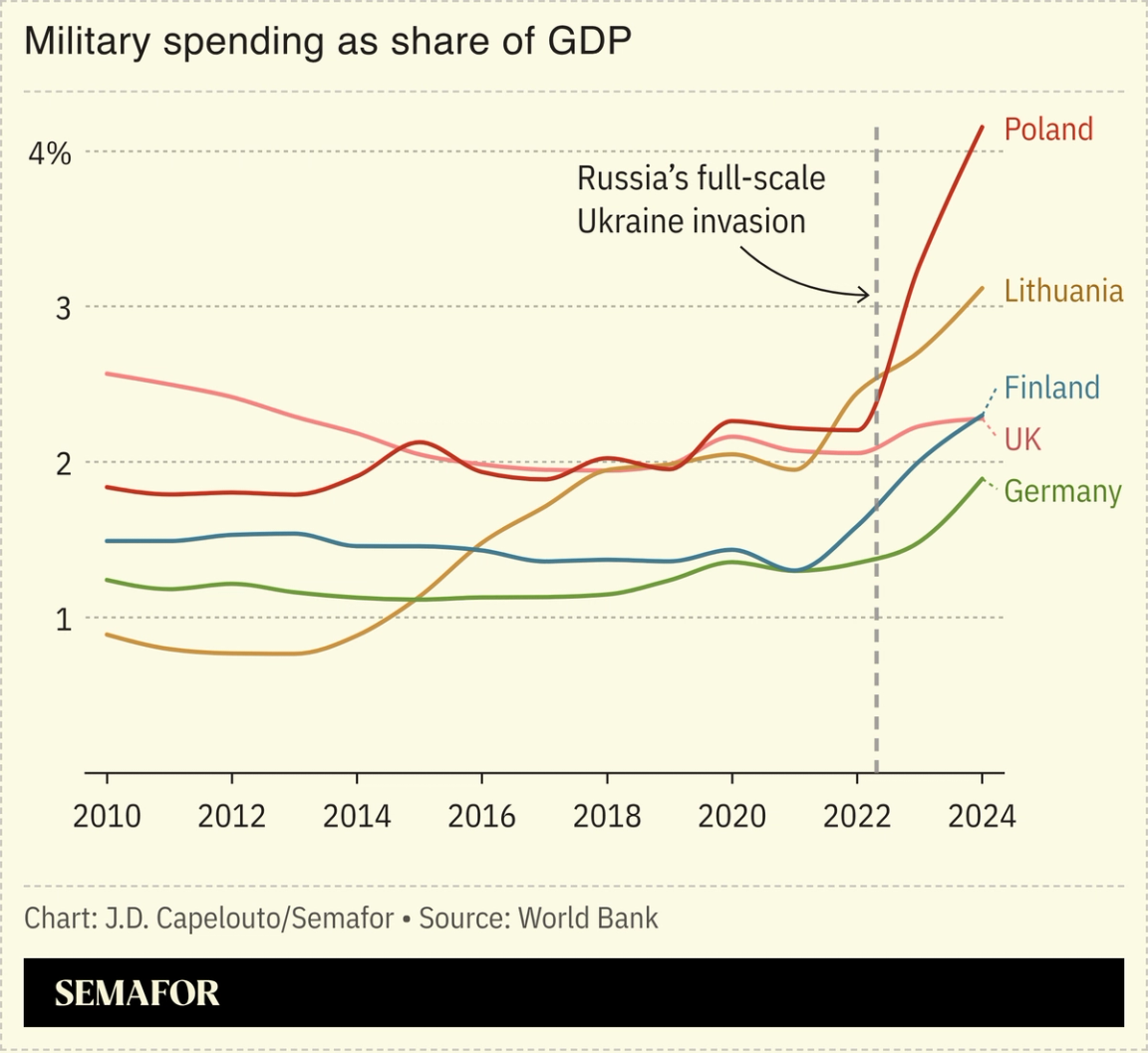 Poland is racing to build bomb shelters to protect its population from Russian aggression. Warsaw spends almost 5% of GDP on defense but Moscow’s hybrid warfare — including its alleged attack on a train line — underscored how little Poland has invested in building civilian defenses. The country has only 1,000 serviceable shelters — compared to around 50,000 in neighboring Finland — which are mainly from the communist era and run down. Poland “focused on… the armed forces and forgot about this,” an official told the Financial Times. The UK is also confronting the scale of its task, with a report saying it must spend $1 trillion on defense by 2040 to meet NATO commitments. |
|
Wall Street is very bullish on 2026 |
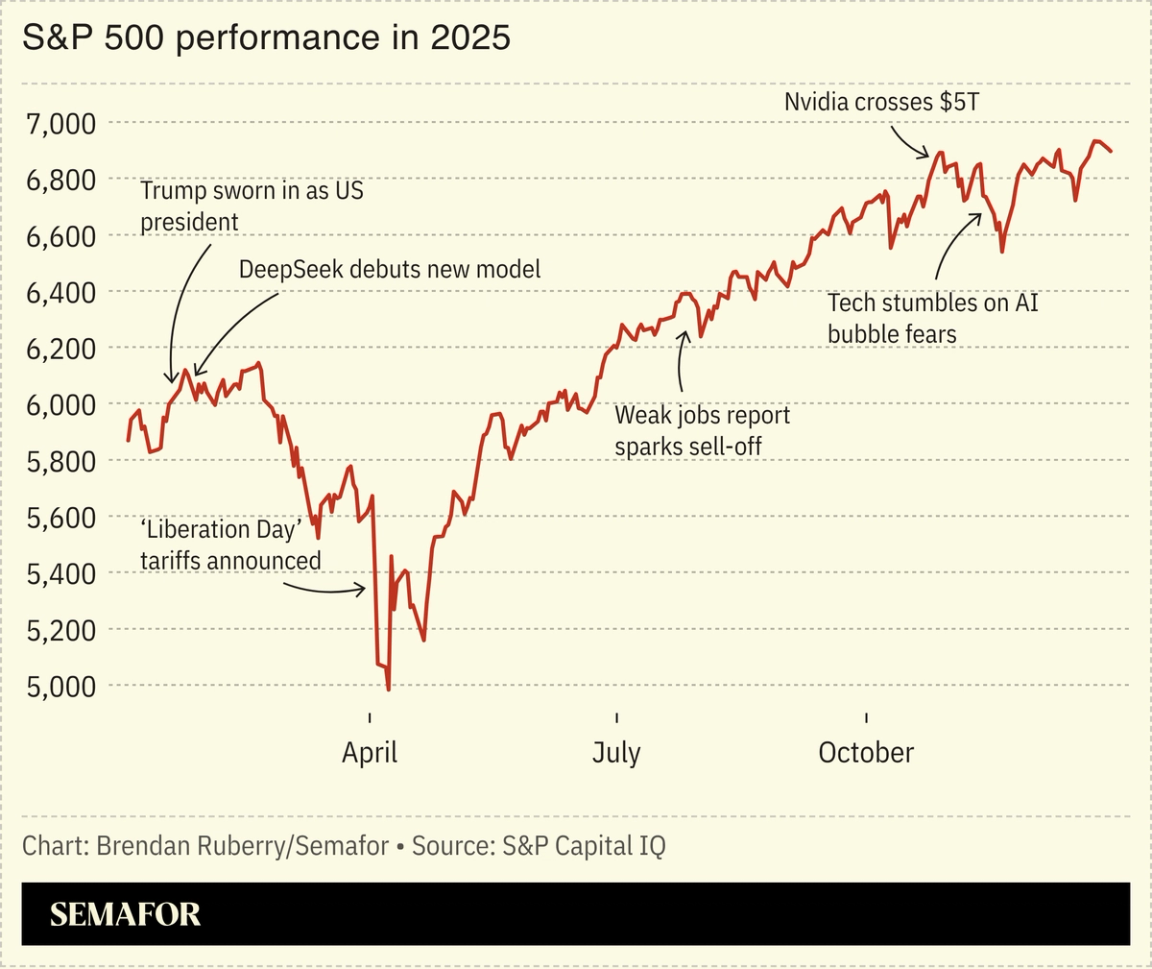 Wall Street analysts overwhelmingly predict a strong 2026 for US stocks. Of 21 experts surveyed by Bloomberg, none think the S&P 500 will decline, despite narratives of overvalued tech stocks. “The pessimists have just been wrong for so long that people are kind of tired of that schtick,” one longtime bull said, although he found it disconcerting that “everyone else seems to have become optimistic.” The enthusiasm amounts to “a bet that corporate profits are set to grow unusually fast across much of the world,” The Economist wrote. But strong stocks likely won’t be enough to buoy the dollar, which is heading for its biggest annual drop since 2017, the Financial Times wrote. Foreign investors buying US equities are now hedging their dollar exposure. |
|
 Tingshu Wang/Reuters Tingshu Wang/ReutersUS tech giant Meta’s purchase of Beijing-founded startup Manus caps a remarkable year for Chinese AI. The ascendance of Chinese company DeepSeek in February “upended multiple AI narratives,” such as AI companies having to spend hundreds of millions to create a high-performing model, and that the US’ lead in the AI race was widening, a China tech Substacker wrote. 2026 will see Beijing further push for widespread AI adoption — the city of Shenzhen wants AI in “every household” within five years — while companies at home and abroad will increasingly use Alibaba’s open-source model Qwen, a WIRED reporter predicted: The success of the Chinese systems suggests the new metric for AI is “how widely it is used to build other stuff.” |
|
Iceland’s hot Christmas Eve |
 Stoyan Nenov/Reuters Stoyan Nenov/ReutersIceland hit a record temperature of nearly 20°C (68°F) on Christmas Eve, underscoring the phenomenon of “Arctic amplification.” Like other polar regions, Iceland’s climate is warming two to four times faster than the global average, harming infrastructure and industries built for cold conditions. Warmer waters disrupt economically critical fisheries, and melting ice has damaged roads there and in neighboring Greenland — changes that are fueling competition between the US, Russia, and, increasingly, China for control over new Arctic shipping routes. Christmas Eve’s reading caps a year of climate milestones for Iceland: It recorded its hottest-ever May temperature, and mosquitoes were spotted for the first time, meaning Antarctica is, for now, the only Earth territory free of the insects. |
|
 Join over 2 million readers who trust The Hustle for their daily 5-minute read on business and tech stories that actually matter. Become part of this informed community that starts each day with essential insights delivered with a fun, engaging twist. Sign up today. |
|
Britain bets on Bollywood |
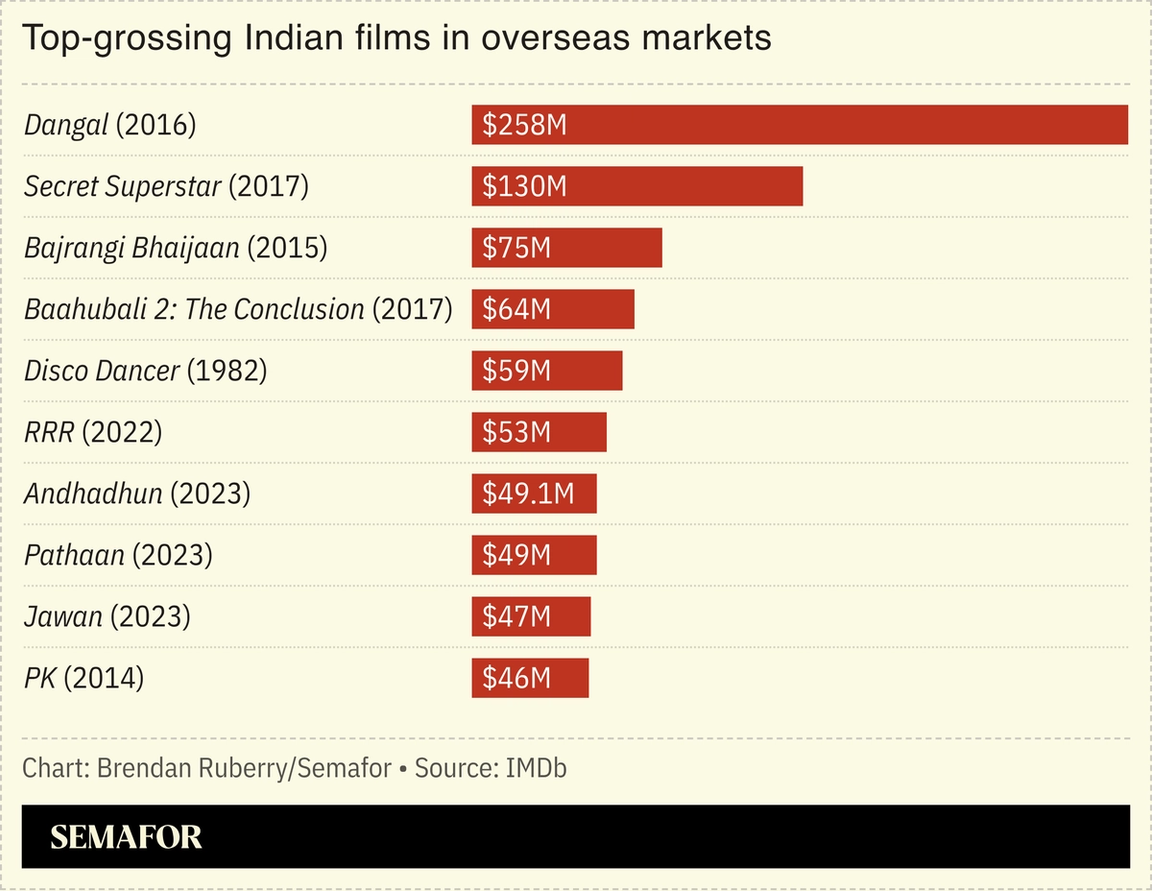 The UK is pivoting to Bollywood to diversify away from Hollywood. India’s largest film production company will shoot three movies in the UK next year, a move expected to boost the British economy by millions of pounds, the UK’s prime minister announced during his recent visit to Mumbai, attributing it to the impact of the countries’ trade deal. Britain receives most of its inbound production investment from five US film studios, a vulnerability exposed during the 2023 writers’ strike and again after Washington’s tariff threats. “When the US sector sneezes,” British film “catch[es] a cold,” a parliamentarian told Nikkei. London is betting that generous subsidies and British Indians’ appetite for Bollywood will entice the world’s largest film industry. |
|
UK’s drone users to be tested |
 Phil Noble/Reuters Phil Noble/ReutersBritish users of even small drones will have to take a test starting Jan. 1 before being allowed to fly outdoors. Regulators will impose the online theory test and require identification for pilots of any drone over 100g (3.5oz). Similarly, Australia, Canada, the EU, and the US require registration for any drone over 250g. Drone use near airports is particularly worrisome — 1,000 flights were delayed or canceled after hundreds of apparent sightings around a London airport in 2018 — along with privacy-related concerns as well as potential misuse such as carrying drugs into prisons. The new UK requirements could impact up to half a million people, the regulator said, pointing to drones becoming a “common Christmas present.” |
|
|


