|
 |
Mark Cuban Tells Us How He Can Fix America’s Shitty Health Care
The entrepreneur wants to do what many in his position have tried and failed to accomplish.
|

| |||||||||||||||


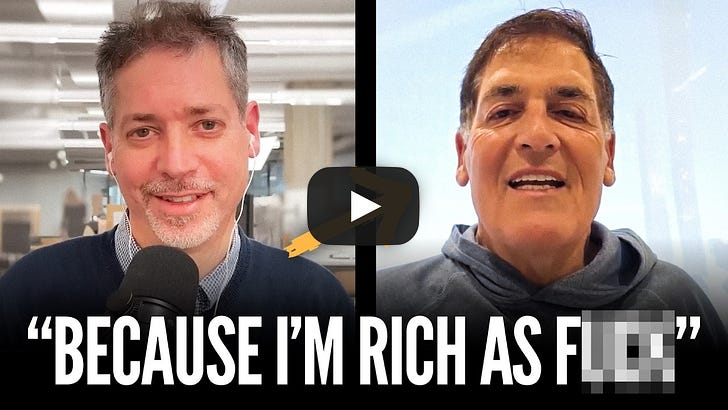
MOST PEOPLE KNOW Mark Cuban as a celebrity entrepreneur and investor, the guy you have seen on Shark Tank or courtside at Dallas Maverick games.¹
Those of us who follow health policy know him as something else. He’s the business mogul who said he knew how to sell prescription drugs at a big discount, and proceeded to do just that.
Now Cuban says he has more ideas—not just on how to fix prescription drug pricing, but on how to reform the U.S. health care system more broadly. Earlier this month, I got to hear some of them when he sat down for an interview via Zoom.
As I told him at the top, I’m generally skeptical of people in his position. There’s this long, well-known history of business figures vowing to fix health care—because, supposedly, the insights they have from finance, tech, or retail will allow them to make our famously dysfunctional system more functional. That’s what all the breathless headlines said in 2018, for example, when Jeff Bezos, Warren Buffett, and Jamie Dimon announced their joint venture to revolutionize health care.
The venture went bust three years later, which is pretty much the way all of these projects have gone. Health care, it turns out, really is different from any other business. Plus it’s harder and maybe less fun than picking investments—or, if you’re Bezos, building rockets and burning down the Washington Post editorial page.²
But Cuban stuck with health care, a subject he says first piqued his interest following the 2015 controversy over a massive (500 percent) price increase for drug to treat a common parasitic infection. A few years later, Cuban got a cold pitch from a doctor interested in selling generic drugs for rare conditions, where shortages were common. Cuban was hooked; he invested and turned the company into Cost Plus Drugs, which today sells drugs directly to consumers online and at deeply discounted prices.
Cost Plus Drugs gets these bargain rates by cutting out industry middlemen called “pharmacy benefit managers.” PBMs, which have been around since the 1960s, are supposed to negotiate lower prices with manufacturers on behalf of insurers and employers. And sometimes they deliver real savings. But as scholars, analysts, and journalists have shown, PBMs frequently keep prices artificially high—thanks, in part, to the confidential, convoluted payment arrangements they make with manufacturers.
Cost Plus Drugs calculates what it believes is the actual manufacturing cost for a drug, adds on a 15 percent markup plus fixed fees for distribution, and sells it at that price. It makes the full calculations available to consumers on the website, and shows how much more the drug would cost elsewhere.
Cuban wasn’t the first person to decry the mysterious, potentially pernicious role of PBMs in sustaining high drug prices. And his company’s reach is limited, both in the types of drugs it covers (mostly generics, at least for now) and the people whom it benefits directly (those whose drug needs line up with what the website has available). But as Rachel Sachs, a Washington University law professor and expert on drug pricing told me, addressing “even one of the pathologies in our health care system” is a big deal.³
Now it appears Cuban would like to do more. He’s constantly engaging in debates about health policy, whether on social media or at live events. He’s dabbled in politics too—most recently, during the 2024 presidential campaign, when he endorsed Kamala Harris and vouched for some of her health care proposals.
Those appearances are one reason Cuban gets mentioned as a presidential candidate in 2028. A more likely role for him (I am guessing) would be as somebody offering input on health policy. And while he doesn’t seem to have strong partisan leanings, Democrats in particular have reason to hear him out.
Here’s why. For the last fifteen years, party leaders have been understandably preoccupied with defending the Affordable Care Act. And they can’t stop now, given that Donald Trump and the Republicans are still trying to roll back the law.