|
|
|
|
Good morning. The escalation of tensions around Iran is highlighting how a country with a relatively small economy exerts outsized influence on the global stage. That’s in focus today – plus, why the fussbudgets need to relax about stock markets in 2026. |
|
|
|
|
|
|
|
|
|
|
|
|
|
|
|
|
Trade: Canada could boost exports of oil, natural gas and uranium to China under an agreement the two countries signed today during Prime Minister Mark Carney’s visit to Beijing. |
|
|
|
|
Politics: François Legault is stepping down as Quebec Premier after a seven-year run, shaking up the political landscape in the province at a time of deep distress for many businesses. |
|
|
|
|
|
|
|
|
|
|
Telecom: Customer complaints have continued to rise among all major carriers, an industry watchdog report has found. |
|
|
|
|
|
|
|
|
|
|
|
|
|
|
|
Iranians hold portraits of Ayatollah Ali Khamenei during a funeral for security forces killed in recent protests. ATTA KENARE/AFP/Getty Images
|
|
|
|
|
|
|
|
|
|
|
Behind Iran’s outsized influence |
|
|
|
|
Rising oil prices and new tariff threats from Washington have pushed into focus Iran’s role in energy markets, its trade ties with China, and its place in the economic conflict between Washington and Beijing. These are just some of the key reasons Iran features so routinely in global tensions. |
|
|
|
|
|
|
|
|
|
|
U.S. sanctions and military threats directed at Iran feed quickly into oil markets, raising price risk for major importers, including China and the United States. |
|
|
|
|
|
|
|
|
Oil prices barely moved
after the U.S. attacked Venezuela, abducted President Nicolás Maduro, and announced plans to seize control of the country’s oil sector. But as protests intensified across Iran and Washington escalated its rhetoric, Brent crude jumped nearly 3 per cent in a single day, rising to US$66 from US$60 a week earlier. (“Brent crude” isn’t one man’s eponymous oil supply, but the world’s main benchmark of oil, reflecting prices across Europe, Africa and much of Asia. Sorry, Brent.) |
|
|
|
|
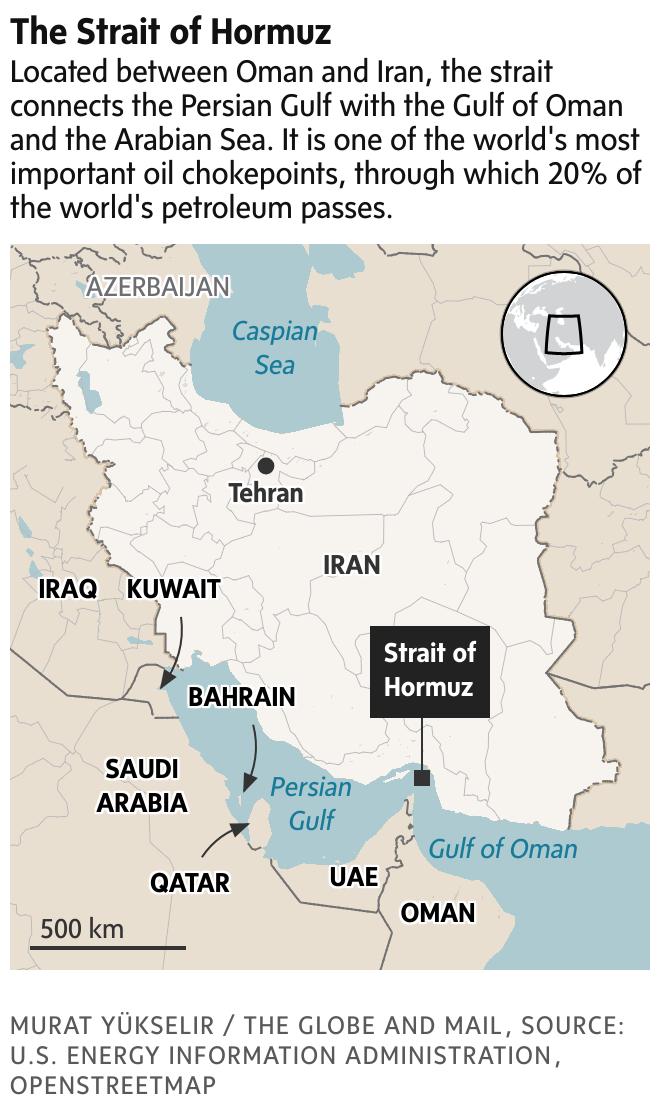
A large share of the world’s seaborne oil trade passes through the Strait of Hormuz, a narrow waterway bordered by Iran that connects the Persian Gulf to global markets. Prices factor in the risk that oil could be delayed or blocked at that chokepoint even without an immediate supply disruption. |
|
|
|
|
A worst-case scenario involving military strikes, Capital Economics warned in a report yesterday, could lift prices by US$20 from its close yesterday of about US$63. And that’s not to mention years-long concerns about the country’s nuclear ambitions. |
|
|
|
|
|
|
|
|
|
|
Sanctions, shadow trade, and China’s role |
|
|
|
|
About 30 per cent of Iran’s exports are shipped to China, its largest trading partner by a wide margin. Chinese customs data show imports from Iran worth roughly US$47-billion last year – a modest sum for China’s overall trade, but by far Tehran’s most important commercial relationship – dominated by petroleum products and industrial metals. |
|
|
|
|
Much of that trade now runs through smaller private companies. China’s large state-owned oil companies pulled back from Iran in 2022 to avoid U.S. secondary sanctions, which threaten foreign companies’ access to U.S. banking, shipping and financial markets. |
|
|
|
|
That defection left sanctioned crude up for grabs to outfits operating outside mainstream financing, insurance and shipping channels. Many of those companies are Chinese private traders that have also handled Venezuelan oil and are accused of disguising cargo origins, keeping Iranian exports moving while limiting China’s direct exposure. |
|
|
|
|
|
|
Iran’s uneasy economic future |
|
|
|
|
Trump’s threats against Iran have laid bare the limits of economic pressure against the authoritarian regime. The U.S. President said last week that countries doing business with Iran would face a 25-per-cent tariff on trade with the U.S. But he did not specify how the tariff would be applied, which of the more than 100 countries that trade with Iran would be targeted, or whether it would be imposed on top of existing levies. Hey, that sounds familiar! |
|
|
|
|
|
|
|
|
|
|
How do you enforce tariffs if Iran is using shadow shipping networks and dealing off the books? And previous U.S. tariff actions have relied on emergency economic powers that are now facing legal challenges – Canada is eagerly awaiting this Supreme Court ruling, too – complicating the use of similar measures. |
|
|
|
|
Still, pressing harder on Iran’s economy could lead it to a breaking point. Years of sanctions and collapsing investment have driven inflation sharply higher, crushed the currency, and left drought and infrastructure failures to push up food prices and expose shortages. Oil remains the main source of hard currency, but sanctions have cut exports to roughly half their 2018 levels, leaving Tehran with few directions to turn. |
|
|
|
|
Any movement on Iran would ripple through oil markets and place immediate pressure on China, Iran’s largest remaining customer. The most recent chill between the U.S. and China has been setting in since early this century, and hardened even more last week when Washington squeezed Beijing
out of the Venezuelan market. Chinese goods entering the U.S. are already subject to elevated tariffs, and Beijing has responded by restricting exports of rare earths. |
|
|
|
|
|