January 16, 2026

Image

Better health begins with ideas


Editors’ Note

On Sunday night, the U.S. Senate released a bipartisan funding bill for the State Department that included $9.4 billion for global health. That amount is more than double the $3.8 billion the State Department requested and signals that this year the United States could spend more than expected on health programs.  


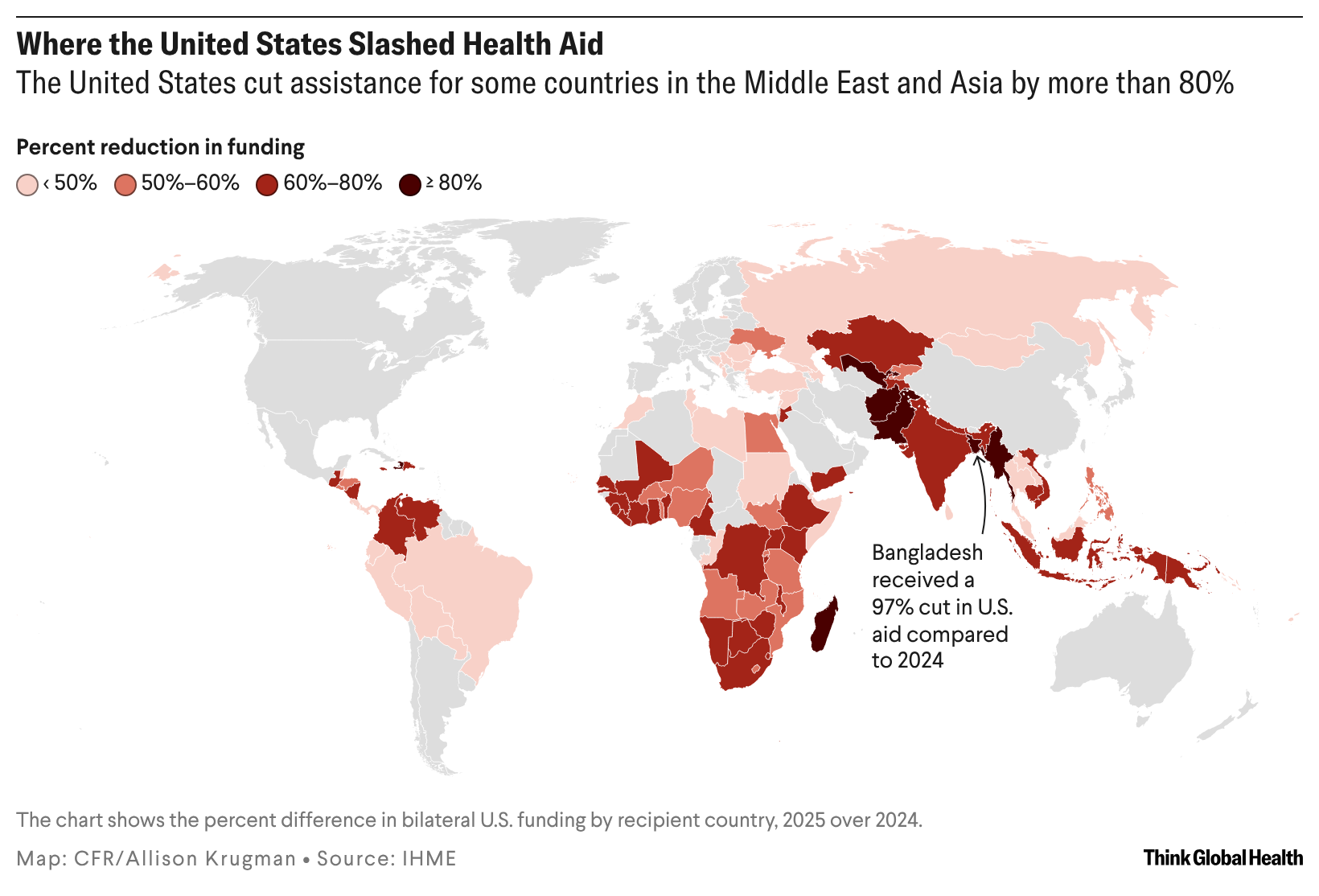
To put that spending in context, new estimates from the University of Washington’s Institute for Health Metrics and Evaluation convey how much global health funding dropped over the course of 2025 and which recipient nations experienced the steepest cuts, after the United States and other countries reduced foreign aid. TGH Data Visuals Editor Allison Krugman explains that cuts to tuberculosis, sanitation, and food aid programs in Asia and the Middle East were larger than previously believed.  


To continue our exploration of last year’s cuts, global health policy leader Sabeeha Quereshi outlines how, in conflict-affected settings and U.S. health systems, political will rather than scarcity drives hunger. To repair the battered food-aid infrastructure, governments need to implement a human-centered, practical approach that makes dignity a strategic imperative, not a charitable afterthought to other sectors. 


The U.S. decision to withdraw from multilateral forums has also offered China the opportunity to take a greater part in global health leadership. Gareth Jones and Zhida Shang, recent graduates from Tsinghua University, and Ruby Wang, honorary global public health fellow at the Asia Society Policy Institute, provide insight into how China’s emphasis on bilateral aid and equal partnerships offers an attractive alternative to traditional global health models.  


Next, the United States rang in 2026 with a new vaccine schedule for children and teens. TGH Managing Editor Nsikan Akpan speaks with University of California, San Francisco law professor Dorit Reiss about whether the schedule creates legal liability for pediatricians and new pressure for states to change their school vaccination requirements. 


To wrap up, Cynthia Lien, a Dalla Lana fellow in journalism and health impact and a geriatrician in New York City, describes why people older than 50 are at greater risk of falling victim to artificial intelligence (AI) scams, and the regulatory efforts underway to protect them. 


Until next week!—Nsikan Akpan, Managing Editor, and Caroline Kantis, Associate Editor  


This Week’s Highlights


FOOD

A person who contracted HIV after losing access to PrEP, washes his face, in Asaba, Delta State, Nigeria, on May 31, 2025.

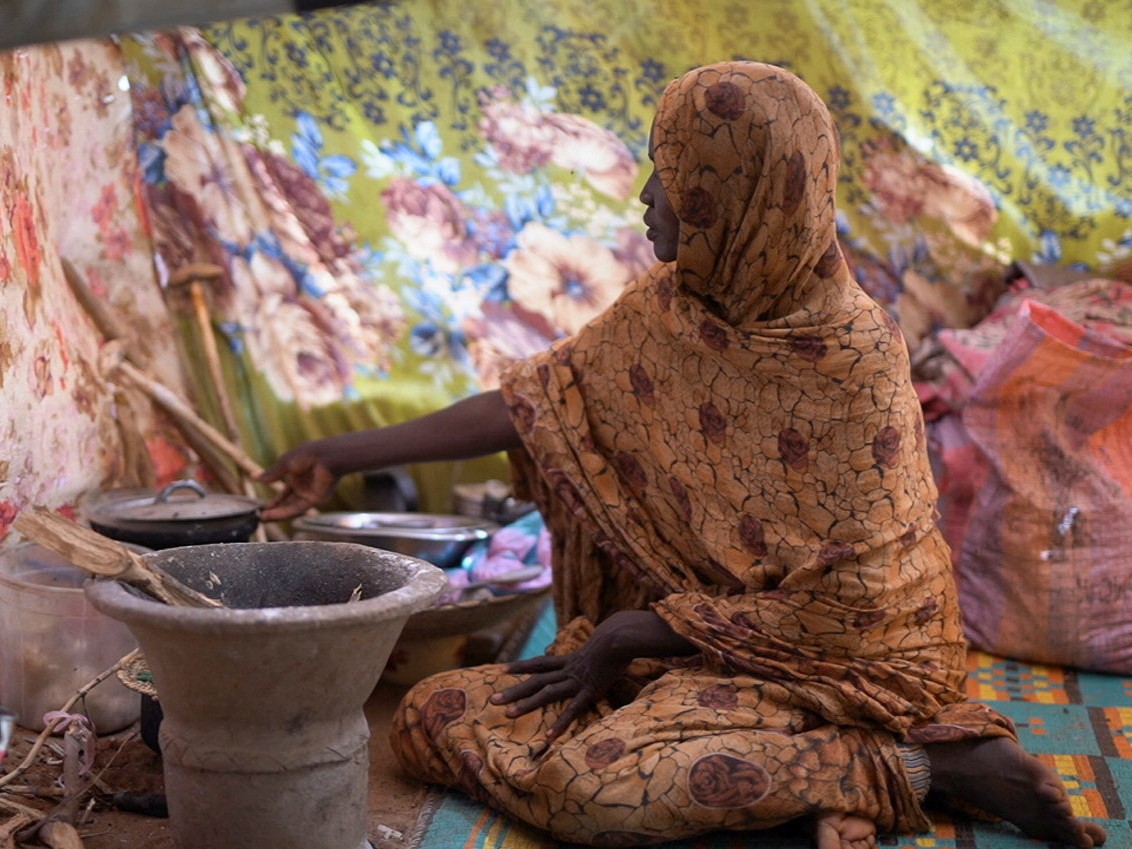
Feeding Dignity: A 2026 Blueprint for Food Aid in a Divided World 

by Sabeeha Quereshi

From Sudan to the U.S. farm belt, hunger is rising not from scarcity but from political disinvestment  


Read this story

GOVERNANCE

An empty classroom at CIS 303: Leadership and Community Service Academy in the Bronx borough of New York City, U.S., on October 8, 2024.

The New U.S. Childhood Vaccine Schedule Creates Legal Risks

by Nsikan Akpan

A law professor weighs the legal protections for pediatricians and states following the rescheduling of certain childhood vaccines


Read this story

GOVERNANCE

Women work to develop an experimental COVID-19 vaccine, during a government-organized media tour, in a Sinovac Biotech laboratory, in Beijing, China, on September 24, 2020.

China’s Evolving Global Health Leadership  

by Gareth Jones, Zhida Shang, and Ruby Wang 

China’s global health ascendence offers alternatives for partnerships that differ from traditional, U.S.-dominated models 


Read this story


Figure of the Week


A world map showing percent reductions in funding for health aid

Read this story


Recommended Feature


AGING

An elderly person sits on their walker while waiting for public transit, in San Diego, California, on March 26, 2025.

Helping Older Adults Navigate AI Scams 

by Cynthia Lien

Regulatory efforts to protect seniors against AI-related risks are emerging across the United States 


Read this story


What We’re Reading

Devex Newswire: U.S. Congress Gives Aid Supporters $50 Billion Boost (Devex)


Marrying for Health insurance? The ACA Cost Crisis Forces Some Drastic Choices (NPR)


Are You Dead?: The Viral Chinese App for Young People Living Alone (BBC)


“There Wasn't Even Time for CPR”: Iran Medics Describe Hospitals Overwhelmed With Dead and Injured Protesters (BBC)


Why Is the United States Pulling Out of 31 UN Groups? And What’s the Impact? (NPR’s Goats and Soda)


EPA to Stop Considering Lives Saved When Setting Rules on Air Pollution (New York Times)


Indoor Air Pollution Is a Global Health Issue, Not Just a Domestic Heating One (The Conversation)


Turning the Amazon’s Toxic Gold Mine Waste Liability Into Economic Opportunity (Mongabay)


Interested in submitting?

Review our Submission Guidelines

Image
Twitter

An initiative from the Council on Foreign Relations

58 East 68th Street — New York, NY 10065

Unsubscribe

View in Browser

Manage Your CFR Email Preferences