|
|
|
|
|
|
|
|
|
Home of the Week: 146 National Drive, Town of The Blue Mountains, Ont. Mitchell Hubble/Modern Movement Creative
|
|
|
|
|
This week: Where home prices and sales landed in 2025, and what we know about a potential rebound in 2026. Plus, why some Vancouver developers are going all-in on lower-rise buildings and one property worth a look. |
|
|
|
|
|
|
|
|
|
|
Home sales fell sharply in December, capping tepid year in real estate market |
|
|
|
|
|
|
|
|
|
|
|
|
|
Home sales and home values both fell in 2025, but analysts say it's too early to tell what 2026 may hold. Sammy Kogan/The Globe and Mail
|
|
|
|
|
The housing market ended 2025 with a sharp drop in December, and experts say it will take a few more months to see whether it can rebound in 2026. National home sales
for the month dropped by 2.7 per cent on a seasonally adjusted basis from November, and by 4.5 per cent in real numbers compared with December, 2024, according to data released Thursday by the Canadian Real Estate Association. As Salmaan Farooqui reports, home sales for the entirety of 2025 – a year when many buyers stayed on the sidelines – were down 1.9 per cent compared to 2024, totalling 470,314 units. Home values also fell in December, with the national home price index declining 4 per cent year-over-year to $673,400. |
|
|
|
|
The drop was surprising after signs of market growth late in 2025, CREA’s senior economist Shaun Cathcart told Sal, but he cautioned that December tends to be a volatile month most years. The usual winter lull makes it difficult to tell where the market is headed, but a Royal LePage report predicts 2026 will be a “crucial reset” year in which buyers will be drawn in by lower rates and higher supply. One small glimmer of hope for sellers: Condo sales in Toronto rose 5.7 per cent
in December compared to November, reaching levels not seen since 2000. Read CREA’s Canada housing market forecast for 2026 here. |
|
|
|
|
|
|
|
|
|
|
Vancouver developers embrace the big advantages to building small |
|
|
|
|
|
|
|
|
|
Mike Mackay, CEO of Strand Development, is leaning into lower-rise buildings, including this one in Vancouver's Dunbar neighbourhood. Jimmy Jeong/The Globe and Mail
|
|
|
|
|
As Vancouver’s 500-block Broadway plan unleashes a torrent of proposed concrete towers, some residential developers are choosing to lean into lower-rise wood-frame buildings.
Strand Development CEO Mike Mackay told Frances Bula the smaller buildings – no more than six storeys – are more appealing, liveable and affordable, both to build and to rent. Concrete construction is more costly and time-consuming, while building with wood “allows us to get into income much faster and minimizes exposure to risk,” Mackay said. It also bypasses Vancouver and Burnaby’s requirements for 20 per cent of units in some concrete buildings to be rented below-market, a demand that usually means the market-rate units go for top dollar. |
|
|
|
|
Developers’ shift towards lower-rise buildings is a sign of a central conundrum in Metro Vancouver’s attempts to densify and build more much-needed affordable housing: the below-market requirement has been a backbone of making housing more affordable for three decades, but it can also stall construction of towers that deliver the most units. |
|
|
|
|
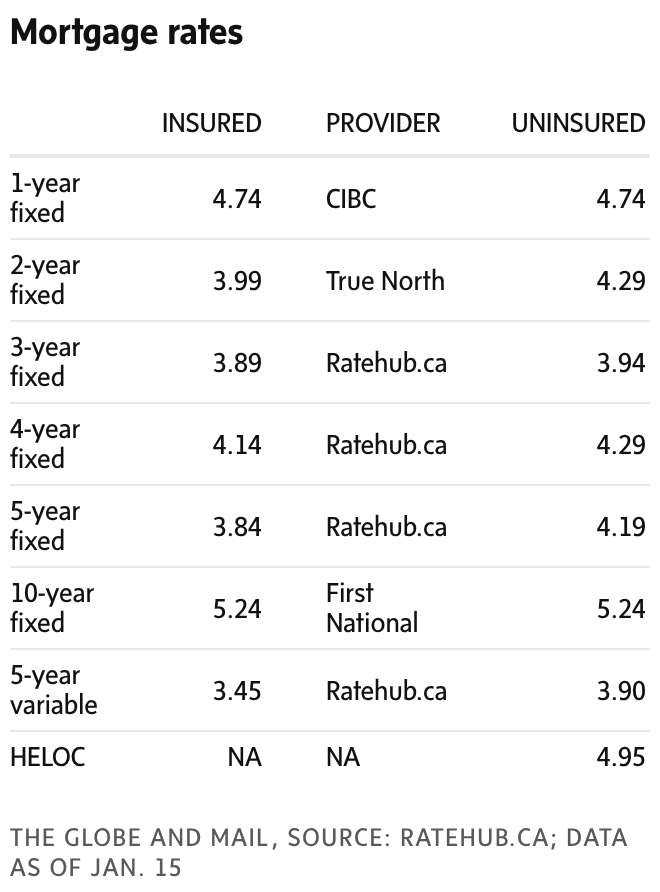
This week’s lowest fixed and variable mortgage rates in Canada |
|
|
|
|
|
|
Rates shown are the lowest available for each term/type and category (insured vs. uninsured) as of market close on Thursday, Jan. 15. |
|
|
|
|
|
|
|
|
|
|
They planned to downsize in retirement. Then their adult children moved back home |
|
|
|
|
|
|
|
|
|
Andy Doyle and Darcy Eaton's adult sons Matt, 29, Brendan, 33, and James, 27, live at home, while 31-year-old Nick, right, just moved out. Jennifer Gauthier/The Globe and Mail
|
|
|
|
|
High rents and home prices out of the reach of young Canadians are upending the typical retirement script for parents trying to help. Many retirees plan to sell the family home, move to a modest bungalow or even a condo and live out their golden years with some extra money in the bank. But now some are putting that downsizing plan on hold
to accommodate adult children still living at home – or the possibility that they might need to boomerang back – because of the high cost of living and difficult job market. |
|
|
|
|
Andy Doyle and Darcy Eaton are among the 17 per cent of retirees who have let their adult kids live with them for free or reduced rent during retirement, according to a 2025 Fidelity Investments report. Three of their adult sons live with them in Vancouver (their eldest just moved out) in an arrangement meant to help the young men save for down payments. Their nominal rents cover the home’s expenses, but the arrangement came at a cost: house prices in the neighbourhood have “dropped like a stone” in the two years since the couple first considered selling. While they plan to list in 2027 and live full-time at recreational properties, Doyle said there’s one part that’s been priceless: “A tonne of time with our kids. … We’re very grateful for that.” |
|
|
|
|
|
|
|
|
|
|
Home spas adding sweat equity |
|
|
|
|
|
|
|
|
|
Eva Pianezzola, an urban designer, created a spa bathroom in her home in Toronto's Parkdale neighbourhood. Scott Norsworthy/Supplied
|
|
|
|
|
Wishing for some reprieve from the snow and cold? Peek inside these luxurious home spas where rest and relaxation don’t require an appointment. |
|
|
|