| | Anthropic’s Amodei warns on AI risks, EU and India sign landmark trade deal, Britiain’s PM visits Be͏ ͏ ͏ ͏ ͏ ͏ |
| |  | Flagship |  |
| |
|
The World Today | 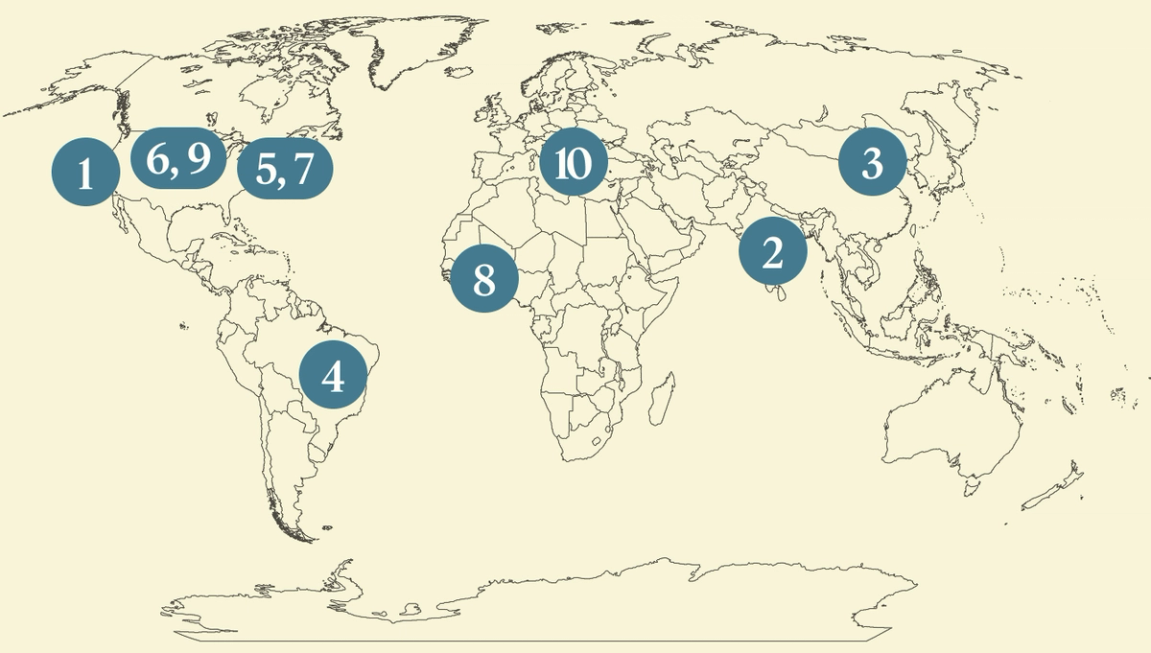 - Anthropic CEO’s warning
- India, EU sign trade deal
- Starmer’s China tightrope
- Trump, Lula hold talks
- Inflation fears grow in US
- US storm boosts gas prices
- GOP anger over shooting
- Guinea bauxite exports up
- Smallpox mastermind dies
- Oldest wooden tool found
 An ‘excitingly ambitious’ dance show in Adelaide, Australia. |
|
 Dario Amodei. Denis Balibouse/Reuters Dario Amodei. Denis Balibouse/ReutersPowerful, world-transforming AI could be two years away, and humanity must get through the technology’s “adolescence” unscathed, Anthropic’s CEO argued. Dario Amodei’s 19,000-word essay warned against both “doomerism” about AI and dismissiveness of its risks, saying that judging by current improvements, soon AI will be “better than humans at essentially everything.” It is not inevitable that that will lead to disaster, but it is plausible, because AI is unpredictable, he said. That could mean the AI itself seizing power, autocratic states using it for repression, or individuals creating bioweapons. Democracies, Amodei wrote, must move fast to outpace autocracies yet carefully to avoid catastrophe; China chip export controls, research into safe AI, and regulations on AI transparency will be vital. |
|
EU, India sign major trade deal |
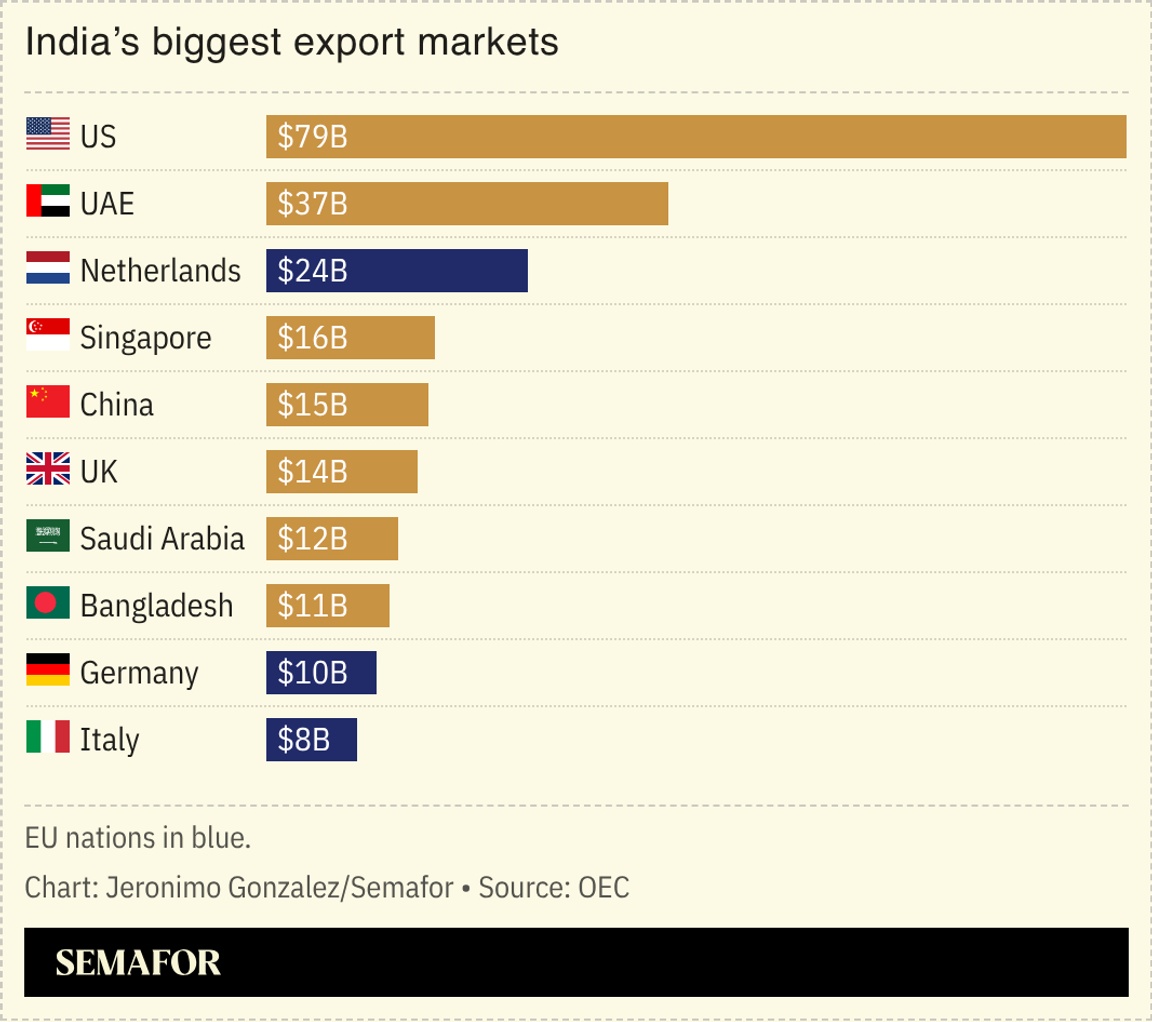 The EU and India signed a landmark trade agreement as both look to bolster commercial alliances amid threats from Washington. The EU expects to double exports to India by 2032 as part of the deal, which was negotiated for two decades, while Delhi, subject of 50% tariffs from Washington, anticipates EU-bound exports to soar. “We have concluded the mother of all deals,” the European Commission president said. US President Donald Trump’s threats have instilled a sense of urgency in the EU, which has accelerated talks with several trading partners. Washington, meanwhile, remains steadfast in using its economic weight to extract concessions from allies: On Monday Trump announced 25% duties on South Korea for “not living up” to an agreement. |
|
UK seeks closer China ties |
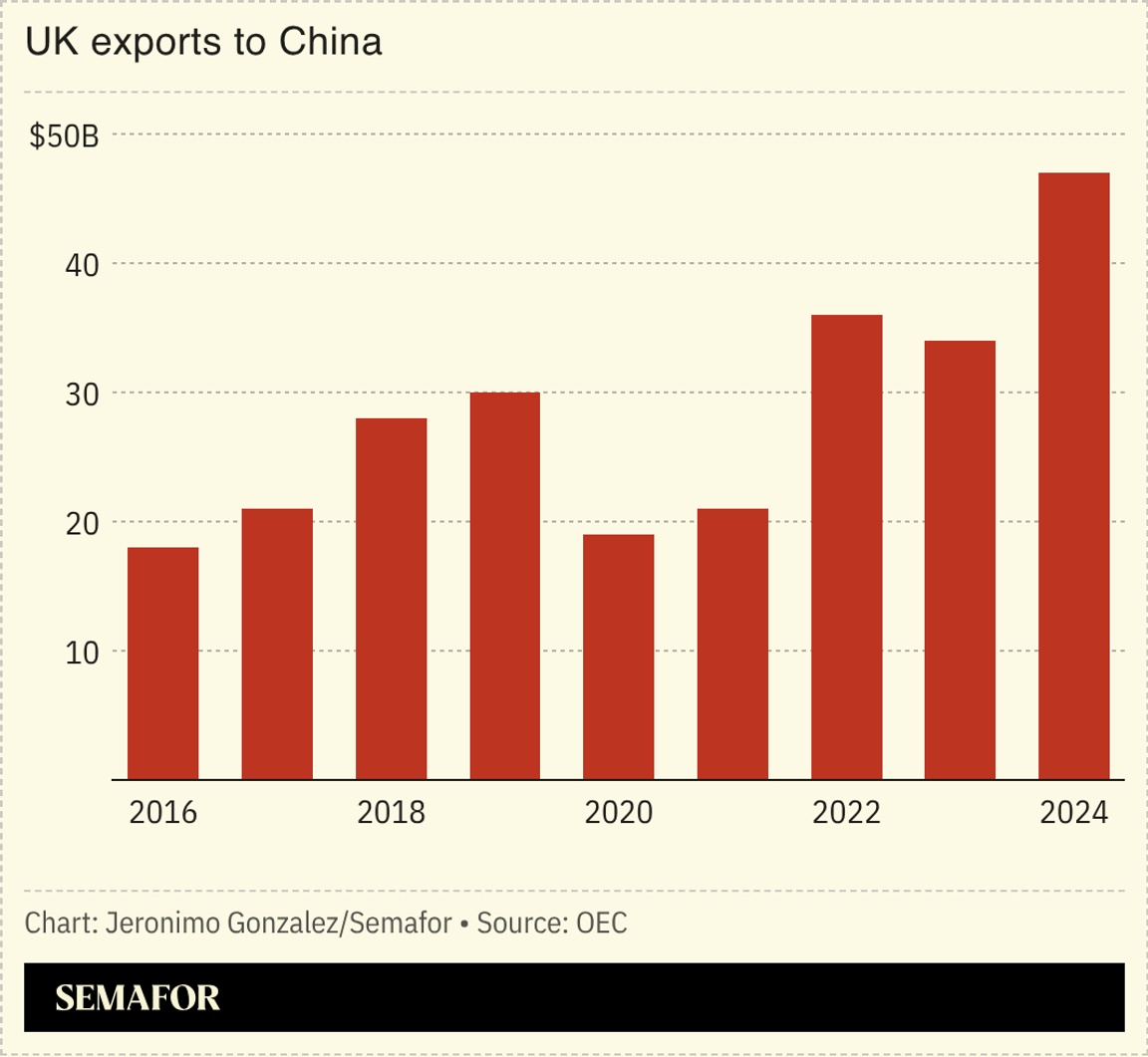 UK Prime Minister Keir Starmer headed to China for a visit that will see him walking a tricky tightrope. Starmer wants to rekindle Britain’s flagging economy, especially as Washington becomes more unpredictable. But he is loath to antagonize the White House, Politico reported. A further complication is that his government plans to heighten scrutiny of Chinese espionage, the Financial Times noted. The West is courting China — the leaders of Canada, Finland, France, and Germany have also either visited recently or will soon — but a former Canadian diplomat jailed by China warned that drawing close to an authoritarian, expansionist Beijing also has risks. “[If] your long-term partner [becomes] abusive,” he told Semafor, you shouldn’t “hop into bed with another serial abuser.” |
|
Trump, Lula hold phone talks |
 Trump and Lula in 2025. Evelyn Hockstein/File Photo/Reuters Trump and Lula in 2025. Evelyn Hockstein/File Photo/ReutersBrazilian leader Luiz Inácio Lula da Silva agreed to visit Washington following a call with US President Donald Trump, a sign that bilateral tensions are easing. Trump imposed 50% tariffs on Latin America’s biggest economy last year over what he said was the unfair treatment of former Brazilian president and ideological ally Jair Bolsonaro. Though the row has calmed in recent months, Lula has criticized Washington’s capture of Venezuela’s leader and called on Trump to limit the focus of his Board of Peace to Gaza, citing concern it could rival the United Nations. Meanwhile, in a call with China’s leader last week, Lula vowed to work with Beijing as Trump vies to reshape the global geopolitical order. |
|
Fears grow of rising US inflation |
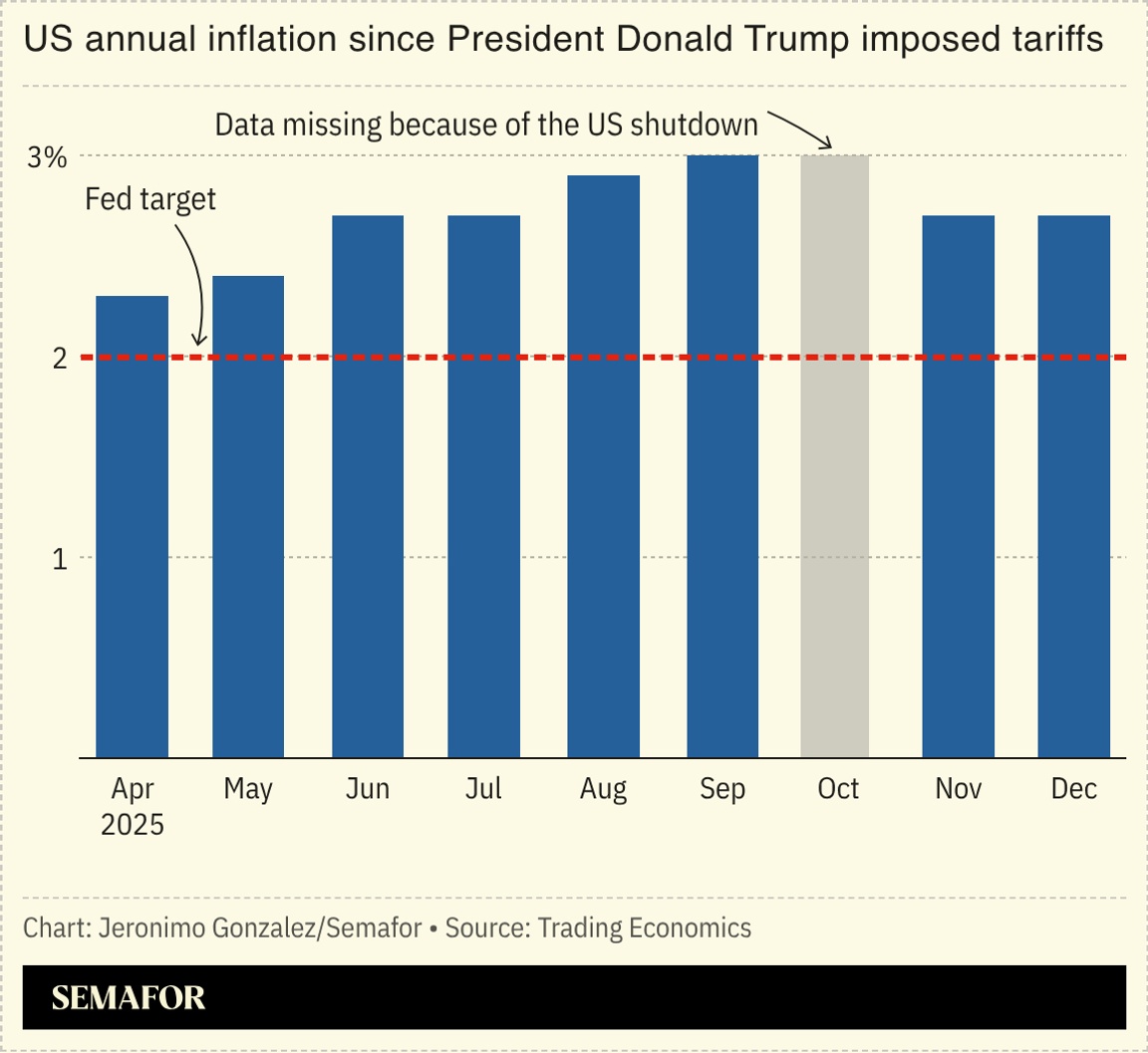 A growing number of experts warned of the risks of inflation accelerating in the US, even as markets bet that policymakers will lower borrowing costs. Traders are pricing in at least two cuts this year, believing the Federal Reserve will prioritize a soft labor market. But inflation could yet worsen, two leading economists warned in a LinkedIn post, projecting it could top 4% in 2026, while Germany’s Kiel Institute projected that the Trump administration’s tariffs meant “US companies will be confronted with shrinking margins and consumers with higher prices in the long run.” In a note to clients, the investment firm Bridgewater warned that rising protectionism and the race to build out AI infrastructure were both likely to drive inflation. |
|
US storm drives global gas prices |
 Jonathan Ernst/Reuters Jonathan Ernst/ReutersA brutal cold snap in the US drove natural gas prices higher globally, highlighting the world’s growing dependence on American fossil fuels. The Trump administration has, largely successfully, prioritized the export of liquefied natural gas, with Europe particularly dependent on US supplies after slashing its reliance on Russia. But the storm — which has left 10 people dead and a million without power — has led to surging gas prices in the US, up around 120% in the past week, as suppliers have had to shut drilling sites because of the cold and prioritize domestic demand. “Prices have likely peaked,” ING commodities analysts forecast. As one Reuters columnist put it: “When the US freezes, the global LNG market catches a cold.” |
|
Republicans retreat over ICE |
|
 Why do more than 1.5 million professionals start their day with The Hustle? Because it’s the only business newsletter that makes you smarter without boring you to death. Get growth stories, biz and tech trends, and insights, all in five engaging minutes. Subscribe today. |
|
China’s growing Africa footprint |
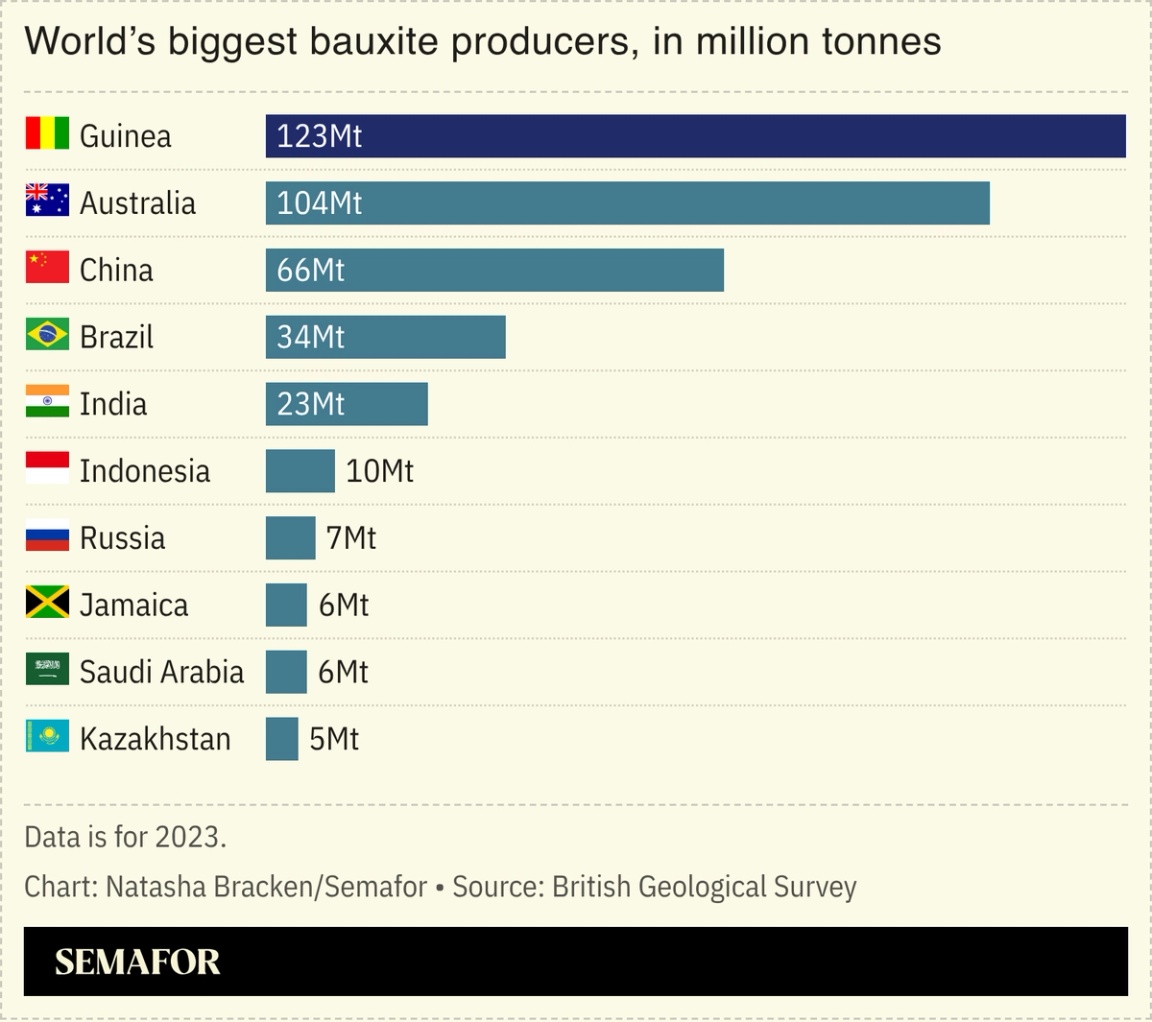 Guinea said exports of bauxite jumped by 25% last year to meet soaring demand from China, which has recently tightened its grip on the African nation’s resources. Government data showed that 74% of Guinea’s bauxite — used to produce aluminum, key to the global energy transition — went to China; Guinea’s biggest bauxite producer is a Chinese-owned firm. Beijing has intensified its push to control African resources in the face of competition from the US. On Monday Chinese mining giant Zijin Gold agreed to buy a Canadian firm with vast operations on the continent for $4 billion. Washington has made moves of its own: Envoys of some of Africa’s biggest mining nations are due to visit the US capital next month for a high-level summit. |
|
Smallpox vaccine pioneer dies |
 William Foege. Kevin Lamarque/Reuters William Foege. Kevin Lamarque/ReutersWilliam Foege, the mastermind behind the world’s eradication of smallpox, died aged 89. The disease was among the world’s deadliest: It killed around a third of those infected, and as recently as 1967, there were an estimated 15 million cases worldwide. But Foege’s strategy of “ring vaccination” — inoculating close contacts of a case — helped control outbreaks efficiently. The last recorded case was in 1977. Foege also led efforts to end polio, and said in 2013 that the project was close to success. That victory, though, may be further off: A senior US health official recently argued that the polio vaccine does not reduce the disease’s spread, part of a wider vaccine-skeptical shift in the Trump administration. |
|
|


