| | Investors race to back Anthropic, OpenAI, and ASML as the AI boom continues, analysts say European p͏ ͏ ͏ ͏ ͏ ͏ |
| |  Mexico City Mexico City |  Madrid Madrid | Washington |
 | Flagship |  |
| |
|
The World Today | 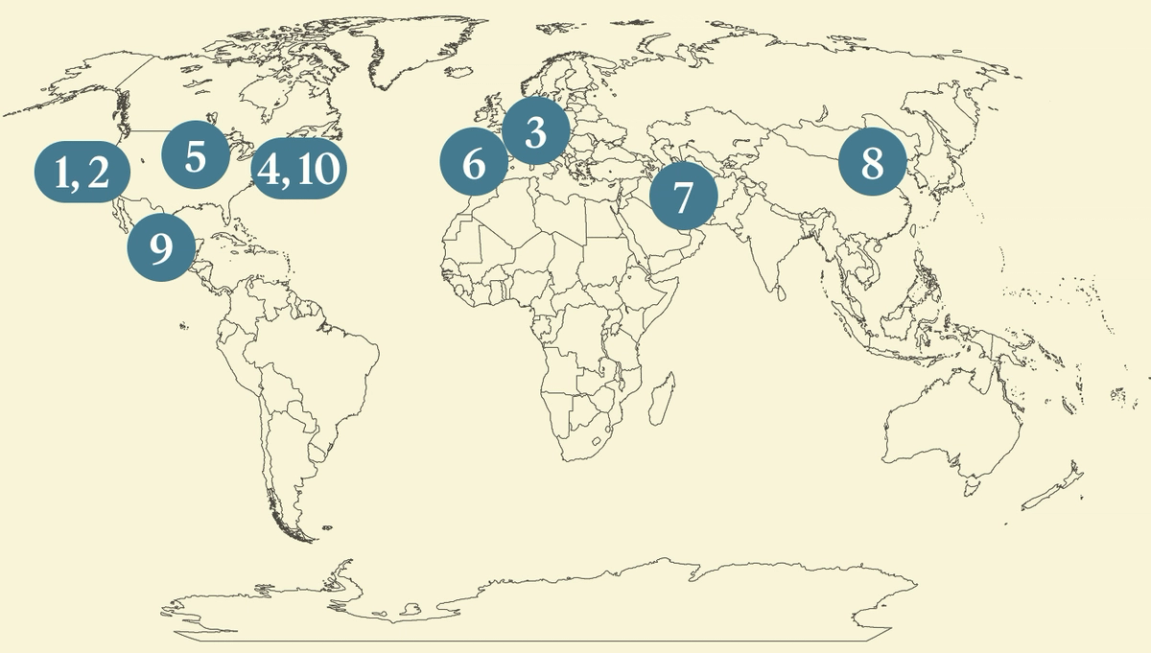 - Betting on the AI boom
- Social media case opens
- Signs of EU optimism
- Fed to hold rates steady
- Trump’s Minnesota reset
- Spain wants more migrants
- US forces draw near Iran
- China shifts Africa strategy
- Mexico halts Cuba oil
- Evidence of Martian beach
 A Berlin retrospective of a ‘transcendent’ Mexican photographer |
|
AI financing boom set to expand |
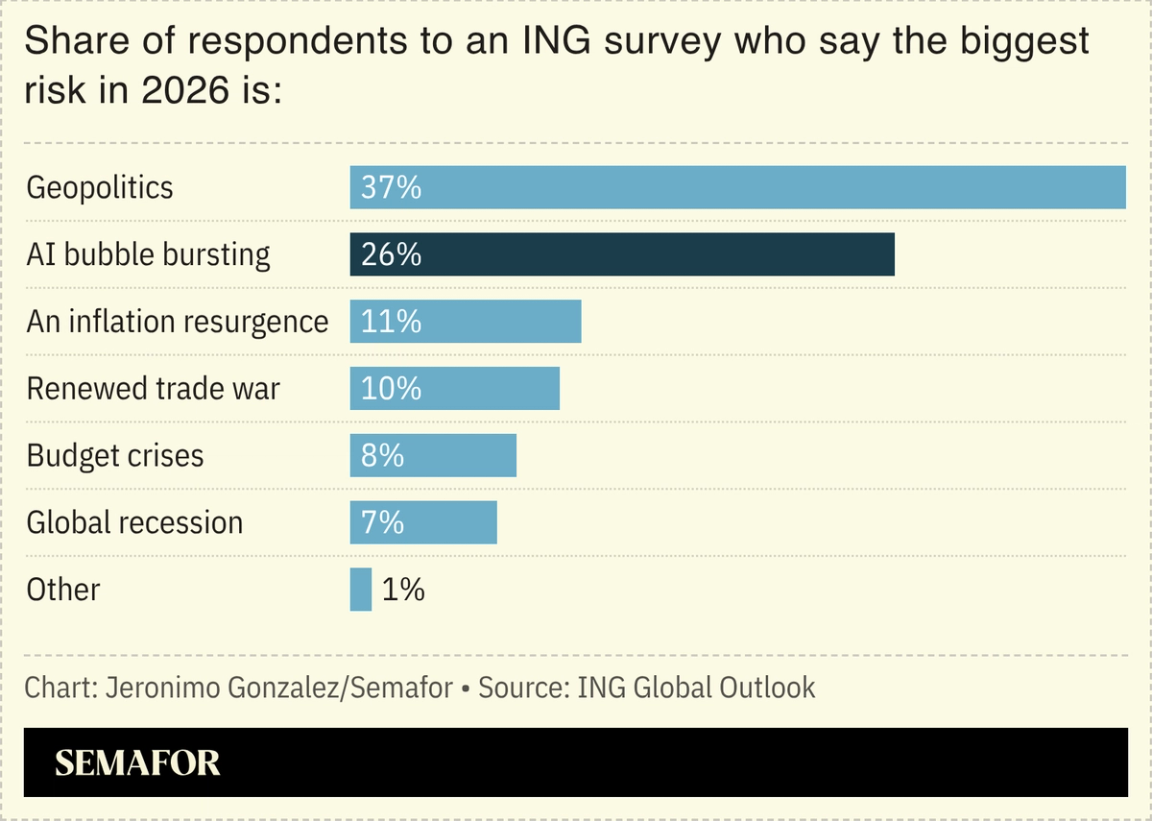 Investors and analysts upped their bets on an AI boom, despite fears of a bubble. The AI startup Anthropic will raise a further $20 billion in funding at a $350 billion valuation; it sought $10 billion, but investor demand was high. The tech investment group Softbank, meanwhile, is in talks to back OpenAI with a further $30 billion to improve its position in the AI race, Reuters reported, and semiconductor equipment manufacturer ASML saw its stock price surge 7% after announcing increased orders on the back of surging demand for AI. The Dutch giant, which makes the world’s most advanced chipmaking machines, is already Europe’s largest company by market capitalization. |
|
Court to hear tech addiction case |
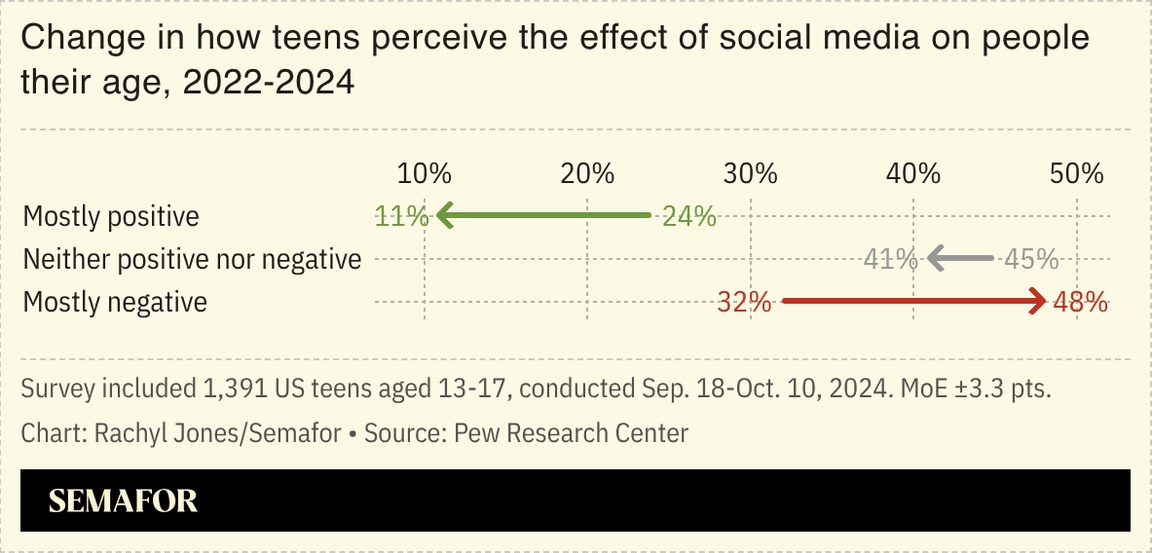 The first of more than 1,000 lawsuits against social media platforms in the US goes to trial this week, with tech giants’ internal communications likely to play a key role. A 20-year-old woman is suing YouTube and Meta — TikTok and Snapchat settled with her out of court — alleging they designed their platforms to be addictive. The case faces significant hurdles: The allegation that social media causes mental health issues, rather than simply correlating with them, is scientifically contentious; the existence of “social media addiction” as a meaningful concept is widely disputed; and courts are rarely a good place to settle scientific questions. But recently unsealed documents apparently showing that tech giants targeted young users could be influential to the jury. |
|
Europe’s economies faring well |
|
Controversy looms over Fed decision |
 Brendan McDermid/Reuters Brendan McDermid/ReutersThe US Federal Reserve is expected to hold rates steady today, a decision overshadowed by threats to its independence and questions over its future leadership. Fed chair Jerome Powell, long the target of US President Donald Trump’s ire for refusing to aggressively lower borrowing costs, is the subject of a criminal inquiry, while a bank governor is contesting Trump’s attempt to fire her. Economists worry the cases could erode the Fed’s credibility as apolitical. Powell’s term is up in May, but Trump “wants something that may not exist,” The Wall Street Journal said, “a new chair who will pursue his demands for lower interest rates while still commanding enough credibility on Wall Street and from his colleagues to deliver them.” |
|
Trump seeks reset after ICE killings |
 White House border czar Tom Homan. Evelyn Hockstein/Reuters White House border czar Tom Homan. Evelyn Hockstein/ReutersThe White House appears to be trying to reset its relationship with Minnesota’s leadership after federal agents killed two citizens there. The administration’s border czar arrived in Minneapolis Tuesday; his task is to extract Democratic concessions in exchange for the withdrawal of immigration enforcement units, The Wall Street Journal reported. Republicans, including President Donald Trump, seem alarmed by the backlash; even staunch Trump supporters expressed rare criticism, The New York Times noted, while Trump distanced himself from his administration’s claims that Alex Pretti, shot on Saturday, was a “domestic terrorist.” Trump may want de-escalation, especially with a partial government shutdown looming, but tempers remain high: A man sprayed a Democratic representative with an unknown liquid after she criticized the crackdown. |
|
Spain to give migrants legal status |
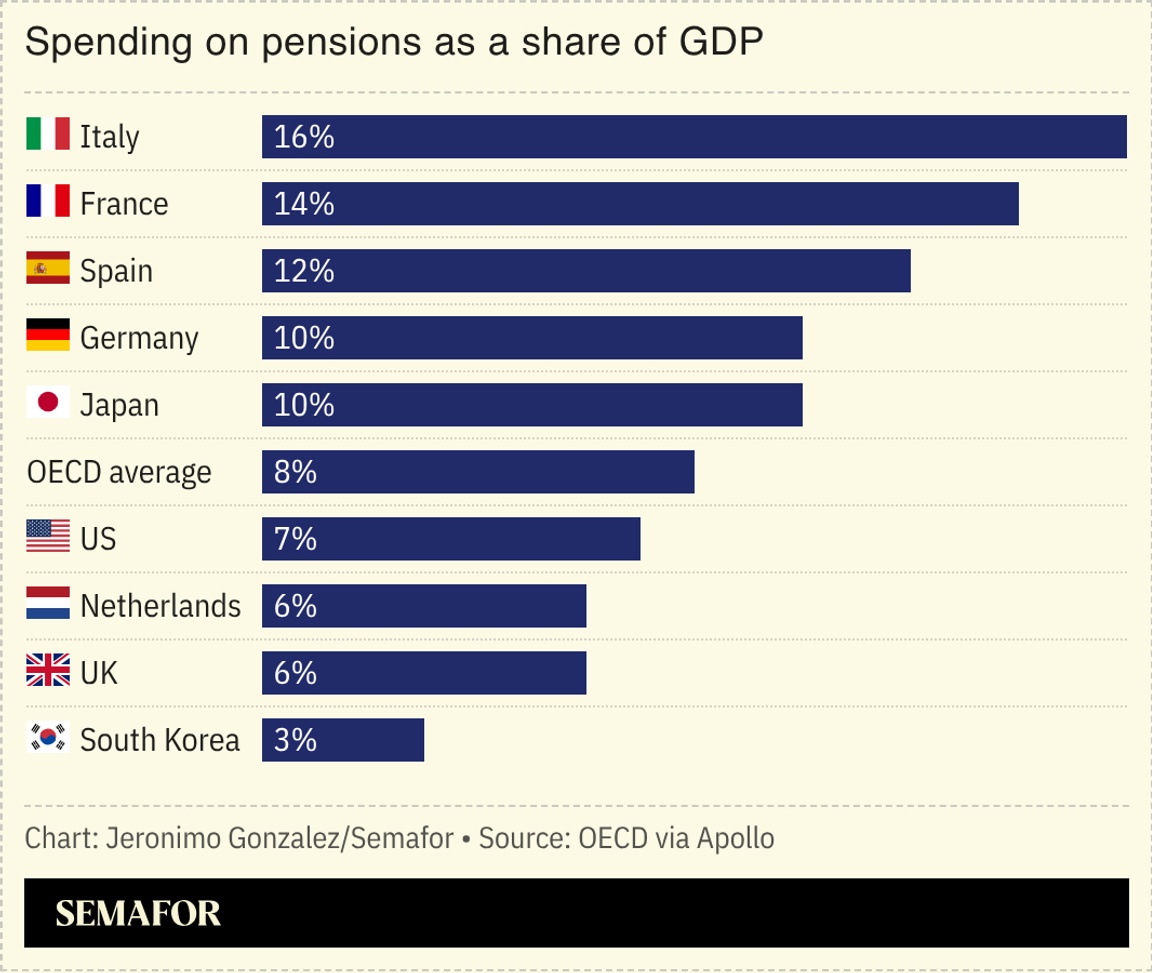 Spain plans to grant 500,000 undocumented migrants legal status, bucking a trend among many Western nations that are cracking down on immigration. Prime Minister Pedro Sánchez has for years sought to increase immigration to Spain: The country ranks as the seventh oldest in the world by median age, and spends around 12% of its GDP on pensions. Despite fears of an impact on domestic workers, Sánchez said the unemployment rate has fallen by 40% even as Spain has added two million foreign workers. Though facing similar demographic challenges, much of the West has turned against migration, while East Asian governments have maintained a historic aversion to it, with economists warning the decision could cripple their economies. |
|
US renews pressure on Iran |
 Mike Blake/Reuters Mike Blake/ReutersThe likelihood of US strikes on Iran increased once again, as Washington deployed a carrier group to the Middle East. President Donald Trump threatened attacks after Tehran’s crackdown on anti-government protests, but seemed to back away. Now, though, the USS Abraham Lincoln and its escorts, along with land-based fighter-bombers, are in the region, and US forces are conducting military exercises; Trump said the “beautiful armada” should encourage Iran to “make a deal.” Saudi Arabia and the UAE, two key US regional allies, ruled out the use of their airspace or territory, making any attacks more complicated, although not impossible. Estimates of the number killed by the Iranian regime in the recent protests range from 6,000 to more than 30,000. |
|
 Christian Klein, CEO of SAP SE, is joining the Semafor World Economy Global Advisory Board, a forum of visionary business leaders guiding the largest gathering of global CEOs in the US. The expanded board represents nearly every sector across the US and G20. Joining the Advisory Board at this year’s convening will be our inaugural cohort of Semafor World Economy Principals, an editorially curated community of innovators, policymakers, and changemakers shaping the new world economy with front-row access to Semafor’s world-class journalism, meaningful opportunities for dialogue, and touchpoints designed for connection-building. Applications are now open. |
|
China shifts its Africa strategy |
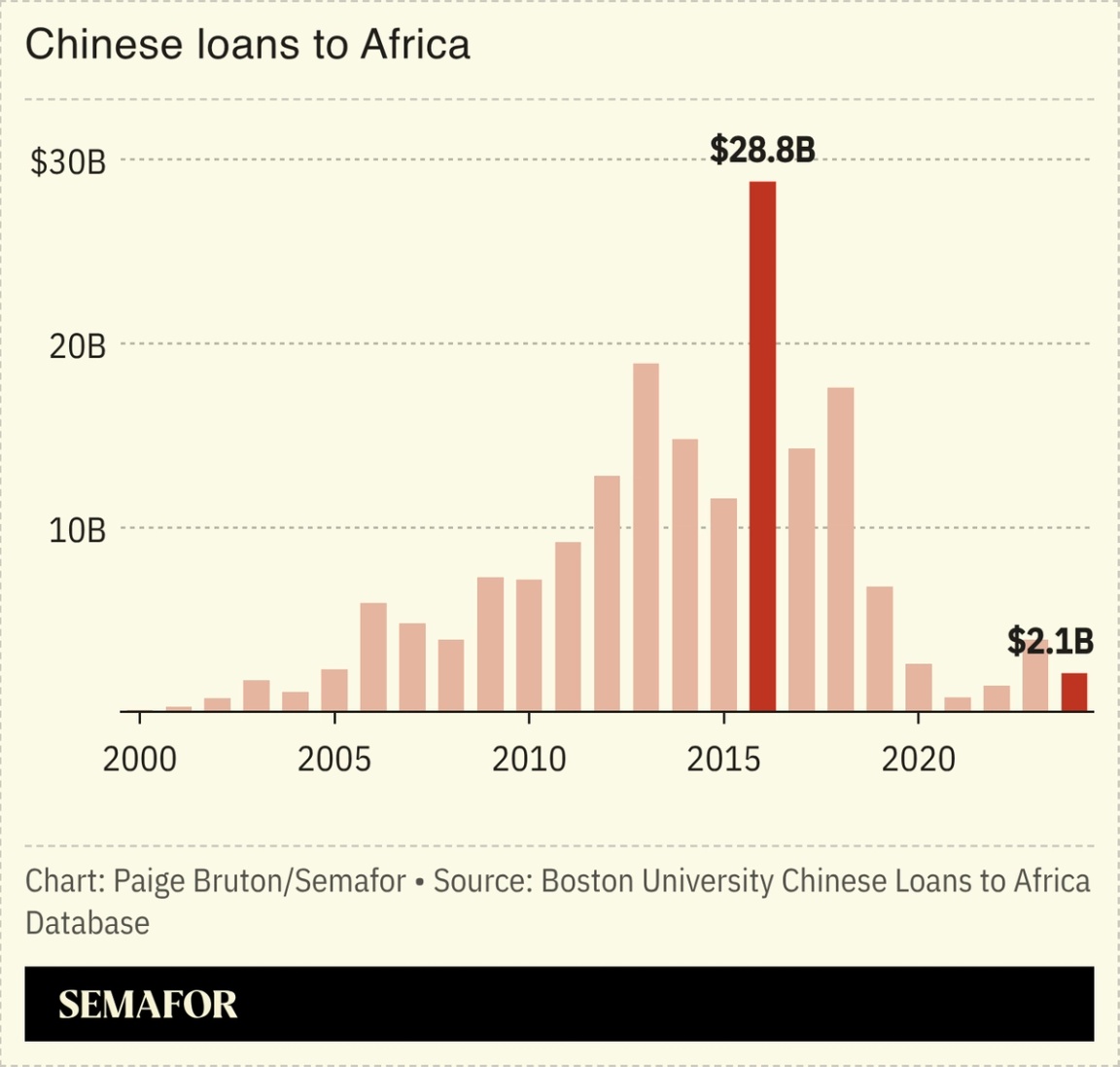 African nations now send more money to China in the form of loan repayments than they receive in new borrowing from the world’s second-biggest economy, signaling the stark shift in Beijing’s strategy on the continent. China began accelerating lending to African nations two decades ago, with annual loans peaking at almost $30 billion in 2016. However, under-performing projects and economic mismanagement led several countries to default on their loans, with China pulling financing in response. Yet Beijing remains keen on expanding its footprint in Africa as competition with the US for access to critical resources heats up: Chinese foreign direct investment in the region has boomed, growing almost tenfold in the two decades to 2024. |
|
Mexico halts Cuba oil shipment |
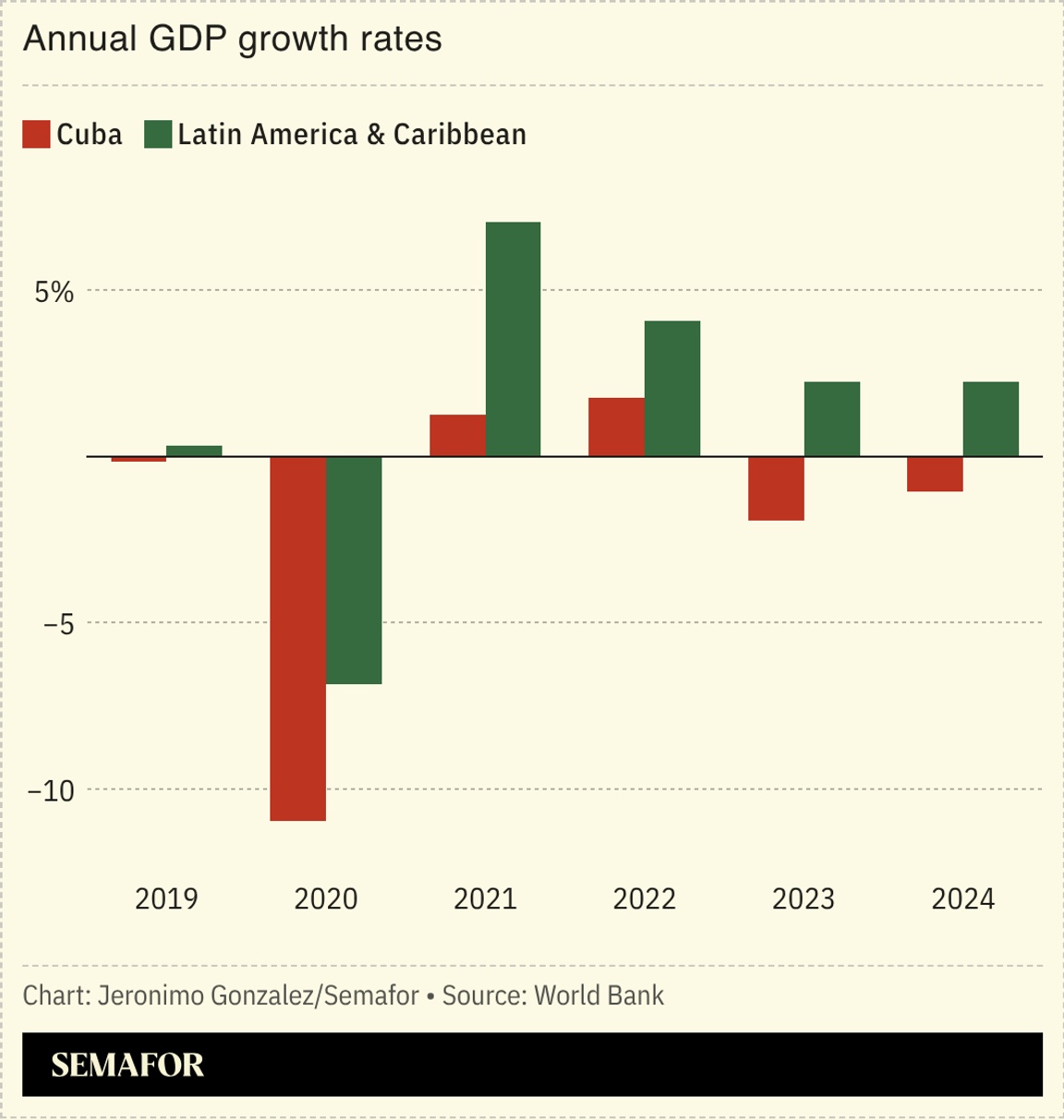 Mexico cancelled an oil shipment to Cuba following pressure from Washington, as US President Donald Trump warned the island nation would be “failing pretty soon.” Since Washington captured Venezuela’s Nicolás Maduro, oil shipments from Venezuela to Cuba have plummeted, leaving Mexico as Havana’s biggest crude supplier. But the White House has urged Mexican President Claudia Sheinbaum to cut oil sales, despite pressure from hard-left members of her governing party to support Havana’s Communist regime. Sheinbaum has defended the move to halt oil deliveries as a “sovereign decision.” Cuba, among the poorest countries in the Western Hemisphere, is facing the worst economic crisis in a generation, compounded by plummeting tourist numbers over the US threats. |
|
|


