| | The US Federal Reserve pauses its run of interest rate cuts, China approves the first Nvidia H200 ch͏ ͏ ͏ ͏ ͏ ͏ |
| |  | Flagship |  |
| |
|
The World Today | 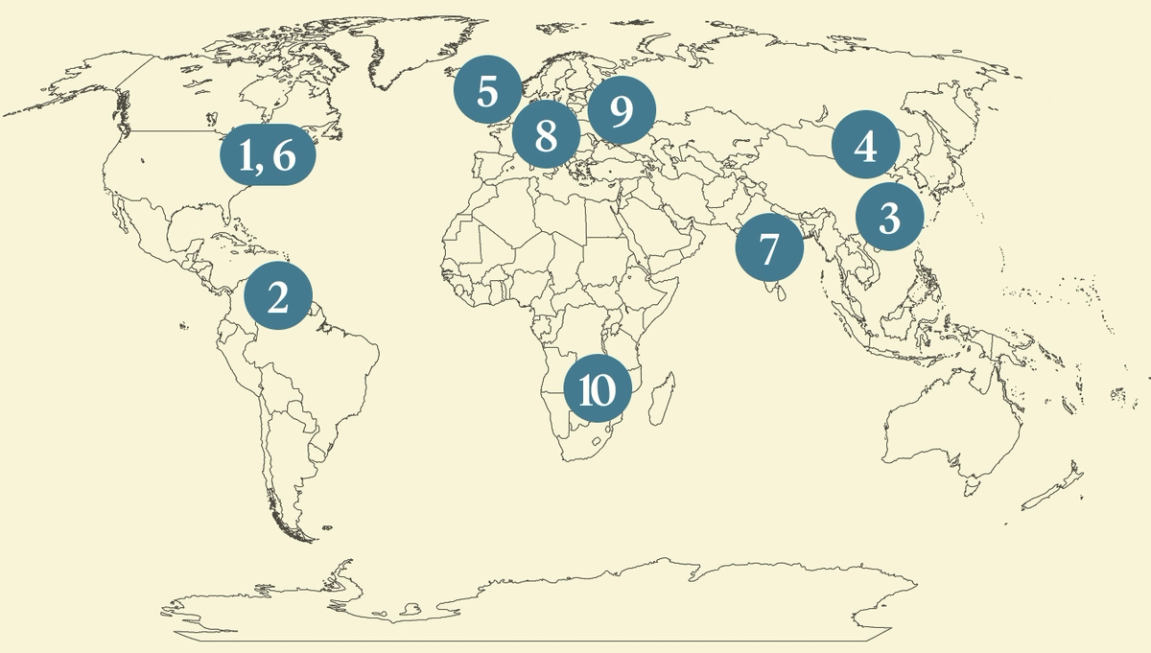 - The Fed takes a breather
- US reviews Caracas’ budgets
- China OKs Nvidia H200 sales
- Starmer brings CEOs to China
- More Chinese students in UK
- Trump touts savings for kids
- Nipah virus outbreak in India
- Europe ramps up defense
- Kyiv builds robot army
- Zimbabwe inflation plummets
 A 75-year-old novel about escaping Nazi Germany gets its first English translation. |
|
Fed holds interest rates steady |
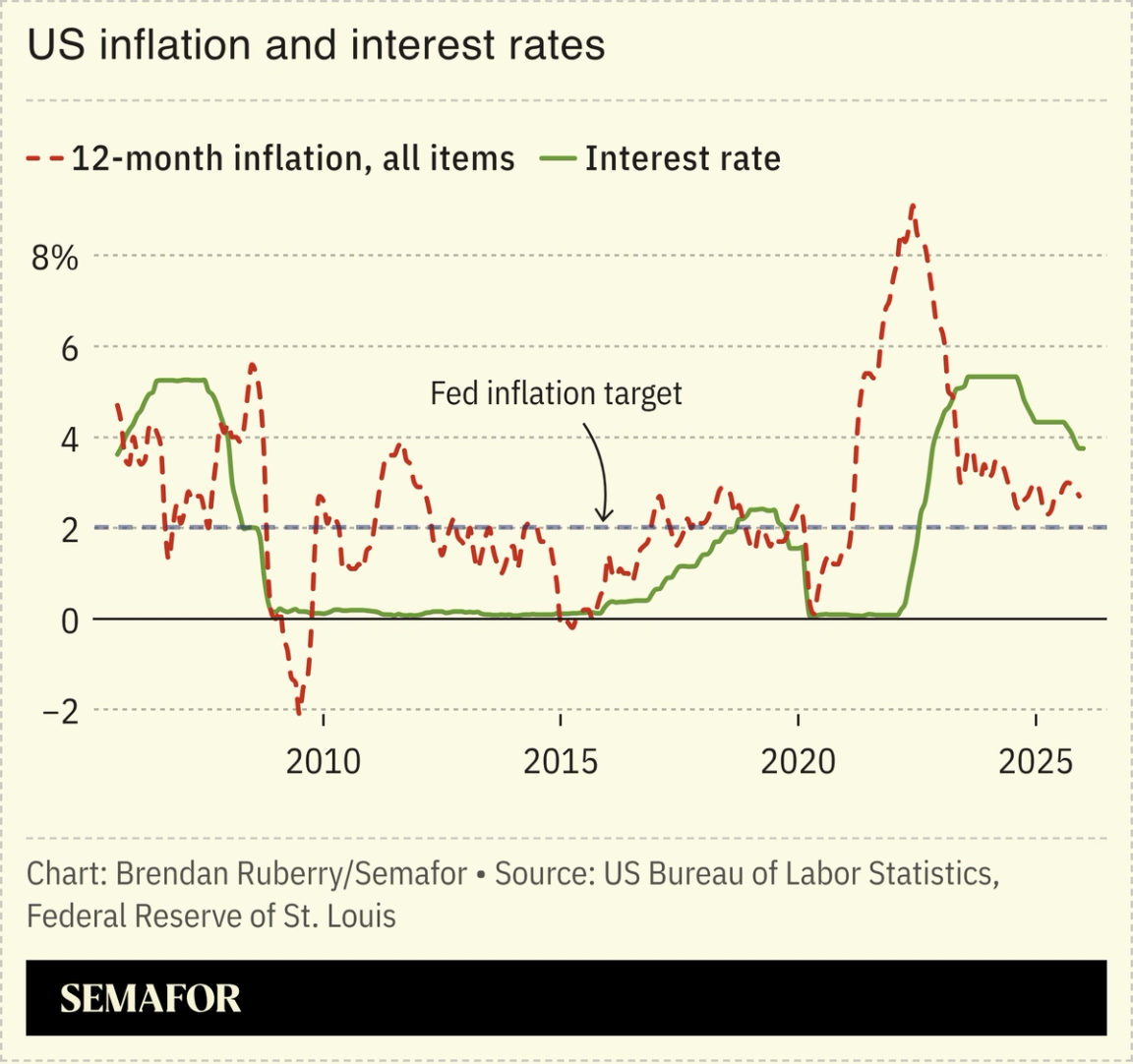 The US Federal Reserve held interest rates steady on Wednesday, signaling a pause after three straight cuts last year. Despite intensifying pressure from US President Donald Trump to lower borrowing costs, the Fed suggested it isn’t in a rush to trim rates given low layoffs and steady economic growth. The widely expected decision followed “a very boring meeting during very interesting times,” one analyst said. Tuesday marked Fed Chair Jerome Powell’s first press conference since he revealed that the central bank is the subject of a federal probe. Trump is gearing up to announce his pick to succeed Powell, whose term ends in May: BlackRock executive Rick Rieder has emerged as a frontrunner, with traders betting on more aggressive cuts. |
|
Rubio: Caracas to submit budgets to US |
 Jonathan Ernst/Reuters Jonathan Ernst/ReutersThe US’ top diplomat detailed how the US will control Venezuela’s finances, less than one month after Washington ousted Nicolás Maduro. Secretary of State Marco Rubio testified to a Senate committee that Caracas will have to submit a monthly budget, and the Trump administration’s review will determine how the funds from oil proceeds can be spent. The unusual arrangement has drawn comparisons to Iraq’s reconstruction, in which the US took control of Baghdad’s oil fund and lost track of $8.7 billion, Politico noted. One leader of the Iraq rebuilding effort called on Trump to use the oil revenues to pay dividends to Venezuela’s citizens, “preventing old Maduro cronies from looting the country’s wealth.” |
|
China OKs Nvidia H200 chip sales |
 Florence Lo/Reuters Florence Lo/ReutersChina began allowing purchases of Nvidia’s powerful H200 chips for the first time, pointing to a nascent US-China rapprochement ahead of a planned visit by President Donald Trump in April. The first Nvidia approvals went to three of China’s tech giants — ByteDance, Alibaba, and Tencent — Reuters reported, after the US greenlit their exports last month. It was previously unclear whether China would allow the sales given its push for high-tech self-sufficiency, but the approval suggests the “extreme hunger for high-quality computing power” from China’s tech scene is taking priority, a Taiwan-based expert said. |
|
Executives join Starmer in Beijing |
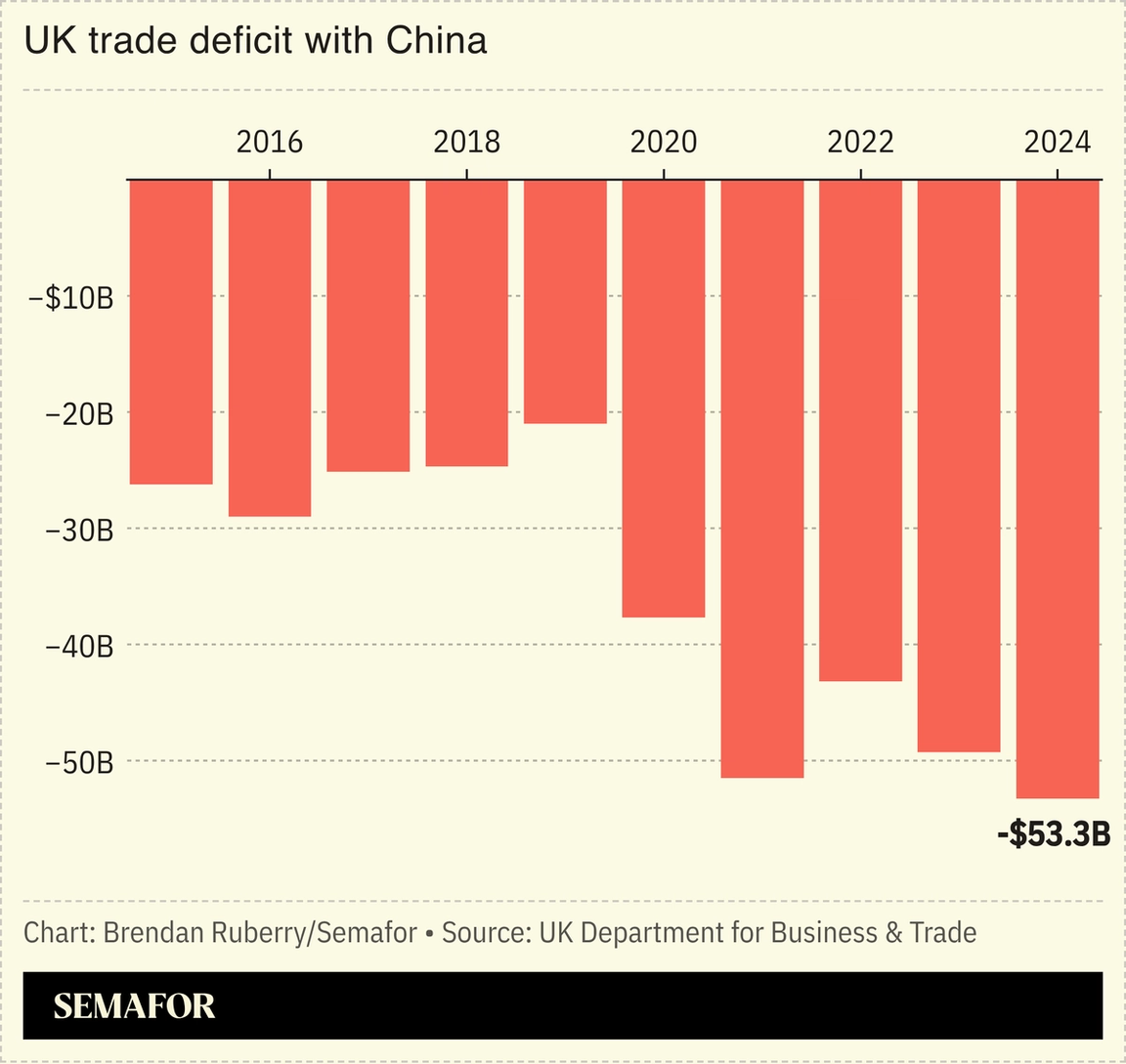 UK Prime Minister Keir Starmer is bringing a cavalcade of business leaders with him on his trip to China this week, as he pursues a reset with the world’s second-largest economy. Executives from top British banks and manufacturers are joining Starmer, who plans to meet with Chinese leader Xi Jinping on Thursday with a goal of unlocking more export business for UK firms. But Starmer is walking a tightrope in enhancing trade ties with Beijing while trying not to rile US President Donald Trump, who has threatened Canada with tariffs if Ottawa strikes a broad deal with China. Trump’s shakeup of global commerce has driven more US allies toward Beijing: German investments in China hit a four-year high last year. |
|
More Chinese students at UK unis |
 Jaimi Joy/Reuters Jaimi Joy/ReutersTwo out of every five overseas students at top UK universities came from China, new data shows. Almost 105,000 Chinese students attend elite “Russell Group” schools, a record 42.5% of their international population, the Financial Times reported. A major income source, the swell of students highlights the risks associated with relying on a single recruitment market. To wit, the US higher education system is having the opposite experience. Although America remains a top destination for students coming from China, numbers have been falling for years: Chinese students in American schools fell by 4% to 265,000 in the 2024-25 school year, as the two countries’ relations worsened. |
|
Trump touts kids’ savings accounts |
 Kevin Lamarque/Reuters Kevin Lamarque/ReutersUS President Donald Trump on Wednesday touted his administration’s plan to invest in newborns’ bank accounts, with backing from a suite of financial giants. Parents who enroll will receive $1,000 from the government to seed their baby’s account; that money will be invested in the stock market by private firms, and can be accessed when the child turns 18. Other countries, including the UK, Hungary, and Singapore, have enacted similar programs, though some studies have shown they have limited economic benefits: The UK’s program ran from 2002 to 2011, and while 6.3 million accounts were opened, nearly half went unclaimed. “There was little evidence of the scheme creating savings habits overall,” one study found. |
|
Nipah virus outbreak in India |
 Suvarnabhumi Airport Office/Handout via Reuters Suvarnabhumi Airport Office/Handout via ReutersA cluster of cases of the deadly Nipah virus in India caused nearby countries to step up screening measures, although New Delhi said it had the outbreak under control. Nipah, first detected in 1999, is usually found in bats and pigs, but occasionally breaks out into humans. There’s no vaccine for the virus, which can lead to fevers, brain swelling, and respiratory illness. It can spread person-to-person, but only via fluid contact, and so is less contagious than airborne diseases like COVID. It is, however, extremely deadly — up to 75% of cases are fatal — and so Hong Kong, Indonesia, and Thailand began temperature checks for incoming passengers. |
|
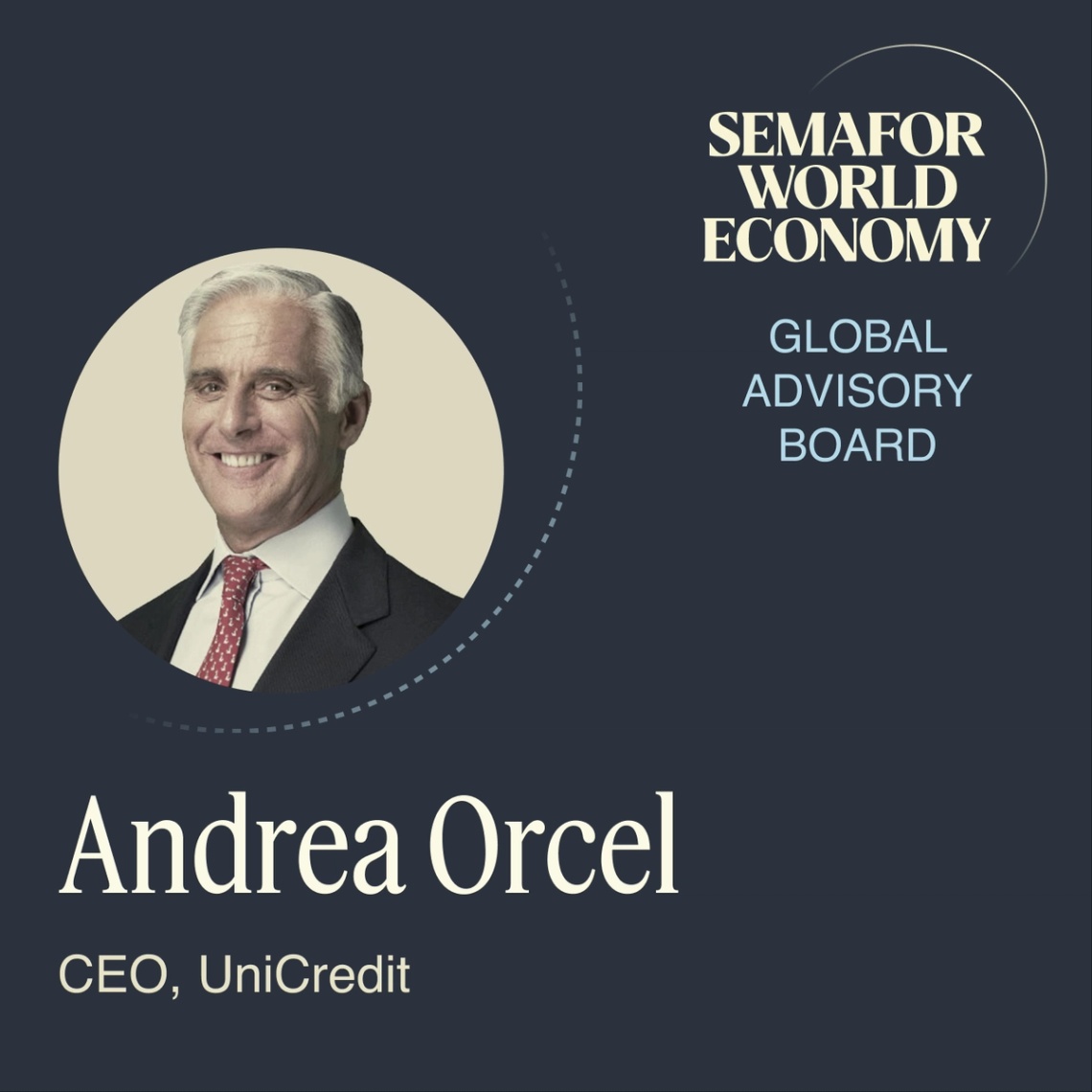 Andrea Orcel, CEO, UniCredit, is joining the Semafor World Economy Global Advisory Board — a forum of visionary business leaders guiding the largest gathering of global CEOs in the US. The expanded board represents nearly every sector across the US and G20. Joining the Advisory Board at this year’s convening will be our inaugural cohort of Semafor World Economy Principals — an editorially curated community of innovators, policymakers, and changemakers shaping the new world economy with front-row access to Semafor’s world-class journalism, meaningful opportunities for dialogue, and touchpoints designed for connection-building. Applications are now open here. |
|
Europe ramps up weapon production |
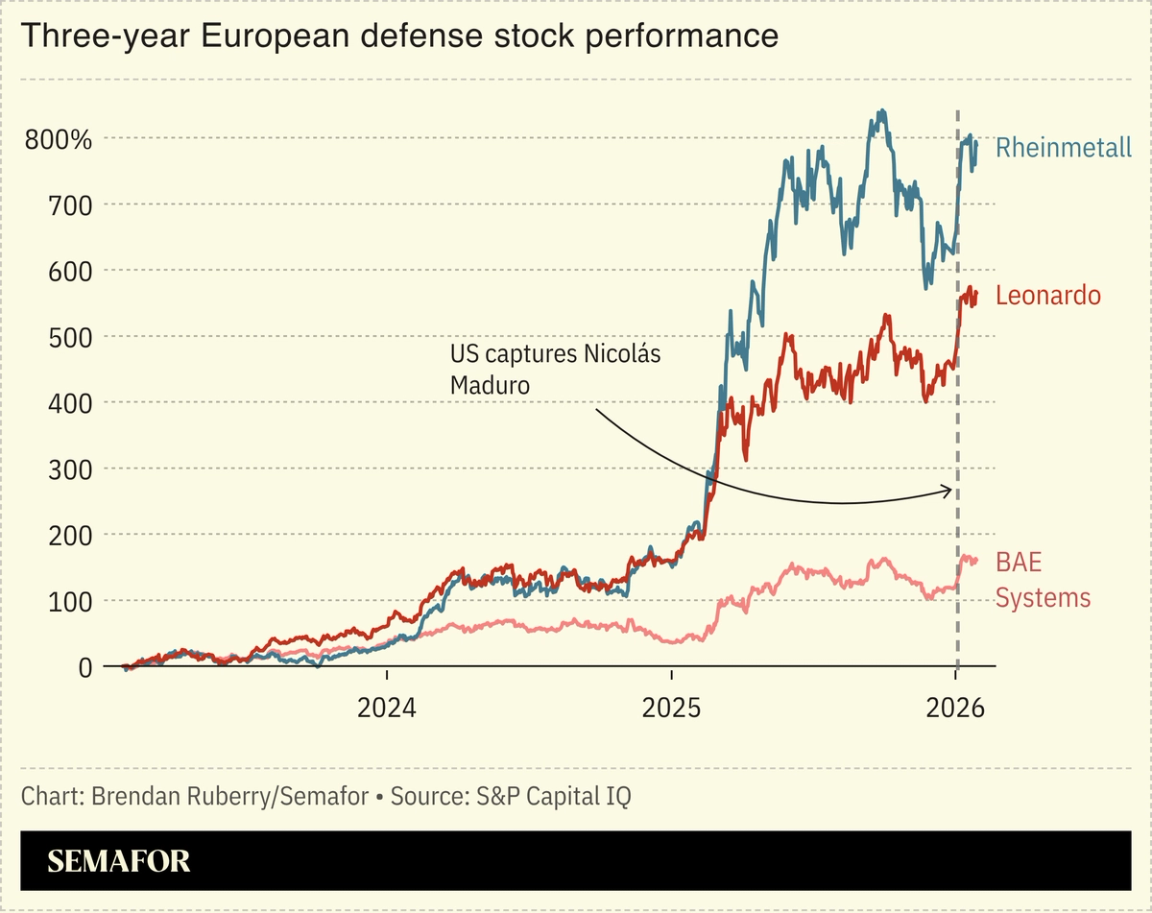 Europe is building weapons and ammunition at its fastest pace in decades as it aims to manage its defense independently of the US. German defense giant Rheinmetall has been building a slew of new factories since Russia’s 2022 invasion of Ukraine, and will soon make more 155mm artillery shells than the entire US defense industry. Italy’s Leonardo has increased its headcount by nearly half. Europe spent $560 billion on defense last year, twice what it spent a decade ago, and by 2035 its spending will be equivalent to 80% of the Pentagon’s. Although the continent still relies on the US for satellite support, advanced fighters, and long-range drones, The Wall Street Journal reported, the pivot toward defense self-reliance is well under way. |
|
Ukraine leads in battle bots |
 Stringer/Reuters Stringer/ReutersUkraine has become the world leader in unmanned ground vehicles. Like their aerial counterparts, UGVs “do not become tired, cold, [or] scared,” and already provide critical frontline logistics and medevac support, The Jamestown Foundation noted. Though fully mechanized assault brigades remain theoretical, UGVs are also increasingly serving in combat roles: This week, Ukraine captured the first footage of Russian troops surrendering to a UGV. Kyiv approved 330 unique models in 2024 — a 350% increase from the year before — almost all of which are manufactured by Ukrainian defense firms, for now outpacing Moscow’s reverse-engineering of Kyiv’s tech. “We don’t have the men to counteract Russia’s [assaults],” one manufacturer told the Economist. “So we’ll send our own zombies against theirs.” |
|
Zimbabwe inflation hits single digits |
|
|


