Readers,
Congrats to the Joshes of the world, condolences to the Bobs of the world. And also everyone who really loves the parks, probably.
Quick programming note before we get into it today: 1.5x Speed will be on complete hiatus for a few months, as I’m due to be on pat leave by the end of the month. Fun! In the meantime, you can get all your industry news from my buds over at Buffering: Joe Adalian, Chris Lee, Savannah Salazar, and Eric Vilas-Boas are all doing tremendous work, and they’re all edited by the same gent who edits this very newsletter, Ray Rahman. And lest you think all the Hollywood stuff they cover isn’t podcast-related … buddy, it’s all connected.
Anyway, feel free to keep in touch, whether through my email (nicholas.quah@vulture.com) or my impeccably profesh Instagram that’s meant to be a repository for all my Vulturious and NYMagian activities, if I haven’t totally forgotten my password. In other news, things are going extremely well over here.
|
|
|
THE MEDIUM IS THE MESSAGE |
Are Netflix Podcasts Just Becoming Cheap Television? |
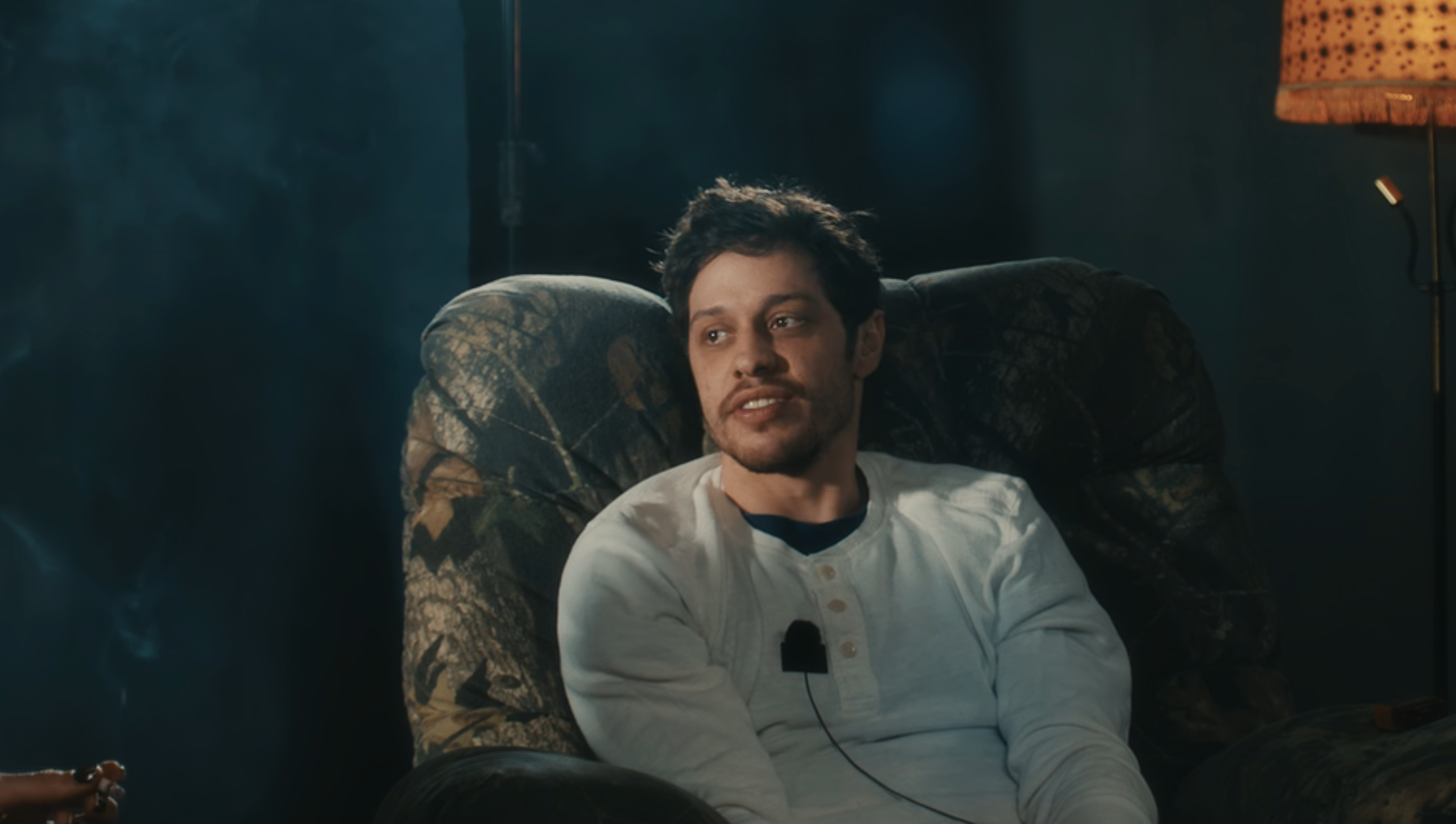
Though billed as a Netflix podcast, The Pete Davidson Show doesn’t feel like a podcast in any conventional sense — if, indeed, podcasts can still be said to resemble anything specific at all, having been so thoroughly transformed and warped by the medium’s pivot to video. Davidson’s debut episode, featuring Machine Gun Kelly, is assembled from the rough, requisite symbols of podcasting: host and guest sunk into plush, beat-up chairs vaguely facing each other, chatting and smoking cigarettes in a space that’s presented as Davidson's garage, Benjamin Moore paint tubs doubling as an ashtray stand. Good pals, their conversation is loose and circuitous; their discussion drifts from adventures while getting high, stints in rehab, and, because this is the first episode, what a podcast even is. "What do two guys talk about that talk every day anyway?” MGK asks. "My idea is like … it's like a phone call that's being recorded," Davidson replies.
And yet there’s more going on here than that framing would suggest. The whole thing is unmistakably televisual: shot with film grain that dramatizes the light seeping into the garage, lingering on the way cigarette smoke curls in the air, cut actively to track the rhythm of the exchange rather than merely observe it. You could say, charitably, that it’s quite the high-end celebrity podcast.
The Pete Davidson Show is one of two original Netflix podcasts that stand apart from the platform’s broader push into the category, which until now has mostly revolved around licensed inventory from the likes of The Ringer and Barstool Sports. (The other is The White House with Michael Irvin, a sports commentary show that actually does look like what you’d expect a typical sports podcast to be.)
But is The Pete Davidson Show actually a podcast? Well, it’s podcast-ish in that it nominally invokes the medium’s familiar tropes. But that doesn’t answer the question. A simple thought experiment helps: If The Pete Davidson Show had been produced by someone else and distributed elsewhere, it should register as a good-looking, high-end celebrity podcast — not unlike Bella Freud’s Fashion Neurosis (now distributed by Vox Media), for example, which similarly deploys an engaged camera that makes great use of Freud’s obscenely gorgeous living quarters. But as a show produced by and distributed exclusively on Netflix, it’s difficult to beat the charges: The Pete Davidson Show is less a podcast than a piece of cheap television, and should be judged on those terms.
This is not a mere semantic quibble. It sure feels like Netflix is opportunistically deploying the label “podcasts” like assholes here, and the strategy is riddled with business implications. As cheap television, The Pete Davidson Show offers Netflix a path toward producing more content at far lower cost, largely independent of the entrenched Hollywood systems that have developed over time to protect the below-the-line workers who traditionally work on talk shows that compete in this space. It’s hard not to view The Pete Davidson Show as some kind of trial balloon to see if anybody notices or cares. That, in turn, recontextualizes the even more lo-fi Netflix original The White House with Michael Irvin. So long as it remains a Netflix exclusive, how is it anything other than a cheaper version of an existing television form — its own cut-rate spin on The Pat McAfee Show?
The Pete Davidson Show’s categorical blurriness takes advantage of a particular unstable time for podcasting. A podcast today is, really, little more than a broad set of signifiers. Once upon a time, the word had a technical meaning: podcasts were audio files distributed via RSS feeds across the open internet. As the medium grew over the past decade, it cohered around two dominant strains: audio storytelling, exemplified by shows like Heavyweight, and a looser, personality-driven mode of internet pirate-esque radio, typified by The Joe Rogan Experience. Even then, podcasting was understood to occupy a space apart. It was not quite Hollywood (though some actors and comedians podcasted), not quite YouTube (though some shows distributed episodes there too), and not fully absorbed into either.
Today, squishiness prevails. The ecosystem has completed its hard swing toward video, where it's now effectively blending with pre-existing digital video platforms that are functionally treating the idea of a “podcast”, as a subgenre instead of a medium with its own tradition. In any strict technical sense, there is little that meaningfully connects The Pete Davidson Show to Who? Weekly, The Bill Simmons Podcast, Club Shay Shay, Flagrant, or even our very own Good One. There continue to be podcasts that are audio-centric and independently distributed on the open web — like Blank Check and TrueAnon — and though they share a kind of “podcasty” spirit with something like Pablo Torre Finds Out, there’s only a growing tension between identifying these different kinds of programs as occupying the same word.
Things have gotten so bad that some have argued, as The Verge’s Andru Marino recently did, the word “podcast” may have been stretched to the point of meaninglessness, perhaps even obsolescence. “It’s becoming an outdated or potentially cringe internet relic,” he writes, likening it to how the term “web series” quietly fell out of use. Podcasting’s identity is purely up for grabs, opening the door for, say, a big tech player to use the word, reshape expectations around it, and extract value accordingly.
Netflix can get away with this because we’re living through a broader blobbification of everything. YouTube is becoming more like Netflix, while Netflix counters by being more like YouTube. So many content forms are bleeding together under this new paradigm, but what these words mean has material consequences. This isn’t new for Netflix; it has long benefited from categorical ambiguity. A decade ago; the New York Times chief TV critic James Poniewozik asked: “Is Netflix TV?” The question never fully went away. When CEO Ted Sarandos appeared in Washington this week for a Senate antitrust hearing, his primary defense hinged on redefining Netflix away from legacy studios like Paramount and toward larger technology companies with vanity streaming divisions — Apple and Amazon — along with YouTube, with which Netflix increasingly competes for the universal currency of attention.
For what it’s worth, Netflix’s shenanigans with the original podcast label is not going completely unnoticed. "SAG-AFTRA and Netflix continue to have discussions regarding the Pete Davidson project," a union rep told Puck's Matt Belloni, a notably diplomatic way of saying the union is working to figure out what this thing is and whether Netflix is using the "podcast" designation to sidestep obligations it would otherwise have for a talk show built around a Hollywood talent who makes movies and series with union labor. Where those discussions go, and how they square this circle, will be the key thing to watch here.
In the closing shot of The Pete Davidson Show’s opening episode, MGK signs a guest book of sorts. “How the fuck did you convince Netflix to pay you to sit on a couch in your garage, smoke cigs, and talk to people?” he writes. The trick is in the word "podcast.” |
|
|
Subscribe now to get unlimited access to everything New York, including subscriber-only newsletters, exclusive perks, the New York app, and more. |
|
|
➼ Bill Simmons spoke to The Hollywood Reporter about the Netflix deal, revealing that it started when Netflix approached the Ringer and Spotify to license The Rewatchables before evolving into something broader. On the Netflix vs. YouTube rivalry: "With YouTube, you're trading off something for something every time, but Netflix actually cares about having us on the platform … YouTube has kind of this attitude, like, you're lucky to be on YouTube, which congrats to them, but I'm not sure how long that's sustainable."
➼ Hulu joins Netflix and Tubi in the podcast licensing rush, signing a deal with Headgum’s We’re Here to Help, hosted by Jake Johnson and Gareth Reynolds.
➼ In case you missed this car crash: On top of all the other things that’s been raising eyebrows, Bari Weiss’ tenure as editor-in-chief of CBS News is turning more heads last week with the official announcement that she’s moving to add a stable of new contributors, chiefly of the online commenting, podcasting, and Substacking variety, to its lineup, while downsizing the staff of actual journalists in the newsroom. Axios was first to report the news.
The roster is a mish-mash. On one side, you have big self-helpy names with cult-of-personality followings like Andrew Huberman and Peter Attia; on another, conservative-ish figures like historian Niall Ferguson who naturally align with Weiss's politics; and then a spate of younger new-media influencer types presumably meant as a beachhead into younger audiences for CBS's rapidly aging viewership, the likes of Casey Lewis, who writes After School, a newsletter tracking Gen-Z trends, and Clare de Boer, the patrician food influencer.
More cars shortly added to the pile-up. Days after the announcement, new Epstein documents revealed Attia's name appeared nearly 1,700 times, with crude emails to the financier. In 2015, Epstein sent Attia a redacted image with the subject line "Got a fresh shipment." Attia responded: "The biggest problem with becoming friends with you? The life you lead is so outrageous, and yet I can't tell a soul." Yeesh. Attia has publicly apologized while denying any criminal wrongdoing; meanwhile, David, the protein bar startup where he was chief science officer, announced he's out. As of today, Weiss is apparently standing by the Attia hire.
➼ Long-time New York Times opinion columnist David Brooks moves to The Atlantic completely, where he’ll headline a podcast for the magazine. My guess is he was market corrected by Ross Douthat as the Times’ resident star conservative.
➼ Just apocalyptic stuff: The Washington Post cuts a third of its staff. As part of this, the Post Reports daily podcast, books section, and sports desk will all be closed.
➼ New York Public Radio names Christy Tanner as its new CEO. Tanner, previously the EVP and managing editor of CBS News Digital, will be the organization’s fourth chief executive in the last decade, not including Cynthia King Vance’s stint as interim between Goli Sheikholeslami, who took over from Laura Walker in 2019 and left for Politico in 2022, and LaFontaine Oliver, who stepped into the role in 2023.
➼ The Chernin Group takes a stake in Goalhanger, the British studio behind The Rest Is History and other shows of the sort, as they look deeper into American expansion.
➼ Dan Bongino is back podcasting, because, of course.> You know, not wrong. |
|
|
| A newsletter about the perpetual Hollywood awards race. |
|
|
https://linkst.vulture.com/oc/5fe2724e7d2f6a1192630286q6cdd.2wu/e1e605a7
|
|
|
|