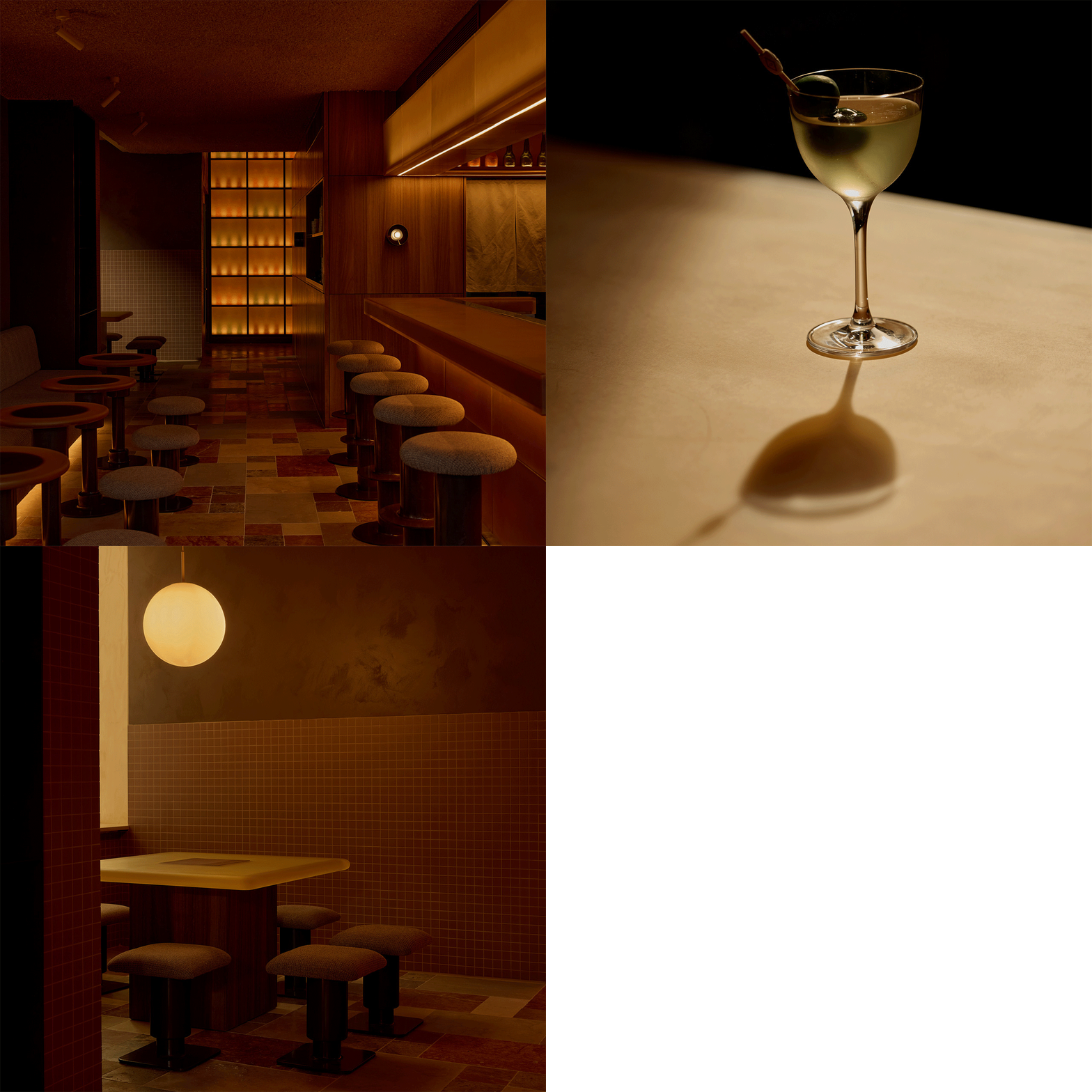
How to survive the cold, ski jumping’s growing problem and a new Gold Coast gin bar.
|
Friday 6/2/26
|

|
|
London
Paris
Zürich
Milan
Bangkok
Tokyo
Toronto
|
|
|
|

Are you feeling that Olympic spirit this morning? Monocle Radio certainly is – but can anyone get more excited than Milano Cortina’s ski jumpers? More below, literally. Here’s what’s in today’s Monocle Minute:
THE OPINION: Danger is what makes the Winter Olympics so great
SPORT: Ski-jumper schemes are below the belt
DAILY TREAT: Sip gin at the Gold Coast’s Burly Bar
FROM MONOCLE.COM: How to survive the cold (from a Finn)
|
|
The Winter Olympics are better than the Summer Games for one reason: the sports are far more dangerous
By Andrew Mueller
|

|
With the exception of BMX racing, which might have been designed by orthopaedic surgeons working on commission, the greatest risks run by summer Olympians are the sort of strains and sprains that, while doubtless painful for the athlete, are merely tedious for the spectator.
Winter Olympians can crash luges and bobsleighs, wipe out on snowboards, clobber each other into hockey-rink barriers, careen off ski runs into forests and lose their balance mid-leap from the ski-jumping ramp to land with an audible fracturing of limbs. Even the relatively prim pastime of figure skating offers opportunities to descend from a height, at speed, onto a surface that’s as hard as cement but colder. Winter Olympians are – and the epithet is offered in respect verging on outright awe – total maniacs.
The Winter Olympics have generally been regarded as a junior partner of their summer counterpart. The cold-weather edition started later – the first was held in 1924, 28 years after the first modern Summer Olympics – and it involves a smaller number of competitors, as fewer countries have climates conducive to the training of athletes. Just 91 nations competed at the 2022 Winter Games in Beijing; by contrast, 204 (including the refugee team and independent contingent) attended the 2024 Summer Olympics in Paris.
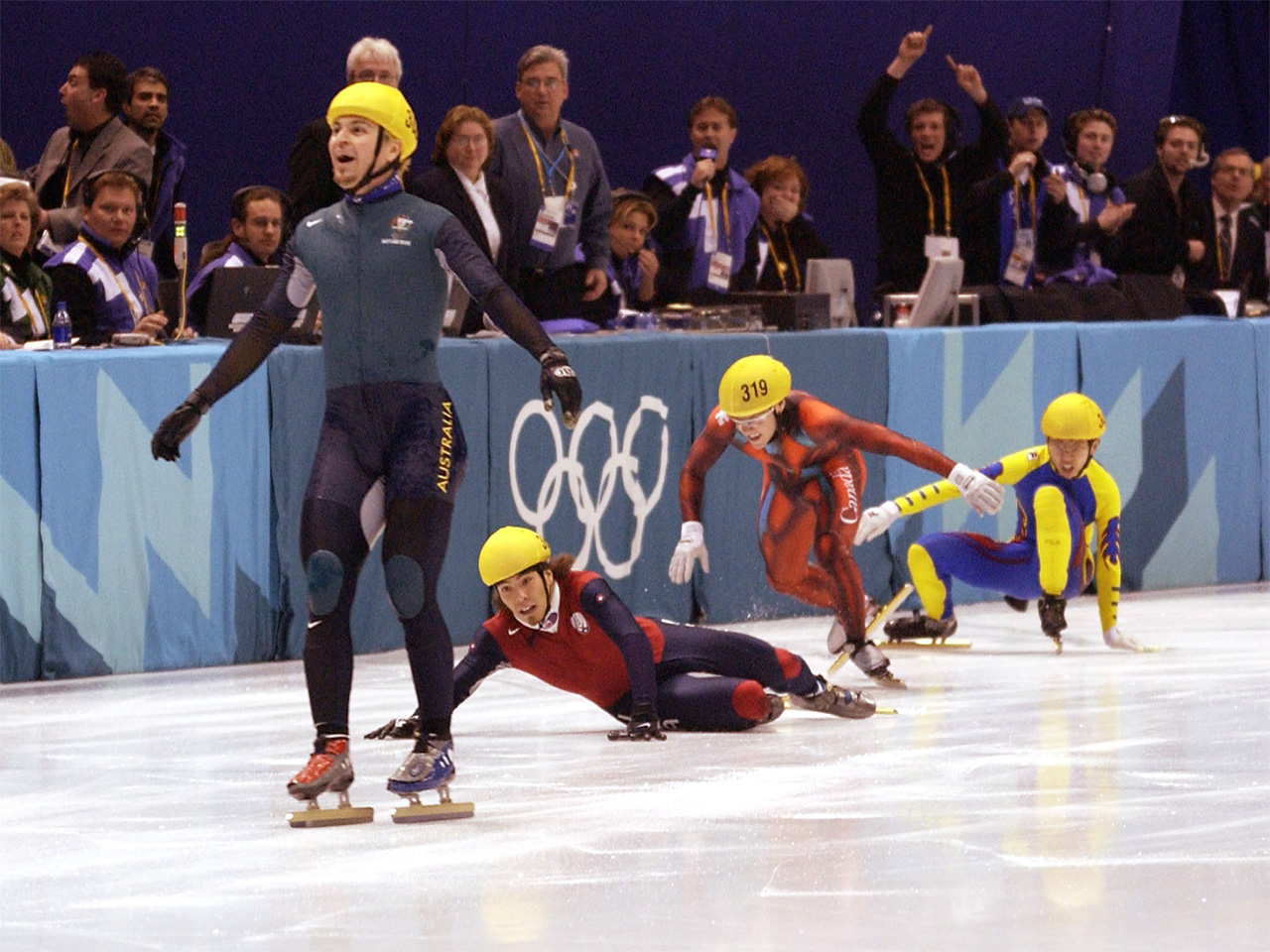
Cool customer: Australia’s first Winter Games gold-medal winner, Steven Bradbury
A lack of snow at home does not have to impede competing in the colder months, however, it should be considered a challenge. Meanwhile, the soft-power benefits to a warm, dry country that decides to take a swing at the Winter Games can be huge. After all, everyone loves an underdog. The Milano Cortina 2026 Winter Olympics will feature competitors from such unlikely places as Brazil, Eritrea, Haiti and Madagascar, all of which might leave without a medal but will win a raised profile.
The model for this sort of enterprise was established in 1988 when Jamaica greatly enhanced the general gaiety by sending a bobsleighing team to the Calgary Games. It finished last in the four-man competition but its story was immortalised in the 1993 John Candy comedy Cool Runnings – and nobody made a Hollywood film about the Swiss team that finished first. (Somewhat unfairly, the Jamaican team also drew the spotlight away from its Caribbean rivals from the Netherlands Antilles, who proved to be better bobsleighers.) But this is surely the Olympic spirit at its purest: the joy of taking part, with not the faintest prayer of winning.
The 2002 Winter Olympics in Salt Lake City gave us what was arguably the most useful and heartening morality fable in the history of sport. On the last lap of the final of the men’s 1,000-metres short-track speed skating, Australia’s Steven Bradbury was a distant last and possibly beginning to console himself by pondering the miracle that he was there at all. Bradbury had come back from hideous injuries twice in his career – an accidental slash from a rival’s blade in 1994, which had spilled four litres of his blood on the rink, and a broken neck from a crash during training in 2000, which prompted the doctors who repaired him with screws and steel plates to tell him that he would never skate again.
But, at the final corner of the race, all four of Bradbury’s rivals fell over each other, leaving the Australian athlete cruising to gold, bearing the expression of a man realising that he would never again pay for a drink back home. It was a reminder that fortune favours not merely the brave but, every so often, the diligent, pragmatic and patient.
Andrew Mueller is the host of Monocle Radio’s ‘The Foreign Desk’. For more insight and analysis, subscribe to Monocle today.
Further reading?
- Our Milan City Guide has been updated for the Games. Take a look and download our handy map of tips here.
- 10 projects reshaping Italy as its north prepares for the Olympic Winter Games
- Have you heard of ski ballet? You will – the forgotten sport is due for a comeback
|
|
HITACHI ENERGY  MONOCLE MONOCLE
|
|
sport: italy
Battle of the bulge: Ski jumpers’ crotches could give them an extra lift
There’s another reason why this year’s Winter Olympics are worth watching and ahead of tonight’s opening ceremony one story is taking up plenty of, um, column inches (writes Jack Simpson). The president of the World Anti-Doping Agency, Witold Bańka, was asked yesterday whether ski jumpers were injecting their manhoods with hyaluronic acid in order to fly further. Supposedly, jumpers might have chemically engorged themselves while being fitted for their competition suits to make their measurements bigger and their kit looser – more parachute-like – for race day. Bańka, understandably, did not have a definitive answer. “I’m going to look at it,” he promised. You and me both, Mr Bańka.
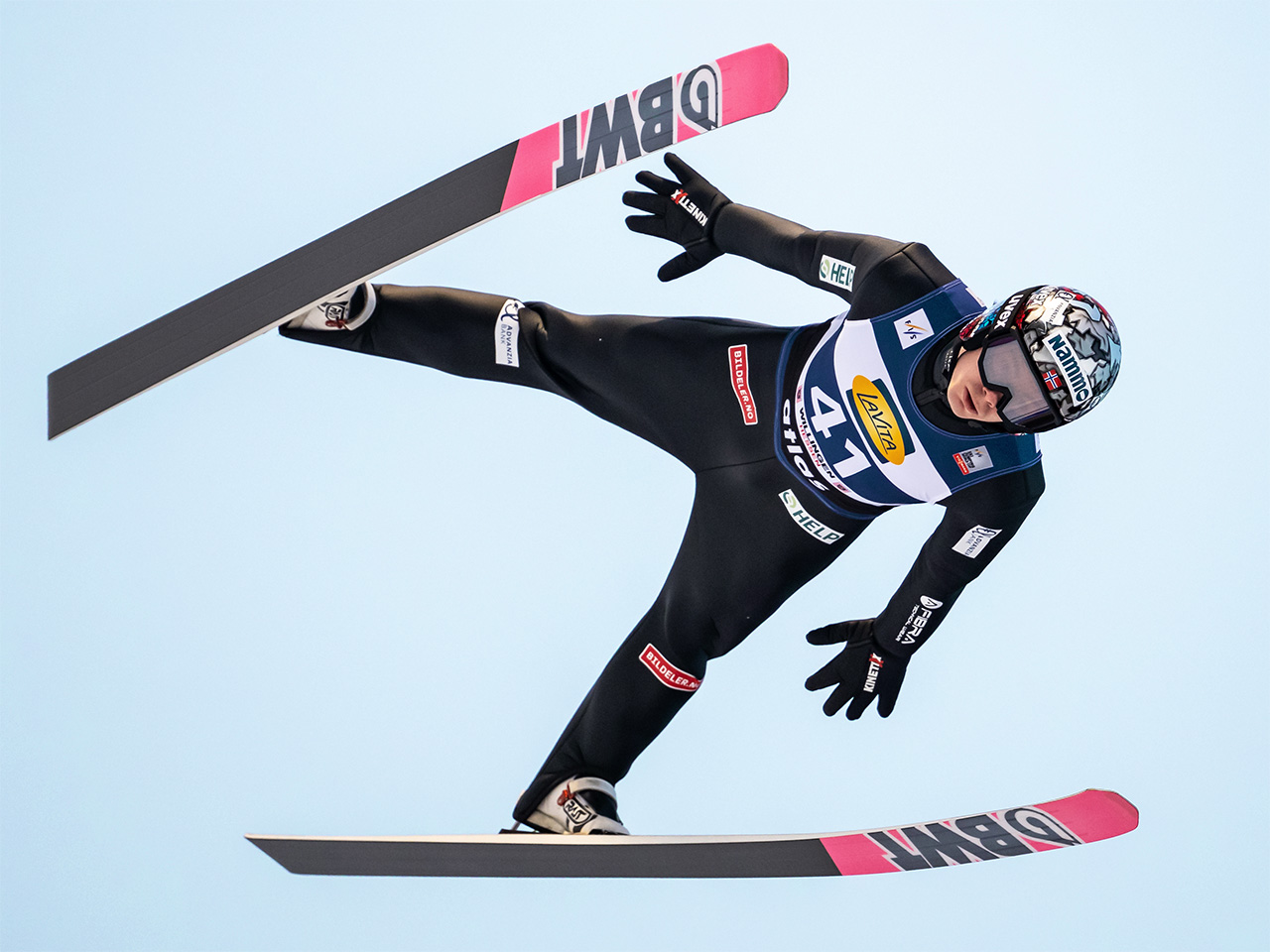
Olympic gains: Norway’s Marius Lindvik was found to have secretly adjusted his suit seams last year
The unconfirmed claims do have scientific merit. At the World Ski Championships last year, two Norwegian Olympians were found guilty of adjusting the seams of their suits around the crotch to increase surface area and, thus, lift. According to scientific journal Frontiers, every two centimetres of suit-size circumference can increase lift by 5 per cent and reduce drag by four. That can translate to more than five metres in jump length. Could it all be worth it? I’ll be tuning into coverage from the Predazzo Ski Jumping Stadium to find out whether any skiers can grow the extra distance.
|
|
• • • • • DAILY TREAT • • • • •
Sip on gin at burly bar
Burly Gin, made with Lebanese cucumbers and distilled in Queensland, has opened its first bricks-and-mortar space. Set in The Warehouses, a reimagined industrial estate on Australia’s Gold Coast, Burly Bar has been designed by Melbourne-based Studio Plenty.
Here you’ll find inventive gin cocktails made with cucumber, berry and citrus varieties. Alongside drinks, Japanese-inspired dishes, such as kingfish ceviche with light ponzu dressing and beef tartare with fermented hot sauce and saltbush crackers, offer a perfect pairing.
burlygin.com
|
|
|
Sponsored by Hitachi Energy
|
|
|
|
|
|
FROM MONOCLE.COM: finland
Take it from a Finn, there are ways to enjoy winter
Winter has fully settled over large parts of the northern hemisphere, bringing with it frigid temperatures and short days (writes Petri Burtsoff). From Toronto to Tokyo, the mercury dips close to 0C and often slides even further down the thermometer. Daylight is scarce too, with the sun disappearing beyond the horizon long before dinnertime. We still have more than 40 days until the spring equinox.
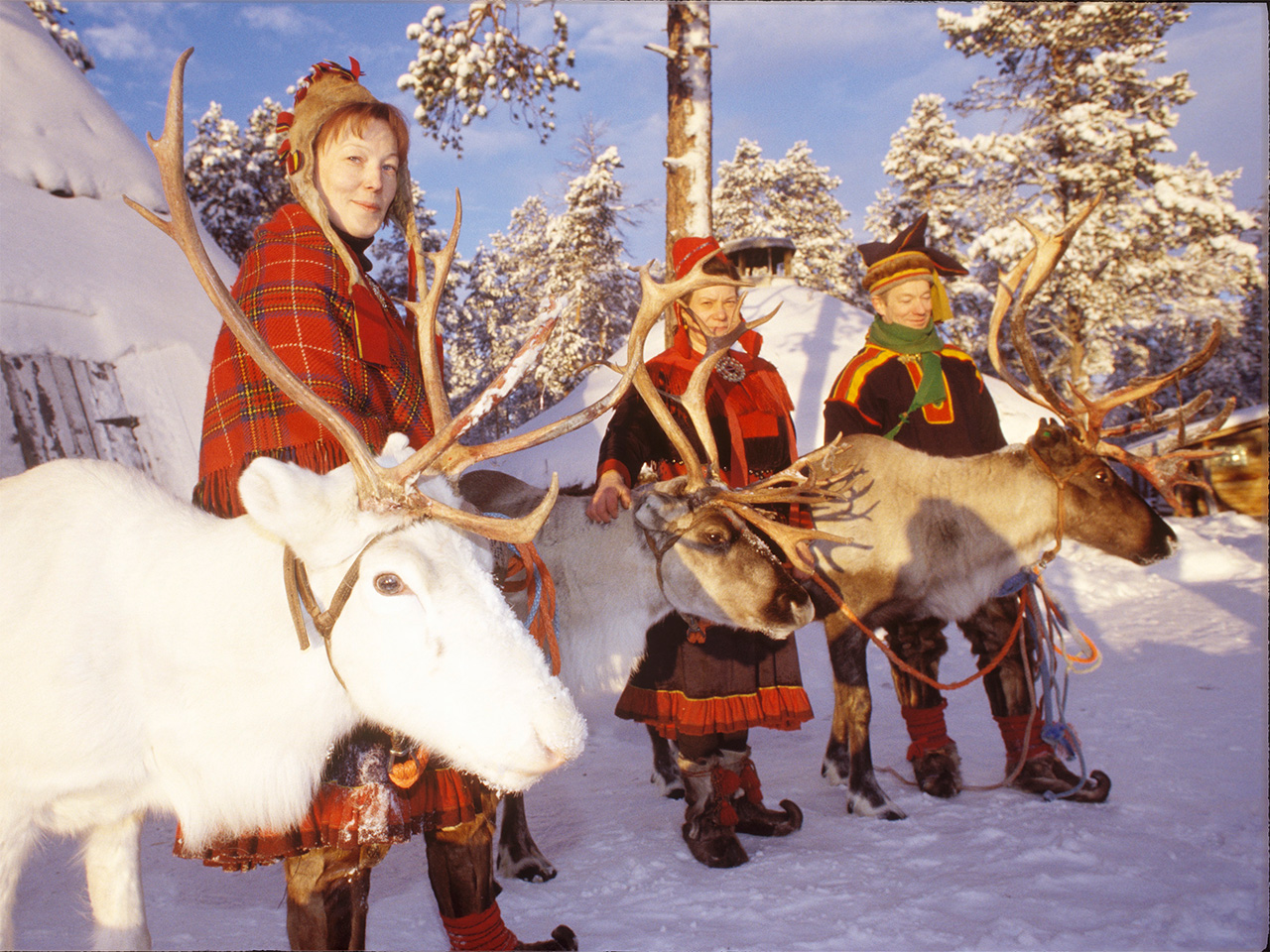
Snow place like home: Sami with reindeer outside traditional tents
But it’s no time to despair. Take it from a Finn, who knows a thing or two about staying cheerful in the cold and gloom. Despite its long and dark winters, during which temperatures can drop to minus 30C, Finland has been ranked the world’s happiest country by the UN for the past eight years. From getting cosy to scheduling social outings, here are five tips for staying positive when spring feels out of reach.
|
|
Monocle Radio: THE ENTREPRENEURS
When is the right time to leave your job and start a business?
We meet Frédéric Robles, CEO of French tech-hospitality platform Namastay. And: the CMO of the Diriyah Gate Development Authority joins to discuss a district-transforming project just minutes from downtown Riyadh.

|
|
| | |