The global oil market appears to be struggling to get a handle on its basic supply and demand balance. The International Energy Agency expects oil production to exceed demand by 3.7 million barrels per day this year, more than 3% of global consumption.
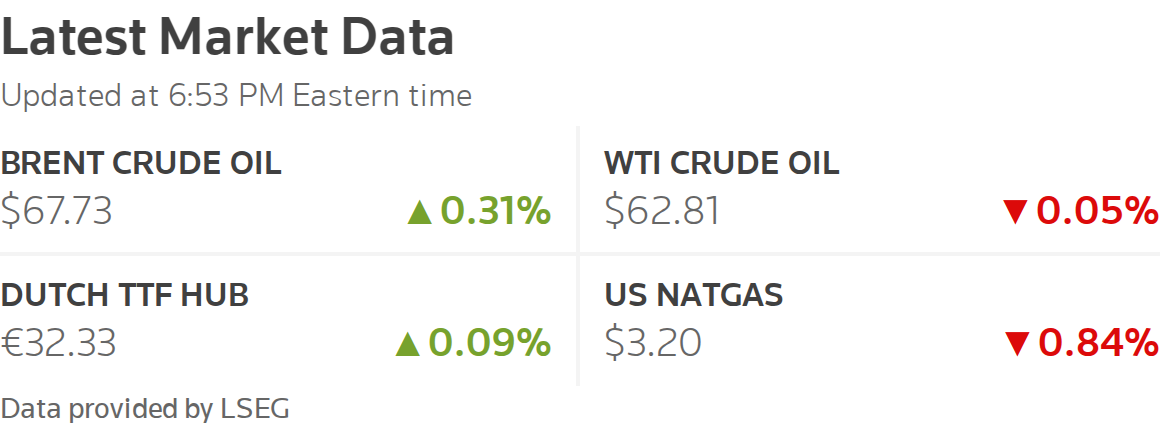
Yet prices tell a different story. While benchmark Brent crude prices have moved around in recent weeks, they remain firm at above $65 a barrel.
What's more, the forward curve is in steep backwardation, a structure usually associated with tight supply.
So what explains this?
In the past few weeks, uncertainty about events in the Middle East has played a role. The risk of U.S. military strikes against Iran, with the possibility of the conflict spilling over across the region, has helped push up oil prices towards $70 a barrel.
In the past few weeks, uncertainty about events in the Middle East has played a role. The risk of U.S. military strikes against Iran, with the possibility of the conflict spilling over across the region, has helped push up oil prices towards $70 a barrel.
The U.S.-Iran tensions are ultimately a short-term factor, unless the conflict truly spirals, but other longer-term trends threaten to obscure the supply-demand picture for months.