Three factors seem to be weighing on the greenback once again - a post-election surge in the yen, accelerating gains in China's yuan to near three-year highs, and some market trepidation about a weak U.S. employment report tomorrow.
The yen's bounceback appears to be a case of 'sell the rumor, buy the fact' surrounding Prime Ministers Sanae Takaichi's fiscal plans. The currency had been floundering for months, but now it seems more comfortable with the growth and interest rate implications of fresh stimulus alongside a more stable political horizon.
The yuan surge comes ahead of the Lunar New Year holidays next week, and is likely being supported by reports that Chinese regulators have warned local banks and investors about over-concentrated holdings of U.S. Treasury bonds and the dollar. The U.S. currency is at its lowest point since May 2023, having fallen almost 6% against the renminbi over the past year.
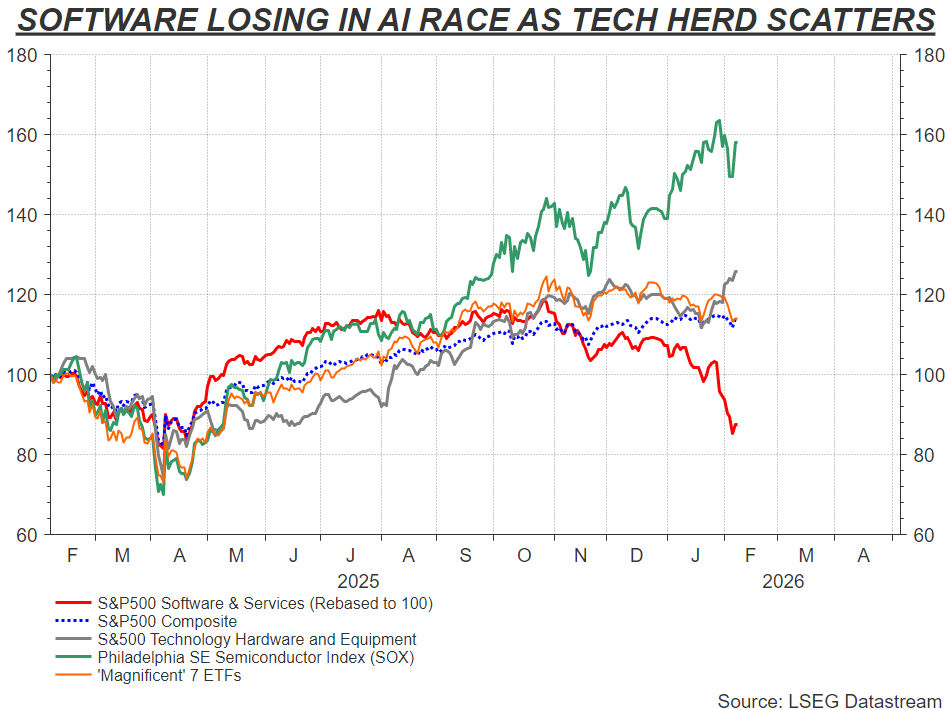
The other big focus yesterday was the bounceback in U.S. mega-cap tech stocks after last week’s wobble over news of capex plans totalling more than $650 billion for 2026.
Some of that will, of course, be debt-financed. Alphabet announced on Monday that it would raise another $15 billion in high-grade bonds. This follows Oracle’s announcement of a new debt sale last week. The five major AI hyperscalers issued $121 billion in U.S. bonds last year, compared with an average of $28 billion per year in the previous four years.
Meantime, President Trump's administration plans to spare tech giants such as Amazon, Google and Microsoft from upcoming tariffs on chips as the hyperscalers build out their AI data centers, according to the Financial Times.
Elsewhere, UK markets had a nervy day on Monday as drama intensified around Prime Minister Keir Starmer’s appointment of Epstein-linked Lord Peter Mandelson as U.S. ambassador in 2025. But the ruling Labour Party backed Starmer late on Monday, calming both sterling and gilts.
Back on Wall Street, Wednesday's January employment report is coming into view, with White House economic adviser Kevin Hassett saying on Monday that people "shouldn't panic" if they see weak numbers. Before that, though, the December retail sales report will take center stage today.