|
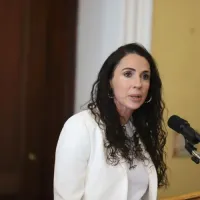
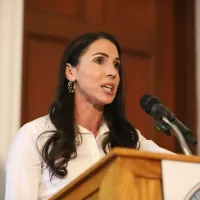
A Boston-based physicians group is denying having ties to a left-leaning national association it helped found after U.S. Senator Rand Paul cited a federal earmark to the group as an example of wasteful government spending supporting political activism. The Kentucky Republican’s Festivus Report, released in December 2025, lists a $700,000 earmark to the Greater Boston Chapter of Physicians for Social Responsibility (PSR) among a total of $1.6 trillion in what the report describes as excess spending. The total figure includes $1.22 trillion in payments on the national debt. The report takes its name from the fictional “Festivus” holiday popularized by a 1997 episode of Seinfeld. The report says that through the earmark to PSR, “federal funds are being routed to an organization that supports banning gas stoves, the U.S. nuclear arsenal, and even publicly supports protest rallies against President Trump.” In a lengthy email message to the NewBostonPost, the Boston chapter’s executive director, Anna Linakis, denied the accusations, distancing the chapter from the national organization, other chapters around the country, and political positions they have taken. Linakis said Paul’s report likely used an article from the Economic Policy Innovation Center as a source, which she said is unreliable. “We at Greater Boston Physicians for Social Responsibility categorically reject the critiques raised in EPIC’s article because the authors conflate our work with that of other PSR chapters around the country,” Linakis told NewBostonPost by email. “While GBPSR was the founding chapter of PSR, it is its own entity; and none of the actions cited here are ones that our group has called for. Our group has not called for a No Kings rally (the photo is of PSR national); nor has it called for a ban on gas stoves (the photo in the article shows this was PSR-LA).” Paul’s office and the Economic Policy Innovation Center did not respond to requests for comment from NewBostonPost. PSR's national organization calls for the full abolition of nuclear arms, reduced military spending, and the complete replacement of fossil fuels with renewable energy sources. PSR also co-sponsored both No Kings rallies held last year. Meanwhile, Greater Boston PSR has yet to receive the $700,000 that Congress has appropriated for the chapter for the current fiscal year. Linakis said the funds would be used for a “study of the health impacts of decommissioning the Pilgrim Nuclear Power Station (Plymouth, MA) on the neighboring communities.” While Greater Boston PSR has not called for a ban on gas stoves, it has raised concerns about the health effects of gas stoves, Linakis said, pointing to a 2017 Massachusetts Department of Public Health study, which she said showed it to be the top trigger for pediatric asthma. Linakis did not reject all of the positions that Paul’s report attributed to the Greater Boston PSR, however. She said the group supports nuclear disarmament, which she said has traditionally been a bipartisan issue. Linakis pointed to President Ronald Reagan, who advocated for nuclear disarmament, but only if all countries abided by it. More recently, Linakis said concerns over the health risks of nuclear power plant decommissioning — which is the proposed project cited in the Festivus report — are bipartisan. U.S. Senator Josh Hawley (R-Missouri), for example, has pushed for insurers to cover workers and other constituents of his who have been affected by uranium mining. Linakis tied Hawley's advocacy in Missouri to local concerns in Massachusetts about the Pilgrim Nuclear Power Station in Plymouth, which closed in May 2019. “The community’s concerns in Plymouth, like those of Josh Hawley’s constituents, are bipartisan: local realtors, fisherman’s associations, and many other traditionally conservative groups have united to call for research into the negative health effects the community has experienced during the decommissioning process. It is an important health question to address because almost 100 nuclear power plants in the US will be decommissioned at some point in the near and distant future as they approach the end of their operational lifespans,” Linakis said. Aside from PSR, Paul’s Festivus report highlighted numerous other cases of what the report describes as wasteful spending, including: ● $244,252 for a climate-change themed cartoon show in Pakistan ● $2.1 million for researchers to go to electronic dance music clubs in New York City and collect saliva samples and survey attendees about their drug usage ● $5.2 million for a study that involves dosing canines with cocaine — for the second time ● $14.6 million for a project in which monkeys play a video game inspired by The Price Is Right ● $77 million in continued annual funding for what the Festivus report deems is “an unnecessary dolphin training program that Congress won’t let end" “No matter how much taxpayer money Washington burns through, politicians can’t help but demand more. Fiscal responsibility may not be the most crowded road, but it’s one I’ve walked year after year — and this holiday season will be no different. So, before we get to the Feats of Strength, it’s time for my Airing of (Spending) Grievances,” Paul said in a written statement released with the report.
|