If you’ve been reading Buffering for any length of time, you know I’m always on the lookout for 20th-century TV shows finally making their way to streaming. Well, the fine folks at Shout! Studios have just added a very cool new title to their collection: The Dean Martin Show. Not to be confused with his popular comedy roasts, the King of Cool’s NBC variety show ran for nine seasons and more than 250 episodes between 1965 and 1974, and it’s been hard to find on streaming. But Shout! is now putting 26 “best of” episodes — including many musical numbers — on YouTube. These installments (and hopefully more) will make their way to other free streaming platforms in the coming months.
As for today’s newsletter, we’ve got thoughts on YouTube TV’s new discount play, fresh scoop on Dancing with the Stars, why NBC’s Super Bowl ratings might have just missed a ratings record, an update on the Warner Bros. sale saga, and a snippet from a new book on Nintendo. We’ve also got an excerpt from the latest edition of our colleague Devon Ivie’s music column, “On That Note,” which this week looks at what happens when rock bands try to soldier on without any of their original members. Thanks for reading, and here’s hoping your Valentine’s Day is a sweet one.
|
— Joe Adalian, West Coast editor
|
|
|
➽ Dancing With the Spin-Off
|
Disney is doubling down on Dancing With the Stars. In the wake of soaring ratings and buzz for the long-running competition reality show, ABC is planning a spin-off series focused on finding a new pro dancer for the resurgent franchise, Buffering has learned. Nothing’s official just yet, but season 34 winner Robert Irwin is in talks to host the project — dubbed Dancing with the Stars: The Next Pro — while current DWTS pro dancer Mark Ballas and his mom, Strictly Come Dancing vet Shirley Ballas, are being eyed to serve as judges. There will also be a third judges’ slot, opening the door for more members of the DWTS extended family to participate as well. —J.A.
|
|
|
➽ Warner War Diary: Day 69
|
The dust still hasn’t settled in the more than two months since Netflix and WBD announced the streamer had won the initial bidding war for Warners. This week, Paramount sweetened its offer by adding a “ticking fee” — not exactly an increase to its offer proper but a promise to pay $0.25 per share, or $650 million, to Warners shareholders for every quarter that Paramount’s proposed transaction doesn’t close after the end of this year. Paramount called it an indicator of the company’s “confidence in the speed and certainty of regulatory approval.” It also agreed to pay the $2.8 billion breakup fee that WBD would owe Netflix should their deal not go through. (Remember: Paramount wants the whole company for $30 a share, while Netflix wants just the streaming and studio businesses for $27.75 a share. Both are now all-cash offers.) The board at WBD, for its part, acknowledged the tweak to Paramount’s offer but hasn’t changed its recommendation.
But that wasn’t all this week: Tuesday, news broke that the Department of Justice had ousted Gail Slater, the department’s antitrust division head. She had been the person in charge of overseeing the review of the Netflix deal. Yesterday, an activist investor in WB, Ancora Holdings Group, which claims to hold about $200 million in the company’s shares, sided with the Paramount CEO David Ellison’s camp and rolled out a campaign calling the Netflix deal “flawed, inferior, and high risk.” It’s hard to say how persuasive Ancora’s push will be — its $200 million in shares amounts to less than one percent of WBD’s overall value — but it is indicative of how heated this battle has gotten and the kind of pressure the Ellison family is willing to exert to wrest control from Netflix. And today, CNN’s Brian Stelter reported David Ellison had met with President Trump to discuss his bid for WBD days before Trump claimed he was “not involved” in this mess.
Paramount desperately wants investors within WBD to tender their shares over, but those same shareholders are undoubtedly holding out to see if Paramount will raise its offer for real, by another $2 or $3 per share, or, alternately, if Netflix would be willing to raise its own offer given these adjustments from Paramount. Like any protracted war, this will only get more expensive. —Eric Vilas-Boas |
|
|
➽ Untangling YouTube TV’s New Bundles
|
After teasing its intentions back in December, YouTube TV this week finally started rolling out pared-down channel packages designed to modestly reduce the high cost of streaming. Since launching in 2017, the Google-owned service had offered only a one-size-fits-all base package — which was fine when said bundle cost $35 and included about 40 channels. But the price has more than doubled (to $83) over the past nine years as YouTube TV expanded to more than 100 channels and major content suppliers such as Comcast and Disney kept demanding higher per-subscriber fees and carriage of smaller channels from their portfolios. The result: What Variety once called a “skinny” bundle became a bloated, not-much-cheaper-than-traditional-cable collection of nearly every major network.
There’s no denying that YouTube TV’s new customizable bundles will give customers the chance to stop paying for networks they never watch and, in some cases, even save a decent chunk of change. The lowest-priced option, for folks who just want to watch the Big Four broadcast networks and general-entertainment cable channels (FX, Hallmark, TCM), is priced at $55 and saves you $28 per month over current rates. But if you want to watch any of the major news networks, you’ll have to pay $8 more per month ($63). You can’t just tack on, say, CNN or MS Now. And if you’ve been holding on to a live-TV subscription because of sports, YouTube TV’s jock-friendly Sports Plan option — which includes all the broadcast networks — will save you even less: It costs $65 a month. That’s not nothing, but it means sacrificing a ton of cable networks and cutting yourself off entirely from cable news (arguably a good thing, but … still).
The problem here, of course, is that YouTube is still very much at the mercy of its programming partners like NBCUniversal, Disney, Paramount, and Warner Bros. Discovery. They’ve reluctantly started to get more flexible with providers like YouTube TV, DirecTV, and Spectrum, and they’ve also finally launched stand-alone streaming services for their various sports (ESPN, Fox One) and news (CNN, CNBC) offerings. But for the most part, legacy entertainment conglomerates really want to hold on to as much cable cash as possible for as long as possible. It seems clear they have no intention of offering true à la carte cable packaging anytime soon. —J.A.
|
|
|
➽ Freeing the Super Bowl Ratings
|
NBC’s broadcast of Super Bowl LX was — shocker! — a ratings smash. Nielsen this week said Seattle’s yawn-inducing win over New England drew 124.9 million viewers on Sunday, falling just short of last year’s record audience of 127.7 million. The 2026 matchup ending up a snooze no doubt played a role in the (slightly) smaller numbers, but I think there’s an underrated factor that might explain why NBC’s telecast broke a multiyear streak for new Super Bowl ratings records: It wasn’t easily available to stream for free.
You’ll recall that last year, Fox simulcast the game on Tubi and an estimated 13.6 million people watched that way. There wasn’t technically a free streaming option when CBS aired the Super Bowl in 2024, but it was available on Paramount+, which at the time offered a free trial, thus allowing cord-cutters to sign up for a week and then cancel before getting a bill. This year, however, NBC not only declined to put Super Bowl LX on a free streamer (even though the Comcast-owned Xumo Play could use the promotion), but Peacock is not currently offering a free trial. Now, if someone were really intent on streaming for free, they could have signed up for a trial subscription to Walmart+ (the retail giant’s version of Amazon Prime) and activated the free Peacock perk that’s included with a membership. I’m guessing not many people went to such great lengths, however. And if they were smart, they’d have just picked up an antenna and watched the game on good old-fashioned free, over-the-air broadcast TV. —J.A.
|
|
|
Various celebrities are leaving the Wasserman agency over CEO Casey Wasserman’s connections to the Epstein files. Wasserman, also the chairman of the 2028 Los Angeles Olympics, is seen in the files flirting with Ghislaine Maxwell, later convicted of child sex trafficking, via email. Now, artists whom the Wasserman agency represents, like Chappell Roan, Dropkick Murphys, Bethany Cosentino of Best Coast, and Olympian Abby Wambach, are leaving. Others are calling for him to step down. —Jason P. Frank
|
|
|
| James Van Der Beek was so pitch-perfect at playing a grateful, genuine, slightly goofy guy that he transcended Dawson without ever really leaving him behind." - Roxana Hadadi |
|
|
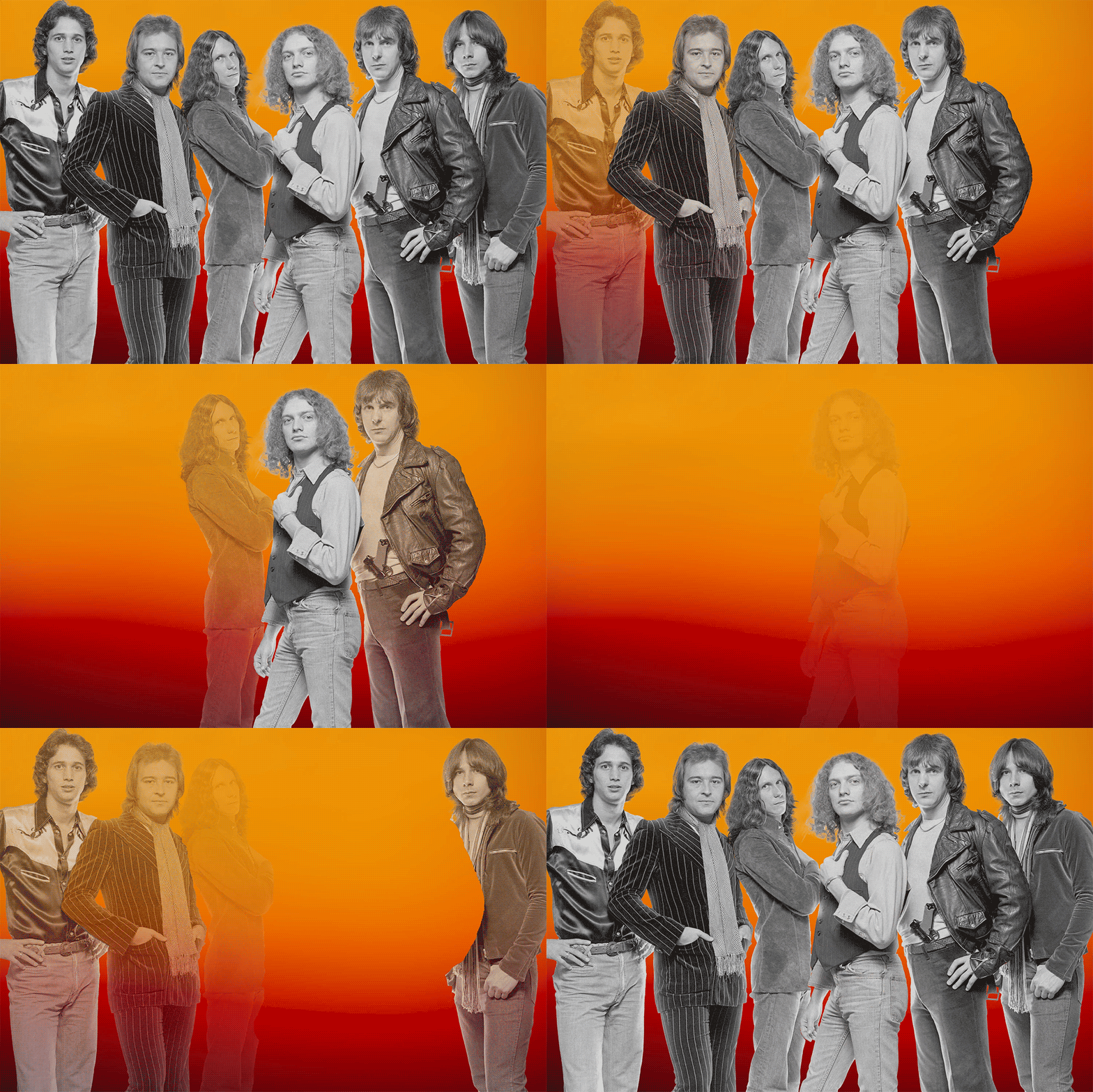
From Foreigner (above) to Lynyrd Skynyrd, a number of legacy acts are touring without any of their original members. Audiences don’t seem to care. Photo-Illustration: Vulture; Photos: Getty |
Recently, veteran concert promoter Joe Fletcher was sent a brief to gauge his interest in organizing a show for REO Speedwagon, the rock balladeers whose hits “Can’t Fight This Feeling” and “Keep on Loving You” soundtracked many people’s lives in the 1980s. Fletcher was intrigued — there are plenty of ticket buyers out there who want to relive their Hi Infidelity days — until the contract revealed itself to be a bit duplicitous in nature. “When I read the fine print, it was ‘an experience with REO Speedwagon’s music.’ It’s none of the original members,” Fletcher recalls. “I don’t want to promote the show unless it’s the real thing. I don’t know why you would want to see that. It’s just a cover band. To me, that’s a little bit strange.” He adds, with a sigh, “If there are no original members, who cares?”
It’s a question, however philosophical, that many fans are being challenged with in 2026: At what point does a band cease to exist and become something else entirely? The two biggest names so far who have Ship-of-Theseused themselves to extend their legacies are Foreigner and Lynyrd Skynyrd, who will be embarking on a duel “Double Trouble Double Vision Tour” this summer — both consistently tour without any original members, instead handpicking and training other musicians to perform their material on the road. The Spinners and the Four Tops, popular vocal groups that emerged in the 1950s, have the same arrangement for their current lineups, as do the rockers Iron Butterfly, the Grass Roots, and Blood, Sweat & Tears. Of course, the circumstances for why each band lost their personnel varies, such as illness (Mick Jones), death (the 1977 Skynyrd airplane crash), and the inevitable need for retirement. But they’re all united by the fact that they still want to keep their music alive, even if some fans are skeptical that this is a fair endeavor when someone other than Lou Gramm is burning down the stage each night to “Juke Box Hero.”
“Fuck those people,” engineer and producer Ron Nevison says about those who disagree with this burgeoning industry trend. “This should be about the songs and music, not about the members. The songs transcend them all.” Nevison, who began his career with the Who’s Quadrophenia and worked with Lynyrd Skynyrd on their transitional 1999 album, Edge of Forever, believes the power of “Freebird” and “Sweet Home Alabama” hold more weight than whoever is on Skynyrd’s current roster, which includes Rickey Medlocke — who was briefly in the band in the early ’70s — and Johnny Van Zant, the younger brother of original front man Ronnie. “I don’t think, for the most part, they care that every single band member is there,” he says of fans. “All of the families support them and want them to keep going. It will be interesting to see, in 20 more years, if there’s another Lynyrd Skynyrd still going on with the sons and daughters of the band.” Nevison points to Kiss, in particular, for creating a template to succeed indefinitely should they choose to mutate …
|
|
|
By Keza MacDonald | Introduction by Chris Plante |
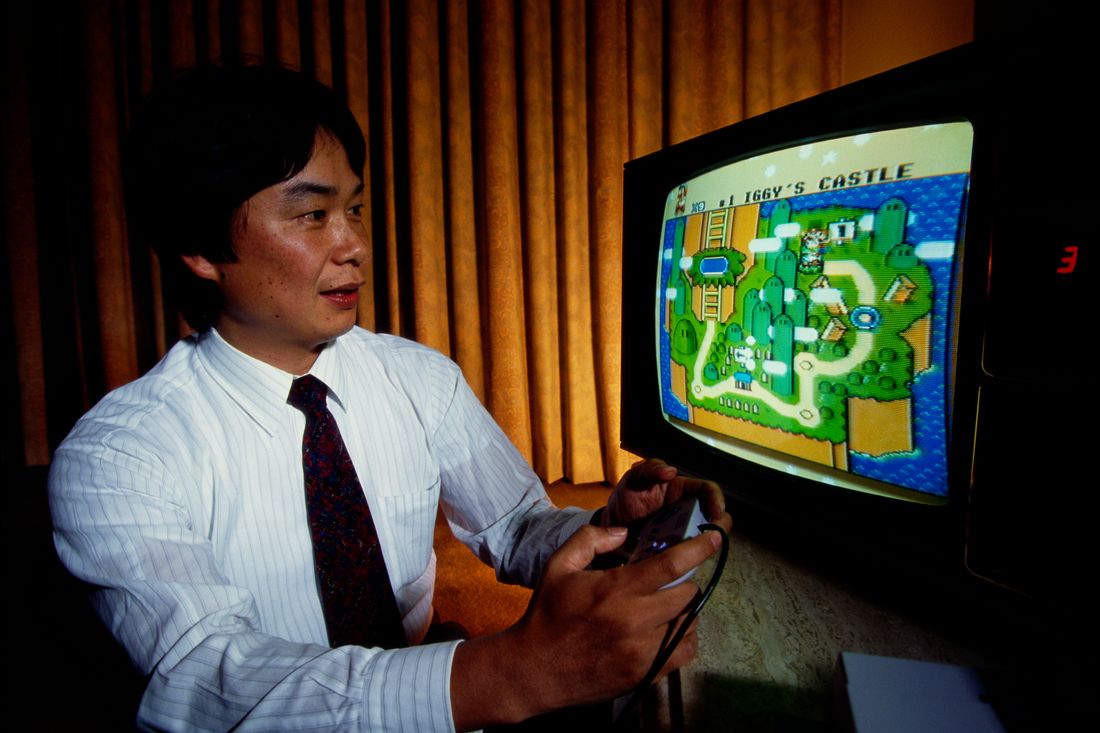
Photo: Ralf-Finn Hestoft/Corbis via Getty Images |
Nintendo is secretive.
Typically, this truth — a perpetual frustration among gaming journalists and historians — surprises the casual video-game player. Perhaps, as I once did, you imagine that the latest Mario and Zelda games are being concocted in a Wonka-esque factory tucked cozily between Kyoto alleyways. That foreign travelers can take a guided tour of the video-game factory, one that, not unlike an American microbrewery, ends with a tasting menu of gaming delights. In reality, Nintendo’s Japanese HQ is a bland office building that nonemployees rarely enter and few details find their way out. Keza MacDonald is one of the tiny number of English-speaking journalists to step inside. She reports seeing little to no signs of magic — just glass, white walls, and the occasional dash of intellectual property, like Mario’s mushroom power-up, to reassure guests that, yes, they are in the right place. MacDonald is the author of Super Nintendo: The Game-Changing Company That Unlocked the Power of Play and the senior games editor at The Guardian, making her (as best I can tell) the only editor at a major newspaper covering the medium as their sole beat. Wielding that status and two decades of experience, she’s the rare reporter to have spoken with many leaders of Nintendo’s design team, often multiple times.
If Nintendo keeps a padlock on its secrets, then legendary game designer Shigeru Miyamoto’s mind is a bank vault. Fans have long rumored that Nintendo requests Miyamoto not share details of his life for fear that they will serve as a sort of creative fuel, that competitors mustn’t have access. I can’t speak to that conspiracy theory, but I can share this anecdote. In my first roundtable interview, I asked the industry icon how his outdoor adventures as a child influenced his design philosophy as an adult. The room fell silent, including the translator, who I noticed wasn’t, well, |
|
|
|