| | The Trump administration plans to end the immigration crackdown in Minnesota, Saudi Arabia replaces ͏ ͏ ͏ ͏ ͏ ͏ |
| |  | Flagship |  |
| |
|
The World Today | 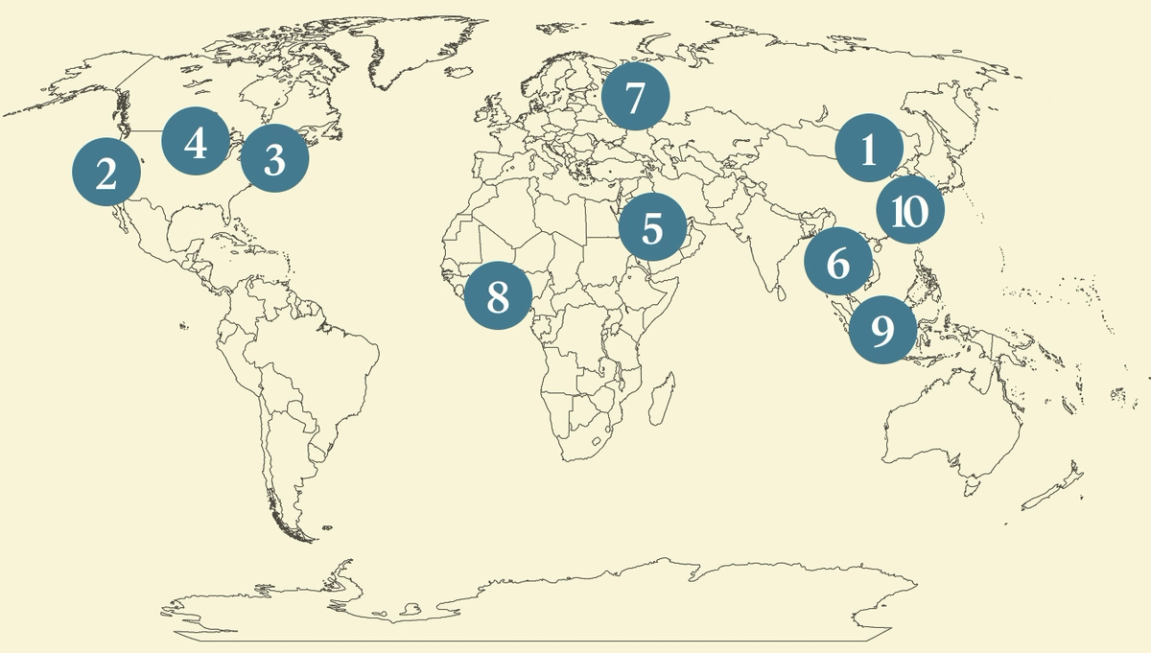 - US shelves China tech curbs
- AI super PAC wars heat up
- The costs of Trump’s tariffs
- Minn. crackdown to end
- Saudi government shakeup
- Record Lunar New Year travel
- Russia’s manpower crisis
- AI embraces languages
- Global corruption worsens
- West drawn to Chinamaxxing
 A very famous, very Canadian jacket. |
|
Trump reins in China tech curbs |
 Florence Lo/Reuters Florence Lo/ReutersThe Trump administration has paused several tech curbs aimed at Beijing ahead of President Donald Trump’s visit to China, Reuters reported. The shelved measures include restrictions on sales of Chinese hardware for US data centers. The move reflects Trump’s broader efforts at rapprochement with Beijing ahead of his April summit with Chinese leader Xi Jinping, where the two are reportedly poised to extend the temporary trade truce between their countries. A former Trump official told Reuters the latest actions pose a national security threat, arguing US data centers could become “remotely controlled islands of Chinese digital sovereignty.” Democratic lawmakers this week also accused the White House of sidelining national security officials focused on China’s tech threat “to avoid confronting Beijing.” |
|
Anthropic donates to super PAC |
|
US consumers bear tariff brunt |
 Brendan McDermid/Reuters Brendan McDermid/ReutersUS businesses and consumers bore 90% of the costs of US President Donald Trump’s tariffs, a New York Federal Reserve report showed, as his tariff regime comes under increasing pressure. The report undermines Trump’s claim that foreign companies would shoulder the burden of duties, the Financial Times noted. US lawmakers on Wednesday voted to remove tariffs on Canadian imports — a symbolic but “politically consequential rebuke” of the president’s signature policy tool, The New York Times wrote. The US Supreme Court is also expected to rule on the tariffs’ legality. Meanwhile, countries targeted by Trump’s duties have chosen to “retaliate” by reducing their reliance on Washington, a Bloomberg columnist argued, contributing to a fall in the US’ share of global exports. |
|
Trump ends Minn. deportation crackdown |
 Tim Evans/Reuters Tim Evans/ReutersUS President Donald Trump’s border czar said Thursday that the administration is ending its immigration enforcement surge in Minnesota. The announcement appears to draw to a close Trump’s months-long deportation efforts in the state, which at its height involved thousands of immigration officers; federal agents killed two US citizens there this year, drawing widespread condemnation. The drawdown also comes amid a broader federal pullback. The administration has quietly pulled out National Guard troops from Chicago, Los Angeles, and Portland, The Washington Post reported. The immigration crackdowns have become a political liability for Republicans ahead of the midterm elections, The Wall Street Journal noted, as polls show Americans souring on the administration’s maximalist enforcement tactics. |
|
Saudi replaces investment minister |
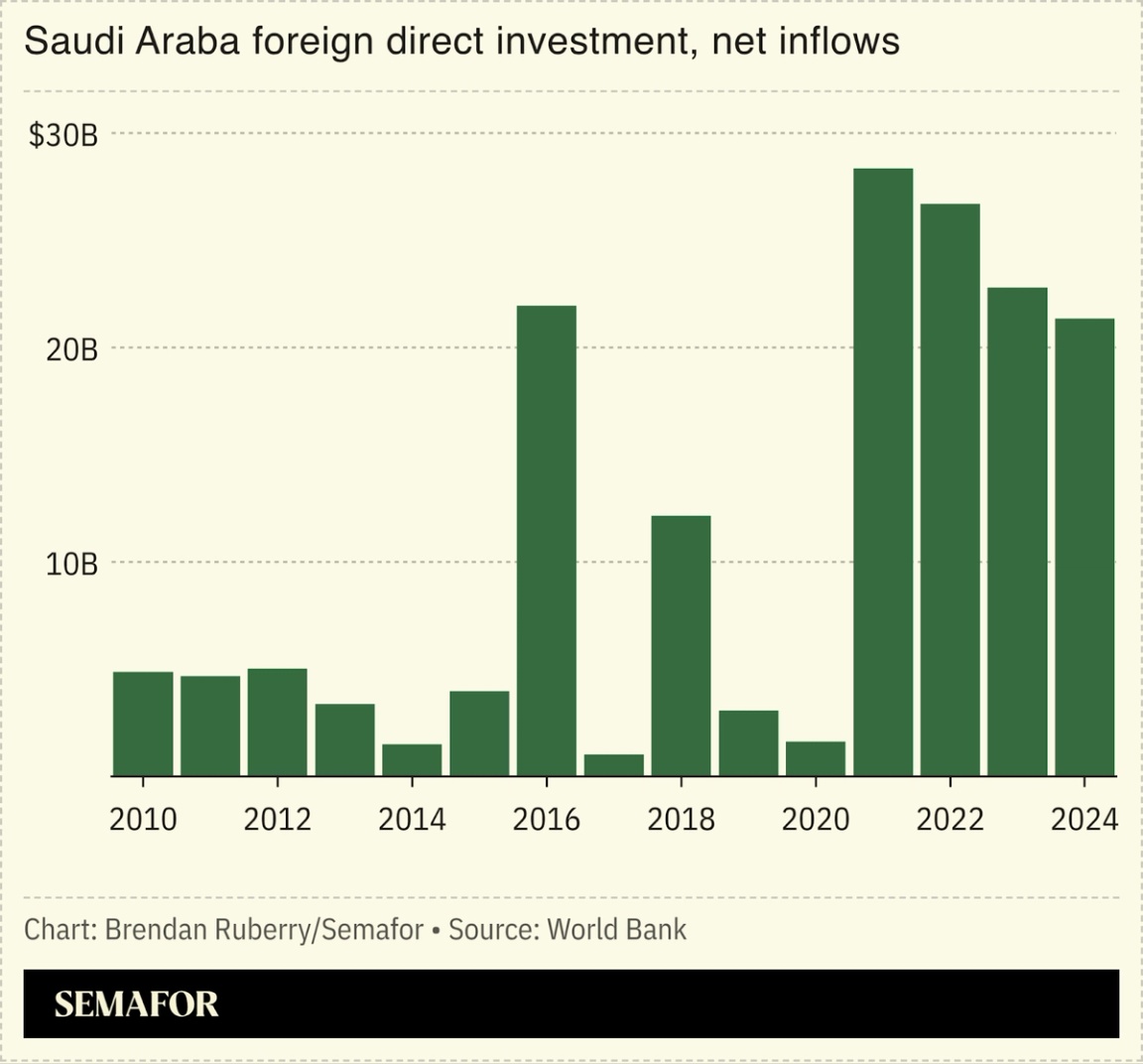 Saudi Arabia on Thursday replaced its investment minister as the kingdom scraps investment projects and steps up efforts to lure foreign cash. Khalid Al-Falih was one of the government’s longest-serving and most internationally known officials, and one of its more outspoken ones: He had questioned the feasibility of the kingdom’s most futuristic projects. His replacement is a veteran banker who sold global investors on the kingdom’s bonds, and now faces the more daunting task of attracting the kind of long-term foreign investment Saudi needs to build its economy. “Getting there will require more work on making Saudi Arabia a country where people want to invest, rather than one where they feel they have to,” Semafor’s Saudi bureau chief wrote. |
|
China expects record Lunar New Year travel |
 Maxim Shemetov/Reuters Maxim Shemetov/ReutersChina is expecting a record 9.5 billion trips to be made during the 40-day Lunar New Year travel period, as Beijing targets tourism to boost domestic consumption. Millions are set to travel to their hometowns in what is the world’s largest movement of people — by comparison, 1.19 billion trips were taken in the EU in all of 2024. China is also expecting an increase in foreign visitors, bucking a traditional slowdown during the holiday, thanks in part to visa exemptions, Caixin reported. The influx has lifted spending, with Alibaba’s payment platform reporting increased transaction volumes by tourists in 2025. More Chinese travelers are also headed overseas this year, though tensions with Tokyo have eroded Japan’s appeal as a favored destination. |
|
Russia faces manpower shortage |
 Anton Vaganov/Reuters Anton Vaganov/ReutersRussia is looking to the developing world to recruit labor and combatants as its war in Ukraine churns on. Southeast Asian men have been duped into service, The Diplomat reported, and at least one Filipino man was killed in Donetsk. Others from Africa and Latin America have also been recruited, either with the promise of inflated salary or “systematic deception”: One Kenyan man was offered a job as a plumber but was enlisted in the army instead. So far 27 Kenyans have been repatriated from Russia, and it is not known how many have died. Russia’s workforce is also depleted by the war and demographic decline. Moscow estimates it needs 11 million workers, and it is turning to India, Sri Lanka, and China for labor. |
|
 Semafor is proud to announce its first slate of speakers for the 2026 annual convening of Semafor World Economy, taking place April 13-17 in Washington, DC. This global cohort of senior leaders from every major sector across the G‑20 represents just some of the 400 top CEOs joining Semafor World Economy for five days of on-stage conversations and in-depth interviews on growth, geopolitics, and technology. See the initial lineup of speakers here. |
|
Governments boost AI language tools |
 Andrew Aitchison/In Pictures Ltd./Corbis via Getty Images Andrew Aitchison/In Pictures Ltd./Corbis via Getty ImagesGovernments and tech companies are building AI tools that work in languages that chatbots aren’t as well-trained on. A Bengaluru-based startup last week rolled out a new AI platform that it claims surpasses the performance of leading AI models for 22 Indian languages. Ghana is partnering with Google to develop AI-powered education tools in local dialects. And Morocco built models that understand the country’s “widely spoken but digitally neglected languages,” Rest of World wrote. The global surge in generative AI has propelled interest in bolstering understanding of underrepresented languages. But this “symbolism of digital inclusion” misunderstands the nature of language, The Dial argued in 2024: AI models are “finders, not creators… mimics, not conversation partners… machines, not people.” |
|
US ranks worse in corruption index |
|
|


