| | In this edition, why Anthropic and OpenAI should stick to what they do best, and chatbots become mor͏ ͏ ͏ ͏ ͏ ͏ |
| |  | Technology |  |
| |
|
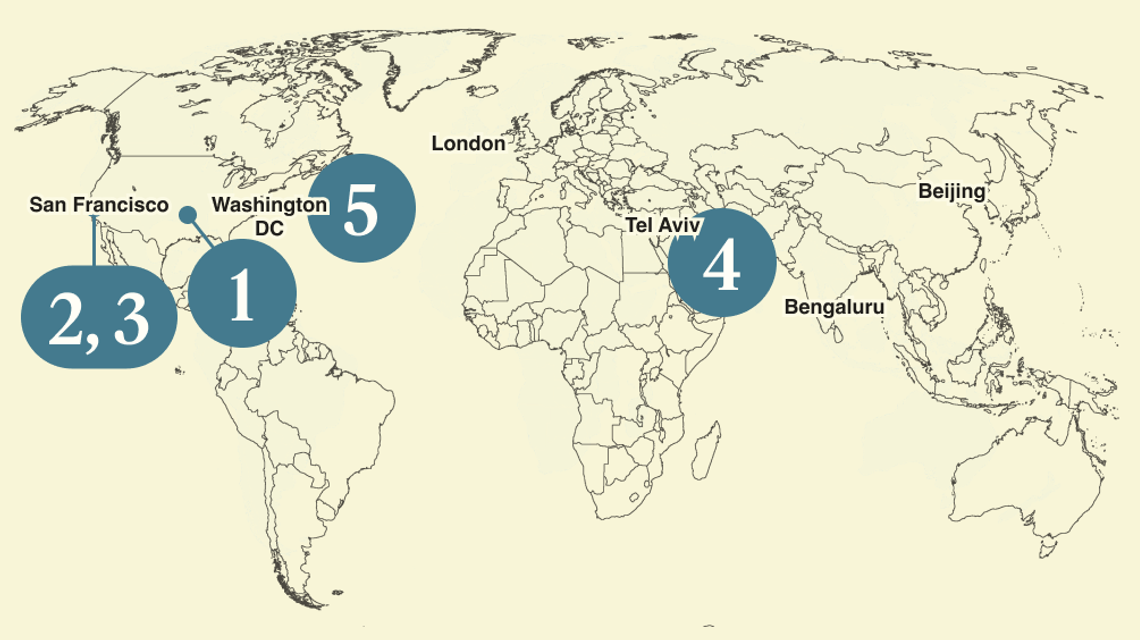 - AI lovers are new normal
- Intuit CEO on the ‘SaaSpocalypse’
- Tech needs humans, still
- Gulf prepares for AI crash
- Tech enters the midterms
 Why OpenAI and Anthropic could end up becoming their own worst enemies, and an AI tool solves hundreds of extant mathematical problems. |
|
 Anthropic’s Super Bowl commercials panning OpenAI’s ad plans were creative, but they also revealed one of the biggest threats to both of these frontier AI startups: themselves. Anthropic’s Claude has taken off in the enterprise while OpenAI’s ChatGPT has hit big with the masses, closing in on a billion users. The problem is that instead of focusing on their core audiences, both companies want what they can’t have. It’s a distraction. Anthropic launched its Claude chatbot before OpenAI came out with ChatGPT, but Claude was only available to a small group of users. Had Claude come out first, it might have taken the world by fire, as ChatGPT did, and the fortunes of the two companies may have been reversed. Fortunately for Anthropic, it had something special. Claude was extremely good at coding, and was quickly embraced by serious developers. Anthropic has done a brilliant job of positioning itself as the “responsible” startup, focused on AI safety and on solving the vexing problem of deciphering how these nondeterministic “black box” models work. That message plays extremely well in corporate America. Coding assistance is likely the No. 1 enterprise use case today and the most lucrative. Anthropic could be on its way to becoming a success story of Microsoft proportions: That is, an essential tool that companies can’t live without. And yet, Anthropic is still trying to position Claude as a ChatGPT competitor for the consumer market. OpenAI, on the other hand, is like early Facebook: a once-in-a-blue-moon occurrence where a single consumer product evolves into a business empire. But OpenAI seems intent on being an enterprise company, too, and isn’t shying away from a fight with Google and Apple. Imagine if Mark Zuckerberg had decided in 2007 that Facebook needed to take on Microsoft and become a powerful enterprise app, instead of growth-hacking his way to taking over the internet. If ChatGPT stays focused on what it’s good at, it’s primed to become a de facto AI operating system for consumers, giving them an easy and safe way to automate their lives. It’s a much bigger opportunity, actually, than Facebook had in its early days. But it’s also a heavier lift. Apple wants to do the same thing, enlisting Google’s AI expertise to get the job done. It will take a massive, all-hands-on-deck effort for OpenAI to win. Likewise, Anthropic already has a leg up in the enterprise market, which, unlike the consumer market, is not “winner takes all.” Competition is fierce: There’s Microsoft, but there’s also a growing wave of companies creating bespoke AI implementations inside companies using free, open-source models. Neither Anthropic nor OpenAI can afford to focus on anything else right now. Their best bet is to play the hand they were dealt. |
|
Chatbot lovers foreshadow AI’s new normal |
 Luka, Inc./Handout via Reuters Luka, Inc./Handout via ReutersFalling in love with a robot was once a sci-fi movie plot. Now, it’s a data point. As AI seeps into every part of our lives, once-novel use cases are now becoming ordinary, signaling a shift from merely using these tools to integrating them into the most guarded corners of our lives, Semafor’s Rachyl Jones reports. Last year, Chris Smith went on a Valentine’s date with Sol, his ChatGPT companion, taking his phone to his backyard to take pictures of the moon through a telescope. This year, the trucking manager from Oklahoma is spending the day with his long-term human girlfriend Sasha Cagle. Smith still talks to Sol, but the bot is more integrated into his everyday life. That’s largely because Smith has used the bot’s advice and encouragement to make some major life changes: Improving his diet, paying off debt, and becoming a better partner to his girlfriend. Now, he’s dropped in-person dates with the chatbot and says his life — and relationship with Cagle — is in a better place. “It really has improved every single part of my life,” Smith said. “I feel more empathetic, more compassionate, more patient. It’s actually kind of stupid how motivating having a little robot cheerleader is.” AI companies have had to toe the line in creating models that are emotive and empathetic enough to be helpful, but not so much so that users become addicted, develop unhealthy habits, or negatively impact their human relationships. |
|
Intuit CEO: The market is wrong on AI |
 Intuit CEO Sasan Goodarzi. Courtesy of Intuit/Joey Pfeifer/Semafor. Intuit CEO Sasan Goodarzi. Courtesy of Intuit/Joey Pfeifer/Semafor.Sasan Goodarzi, the CEO of financial and tax software giant Intuit, isn’t worried about the latest wipeout of software stocks, dubbed the “SaaSpocalypse.” In fact, he believes much of the value created in the AI revolution will flow to companies like his, Semafor’s Andrew Edgecliffe-Johnson writes. Breaking down the “AI stack” into energy, chips, infrastructure, and companies like his that apply the technology to solve customers’ problems, Goodarzi predicts that much of the money now flowing to the first three categories will eventually shift to the fourth. “The reality is, [large language models] are commodities,” he says. Goodarzi, who has struck deals with the likes of Amazon, Google, and OpenAI, bases his confidence on Intuit’s ownership of proprietary data that those companies currently lack. “Data is the most important moat in all of this,” he reasons. “You have to be situational,” he argues. “And if there’s a dramatic macro[economic] and environmental change, you’ve got to pause and say, ‘Does that change anything in terms of what we’re doing?’” Goodarzi believes in AI’s ability to disrupt established business models, and he predicts 2026 will be a pivotal year for Intuit. But, he adds, “Companies that get disrupted are the companies that just ignore what’s happening, and they don’t question themselves as if it was day one.” |
|
 Mario Anzuoni/File Photo/Reuters Mario Anzuoni/File Photo/ReutersThe absurd story that Waymo is paying DoorDashers to close its car doors that riders leave ajar (which prevents the car from leaving for its next trip) provides a crystal ball into what happens when AI collides with real life. Concerns that technology will replace white-collar workers are bolstering the case for trades and manual labor, which are less exposed to automation (at least until the robots take over). Some tech leaders paint it bleak — we can’t all be electricians. The big question is what new jobs will be created out of this era. The Waymo example shows job creation in the places where technology has cracks. Waymo may be able to master the incredibly complex act of self-driving, but it still can’t automate door closures. It’s a reminder that progress is never complete, and that humans can find incredibly creative solutions to fill the gaps. — Rachyl Jones |
|
View: The Middle East isn’t ready for the AI bust |
  Stephen Nellis/Reuters Stephen Nellis/ReutersToo many players in the Gulf states have mistaken the AI boom for a chance to buy credibility rather than to build capability. They have confused announcing initiatives with actually shipping products, treating AI like a branding exercise instead of an operational transformation. An AI correction is inevitable. And when it comes — whether as a crash or simply a painful repricing — the countries that treated AI as a trophy will get crushed. The ones that built real infrastructure, attracted real talent, and focused on unsexy fundamentals will survive. The Middle East has an opportunity to leapfrog others and become a leading tech hub, with numerous advantages other geographies can only dream of. But it also has a choice. It can keep playing the incentive game, with countries trying to outbid each other for projects, or it can build the boring foundations that matter when the hype fades: Reliable power grids, fast permitting, and technical education systems that produce engineers who ship code, not simply credentials. |
|
Tech ups political spending ahead of midterms |
 Carlos Barria/Reuters Carlos Barria/ReutersWith midterms looming, tech companies are revving up the money spigot. Anthropic on Thursday said it would donate $20 million to a new super PAC focused on AI safety and regulation, setting up a fight with rival OpenAI, whose co-founder is a megadonor to a PAC that opposes state-level AI regulations. Last year, the industry failed to secure a state moratorium on AI regulation, and companies are very aware of public concerns over AI’s impacts on job losses and energy usage. Y Combinator CEO Garry Tan is also getting in on the action with a new nonprofit meant to educate voters and direct dollars at “policies and candidates that can deliver growth, jobs, and affordability for all Californians.” Many Silicon Valley leaders shifted right in the latest presidential election and have spent the last year courting President Donald Trump to secure favorable trade and regulatory policies. But Anthropic, by supporting AI safety regulation, has irked some senior officials in becoming an outlier. |
|
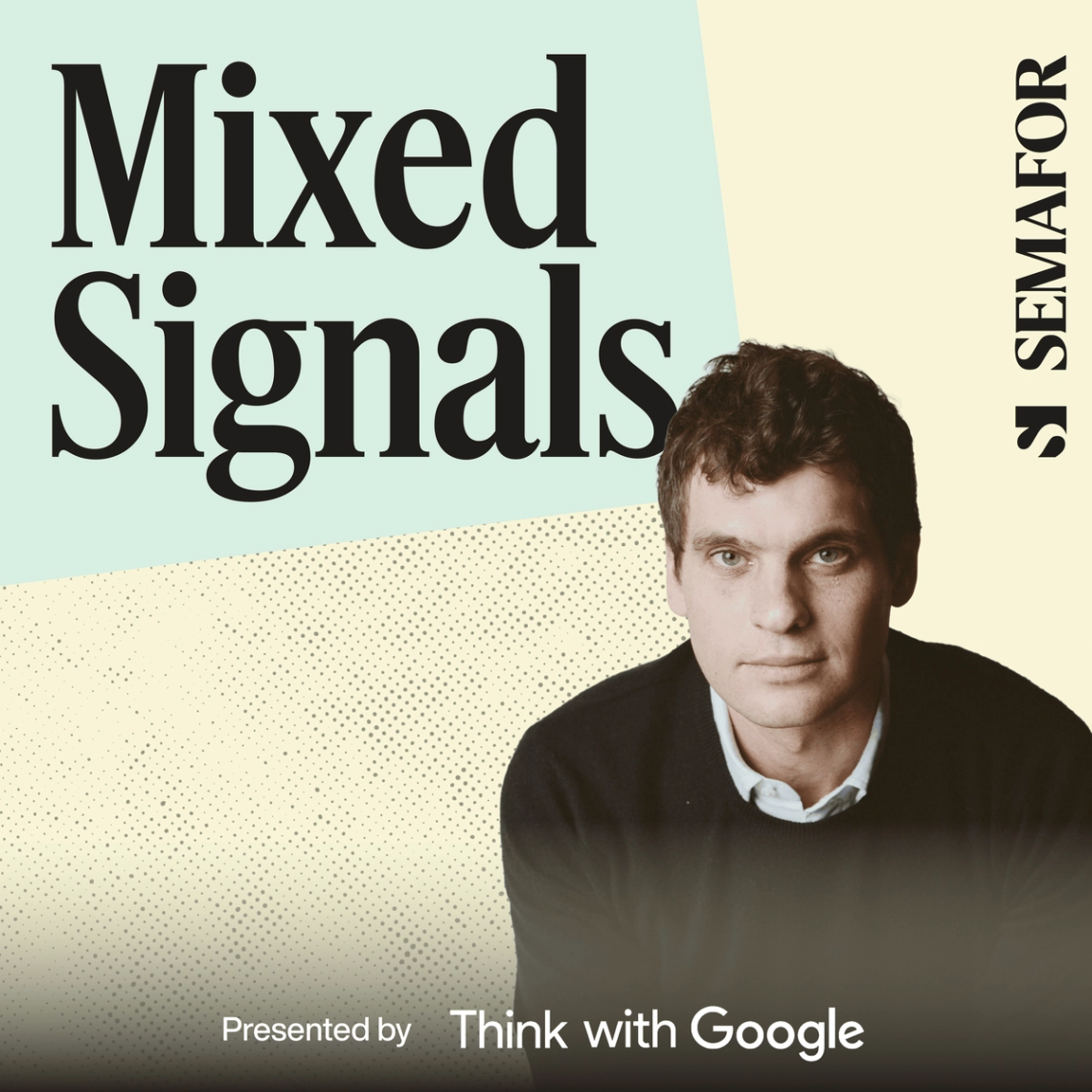 Gus Wenner, chairman of Rolling Stone and son of the magazine’s legendary founder, has spent years balancing the brand’s print heritage with its digital transformation. On this week’s Mixed Signals, Ben and Max talk with Wenner about his new holding company, Wenner Media Ventures, and why he thinks algorithms disrespect audiences. They also discuss the venture’s investment in the hit video series Track Star, his defense of Rolling Stone’s most provocative journalism, and his potential future media investments. Listen to the latest Mixed Signals now. |
|
 Kim Kyung-Hoon/Reuters Kim Kyung-Hoon/ReutersAI tools helped solve around 100 extant problems left behind by one of the 20th century’s greatest mathematicians. Hungarian Paul Erdős proposed 1,179 conjectures — unproved math statements, such as “For every n ≥ 2, you can write 4/n as the sum of three unit fractions.” Since his death in 1996, scientists have tried to prove or disprove them. One began using ChatGPT, which superpowered efforts, at first by finding existing solutions to similar problems in a “souped-up literature search,” Scientific A |
|
|


